Explore crypto news and in-depth articles related to Capital Flow, covering market updates, data-driven analysis, trend insights, and key developments to help you fully grasp key information about Capital Flow in the crypto market.
According to CoinShares weekly report, digital asset investment products saw a net inflow of $619 million on March 9, reflecting the market's response to the Iran crisis. Despite poor non-farm payroll data, overall sentiment remains positive, with the United States contributing the majority of the funds. Bitcoin and Ethereum performed notably.
Data from Pine Analytics reveals that Hyperliquid HIP-3 recorded its highest daily trading volume on a Sunday, driven by active trading in XYZ amid rising geopolitical tensions affecting oil prices and financial volatility. This resulted in a record weekend trading volume of approximately 720 million USD, underscoring the impact of macroeconomic shocks on decentralized crypto derivatives platforms.
On March 9th, influenced by a sharp decline in the Japanese stock market, the trading volume of a certain CEX in Japan surged, with 24-hour trading volume increasing by 200%. In comparison, the CEXs in the United States and South Korea experienced smaller increases. Bitcoin against the Japanese Yen rose approximately 2.05%, reflecting the yen's weakness and a surge in trading activity. Analysts point out that South Korea reacts strongly to oil price shocks, while the increase in Japanese CEX trading instead demonstrates market resilience.
Gate News Report, March 9th, French publicly listed company Capital B recently increased its Bitcoin holdings by 2 coins, bringing the total holdings to 2836 BTC.
U.S. spot Bitcoin ETFs have experienced net inflows for two consecutive weeks, totaling approximately $1.355 billion, indicating a rebound in institutional confidence. Although there was a capital withdrawal over the weekend, this is still the first sustained growth in five months. The inflow rate for Bitcoin ETFs has approached the fifteen-year cumulative level of gold ETFs, reflecting increased market acceptance of Bitcoin.
Recently, Bitcoin's price has been fluctuating around $67,500, but related crypto concept stocks have experienced a significant pullback, sparking market concerns about risk. Data shows that the stock prices of many publicly traded companies holding Bitcoin have declined, and some investors are already in unrealized losses. This situation echoes signals from the 2022 crypto market crisis, with funds flowing out of crypto ETFs and investors beginning to reduce their risk exposure. Nevertheless, publicly traded companies still hold large amounts of Bitcoin, and future development depends on increased institutional participation.
Against the backdrop of weak market sentiment in the crypto space, Chainlink demonstrates resilience in capital inflows, attracting market attention. The current $9.17 is a key resistance level; if successfully broken, LINK could see upward potential. Market focus is on its technical trend and fundamental support. Please pay attention to its price ranges at $9.17 and $8.30.
Stablecoins have seen a significant increase in blockchain settlement volume, with the Solana network performing outstandingly, reaching $650 billion in transfers by 2026. Their applications have expanded to cross-chain settlements, DeFi collateral, and other areas, with market attention on stablecoins becoming increasingly focused on their role as an important payment layer. User engagement has increased, and stablecoins are transforming into the foundational infrastructure for blockchain payments.
Ethereum is about to undergo a major upgrade, and the market is highly focused on it. However, short-selling firm Culper Research believes that the Ethereum economic model is failing and warns of a potential "death spiral." They point out that a significant drop in transaction fees and shrinking staking rewards will impact network security. The report also mentions Vitalik Buterin selling Ethereum and questions the market fundamentals, suggesting that Ethereum is facing a new reality.
The blockchain real-world asset market is heating up, with tokenized gold Tether Gold (XAUT) experiencing a significant increase in trading volume on the Solana network, with weekly trading exceeding $280 million. As institutional investors participate more, the market demand for tokenized assets is rapidly expanding, indicating that the RWA market may continue to grow in the future.
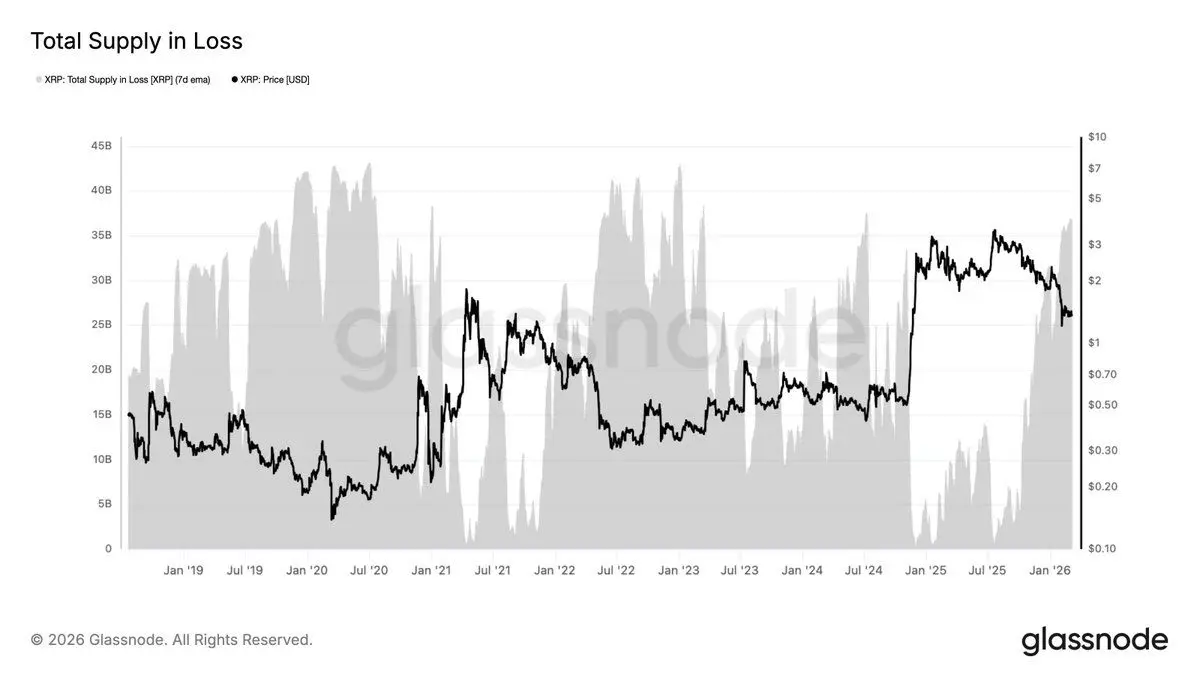
According to Glassnode data, there are currently approximately 36.8 billion XRP in loss, with unrealized losses reaching $50.8 billion. Meanwhile, the large whale group holding between 1 million and 100 million XRP has increased their holdings by about 210 million XRP since March, indicating they see current market downturns as a buying opportunity. Binance's XRP trading volume Z-score has decreased, indicating reduced liquidity and increased market volatility.
From 2026-03-09 05:30 to 2026-03-09 05:45 (UTC), BTC experienced a significant upward movement, with a 15-minute return of +0.82%. The price range was 67,350.4 to 67,970.0 USDT, with an amplitude of 0.92%. This fluctuation occurred during a period of global risk asset pressure and increased volatility in the crypto market, attracting market attention.
The main driving forces behind this movement are the continuous accumulation by whale funds at the bottom and the rebound of ETF fund inflows. On-chain data shows that from February to March, large holders with over 1000 BTC...
Last week, Bitcoin spot ETF net inflows reached $568 million, with BlackRock's IBIT leading with a weekly net inflow of $660 million, bringing the total historical net inflows to $62.47 billion. Fidelity's FBTC experienced a net outflow of $153 million. The current total net asset value of Bitcoin spot ETFs is $87.07 billion.
According to Gate News, as of March 6th, Ethereum spot ETFs saw a net inflow of $23.56 million last week, with BlackRock's ETHA performing notably, with a weekly net inflow of $133 million. Grayscale Ethereum Mini Trust had a weekly net inflow of $84.18 million, while Fidelity's FETH experienced a net outflow of $218 million. Currently, the total net asset value of Ethereum spot ETFs is $11.28 billion.
According to Gate News, on March 9th, last week, SOL spot ETF had a net inflow of $24.05 million, mainly contributed by Bitwise ETF BSOL with $33.94 million; XRP spot ETF experienced a net outflow of $4.0855 million. The total assets under management reached $807 million.
BloFin Research report analyzes Circle's profit model, primarily driven by three factors: "interest rates, USDC scale, and distribution economics." However, OCC's new interpretation of the "GENIUS Act" could pose a serious threat to the collaboration between Circle and Coinbase, affecting USDC distribution efficiency. The report also notes that the stablecoin supply is decoupled from the crypto market prices, indicating that Circle's reserve income is more stable.
Gate News Report, March 9th, according to Arkham data, at 11:43, 332.09 BTC (worth approximately $134 million) was transferred from an anonymous address (starting with bc1qnzx...) to a certain CEX.
Gate News Report, March 9 — According to The Data Nerd, within the past 10 hours, the Ethena team deposited 6,500 ETH (approximately $12.58 million) into a CEX. Additionally, cryptocurrency market maker B2C2 deposited 3,050 ETH (about $5.89 million) into another CEX.
From 00:00 to 00:15 (UTC) on March 9, 2026, the AVAX price experienced a rapid surge, with a return of +0.76%. The price ranged between 8.815 and 8.885 USDT, with an amplitude of 0.79%. At the same time, trading volume significantly increased during this period, market volatility intensified, short-term trading became active, and market attention was heightened.
The main driver of this anomaly was the ongoing fermentation of the news announced by Avalanche on March 8, about a liquidity staking partnership with a well-known DeFi protocol. The market