This course provides a guide to on-chain wealth management, focusing on decentralized finance (DeFi) strategies for generating passive income through staking, lending, liquidity provision, and yield farming. It explains key financial principles, risk management techniques, and future trends in on-chain earnings while comparing centralized and decentralized finance ecosystems.
Memecoins have become a prominent category in cryptocurrency trading, attracting substantial retail interest despite lacking traditional fundamentals. This course presents a detailed examination of how memecoins originate, perform, evolve, and collapse. Participants will gain practical knowledge for identifying, evaluating, and navigating these assets, with emphasis on avoiding common risks. Anyone trading or analyzing memecoins needs to understand how these tokens function across platforms, how market cycles develop, and how scams are structured.
In this course, you will learn everything you need to know about mining cryptocurrencies, including the different types of mining hardware, software tools, and strategies for reducing the environmental impact of mining. Whether you're a beginner or an experienced miner, this course will provide you with the knowledge and skills to succeed in this exciting and rapidly evolving industry.
Welcome to The Beginner's Guide to Trading Fundamentals — a structured course crafted for learners aiming to build a solid foundation in both traditional finance and crypto markets. Whether you're a first-time explorer of the markets or an experienced trader looking to clarify strategic logic, this series will help you grasp the underlying principles of market operations. Covering topics from the differences between trading and investing to fundamental vs. technical analysis and market cycles and investor psychology, these five progressive lessons will teach you to combine analytical methods, risk management, and psychological discipline, empowering you to make more rational, higher-probability decisions in real market scenarios.
The transparent nature of blockchain makes "on-chain data" one of the most powerful tools for investors to identify trends, gauge market sentiment, and mitigate risks. This course will systematically guide investors in learning how to interpret capital flows, sentiment shifts, and user behavior. It covers practical methods for using mainstream on-chain analysis tools (such as Dune, Nansen, Meme GO, etc.), taking learners from beginner level to independently identifying trend signals.
Celestia represents a fundamental redesign of blockchain architecture through its modular approach. Instead of requiring every blockchain to handle execution, settlement, consensus, and data availability within a single system, Celestia separates these functions into specialized layers. This allows developers to create sovereign and application-specific blockchains that outsource data availability and consensus to Celestia while retaining full control over their execution environments.
Meet GUSD — your gateway to stable, real-world-backed investing. Backed by real-world assets (RWA) such as U.S. Treasuries, GUSD goes beyond ordinary stablecoins. In this video, we'll walk you through its key advantages, how to mint, earn, and redeem GUSD on Gate, and why it's built for long-term value growth. Unlike typical stablecoins, GUSD is designed to preserve value while helping your assets grow over time.
Want to earn rewards while holding your crypto? In this video, we'll walk you through what Gate Staking is, the benefits of staking, and how Gate's secure, compliant platform and wide range of supported cryptocurrencies open up multiple earning opportunities for you!
In this video, we'll break down what the Gate Broker Program is, the challenges of becoming a broker, and how Gate supports you through a three-stage growth path — turning one success into a long-term, repeatable growth plan.The Gate Broker Program has already empowered 500+ leading industry partners worldwide. With multiple campaign types and dedicated promotional support, you can book a business consultation on the Gate website to find out what works best for you.
Gate Research Daily Report: On November 28, BTC saw a clear volume-driven breakout after several days of wide-range consolidation; ETH remains in a strong market structure; GT continues to maintain a solid short-term uptrend; and BBT became the spotlight with an impressive +83.14% surge. MegaETH issued full refunds due to disorganized pre-deposit fundraising and plans to relaunch its cross-chain bridge. The Monad mainnet has officially gone live, with multiple ecosystem projects releasing new earning opportunities. Meanwhile, Ethereum has raised its block gas limit to 60 million, reaching record-high throughput ahead of the upcoming Fusaka upgrade.
From November 11 to November 24, 2025, the crypto market retreated under AI-bubble concerns and macro tightening pressures, though BTC and ETH staged a short-term rebound from local lows, keeping the broader structure in a consolidation phase. The top 500 tokens by market cap declined about 15% on average, with mid- and small-cap assets showing notable divergence—BEAT surged 436% to lead the market, while narrative-driven tokens such as SOON retraced 50–70%. A clear volume-price mismatch emerged, as tokens like AGENTFUN and XSO saw 10–15x volume spikes without meaningful price follow-through, reflecting cautious short-term sentiment despite ongoing structural opportunities. Amid this backdrop, several sectors—including prediction markets, DID identity systems, testnet participation, and yield aggregation platforms—have begun launching airdrop-driven campaigns. This report summarizes key participation methods to help users capture testnet incentives and potential rewards during the rebound phase and position a
Annual Percentage Rate (APR) is a financial metric expressing the percentage of interest earned or charged over a one-year period without accounting for compounding effects. In cryptocurrency, APR measures the annualized yield or cost of lending platforms, staking services, and liquidity pools, serving as a standardized indicator for investors to compare earnings potential across different DeFi protocols.
Fear of Missing Out (FOMO) is a psychological state where investors fear missing significant investment opportunities, leading to hasty investment decisions without adequate research. This phenomenon is particularly prevalent in cryptocurrency markets, triggered by social media hype, rapid price increases, and other factors that cause investors to act on emotions rather than rational analysis, often resulting in irrational valuations and market bubbles.
NFT (Non-Fungible Token) is a unique digital asset based on blockchain technology where each token possesses a distinct identifier and non-interchangeable characteristics, fundamentally different from fungible tokens like Bitcoin. Created through smart contracts and recorded on the blockchain, NFTs ensure verifiable ownership, authenticity, and scarcity, primarily applied in digital art, collectibles, gaming assets, and digital identity.
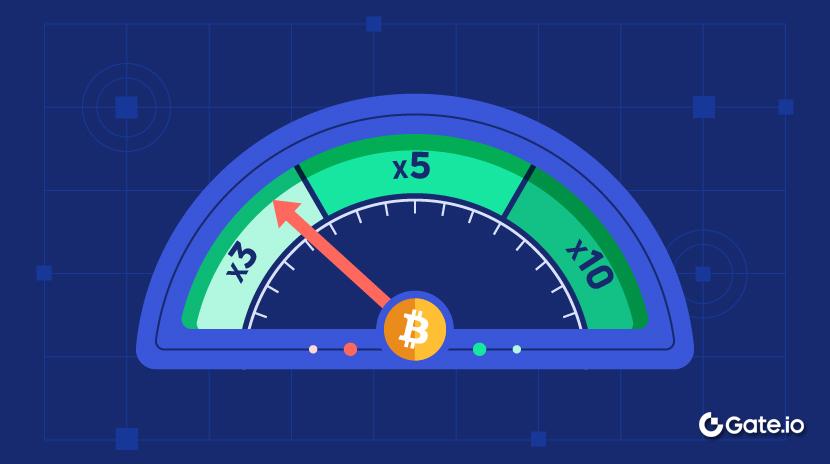
Leverage refers to a financial strategy where traders use borrowed funds to increase the size of their trading positions, allowing investors to control market exposure larger than their actual capital. In cryptocurrency trading, leverage can be implemented through various forms such as margin trading, perpetual contracts, or leveraged tokens, offering amplification ratios ranging from 1.5x to 125x, accompanied by liquidation risks and potential magnified losses.
Your Gateway to Crypto World, Subscribe to Gate for A New Perspective