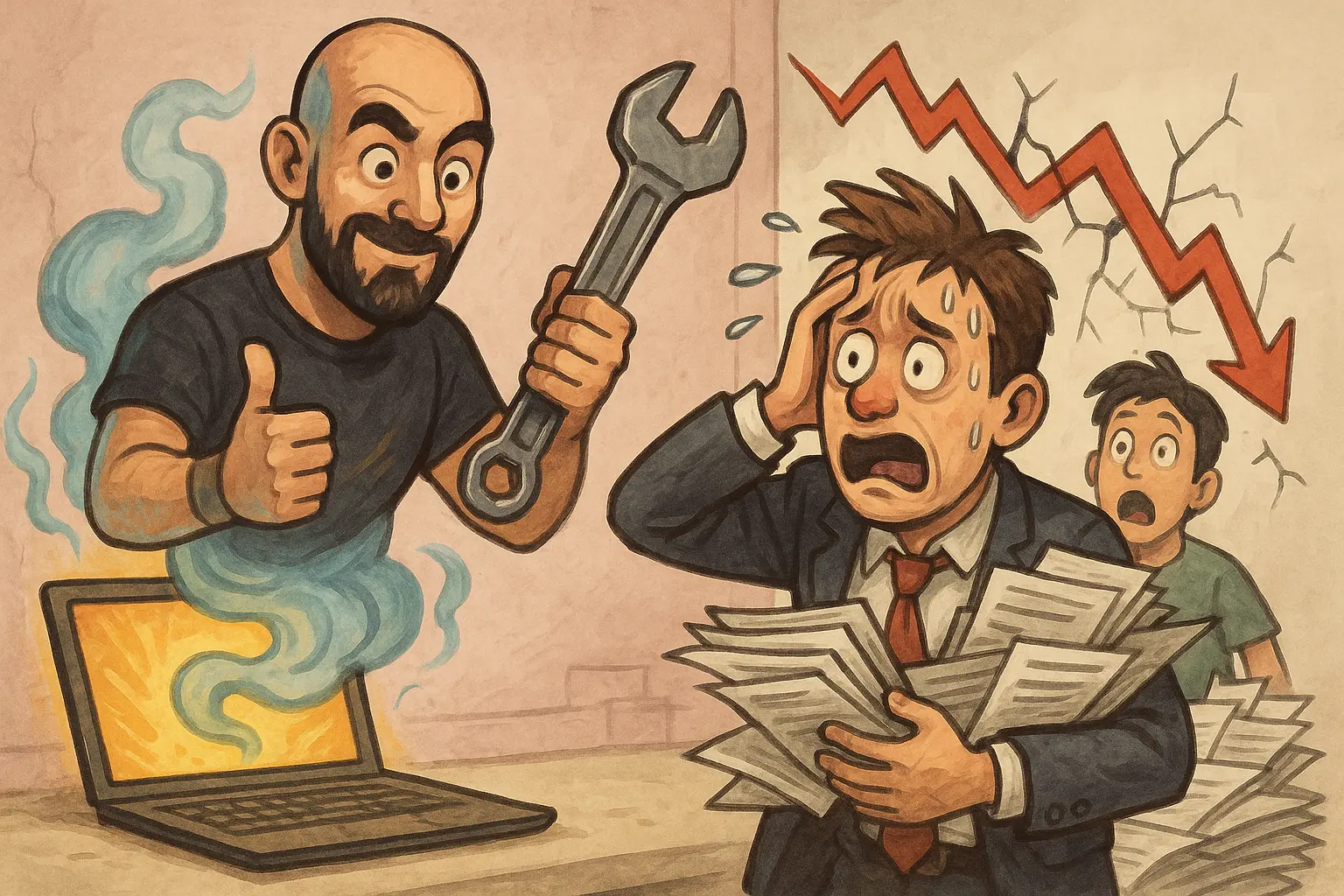
Google’s Project Genie prompts interactive world generation, triggering panic in gaming stocks. Unity plummeted 35%, while Take Two, Nintendo, and others also declined. Unity CEO states that it is an accelerator, not a risk; probabilistic generation is not suitable for games. Take Two CEO: Tools are not the same as the作品, talent remains key.
Google’s One-Word World Generation Technology Revolution
Recently, Google launched “Project Genie,” an experimental research prototype built on the Genie 3 general world model. Currently, it is available for testing by Google AI Ultra subscribers in the United States. Its core function is to allow users to generate a lively, expandable environment automatically through simple prompts or by uploading images. Unlike traditional static 3D scenes, Genie 3 can generate paths ahead and simulate physics and dynamic changes in real-time as users move or interact within the virtual world.
This technological breakthrough shifts the paradigm of traditional game development. Previously, creating a game world required: 3D modelers designing scenes, programmers coding physics engines, artists creating textures, level designers planning layouts. The entire process took months or years and cost tens of millions of dollars. Project Genie compresses this process into minutes: input “a cyberpunk-style future city,” and AI can generate an explorable 3D world.
Real-time generation is the killer feature of Project Genie. Unlike pre-rendering the entire world, Genie 3 uses a mechanism similar to “fog of war”: only generating content within the player’s current view. As players move forward, AI generates the scene ahead; when players interact, AI calculates physics responses instantly. This on-demand generation greatly reduces computational resource requirements, enabling personal computers to run vast virtual worlds.
According to VGC, some users have begun sharing videos of interactive worlds created with Project Genie, some even featuring copyrighted characters like Pokémon from Nintendo. The potential copyright infringement is one of the legal risks facing Project Genie. If users can easily generate worlds with Nintendo characters, Nintendo’s IP value could be threatened.
Some AI advocates believe that as tools like Project Genie for interactive world generation continue to evolve, the demand for traditional game developers in the future gaming market may significantly decrease. The idea that “AI replaces game developers” is a core reason behind the stock price plunge. Investors worry that if AI can automatically generate games, companies like Unity and traditional game studios’ business models could collapse.
Unity’s 35% Panic Sell-Off
Following the launch of Project Genie, investor reactions influenced by community discussions initially seemed to be concern that such technology might impact the existing gaming industry, especially user-generated content (UGC) sectors, leading to a decline in multiple gaming stocks. For example, Unity’s stock price once dropped from $38.40 to a low of $27.80, a 35% decrease on the day. Other well-known gaming companies like CD Projekt (developer of The Witcher 3), Nintendo, Roblox, and Take Two (publisher of GTA) also saw declines.
A 35% single-day drop is extremely rare among large tech stocks, indicating a highly panic-driven market response to the threat of Project Genie. This panic may be exaggerated but also reflects genuine investor concerns about AI’s disruptive potential. As the second-largest game engine globally (after Unreal), Unity’s business model relies on game developers needing engine tools to create games. If AI can directly generate games, the value of engines could be greatly diminished.
Gaming Stocks’ Decline Overview
Unity: from $38.40 down to $27.80, a 35% drop
Take Two: GTA parent company’s stock declined (specific percentage not disclosed)
Nintendo: stock price fell (specific percentage not disclosed)
Roblox: UGC platform impacted, stock price declined
CD Projekt: The Witcher developer’s stock fell
In response, Unity CEO Matthew Bromberg stated that the development of large-scale world models is a positive accelerator for the industry, not a risk. He pointed out that current results from these models are still probabilistic and non-deterministic, not suitable for games requiring consistent and repeatable player experiences. However, if integrated with Unity’s engine, generated content could be transformed into fully controllable simulation environments.
Bromberg’s argument is: although the worlds generated by Project Genie look impressive, they lack the stability and controllability needed for commercial games. Each generation yields slightly different results, which is a fatal flaw for games requiring precise level design and balancing. Unity’s value lies in providing a stable, controllable, and optimized development environment—something AI-generated randomness cannot replace.
Counterattack: Take Two’s “Tools Are Not the作品”
Take Two CEO Strauss Zelnick also remains optimistic about Project Genie. The company has been exploring machine learning and AI for 25 years and is actively embracing new AI technologies to boost efficiency and creativity. In an interview with IGN, Zelnick responded that he does not see Genie threatening the company’s business; rather, he is excited about the prospects these new tools bring.
Zelnick believes the current market panic stems from the misconception that “tools” are equivalent to “作品.” He emphasizes that no tool can produce a competitive commercial作品 with just the press of a button. Even if creators use AI tools for assistance, they still need to conceive core game concepts, characters, and structure. He states, “I will never underestimate the importance of human talent, even with excellent tools.” Because, great tools are meant to unleash human talent and enable great achievements, not replace humans.
This distinction between “tools vs作品” is insightful. The advent of Photoshop did not eliminate photographers and designers; it made their creations more efficient. Final Cut Pro did not eliminate film directors; it lowered the barriers to filmmaking. Similarly, Project Genie may not eliminate game developers but could change how they work. Truly great games like GTA, The Witcher 3, and Zelda are valued not just for technical implementation but for their storytelling, characters, world-building, and gameplay design.
Rockstar Games’ GTA series, developed over years with hundreds of millions of dollars, reportedly cost over $1 billion for GTA 6. This investment encompasses not only technology but also scripts, voice acting, motion capture, music, and polishing details. Project Genie might help quickly generate basic scenes but cannot replace this comprehensive creative investment.
Market reactions show Unity’s stock rebounded after the CEO’s comments, indicating rational voices are gaining ground. The initial panic sell-off was more emotional than fundamental. As investors better understand Project Genie’s capabilities and limitations, gaming stocks may gradually recover. The key is whether game companies can integrate AI tools into their development processes to enhance efficiency rather than be replaced by AI.
For the gaming industry, Project Genie is both a threat and an opportunity. The threat lies in lowering creative barriers, potentially flooding the market with low-quality AI-generated games, diluting attention. The opportunity is for top studios to accelerate development, invest more in creativity and refinement, and differentiate from low-quality works. Ultimately, success will still belong to developers with unique creativity and deep experience, not just opportunists using AI tools.


