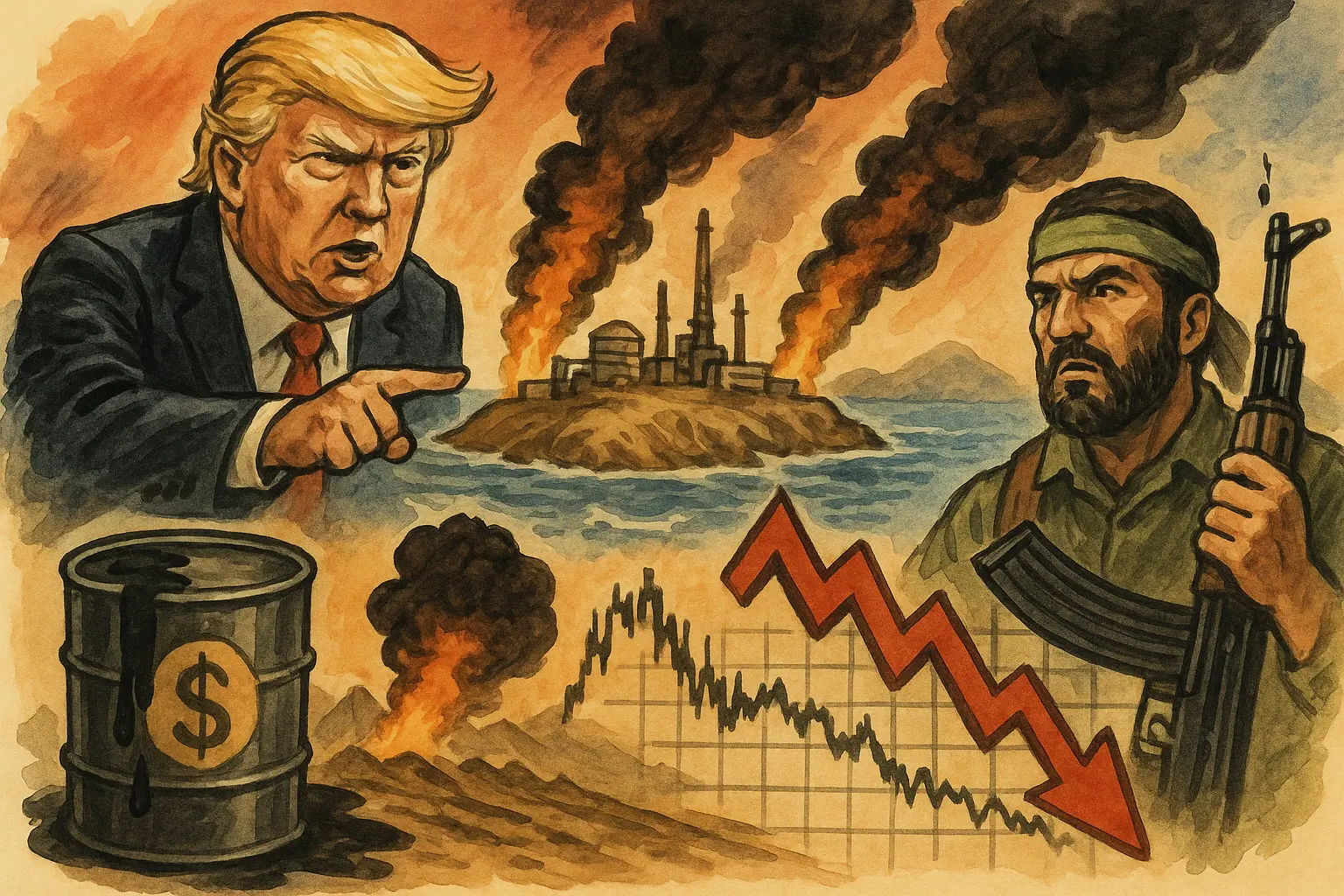
The conflict between the United States, Israel, and Iran escalated again on March 30, with the Iranian military claiming to be prepared for a U.S. ground troop invasion, and U.S. President Trump considering the occupation of Kharg Island. As a result, Brent crude oil quickly surged past $115 per barrel; Taiwan’s weighted stock index opened down over 600 points, while the Nasdaq index plummeted over 2%.
Latest Updates on the U.S.-Iran War: Threats from Kharg Island and Escalation of Multiple Interventions
In the past 24 hours, the conflict has escalated across multiple dimensions. The Israeli military conducted nighttime airstrikes on ballistic missile component facilities in Tehran, to which Iran immediately retaliated by launching multiple missiles. The Houthi armed group in Yemen also directly fired ballistic missiles at Israel for the first time, expanding both the geographical scope of the battlefield and the number of participating parties.
Trump stated to the media that the U.S.-Israeli coalition’s actions have led to a regime change in Iran, and the U.S. intends to seize Iranian oil while assessing the feasibility of occupying Kharg Island. Quantum Strategy strategist David Roche warned that if the U.S. takes action to occupy Kharg Island, Iran is likely to expand its retaliatory actions to critical energy infrastructure in other countries in the Persian Gulf, leading to global supply shocks far exceeding the current scale.
Timeline of Key Events in the U.S.-Iran War Over the Last 24 Hours
Israeli Airstrikes: Precision strikes on Tehran’s ballistic missile component facilities at night.
Iran’s Retaliation: Launching multiple missiles at Israel, with ongoing exchanges of fire.
Houthi Armed Group’s First Intervention: The Yemeni Houthi group directly firing ballistic missiles at Israel for the first time.
Trump Reveals Plans: Disclosing intentions to occupy Kharg Island and seize Iranian oil export points.
Qalibaf Issues Warning: The Speaker of the Iranian Parliament publicly stated that the military is prepared and waiting for U.S. ground troops.
Global Market Impact: Oil Prices Soar, Taiwanese Stocks Plummet, and Market Expectations Flip
The effective blockade of the Strait of Hormuz has disrupted about 20% of the world’s oil and liquefied natural gas supply, with Asian spot oil prices exceeding futures market quotes. Onyx Capital Group CEO Greg Newman stated that the energy market has only just begun to reflect the real consequences of the conflict, with physical crude oil premiums reaching historic highs, and Brent crude is expected to steadily approach $120 per barrel or even higher levels.
In Taiwan’s stock market, TSMC opened down 40 New Taiwan Dollars to NT$1,780, while Foxconn fell below NT$200; however, the shipping sector rose against the trend, with Wan Hai, Evergreen, and Yang Ming all showing gains, reflecting market expectations of rising freight rates due to rerouting. Yardeni Research President Ed Yardeni warned that the ongoing blockade of the Strait of Hormuz will significantly increase the risk of a global economic recession.
Expectations for monetary policy have also flipped significantly. The CME FedWatch tool shows that the probability of the federal funds rate being above current levels by the end of the year has approached 30%, as the market shifts from previously expecting multiple rate cuts by the Fed to being alert to the possibility of rate hikes.
In the realm of safe-haven assets, unusual differentiation has emerged: since the U.S. launched its attacks, gold prices have fallen by about 20%, diverging from the traditional expectation of “gold strengthening during wartime.” Bitcoin has maintained a price range of $65,000 to $70,000 in the short term, outperforming the Nasdaq, but when viewed over a longer time frame, it still lags behind major asset classes like stocks and gold.
Frequently Asked Questions
What is the strategic significance of Kharg Island in the U.S.-Iran War?
Kharg Island, located in the Persian Gulf, is a key hub for about 90% of Iran’s oil exports. If the U.S. occupies Kharg Island, it would effectively cut off Iran’s main energy export route; however, strategists warn that this could trigger large-scale retaliation from Iran against the energy infrastructure of various Gulf countries, causing global supply shocks far exceeding the current blockade of the Strait of Hormuz.
How does the U.S.-Iran War affect Bitcoin and the cryptocurrency market?
In the short term, Bitcoin’s performance during the conflict has outperformed the Nasdaq, maintaining a range of $65,000 to $70,000. However, inflation expectations driven by rising oil prices are changing the Fed’s policy path; if interest rates remain high or even increase for an extended period, it will create systemic downward pressure on risk assets, including Bitcoin.
What are the long-term impacts of the Strait of Hormuz blockade on the global economy?
The blockade of the Strait of Hormuz has disrupted about 20% of the world’s oil and liquefied natural gas supply, with Brent crude potentially breaking above $120 per barrel. Many countries are experiencing energy emergencies, expectations for Fed monetary policy have flipped, and a structural reorganization of global supply chains has begun, with inflation concerns likely dominating market dynamics for the long term.
Disclaimer: The information on this page may come from third parties and does not represent the views or opinions of Gate. The content displayed on this page is for reference only and does not constitute any financial, investment, or legal advice. Gate does not guarantee the accuracy or completeness of the information and shall not be liable for any losses arising from the use of this information. Virtual asset investments carry high risks and are subject to significant price volatility. You may lose all of your invested principal. Please fully understand the relevant risks and make prudent decisions based on your own financial situation and risk tolerance. For details, please refer to
Disclaimer.


