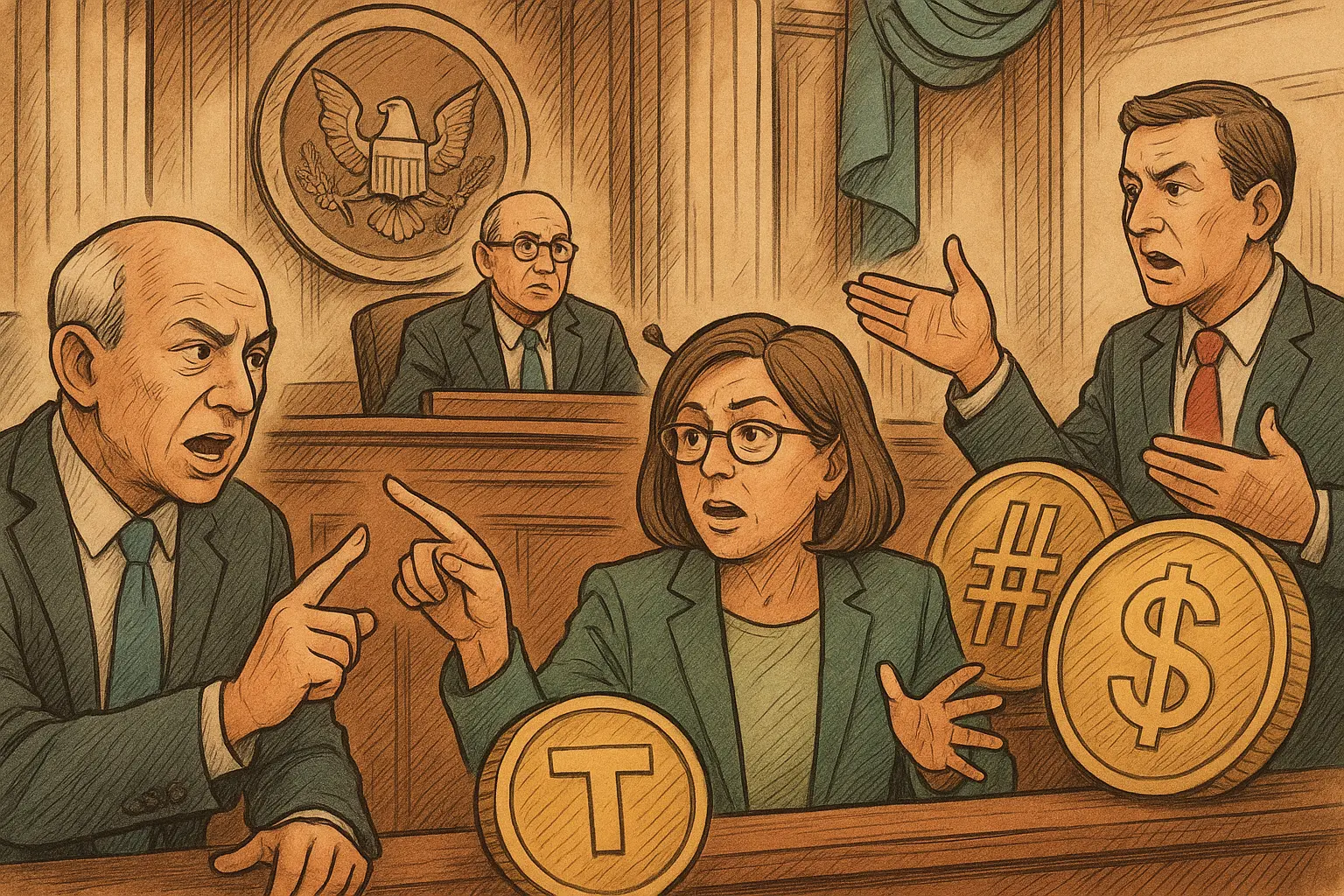
The U.S. House Financial Services Committee held a hearing on Wednesday titled “The Future of Tokenization and Securities: Modernizing Capital Markets.” During the same session, SEC Chair Paul Atkins announced that the agency will soon seek public input on a series of issues, including the proposed “Innovation Exemption,” which could serve as a regulatory sandbox for on-chain assets. Lawmakers showed clear divisions over balancing regulatory modernization and investor protection.
Core Focus of the Hearing: Recent Developments in SEC Tokenization Policies
Over the past few months, the SEC has undertaken a series of policy actions related to tokenization. In December last year, the SEC authorized Depository Trust & Clearing Corporation (DTCC) to tokenize certain high-liquidity assets on a pre-approved blockchain, with a three-year authorization period. Recently, the SEC approved rule changes allowing Nasdaq to support tokenized stock trading, and the New York Stock Exchange (NYSE) announced it is developing a 24/7 trading platform supporting tokenized securities trading and on-chain settlement.
Against this backdrop, Atkins’ proposed “Innovation Exemption” has garnered widespread attention—this mechanism would allow industry players to pilot tokenization projects under certain conditions, similar to a regulatory sandbox, aiming to provide a supervised testing ground for on-chain financial innovation.
Lawmakers’ Divergent Views: The Battle Between Modernization Support and Systemic Risk Prevention
Key Positions of Major Lawmakers at the Hearing
Andy Barr (Republican, Kentucky): Clearly supportive, stating, “Undoubtedly, security tokenization is coming. We need modernization reforms that uphold the gold standard of investor protection while ensuring the U.S. leads the way.”
Brad Sherman (Democrat, California): Questioned the exemption not passing through legislative process, expressing concern that it could create a “two-tier market,” allowing tokenized securities to bypass core securities regulations.
Maxine Waters (Democrat, California): Believes tokenization can improve efficiency and expand global investor participation, but warned, citing lessons from the 2008 financial crisis, that technological innovation could be exploited for predatory financial practices. She also pointed out conflicts of interest involving Trump in the crypto space—Bloomberg estimates Trump has profited about $1.4 billion from crypto investments.
Industry Stance: Clear Regulation Determines Whether Innovation Remains in the U.S.
Kenneth Bentsen Jr., President of the Securities Industry and Financial Markets Association (SIFMA), representing traditional finance firms, stated at the hearing that the industry supports “developing within the existing legal and regulatory framework,” and continues to urge the SEC to proceed through public comment processes rather than granting exemptions directly to push reforms.
Summer Mersinger, CEO of the Blockchain Association, emphasized the urgency of regulation: “If we can’t establish clear regulation, innovation in this space will continue to happen abroad, and the U.S. will fall behind.”
These represent two mainstream industry voices: traditional finance advocates favor cautious, gradual progress, while crypto-native sectors emphasize speed and certainty.
Frequently Asked Questions
What is the SEC’s proposed “Innovation Exemption,” and how does it differ from current regulation?
The “Innovation Exemption” is a mechanism proposed by SEC Chair Atkins that allows industry players to pilot blockchain-based tokenized securities under certain conditions. It functions similarly to a regulatory sandbox, providing a supervised environment for innovation, creating a differentiated pathway from the fully applicable securities laws.
What are the main concerns of lawmakers regarding tokenization?
Primary concerns include: the potential creation of a “two-tier market” that allows tokenized securities to bypass core regulations; the exemption bypassing legislative procedures lacking democratic legitimacy; and lessons from financial history where innovative technologies have been exploited for predatory practices. Some Democratic lawmakers also raised concerns about conflicts of interest among government officials involved.
Why is regulatory clarity on tokenization crucial for U.S. competitiveness?
The Blockchain Association points out that a lack of clear regulation could push tokenization innovation overseas, causing the U.S. to lose its strategic advantage in on-chain financial infrastructure. Conversely, SIFMA emphasizes that any tokenization regulation should be based on transparent public consultation to ensure long-term market stability.
Disclaimer: The information on this page may come from third parties and does not represent the views or opinions of Gate. The content displayed on this page is for reference only and does not constitute any financial, investment, or legal advice. Gate does not guarantee the accuracy or completeness of the information and shall not be liable for any losses arising from the use of this information. Virtual asset investments carry high risks and are subject to significant price volatility. You may lose all of your invested principal. Please fully understand the relevant risks and make prudent decisions based on your own financial situation and risk tolerance. For details, please refer to
Disclaimer.


