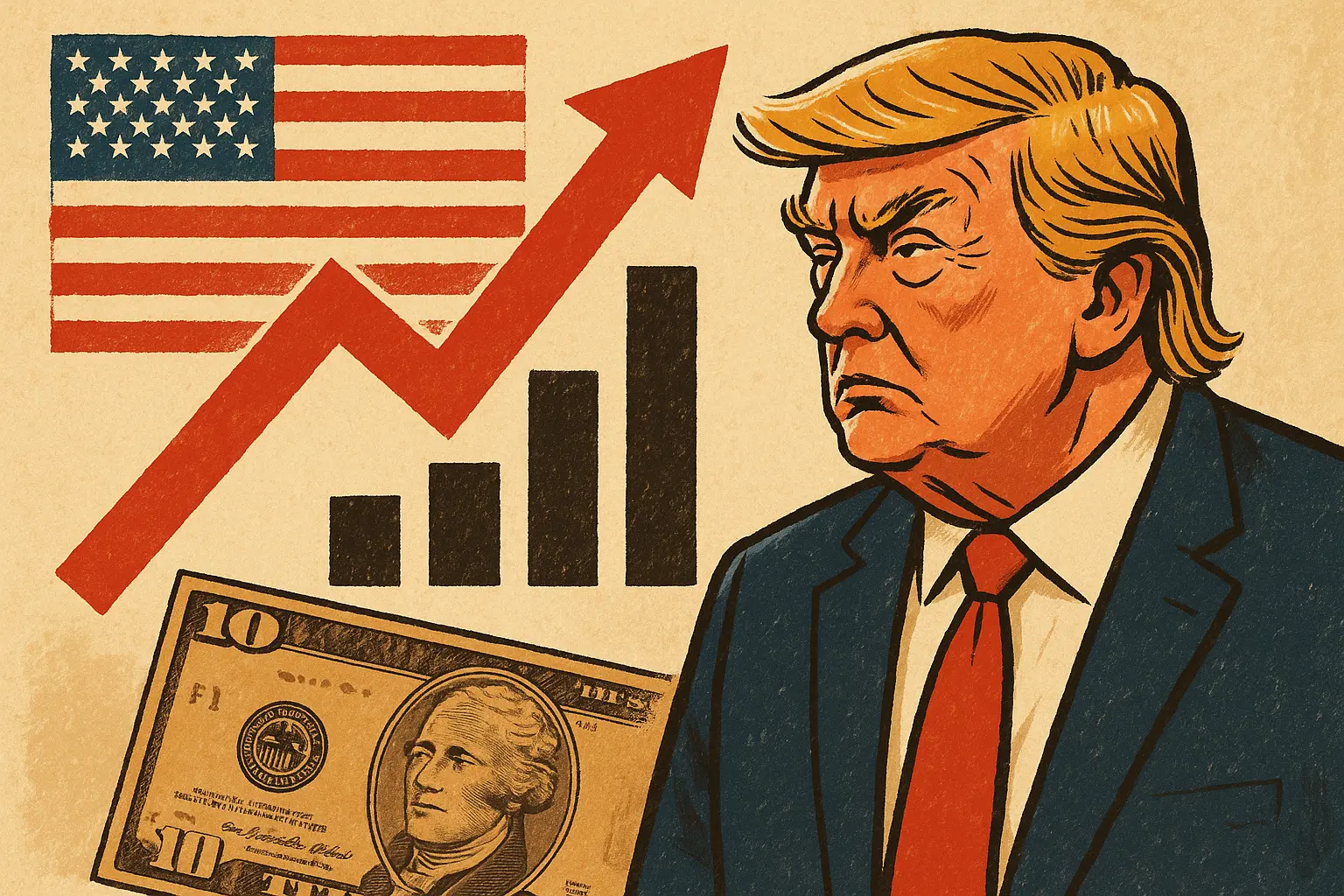
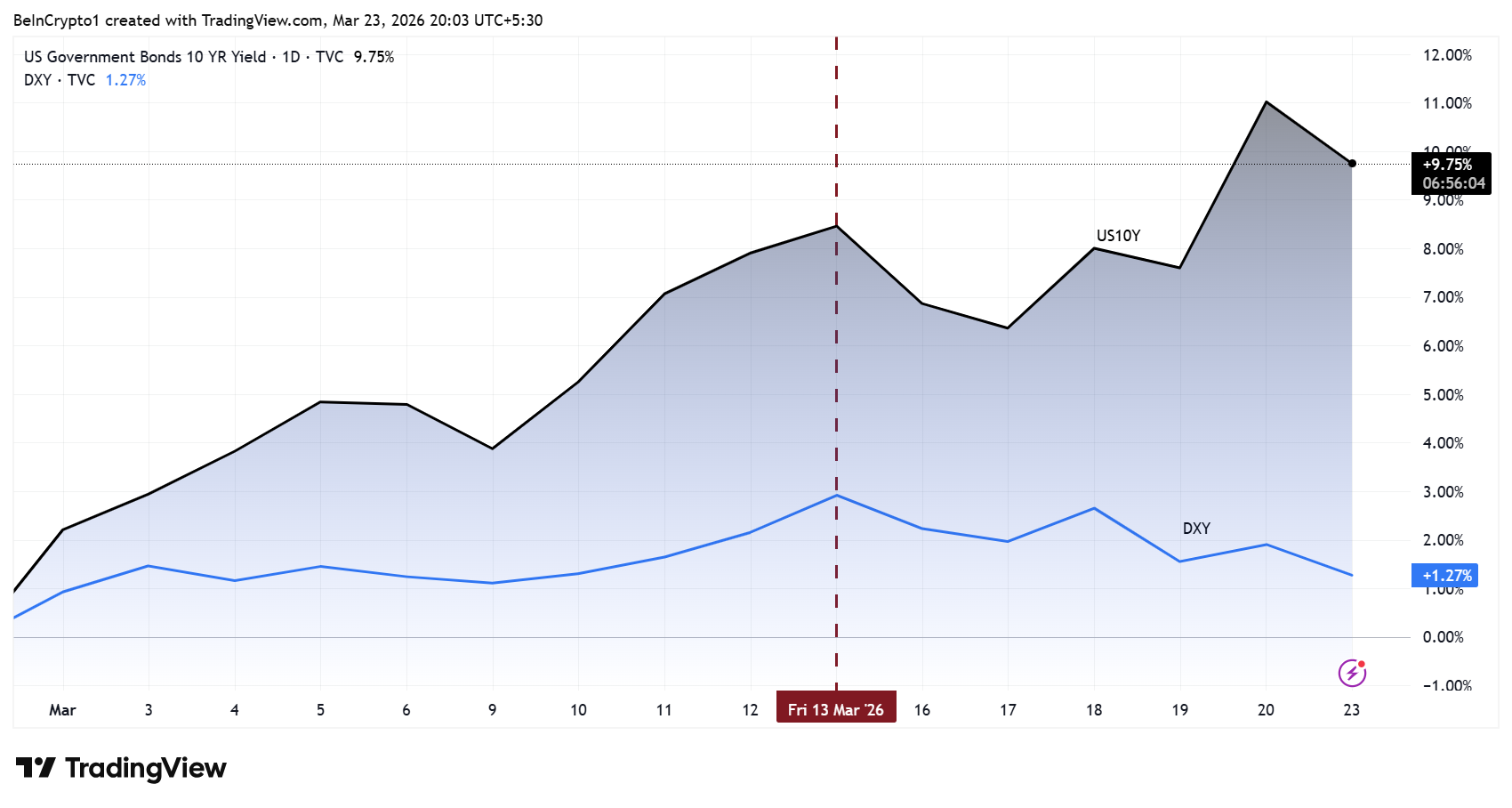
Since the outbreak of the Iran conflict on February 28, the US 10-year Treasury yield has risen approximately 48 basis points, reaching the highest level since last summer. It closed at 4.39% on March 20 and is approaching 4.40% at the start of this week. Analysts’ warnings are becoming increasingly clear: 4.5% is a historical critical threshold that once prompted policy shifts during Trump’s administration, and it is also the primary macro factor constraining Bitcoin and gold.
48 Basis Point Surge: Bond Market Pressure Triggered by Iran War
(Source: TradingView)
This yield increase is directly driven by safe-haven capital flows and rising inflation expectations following the Iran conflict. Rising 10-year Treasury yields mean falling bond prices, reflecting a market re-pricing of borrowing costs. Every basis point increase in yield silently raises the refinancing costs of the enormous US debt stock. While this pressure may not be immediately visible, it will continue to erode fiscal space until reaching a critical point that triggers policy responses.
Kobeissi Letter analysts note: “Oil prices are no longer the biggest threat facing the market. It’s increasingly clear that the bond market will determine how long President Trump can continue exerting pressure during the Iran conflict.”
Historical Precedent at 4.5%: Lessons from April 2025
The current yield trend has heightened market sensitivity because it closely resembles the scenario in April 2025. Back then, after the 10-year Treasury yield surged above 4.5% and broke 4.6%, Trump announced a 90-day suspension of reciprocal tariffs on April 9.
Analyst Adam Kobeissi emphasizes that the bond market pressure structures in both events are similar. The US economy cannot withstand a 10-year yield of 5%. Markets and Mayhem also warn that 4.5% is the threshold that could trigger a tightening of global market liquidity. Former investment banker Simon Dixon directly states: “Trump has no choice but to announce an agreement in the Middle East to lower oil prices and bond yields.”
How Yield Suppresses Bitcoin and Gold: Three Transmission Paths
(Source: TradingView)
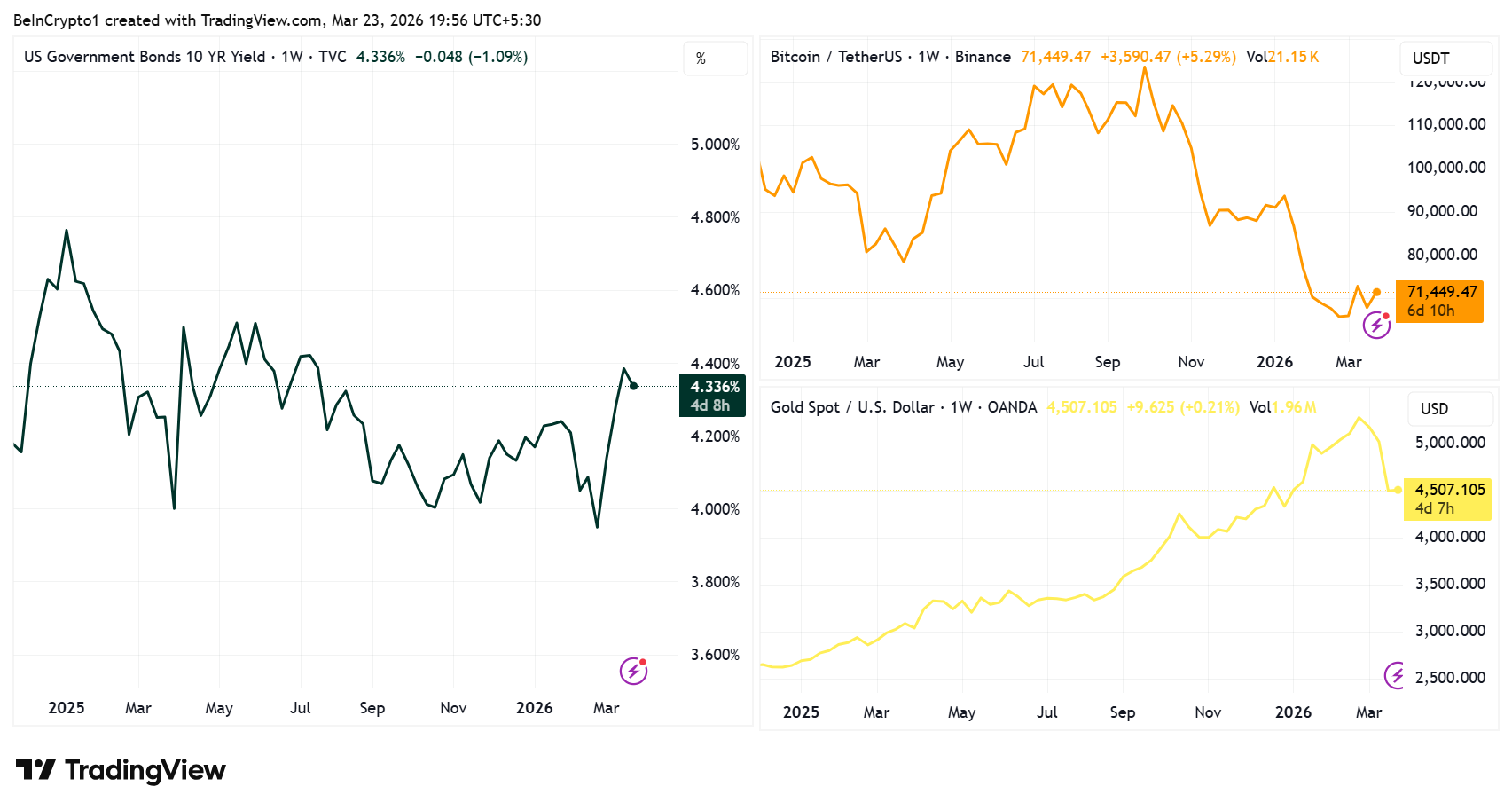
The inverse relationship between the US 10-year Treasury yield and Bitcoin, gold is one of the most stable macro patterns from 2025 to 2026.
Opportunity Cost Increase: With the US 10-year yield at 4.4% and virtually risk-free, holding non-yielding assets like gold or non-dividend-paying Bitcoin increases opportunity costs, prompting capital to flow back into government bonds.
Strong Dollar Effect: Higher yields attract capital inflows into dollar-denominated assets, boosting the US dollar index (DXY). Since gold and Bitcoin are both priced in dollars, a stronger dollar directly reduces their purchasing power in other currencies, raising the cost for global buyers to hold these assets.
Discount Rate Effect: Bitcoin’s valuation partly depends on expectations of widespread future adoption, similar to growth stocks. Rising real yields compress the present value of future cash flows, weakening this narrative’s support.
Notably, the US dollar index (DXY) broke above 100 earlier this month for the first time since late November last year. This movement directly confirms the above transmission logic on a macro level.
Bull and Bear Scenarios: Next Steps for Bitcoin and Gold
The current situation presents a clear binary scenario. If the 10-year yield continues to rise above 4.5%, history suggests it will trigger greater policy easing pressures. Before that, Bitcoin may face deeper declines, with altcoins under more pronounced stress.
Conversely, if diplomatic tensions in the Middle East ease or the Federal Reserve signals dovish policy, a decline in yields could trigger a strong rebound in Bitcoin and gold. Additionally, if geopolitical tensions fully subside, gold’s safe-haven premium may diminish, and funds could rotate into Bitcoin, which has lower market saturation.
FAQs
Why does the US 10-year Treasury yield have such a significant impact on Bitcoin and gold?
The 10-year Treasury yield is the benchmark for global risk-free returns. When yields rise, the opportunity cost of holding non-yielding assets like gold and Bitcoin increases; at the same time, a stronger dollar suppresses global demand for dollar-priced precious metals and cryptocurrencies. This inverse relationship has been highly stable in market data from 2025 to 2026.
Why is 4.5% considered a critical turning point for Trump’s policy shift?
In April 2025, after the 10-year yield broke above 4.5% and continued rising to 4.6%, Trump announced a 90-day suspension of reciprocal tariffs under strong market pressure. Analysts believe this historical precedent establishes a logical link between yield levels and policy responses: once yields reach this level, the US government’s economic tolerance sharply narrows.
What does the continued rise in the US 10-year yield mean for Bitcoin?
Since Bitcoin’s correlation with the S&P 500 is as high as 89%, it faces similar macroeconomic pressures as stocks. If yields continue to exceed 4.5%, the combined pressures of a strengthening dollar and tightening liquidity could cause Bitcoin to break key support levels. Historical patterns show that altcoins tend to be even more impacted under these conditions.
Disclaimer: The information on this page may come from third parties and does not represent the views or opinions of Gate. The content displayed on this page is for reference only and does not constitute any financial, investment, or legal advice. Gate does not guarantee the accuracy or completeness of the information and shall not be liable for any losses arising from the use of this information. Virtual asset investments carry high risks and are subject to significant price volatility. You may lose all of your invested principal. Please fully understand the relevant risks and make prudent decisions based on your own financial situation and risk tolerance. For details, please refer to
Disclaimer.


