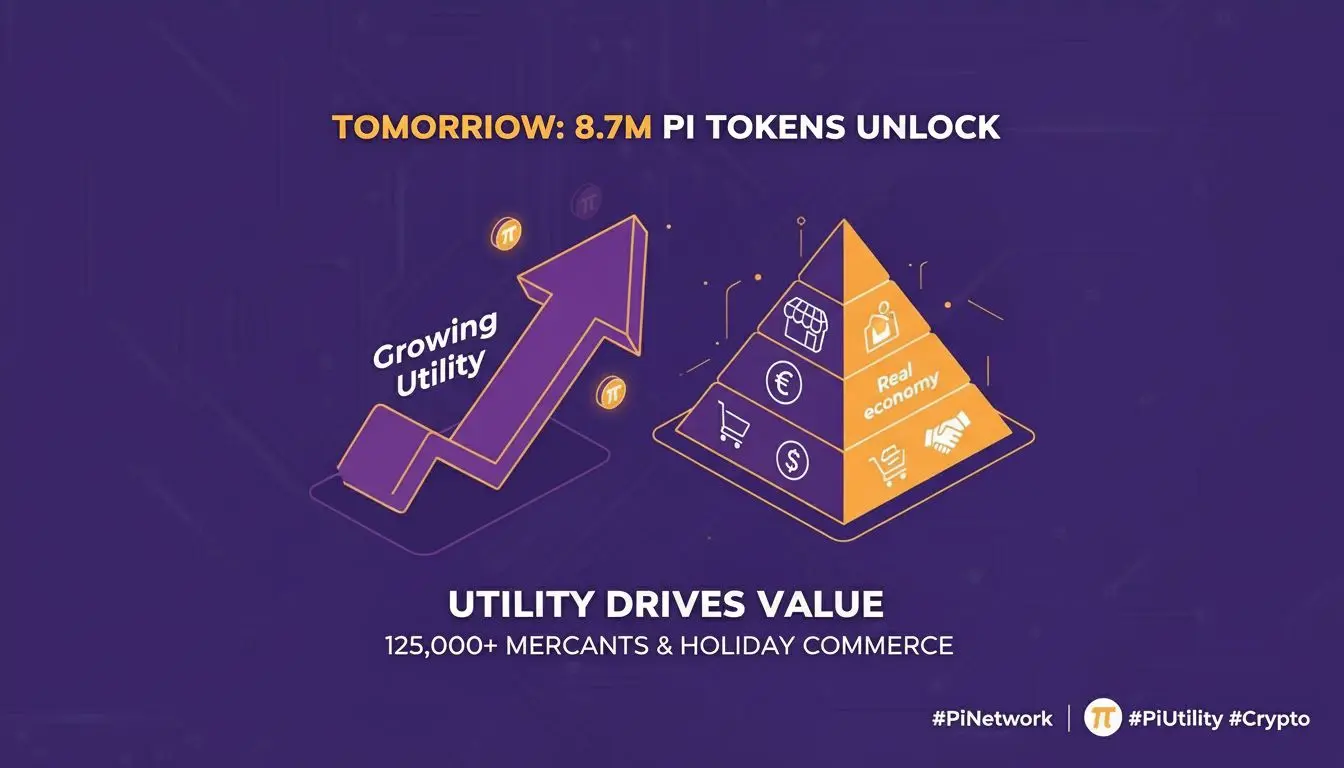
On December 25, 2025, Pi Network unlocked approximately 8.7 million Pi coins, marking a key step in the release process of this network’s supply. The unlock coincided with the peak holiday shopping season across the ecosystem, with over 125,000 merchants accepting PI tokens for goods and services, reflecting the increasing real-world application of Pi tokens in transactions.
Unique Token Unlock Logic in Pi Network’s Closed Economy
The unlocking of 8.7 million Pi tokens by Pi Network has attracted external attention, but it differs significantly from traditional crypto project token unlocks. Pi Network operates within a closed economic environment, not participating in market price discovery or public trading, which limits the direct impact of new supply on broader markets. This design philosophy sharply contrasts with open-market tokens like Bitcoin and Ethereum.
Pi Network has consistently followed a predetermined token release process, tightly linking token unlocks to user participation and development milestones. This unlock is not an arbitrary issuance but aligns with the ongoing growth of the ecosystem, especially closely related to the increase in Pi transaction volume. Since Pi has no official market cap and operates within a closed economic environment, the community is not overly concerned about the impact of additional token supply.
Community members believe that the widespread adoption of Pi in commerce will smoothly absorb these new tokens without causing significant disruptions. This confidence stems from an internal circulation logic: token unlock → merchant acceptance → user spending → value cycle. Unlike traditional crypto projects facing sell pressure on secondary markets, Pi tokens mainly circulate within the internal ecosystem, making this closed nature both an advantage and a limitation.
The advantage lies in avoiding market speculation and extreme price volatility, allowing the ecosystem to focus on developing practical applications. The limitation is the lack of a public market price discovery mechanism, making it difficult for outsiders to assess Pi’s true value. This model is relatively rare in crypto history, and its long-term sustainability remains to be seen.
125,000 Merchants Accept PI: Ecosystem Boom During Holiday Shopping Season
(Source: Pi Network Moderator)
The token unlock coincides with a critical period for expanding holiday commercial activities within Pi Network, with over 125,000 merchants accepting PI tokens for purchasing goods and services. This figure is quite significant—roughly one merchant per 80 Pi users. This seasonal initiative aims to boost Pi’s practical utility in the real world by encouraging spending within the ecosystem.
All pricing and sales are directly managed by merchants, while Pi Network’s role is focused on promoting transparency and coordination, not managing transactions. This decentralized business model grants merchants pricing autonomy but also means that PI token prices may vary across different merchants. During the holiday shopping period, over 215 mainnet applications are online, supporting various services and fostering community interaction.
Three Key Features of Pi Network’s Holiday Shopping Season
Merchant Expansion: 125,000 merchants accepting PI payments across retail, dining, and service industries
Diverse Application Ecosystem: 215 mainnet apps offering comprehensive services from e-commerce to social platforms
Practical Focus: Emphasizing real-world application of Pi tokens rather than speculative trading, creating a sustainable commercial environment
These applications aim to drive ecosystem development by focusing on the practical use of Pi tokens rather than speculation. Pi Network hopes to connect merchants and consumers to create a more sustainable and utility-driven environment. This strategy contrasts with the current speculative atmosphere in crypto markets, opting for a more pragmatic but slower development path.
However, acceptance by 125,000 merchants does not necessarily mean all have significant transaction volumes. In a closed ecosystem, merchants’ motivation to accept PI may include attracting Pi community users, exploring new payment methods, or simply supporting ecosystem growth. Actual transaction scale and frequency of PI payments remain data that outsiders find difficult to verify.
User Experience Revolution Behind Wallet Updates
(Source: Pi Testnet)
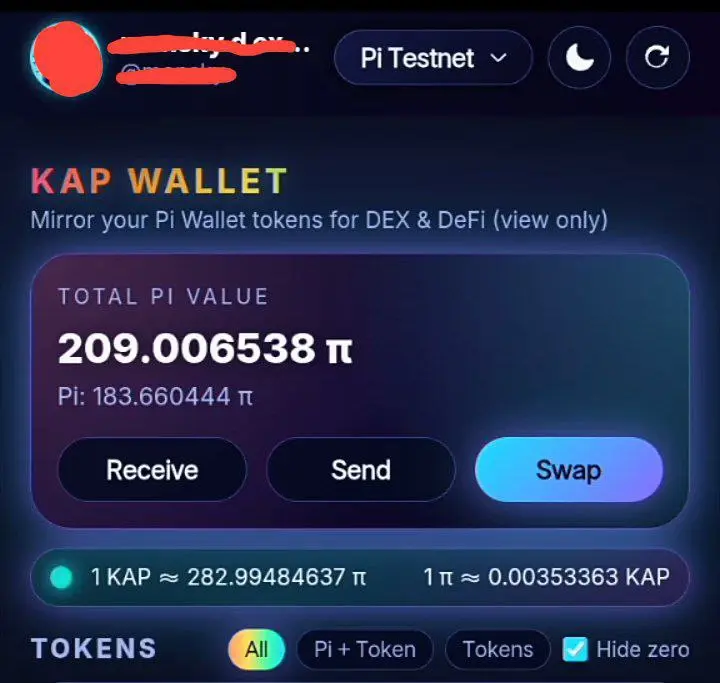
In addition to token unlocks and trading activities, Pi Network has rolled out wallet updates for users and enterprises. This update improves the wallet interface, including a new token display method and enhanced user experience features. Early reports indicate that some merchants and institutions have gained early access to the update, with wider deployment expected soon.
This update is part of Pi’s ongoing efforts to enhance ecosystem functionality and increase user engagement. Community-shared screenshots showcase the new interface and improved usability. Wallet improvements are crucial for attracting more merchants and users, as a smooth payment experience is fundamental to any successful payment system.
Pi Network remains committed to developing practical features, aiming to expand the application scenarios of its tokens and build a more mature ecosystem. As the network continues to evolve, features like wallet updates mark ongoing improvements and prepare for broader integration. This incremental upgrade strategy indicates Pi Network is preparing for the possible mainnet launch in the future.
Opportunities and Challenges of a Closed Ecosystem
Pi Network’s approach to supply management, expanding merchant participation, and improving wallet functionality reflects its firm commitment to development. However, before the network officially confirms market integration or reaches mainnet milestones, Pi tokens remain confined within their own ecosystem, emphasizing application over market valuation. This closed ecosystem model is both a unique advantage and the biggest challenge for Pi.
The advantage lies in focusing on developing practical application scenarios and avoiding market speculation interference. The acceptance of PI by 125,000 merchants and the launch of 215 applications demonstrate Pi’s effort to establish a relatively complete internal economic cycle. The challenge is the lack of public market validation, making it difficult for outsiders to assess the true health of the Pi ecosystem.
Disclaimer: The information on this page may come from third parties and does not represent the views or opinions of Gate. The content displayed on this page is for reference only and does not constitute any financial, investment, or legal advice. Gate does not guarantee the accuracy or completeness of the information and shall not be liable for any losses arising from the use of this information. Virtual asset investments carry high risks and are subject to significant price volatility. You may lose all of your invested principal. Please fully understand the relevant risks and make prudent decisions based on your own financial situation and risk tolerance. For details, please refer to
Disclaimer.
Related Articles
Pi Network’s PI Token Dumps 13% Weekly as Team Announces Crucial Deadline Ahead
The Core Team behind the controversial blockchain project has outlined the deadline for the completion of the next major upgrade, which should take place in the next week or so.
However, the protocol’s native token continues to bleed, dropping over 3% in the past day and dumping by double-digits we
CryptoPotato4h ago
Pi Network launches a developer-only RPC server to speed up smart contract testing
Pi Network launches new RPC servers, providing standardized tools for developers, supporting smart contract testing and simulation, and improving development security and efficiency. This marks its transition toward practical functionality, which may attract more developers and help advance the ecosystem, even though it still faces some challenges.
GateNews8h ago
Pi Network testnet RPC server is ready, and the smart contract ecosystem deployment is underway
Pi Network successfully deployed a testnet RPC server on April 1, marking an important step forward in smart contract simulation and testing. The upcoming v21 release will officially enable smart contracts, allowing developers to validate logic in a sandbox environment and support applications such as NFTs, managed services, and subscription systems. However, despite technological progress, PI Coin’s market performance is still facing setbacks, and future token unlocks may further intensify sell pressure.
MarketWhisper8h ago
Major Pi Network Announcement for Developers, Users, Investors: Details
Despite the growing criticism online, the Pi Network Core Team continues to introduce new features that are aimed at enhancing its overall performance and providing new features and capabilities for users.
The latest announcement, made just hours ago, was regarding a crucial step taken to
CryptoPotato8h ago
Pi Network Launches RPC Server on Testnet for Developers
Pi Network has introduced a new RPC server on its Testnet. This marks a key step in its technical growth. The update allows developers to interact directly with the network in a simple and structured way. With this launch, developers can now test, simulate and prepare smart contracts before they
Coinfomania9h ago
Pi Network mainnet expansion is imminent, cross-chain bridge integrates KYB and smart contracts
Pi Network is developing a cross-chain bridge to connect its blockchain with other major networks, and to conduct smart contract testing and security audits. Its core features include using KYB identity verification to ensure compliance, and allowing businesses to enter the ecosystem. This series of measures is intended to improve the system’s transaction efficiency and security, and to expand the use cases for the PI token.
MarketWhisper12h ago


