
The Pi Network core team announced on April 1 that the testnet has successfully deployed a Remote Procedure Call (RPC) server. Pi Network’s official statement describes this as “an important step toward smart contract simulation, testing, and deployment.” This marks the latest progress in a recent series of technical updates: the protocol version has been upgraded to v20.2, and the upcoming v21 version is expected to officially lay the foundation for smart contract functionality.
RPC Server Launch: A Critical Infrastructure for Smart Contract Deployment
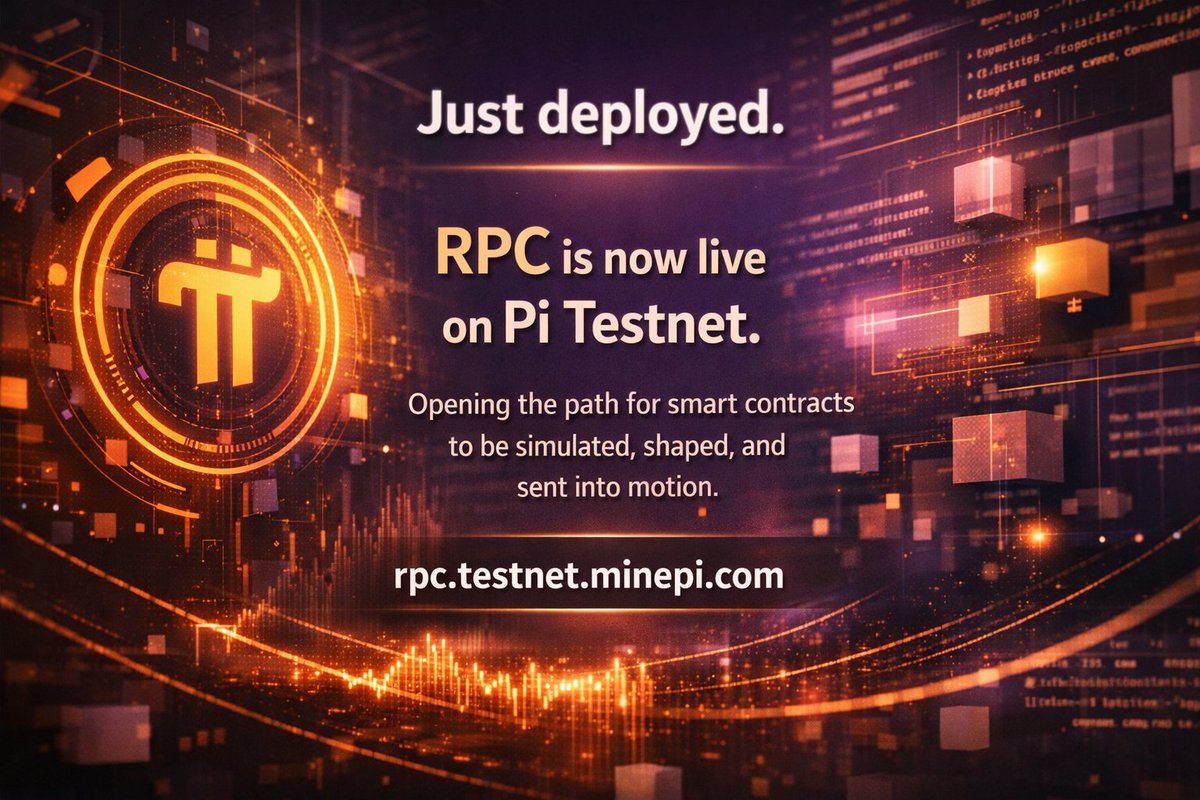
In the blockchain ecosystem, the role of an RPC server is akin to a bridge between the network and the outside world: decentralized applications (dApps), digital wallets, and developer tools all need to query blockchain data (such as token balances and transaction records) or submit new transactions through the RPC server. The server then converts these requests into a format that nodes can understand before executing them.
The successful deployment of the Pi Network testnet RPC server means that developers can now simulate and test smart contract behaviors in a sandbox environment, thoroughly verifying logic before the mainnet officially supports it—significantly reducing the risk of launch. This is a necessary prerequisite for integrating smart contracts into Pi Network’s technical roadmap, not an optional feature.
Protocol Upgrade Roadmap: v21 Will Initiate Pi’s Era of Smart Contracts
Since the series of announcements around Pi Day on March 14, Pi Network’s protocol version has undergone three rapid iterations: v19.6 (February) → v19.9 (March) → v20.2 (current). The upcoming v21 version has been described by the Core Team as a “transformative” upgrade, with the primary goal of officially enabling smart contracts. After the feature integration, three main application scenarios are expected to be unlocked:
NFT-related applications: minting, trading, and automatic royalty distribution mechanisms for digital assets
Custody services: fund custody based on smart contracts, eliminating the need for third-party intermediaries
Subscription systems: automated recurring payments and service authorization management
The progress of the mainnet’s second migration remains a hot topic within the community. Although thousands of successful migrations have been recorded, some community members believe the migration process still needs optimization, and opinions vary on how to accept and view this progress.
PI Token Price Dilemma: A Clear Disparity Between Technical Progress and Market Performance
Despite reaching technical milestones, the market performance of PI tokens has not shown a corresponding upward trend. Since mid-March, when Kraken listed the token and pushed its price toward $0.30, PI has faced strong resistance and has traded sideways. During a 24-hour period when most mid-cap altcoins saw significant gains, PI’s increase was less than 1%, far below $0.18.
The upcoming token unlock schedule is one of the most critical short-term market risk factors: over the next few weeks, several unlock dates will release more than 10 million PI in a single day, potentially increasing selling pressure. On the more optimistic side, some of the remaining unlock dates in April are expected to see daily releases drop below 5 million PI. If market absorption remains strong, short-term selling pressure may gradually ease.
Frequently Asked Questions
What does the launch of the Pi Network testnet RPC server mean?
An RPC server is a necessary infrastructure for the deployment of Pi Network’s smart contract features, allowing developers to fully test and verify logic in a test environment before mainnet deployment. It also helps identify potential vulnerabilities. This milestone signifies a key step toward a complete dApp ecosystem for Pi Network, with commercial scenarios such as NFT applications, custody services, and subscription systems gradually becoming feasible.
What does the v21 protocol upgrade mean for PI holders?
The v21 upgrade is expected to officially enable smart contract functionality, transforming Pi Network from a simple token network into a general-purpose blockchain platform capable of supporting decentralized applications. In the long term, a richer ecosystem of applications could expand real-world demand for PI; however, the immediate impact of the upgrade on market prices remains uncertain. In the short term, it will still be constrained by token unlock pressures and overall market sentiment.
How will upcoming token unlocks affect PI’s price in the coming weeks?
Over the next few weeks, several days will see daily unlock volumes exceeding 10 million PI, which could serve as short-term selling pressure. If holders tend to sell immediately after unlocks, it may create additional resistance below $0.18. Investors should closely monitor the specific unlock schedule and observe whether trading volume changes indicate meaningful accumulation with support potential.
Disclaimer: The information on this page may come from third parties and does not represent the views or opinions of Gate. The content displayed on this page is for reference only and does not constitute any financial, investment, or legal advice. Gate does not guarantee the accuracy or completeness of the information and shall not be liable for any losses arising from the use of this information. Virtual asset investments carry high risks and are subject to significant price volatility. You may lose all of your invested principal. Please fully understand the relevant risks and make prudent decisions based on your own financial situation and risk tolerance. For details, please refer to
Disclaimer.


