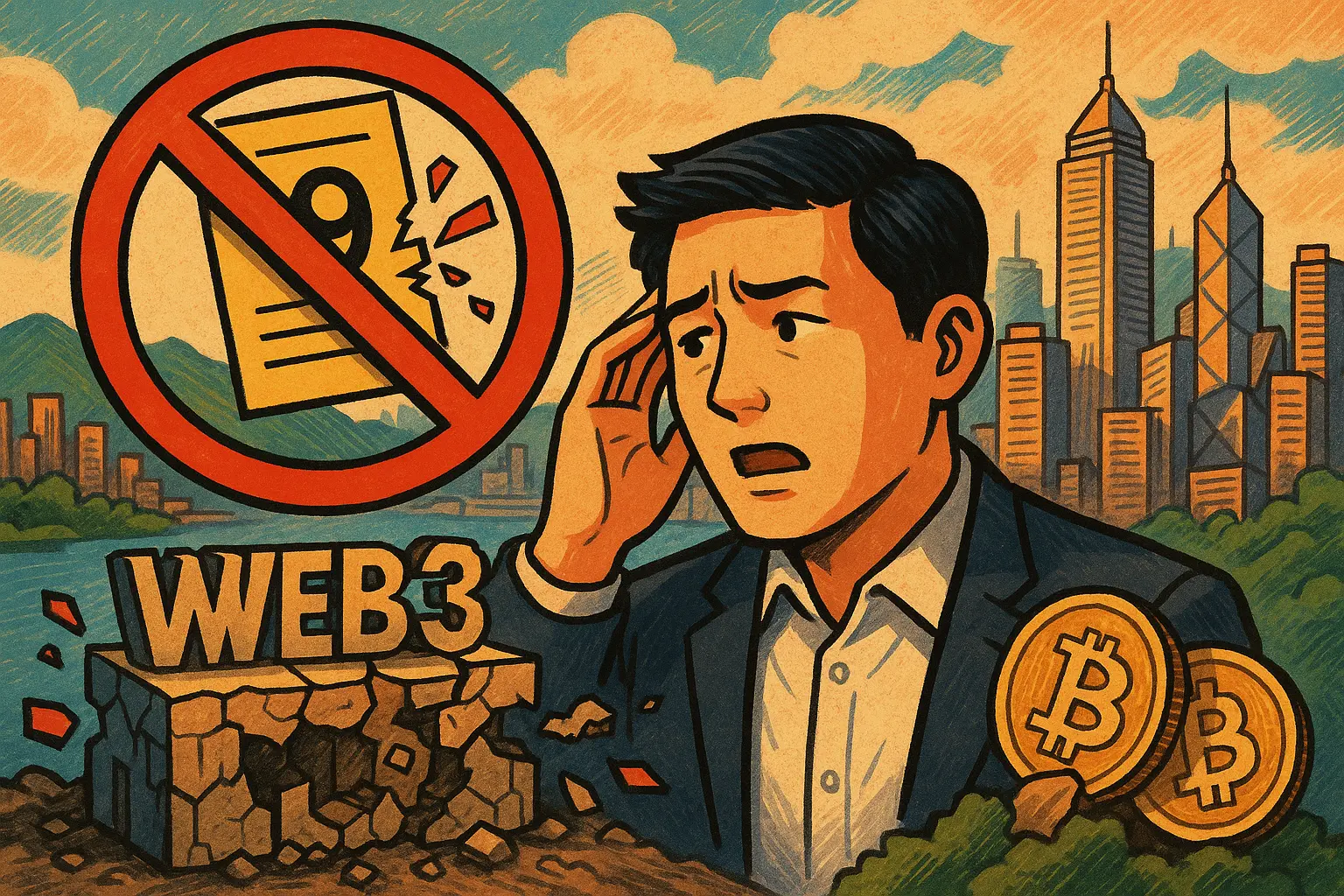
Hong Kong Securities and Futures Professionals Association (HKSFPA) opposes the regulatory proposal to remove the Class 9 license exemption threshold, stating that even allocating only 1% in BTC would require a full virtual asset license, leading to disproportionate compliance costs. It criticizes the mandatory licensed custodian restriction on Web3 venture capital funds, calling for allowance of self-custody and offshore custody arrangements.
Hong Kong proposes abolishing exemption threshold; 1% allocation still requires full license
Hong Kong Securities and Futures Professionals Association (HKSFPA) publicly opposes the regulator’s proposal to eliminate the virtual asset investment “exemption threshold” for Class 9 asset management firms, pointing out that this measure would force funds with only 1% Bitcoin allocation to apply for a full virtual asset management license, resulting in disproportionate compliance costs and potentially discouraging traditional asset managers from exploring crypto assets.
HKSFPA explicitly states in its response: “We do not agree with removing the minimum threshold. The proposal abolishes the current ‘total asset value 10%’ threshold applicable to Class 9 asset managers. This means that even traditional equity portfolio managers who allocate 1% of their assets to Bitcoin for diversification would need to obtain a full virtual asset management license.”
This “all-or-nothing” approach is unreasonable. It would hinder traditional asset managers from exploring Bitcoin as an asset class and runs counter to the government’s goal of integrating Web3 with traditional finance. It imposes heavy compliance burdens for negligible risk exposure. HKSFPA strongly recommends restoring the minimum exemption, such as allowing companies holding a Class 9 license with virtual assets below a certain threshold (e.g., 10% of total assets) to be exempt from full virtual asset management licensing, perhaps only requiring notification.
Practically, a traditional fund managing HKD 1 billion that allocates 1% (HKD 10 million) to Bitcoin as a hedge or diversification would need to apply for a new virtual asset management license. The application process is complex, requiring detailed business plans, proof of team expertise in crypto assets, establishment of risk control systems, and payment of high compliance costs. For a fund with only 1% exposure, these costs are entirely disproportionate.
Three major negative impacts of removing exemption threshold
Hindering gradual adoption: Traditional institutions cannot test the waters with small amounts, being blocked at the outset
Disproportionate costs: 1% allocation incurs 100% licensing compliance costs
Contradicting integration goals: Conflicts with Hong Kong’s strategy to develop Web3 financial hub
The problem with this regulatory logic is the “one-size-fits-all” approach. It does not differentiate risk levels, treating small 1% allocations the same as 100% pure crypto funds. Risk-based regulation should be: the higher the risk, the stricter the regulation; the lower the risk, the more lenient. Removing the exemption threshold violates this fundamental principle.
Mandatory licensed custody may stifle Web3 venture capital funds
Additionally, the association criticizes the proposed requirement that assets be held only through licensed custodians, or restrictions on Web3 VC fund operations, and calls for flexible arrangements such as self-custody and offshore custody. HKSFPA states: “We strongly advocate maintaining flexibility in private fund custody arrangements. Forcing all virtual asset funds to use regulated custodians is impractical.”
There are two reasons. First, asset support issues: licensed custodians typically support only a limited number of large-cap tokens. Private equity and VC funds investing in early tokens not yet supported by local custodians would be restricted. Strict rules could effectively prohibit local managers from operating Web3 VC funds. Second, risk diversification: institutional investors usually require diversified custody arrangements (including offshore qualified custodians) to reduce counterparty risk.
HKSFPA supports the regulator’s consideration of allowing private equity/VC funds (within certain limits) to self-custody, and permitting private funds serving professional investors to use qualified offshore custodians (e.g., regulated in the US, Japan, or Singapore). Such flexibility is crucial for Web3 VC funds.
Since early project tokens are often the investment targets of Web3 VC funds, and these tokens may not yet be listed on mainstream exchanges or supported by licensed Hong Kong custodians, mandatory use of local custody would make it impossible for these funds to invest in their target assets, effectively banning Web3 VC activities. This directly conflicts with Hong Kong’s goal of becoming a Web3 innovation hub.
From an international perspective, competitors like Singapore and Dubai have adopted more flexible custody policies. If Hong Kong insists on overly strict requirements, Web3 VC funds may choose to register in jurisdictions with more friendly regulation, causing Hong Kong to miss out on this high-growth sector.
Transition arrangements and fee concerns
HKSFPA expresses concern over the lack of “deferred arrangements” (grace periods). The proposal suggests existing managers must obtain licenses before the effective date, or cease operations. Given the complexity of the application process and potential approval bottlenecks at the SFC, a “hard start” could cause significant business continuity risks. Legitimate firms might be forced to suspend operations during the approval period.
HKSFPA urges the government to implement a 6 to 12-month grace period for existing practitioners who submit applications before the effective date. Such transitional arrangements are common in regulatory reforms, ensuring new rules are implemented smoothly without unnecessary market disruption. A hard start could lead many existing operators to cease or relocate, weakening Hong Kong’s market.
Regarding costs, HKSFPA states that fees should be commensurate with those under the Securities and Futures Ordinance for Class 4 and Class 9 regulated activities. The association opposes any “premium” on virtual asset licenses, as compliance costs (e.g., blockchain analysis tools, professional audits) for these firms are already much higher than traditional companies. Additional licensing fees would further raise barriers to entry.
Overall, HKSFPA’s response reflects deep concern within Hong Kong’s crypto industry about overregulation. While appropriate regulation helps protect investors and market stability, overly strict rules could have the opposite effect, pushing innovation and capital to other markets. To truly establish Hong Kong as a Web3 financial center, a more nuanced balance between investor protection and industry development is essential.
Tuyên bố miễn trừ trách nhiệm: Thông tin trên trang này có thể đến từ bên thứ ba và không đại diện cho quan điểm hoặc ý kiến của Gate. Nội dung hiển thị trên trang này chỉ mang tính chất tham khảo và không cấu thành bất kỳ lời khuyên tài chính, đầu tư hoặc pháp lý nào. Gate không đảm bảo tính chính xác hoặc đầy đủ của thông tin và sẽ không chịu trách nhiệm cho bất kỳ tổn thất nào phát sinh từ việc sử dụng thông tin này. Đầu tư vào tài sản ảo tiềm ẩn rủi ro cao và chịu biến động giá đáng kể. Bạn có thể mất toàn bộ vốn đầu tư. Vui lòng hiểu rõ các rủi ro liên quan và đưa ra quyết định thận trọng dựa trên tình hình tài chính và khả năng chấp nhận rủi ro của riêng bạn. Để biết thêm chi tiết, vui lòng tham khảo
Tuyên bố miễn trừ trách nhiệm.
Bài viết liên quan
BTC giảm xuống dưới 66000 USDT
Tin nhắn từ bot Gate News, hiển thị diễn biến thị trường Gate: BTC giảm xuống dưới 66.000 USDT, giá hiện tại là 65.996,5 USDT.
CryptoRadar28phút trước
Giá Bitcoin tăng vọt lên 74.000 USD, nhưng các nhà đầu tư đã bắt đầu chú ý đến đồng altcoin mới GCoin trong tuần này.
Giá Bitcoin đã tăng vọt lên trên 74,400 USD hôm nay, đánh dấu mức cao nhất trong nhiều tuần và khơi dậy sự lạc quan trên toàn thị trường tiền điện tử, như được chứng minh bởi sự tăng giá của các đồng altcoin.
Cuộc tăng giá này diễn ra giữa áp lực mua mới, một làn sóng cầu từ các tổ chức, và một lần mua khổng lồ khác của Michael.
CryptoPotato34phút trước
Biến động Bitcoin lại gia tăng — Các nhà đầu tư đang chuyển sang Everlight Shards để nhận phần thưởng BTC thụ động
Bitcoin đã mở đầu năm 2026 với một khoảng thời gian tương đối yên tĩnh — và sau đó thị trường đã nhớ lại điều mà nó làm tốt nhất. Những căng thẳng địa chính trị, một thị trường phái sinh hoạt động với độ đòn bẩy cao, và một môi trường vĩ mô vẫn đang tiêu hóa những kỳ vọng thay đổi về lãi suất đã kết hợp để đẩy Bitcoin’s
CryptoPotato42phút trước
BTC & ETH Bước Vào Một Kỷ Nguyên Mới? Các Nhà Phân Tích Nói Rằng Là Có — Nền Tảng Này Đã Đang Trả Thưởng BTC Thật Sự
Grayscale gọi đó là “rạng đông của kỷ nguyên thể chế.”
Bitwise dự đoán Bitcoin sẽ phá vỡ chu kỳ bốn năm và thiết lập mức cao nhất mọi thời đại mới.
Bitcoin Suisse đã công bố một kịch bản trong đó Bitcoin tiến gần đến 180,000 đô la và Ethereum đạt 8,000 đô la nhờ vào việc cắt giảm lãi suất của Fed và sự gia tăng đầu tư từ các tổ chức.
CryptoPotato50phút trước
BTC 15 phút giảm 0.61%: Dòng tiền ròng từ sàn giao dịch và dòng tiền ra từ ETF cộng hưởng gây áp lực bán ngắn hạn.
2026-03-29 22:00 đến 22:15 (UTC), giá BTC giảm 0.61% trong 15 phút, khoảng giá từ 66230.0 đến 66716.0 USDT, biên độ 0.73%. Trong khoảng thời gian này, thị trường biến động mạnh, sự chú ý tăng đáng kể, dòng tiền và giá đều đi xuống.
Động lực chính của sự biến động lần này là dòng tiền lớn trên chuỗi vào sàn giao dịch và dòng vốn ETF liên tục ra khỏi. Từ 22:00 đến 22:15, khối lượng giao dịch BTC/USDT trên các sàn giao dịch chính tăng khoảng 30% so với 15 phút trước, dòng tiền ròng trên chuỗi đạt 8,420.
GateNews52phút trước


