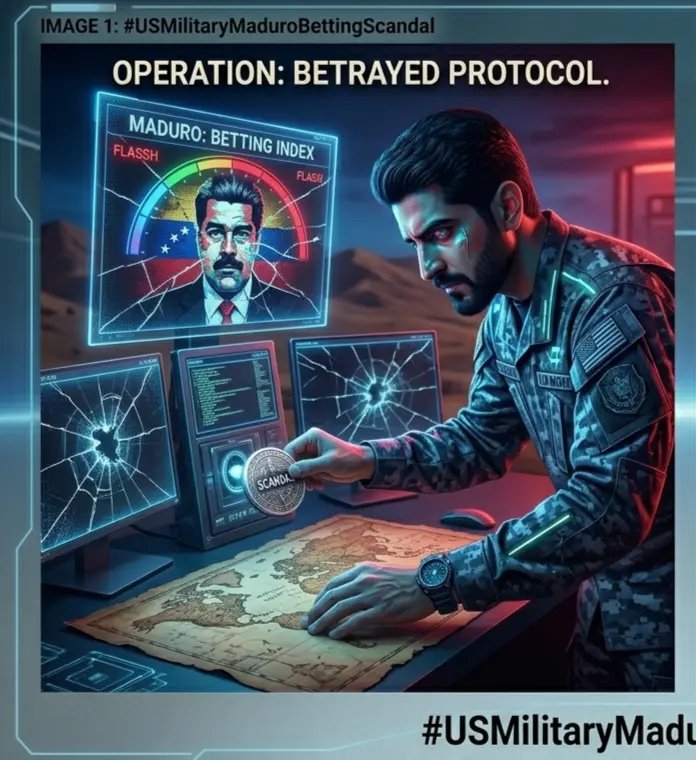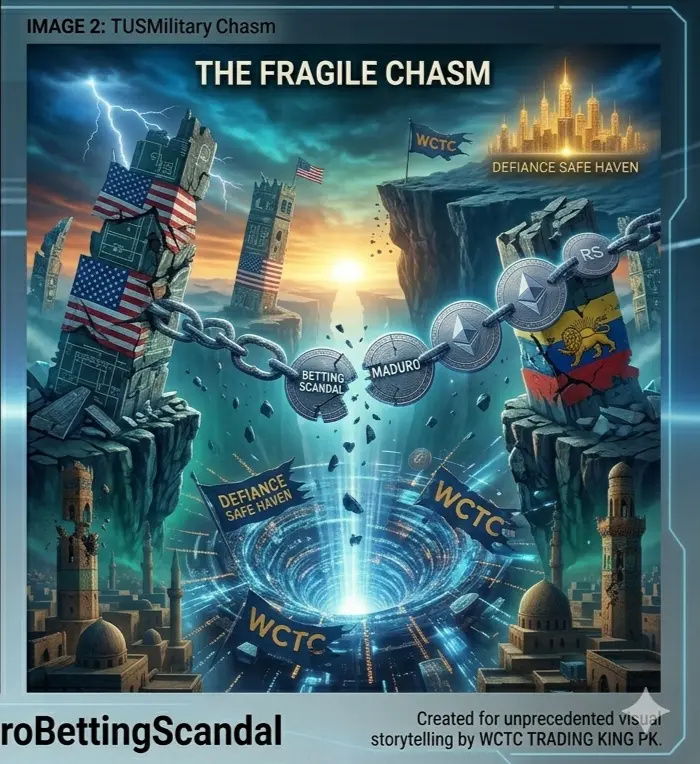



#USMilitaryMaduroBettingScandal
The US Military–Maduro betting scandal has rapidly evolved into one of the most complex and controversial cases at the intersection of national security, prediction markets, and modern financial technology. What initially appeared to be an isolated insider trading incident has now expanded into a broader investigation involving classified intelligence handling, geopolitical operations in Venezuela, and the growing risks of real-world betting markets tied to political events.
At the center of the case is allegations that a U.S. Army Special Forces soldier used privileged operational knowledge related to a covert mission involving Venezuela’s political leadership to place strategic wagers on prediction markets. These markets, which allow participants to bet on outcomes of real-world events, became the financial mechanism through which the alleged insider information was monetized. The core issue is not just the betting activity itself, but the timing and specificity of the trades, which reportedly aligned closely with non-public military planning.
According to investigation details, the soldier allegedly accessed sensitive operational information during active deployment planning phases. This information included timing estimates, mission objectives, and potential outcomes related to a covert operation involving Venezuelan President Nicolás Maduro. The concern raised by prosecutors is that this information was not publicly available and could only have been obtained through direct involvement in classified military channels.
What makes this case particularly significant is the scale of the financial activity. Reports suggest that relatively small initial positions placed on prediction platforms were later amplified into substantial gains once the geopolitical outcome aligned with the expected scenario. This raised immediate red flags among financial monitoring systems and compliance watchdogs, triggering a deeper investigation into the source of informational advantage used in the trades.
Prediction markets, which have gained popularity in recent years as tools for forecasting political and economic outcomes, are designed to reflect collective public expectations. However, this case exposes a critical vulnerability: when participants possess non-public or classified information, the integrity of the entire system can be compromised. Unlike traditional financial markets, prediction markets often operate with fewer institutional safeguards, making them more exposed to informational asymmetry.
From a legal standpoint, the case introduces multiple layers of complexity. Authorities are reportedly pursuing charges related to wire fraud, misuse of government information, and violations of financial trading laws. The central legal argument is that classified intelligence cannot be converted into financial gain under any circumstances, particularly when it involves national security operations. This positions the case not only as a financial crime but also as a direct breach of military protocol and intelligence security standards.
Beyond the individual allegations, the scandal has triggered broader concerns within defense and intelligence communities. One major issue is the increasing overlap between digital financial systems and geopolitical events. In the past, insider trading cases were typically confined to corporate earnings or economic data leaks. However, this case demonstrates that modern prediction markets now extend into areas involving military operations, regime stability, and international conflict scenarios.
Another emerging concern is the speed at which information can be monetized. In traditional markets, regulatory delays and reporting structures often limit immediate exploitation of insider knowledge. In contrast, prediction markets operate in near real time, allowing participants to act instantly on perceived future events. This creates a compressed risk window where classified information can be turned into financial positions within minutes or hours.
The geopolitical dimension of the case adds further complexity. Venezuela has long been a focal point of tension involving the United States, regional allies, and global energy interests. Any covert operations or political interventions in the region carry significant international implications. The alleged connection between military planning and betting activity therefore raises sensitive questions about operational security and the potential exposure of strategic intentions.
Within the military establishment, the scandal has reportedly triggered internal reviews of intelligence access protocols. One key focus is how personnel with operational knowledge are monitored when it comes to external financial activity. While service members are already restricted from certain financial behaviors, the rise of decentralized prediction markets has created new enforcement challenges that existing regulations were not designed to address.
At the market level, prediction platforms are also under scrutiny. While they position themselves as neutral forecasting tools, this case highlights the difficulty of distinguishing between informed analysis and privileged intelligence. If insider-driven activity becomes more common, it could undermine confidence in these platforms as reliable indicators of public sentiment or probabilistic forecasting tools.
Another important aspect is the technological evolution behind these systems. Blockchain-based prediction markets are often decentralized, meaning transactions are pseudonymous and globally accessible. This structure makes enforcement more difficult, especially when cross-border jurisdictions and classified information are involved. Regulators now face the challenge of adapting oversight frameworks to systems that were originally designed to operate outside traditional financial regulation.
The broader financial community is also reacting to the implications of this case. Institutional analysts are increasingly questioning whether prediction markets should be treated more like financial derivatives or more like informational ecosystems. If they are considered financial instruments, stricter insider trading laws may apply. If they are considered informational tools, regulatory boundaries become less clear.
From a risk perspective, this scandal highlights a growing convergence between geopolitics, military operations, and digital finance. The ability to monetize real-world outcomes in real time creates powerful incentives, but also introduces systemic risks if those outcomes are influenced by privileged or restricted knowledge. This is especially relevant in an era where information spreads rapidly and financial systems are increasingly interconnected.
As investigations continue, the key questions remain unresolved. How much of the trading activity was directly tied to classified knowledge? Whether additional individuals were involved or aware of the activity? And whether current military and financial regulations are sufficient to prevent similar incidents in the future?
Ultimately, the US Military–Maduro betting scandal is more than a legal case. It represents a structural warning about the evolving relationship between intelligence operations and decentralized financial systems. As prediction markets grow in scale and influence, the line between forecasting and insider advantage becomes increasingly difficult to define, creating new challenges for both regulators and national security institutions.
The US Military–Maduro betting scandal has rapidly evolved into one of the most complex and controversial cases at the intersection of national security, prediction markets, and modern financial technology. What initially appeared to be an isolated insider trading incident has now expanded into a broader investigation involving classified intelligence handling, geopolitical operations in Venezuela, and the growing risks of real-world betting markets tied to political events.
At the center of the case is allegations that a U.S. Army Special Forces soldier used privileged operational knowledge related to a covert mission involving Venezuela’s political leadership to place strategic wagers on prediction markets. These markets, which allow participants to bet on outcomes of real-world events, became the financial mechanism through which the alleged insider information was monetized. The core issue is not just the betting activity itself, but the timing and specificity of the trades, which reportedly aligned closely with non-public military planning.
According to investigation details, the soldier allegedly accessed sensitive operational information during active deployment planning phases. This information included timing estimates, mission objectives, and potential outcomes related to a covert operation involving Venezuelan President Nicolás Maduro. The concern raised by prosecutors is that this information was not publicly available and could only have been obtained through direct involvement in classified military channels.
What makes this case particularly significant is the scale of the financial activity. Reports suggest that relatively small initial positions placed on prediction platforms were later amplified into substantial gains once the geopolitical outcome aligned with the expected scenario. This raised immediate red flags among financial monitoring systems and compliance watchdogs, triggering a deeper investigation into the source of informational advantage used in the trades.
Prediction markets, which have gained popularity in recent years as tools for forecasting political and economic outcomes, are designed to reflect collective public expectations. However, this case exposes a critical vulnerability: when participants possess non-public or classified information, the integrity of the entire system can be compromised. Unlike traditional financial markets, prediction markets often operate with fewer institutional safeguards, making them more exposed to informational asymmetry.
From a legal standpoint, the case introduces multiple layers of complexity. Authorities are reportedly pursuing charges related to wire fraud, misuse of government information, and violations of financial trading laws. The central legal argument is that classified intelligence cannot be converted into financial gain under any circumstances, particularly when it involves national security operations. This positions the case not only as a financial crime but also as a direct breach of military protocol and intelligence security standards.
Beyond the individual allegations, the scandal has triggered broader concerns within defense and intelligence communities. One major issue is the increasing overlap between digital financial systems and geopolitical events. In the past, insider trading cases were typically confined to corporate earnings or economic data leaks. However, this case demonstrates that modern prediction markets now extend into areas involving military operations, regime stability, and international conflict scenarios.
Another emerging concern is the speed at which information can be monetized. In traditional markets, regulatory delays and reporting structures often limit immediate exploitation of insider knowledge. In contrast, prediction markets operate in near real time, allowing participants to act instantly on perceived future events. This creates a compressed risk window where classified information can be turned into financial positions within minutes or hours.
The geopolitical dimension of the case adds further complexity. Venezuela has long been a focal point of tension involving the United States, regional allies, and global energy interests. Any covert operations or political interventions in the region carry significant international implications. The alleged connection between military planning and betting activity therefore raises sensitive questions about operational security and the potential exposure of strategic intentions.
Within the military establishment, the scandal has reportedly triggered internal reviews of intelligence access protocols. One key focus is how personnel with operational knowledge are monitored when it comes to external financial activity. While service members are already restricted from certain financial behaviors, the rise of decentralized prediction markets has created new enforcement challenges that existing regulations were not designed to address.
At the market level, prediction platforms are also under scrutiny. While they position themselves as neutral forecasting tools, this case highlights the difficulty of distinguishing between informed analysis and privileged intelligence. If insider-driven activity becomes more common, it could undermine confidence in these platforms as reliable indicators of public sentiment or probabilistic forecasting tools.
Another important aspect is the technological evolution behind these systems. Blockchain-based prediction markets are often decentralized, meaning transactions are pseudonymous and globally accessible. This structure makes enforcement more difficult, especially when cross-border jurisdictions and classified information are involved. Regulators now face the challenge of adapting oversight frameworks to systems that were originally designed to operate outside traditional financial regulation.
The broader financial community is also reacting to the implications of this case. Institutional analysts are increasingly questioning whether prediction markets should be treated more like financial derivatives or more like informational ecosystems. If they are considered financial instruments, stricter insider trading laws may apply. If they are considered informational tools, regulatory boundaries become less clear.
From a risk perspective, this scandal highlights a growing convergence between geopolitics, military operations, and digital finance. The ability to monetize real-world outcomes in real time creates powerful incentives, but also introduces systemic risks if those outcomes are influenced by privileged or restricted knowledge. This is especially relevant in an era where information spreads rapidly and financial systems are increasingly interconnected.
As investigations continue, the key questions remain unresolved. How much of the trading activity was directly tied to classified knowledge? Whether additional individuals were involved or aware of the activity? And whether current military and financial regulations are sufficient to prevent similar incidents in the future?
Ultimately, the US Military–Maduro betting scandal is more than a legal case. It represents a structural warning about the evolving relationship between intelligence operations and decentralized financial systems. As prediction markets grow in scale and influence, the line between forecasting and insider advantage becomes increasingly difficult to define, creating new challenges for both regulators and national security institutions.