BabaJi

vip
Age 0.9 Yıl
Peak Tier 5
No content yet
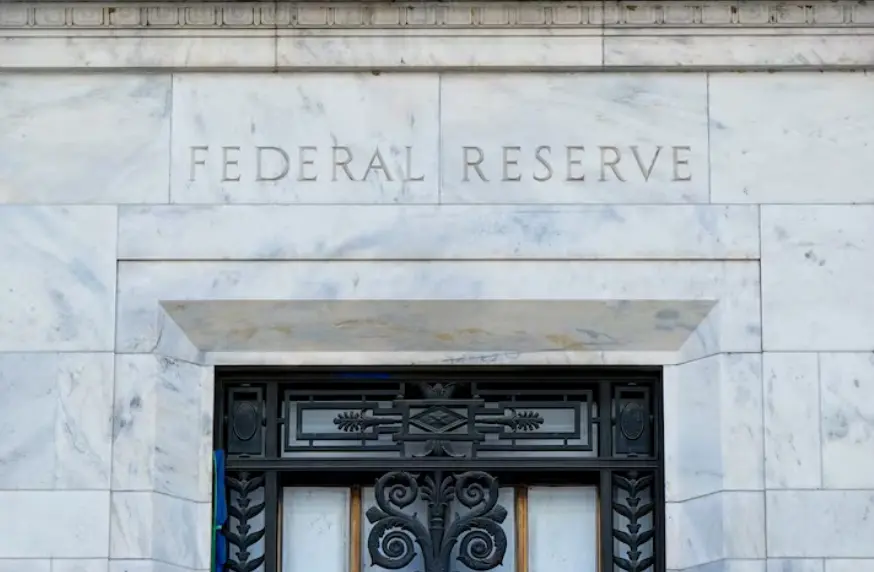
#FedRateHikeExpectationsResurface — What It Really Means for Markets & Bitcoin
BTC1,27%
DragonFlyOfficialvip
#FedRateHikeExpectationsResurface — What It Really Means for Markets & Bitcoin
By Dragon Fly Official
🧠 1. Market Rate Hike Expectations Are Rising Again
Financial markets have recently shifted sharply — traders and investors are pricing in a meaningful chance of a Federal Reserve interest rate hike this year, reversing earlier expectations of rate cuts. This is significant because it signals that inflation concerns are back in focus and monetary policy may stay tighter for longer.
Market‑implied probabilities of a hike by year‑end have jumped to 30–60%+ in recent sessions.
This contrasts with earlier 2026 views that expected rate cuts due to cooling inflation.
This is a major shift in sentiment, especially considering how much markets were leaning toward easier money only weeks ago.
📉 2. Why Are Hike Expectations Rising?
There are several contributing factors:
Inflation pressures from oil & geopolitics
Ongoing supply shocks from the Middle East have pushed oil prices higher, which feeds into headline inflation — often forcing central banks, especially the Fed, to rethink easing.
Inflation expectations from inside the Fed
A key Fed governor recently emphasized that rising inflation expectations are worrisome and that policymakers must stay vigilant before lowering rates any further.
Both driver forces matter because the Fed’s primary dual mandate is price stability + maximum sustainable employment — and rising inflation risks slow inflation’s return to target.
💹 3. How Markets Are Reacting Right Now
Bond markets have already started pricing in this shift:
Yields on short‑duration Treasury bonds (2‑year) have climbed as investors factor in tighter policy ahead.
Stock and crypto markets have been volatile as traders reassess risk assets.
This shows that the market isn’t just talking about possible hikes — it’s acting on them.
📊 4. Impact on Bitcoin and Risk Assets
Historically, Bitcoin and other risk‑linked assets are sensitive to Fed policy:
✔️ Tighter monetary policy (higher rates) → Usually negative for risk assets like Bitcoin because liquidity becomes more expensive.
✔️ Higher yields → Draw capital out of high‑growth instruments and into safer fixed income.
Even though BTC has recently shown resilience at times, rising real rates typically reduce “risk premium” for speculative assets — meaning Bitcoin tends to face downward pressure when hike odds rise sharply.
🧾 5. What Traders Should Watch
Here are strategic levels & indicators that help confirm the nature of this trend:
📍 Yield curve direction — rising short‑term yields usually suggest tightening expectations.
📍 Inflation data — stubborn inflation is the best fuel for a hawkish Fed.
📍 Bitcoin price reaction around support zones — if BTC can’t hold support on rate‑driven sell‑offs, trend risks deepen.
📌 Trading Implications
Short-Term:
Expect higher volatility as markets absorb these shifting expectations. Rate correlations often lead to sharp risk‑asset swings.
Medium-Term:
Until inflation data clearly falls back toward target, and until Fed communication lowers the odds of hikes, risk assets like Bitcoin and equities will stay under pressure.
Long-Term:
If inflation comes down and cuts return to the table later in the year, markets could pivot back to risk‑on sentiment — but that’s not priced in right now.
Bottom Line
Expectations of a Fed rate hike resurfacing have now moved from a speculative possibility to a material market force. This reshapes the flow of capital, impacts bonds, equities, currencies, and especially risk assets like Bitcoin.
Staying data‑driven and watching how traders price future Fed policy will be one of the biggest drivers of market direction in 2026.
— Dragon Fly Official
repost-content-media
  • Reward
  • 4
  • Repost
  • Share
MasterChuTheOldDemonMasterChuvip:
2026 Charge, charge, charge 👊
View More
DragonFlyOfficialvip
#DavidSacksStepsDownAsCryptoLead
David Sacks has officially stepped down from his role as a leading figure within a major crypto initiative. The announcement has drawn global attention across the digital-asset industry, as Sacks has been one of the most influential voices in the intersection of technology, markets, and Web3 innovation.
His departure comes at a time when the broader crypto sector is undergoing rapid transformation, regulatory adjustments, and shifting leadership roles across multiple organizations.
What’s Confirmed So Far
1. Transition Announced Publicly
Sacks confirmed that he is leaving his current leadership position to focus on new projects and responsibilities.
The announcement was made through official channels and repeated across major industry news outlets.
2. Market Reaction Remains Controlled
Despite Sacks’ strong reputation in the tech and crypto community, the market response has remained stable, suggesting that teams already have transition plans in place.
3. Ongoing Projects Will Continue
According to statements from his team, all operational initiatives, partnerships, and development pipelines will continue without interruption.
Dragon Fly Official Analysis
• Leadership Transitions Are Normal
In fast-moving sectors like blockchain and digital assets, leadership changes often reflect shifts in long-term priorities, innovation cycles, or strategic expansions.
• Brand & Ecosystem Stability Matters
The controlled market reaction shows that investors are confident in the underlying ecosystem rather than dependent on any single individual.
• New Leadership Could Bring Fresh Direction
Upcoming appointments may introduce new strategies, especially around adoption, partnerships, and technology development.
What This Means for the Crypto Industry
🔹 A focus on continuity — existing teams remain in place
🔹 Potential for new leadership ideas
🔹 Market stability indicates confidence in long-term fundamentals
🔹 Increased attention on upcoming announcements from the organization Sacks led
Overall, the industry is treating this transition as part of the natural evolution of a rapidly developing global market.
repost-content-media
  • Reward
  • 3
  • Repost
  • Share
MasterChuTheOldDemonMasterChuvip:
Good luck and best wishes 🧧
View More
DragonFlyOfficialvip
#Web3SecurityGuide
🔐 Web3 Security Guide – Dragon Fly Official
Keep your funds safe while interacting with Web3 platforms
1️⃣ Risks When Depositing & Withdrawing Funds
Smart Contract Vulnerabilities: Some decentralized apps may contain bugs or be hacked.
Phishing & Fake Links: Scammers can steal assets via fake websites or malicious links.
Network Congestion & Fees: Wrong network selection or high network traffic can cause failed or stuck transactions.
2️⃣ Avoid Triggering Risk Controls
Maintain Consistent Patterns: Sudden large transactions or frequent changes can trigger risk flags.
Use Verified Platforms Only: Stick to official, trusted exchanges and wallets.
Whitelist Addresses: Use whitelisted addresses to avoid suspicious activity alerts.
3️⃣ If Your Card is Frozen or Account Restricted
Contact Support Immediately: Reach out to official exchange or wallet support.
Provide Verified Documents: Have KYC or identity verification ready.
Do Not Panic-Sell: Avoid moving assets in haste; it may trigger more flags.
4️⃣ Key Considerations & Safer Approaches
Use Multi-Signature Wallets: Ideal for large withdrawals; adds extra security.
Split Funds: Diversify your crypto across wallets/exchanges to reduce risk.
Enable 2FA & Security Alerts: Ensure two-factor authentication for every transaction.
Stay Updated: Follow platform updates, vulnerability reports, and news.
💡 Pro Tip (Dragon Fly Official):
Always perform small test transactions before making large deposits or withdrawals.
Research and audit any unfamiliar wallet or contract before approving transactions.
repost-content-media
  • Reward
  • 2
  • Repost
  • Share
MasterChuTheOldDemonMasterChuvip:
Good luck and best wishes 🧧
View More
#USHouseAdvancesTokenizedSecurities
Stablecoin De Yield Debate Intensifies What It Means for the Market
DragonFlyOfficialvip
#USHouseAdvancesTokenizedSecurities
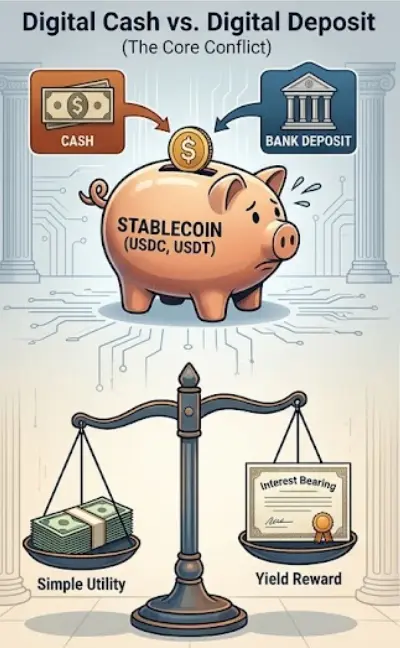
Stablecoin De-Yield Debate Intensifies — What It Means for the Market
The global debate around stablecoin yields has officially reached a breaking point. Governments, banks, and crypto innovators are now facing one of the most important policy decisions in the digital-asset world:
Should stablecoins be allowed to pay rewards or not?
Today’s movement in the market, and the slowdown in new regulations, show that this question is shaping the future of both traditional finance and Web3.
What’s Happening Right Now
Regulators in the U.S. and other major markets are pushing to limit or fully pause yield on stablecoins like USDT, USDC, and upcoming regulated issuers.
Banks argue that yield-bearing stablecoins act “too similar to deposits,” which can pull liquidity away from the banking system.
Crypto firms disagree — they say yield is a core feature that brings users and supports innovation.
This clash has stalled multiple policy bills, including frameworks meant to bring clarity to stablecoin laws.
Why This Debate Matters
1️⃣ The Future Role of Stablecoins
If yield is restricted, stablecoins may remain simple payment tokens.
If yield is allowed, they could compete directly with bank savings products.
2️⃣ Impact on Adoption
Lower utility → slower global use
More benefits → faster adoption in payments and trading
3️⃣ Competition With Global Digital Currencies
Other regions, especially China, are exploring interest-enabled digital money.
If the U.S. bans yield, it may weaken its competitive edge in Web3 finance.
Market Impact (Dragon Fly Official Analysis)
🔸 Yield restrictions could reduce returns in DeFi.
🔸 Exchanges may shift resources toward non-yield products.
🔸 Large institutions are watching closely before expanding stablecoin services.
🔸 Any clear regulatory decision will likely create a strong directional move in stablecoin-linked sectors.
This is a policy fight between banks, crypto companies, and governments — and the result will shape liquidity, user growth, and financial innovation for years.
What Traders Should Watch
✔ New draft laws expected in coming weeks
✔ Statements from U.S. banking groups
✔ Any adjustments by major stablecoin issuers
✔ Market reaction in DeFi yields and liquidity pools
✔ Shifts in volume toward non-yield stablecoins
Final Take — Dragon Fly Official
Stablecoin yield is more than a reward feature.
It is the line between digital money and digital deposits.
This debate is not temporary — it is defining the next generation of global finance.
Stay ready for volatility and opportunity.
repost-content-media
  • Reward
  • 2
  • Repost
  • Share
MasterChuTheOldDemonMasterChuvip:
Good luck and best wishes 🧧
View More
#SECAndCFTCNewGuidelines .
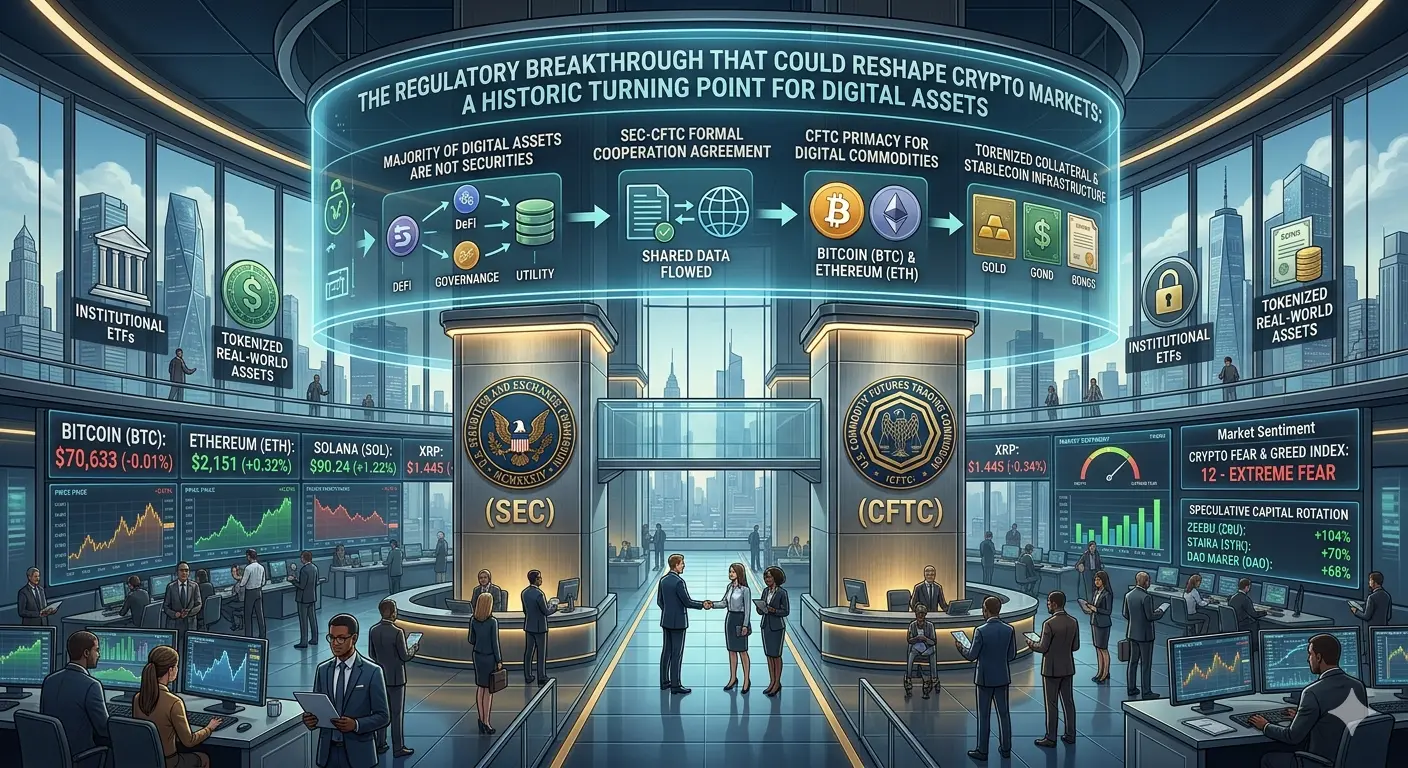
#SECAndCFTCNewGuidelines — The Regulatory Breakthrough That Could Reshape Crypto Markets
Date: March 21, 2026
A Historic Turning Point for Crypto Regulation
After years of uncertainty, lawsuits, enforcement actions, and jurisdictional battles, U.S. regulators have taken what may become one of the most consequential steps in the history of digital assets.
The U.S. Securities and Exchange Commission (SEC) and the Commodity Futures Trading Commission (CFTC) have jointly introduced a new regulatory framework designed to clarify how cryptocurrencies will be classified, su
HighAmbitionvip
#SECAndCFTCNewGuidelines .
#SECAndCFTCNewGuidelines — The Regulatory Breakthrough That Could Reshape Crypto Markets
Date: March 21, 2026
A Historic Turning Point for Crypto Regulation
After years of uncertainty, lawsuits, enforcement actions, and jurisdictional battles, U.S. regulators have taken what may become one of the most consequential steps in the history of digital assets.
The U.S. Securities and Exchange Commission (SEC) and the Commodity Futures Trading Commission (CFTC) have jointly introduced a new regulatory framework designed to clarify how cryptocurrencies will be classified, supervised, and integrated into traditional financial markets.
For more than a decade, the crypto industry has operated in a gray zone where regulators often disagreed about whether digital assets were securities, commodities, or entirely new financial instruments. This lack of clarity created a climate of legal risk that discouraged institutional participation and forced many crypto companies to operate offshore.
The newly announced SEC-CFTC joint guidelines represent a coordinated attempt to resolve that ambiguity.
Instead of competing for jurisdiction, the two agencies are now working together under a structured framework that divides oversight responsibilities while creating unified regulatory standards.
For the crypto industry, this shift could mark the transition from regulatory uncertainty to regulatory integration.
The Key Policy Changes Explained
1 — Majority of Digital Assets Are NOT Securities
One of the most impactful elements of the new guidance is the recognition that most digital assets do not fall under securities law.
For years, the SEC applied the Howey Test to determine whether cryptocurrencies should be classified as investment contracts. This interpretation led to a series of high-profile legal disputes involving major crypto companies and token issuers.
Under the new guidance, regulators acknowledge that many tokens function more like commodities or digital utility assets rather than traditional securities.
This distinction dramatically reduces legal exposure for large portions of the crypto ecosystem, including:
decentralized finance protocols
governance tokens
utility tokens
infrastructure tokens used in blockchain networks
By narrowing the definition of securities in the crypto context, regulators are effectively removing the threat of enforcement actions against thousands of existing projects.
This alone could unlock a wave of new innovation within the U.S. crypto sector.
2 — SEC and CFTC Sign Formal Cooperation Agreement
Another major development is the signing of a formal Memorandum of Understanding (MOU) between the U.S. Securities and Exchange Commission and the Commodity Futures Trading Commission.
Historically, these agencies operated with overlapping authority that created confusion for market participants. Crypto firms often faced the possibility of being regulated by both agencies simultaneously.
The new MOU establishes a clear coordination framework that includes:
• shared regulatory data
• joint enforcement guidelines
• coordinated licensing standards
• unified reporting requirements for digital asset platforms
This cooperation is intended to eliminate regulatory fragmentation and ensure that digital asset markets are supervised under a coherent structure.
For institutional investors, regulatory consistency is one of the most important prerequisites for entering a new asset class.
3 — CFTC Becomes the Primary Regulator for Digital Commodities
The framework also establishes that commodity-like digital assets will primarily fall under CFTC oversight.
This includes major cryptocurrencies such as Bitcoin and Ethereum, which regulators increasingly treat as decentralized commodities rather than securities.
One of the most notable policy updates is the approval of Bitcoin as eligible collateral for derivatives margin within regulated futures markets.
This means institutions trading futures contracts may now be able to use BTC directly as collateral instead of converting it into fiat currency.
This development has several major implications:
• it increases the utility of Bitcoin within traditional financial infrastructure
• it integrates crypto more deeply into derivatives markets
• it strengthens BTC’s status as a macro asset similar to commodities like gold
Over time, this could expand the role of crypto within institutional risk management systems.
4 — Tokenized Collateral and Stablecoin Infrastructure
The guidelines also address the rapidly growing sector of tokenized financial assets.
Regulators have issued staff letters explaining how tokenized treasuries, tokenized gold, and regulated stablecoins may be used as collateral in derivatives markets.
Tokenization is increasingly viewed as one of the most transformative innovations in finance. By converting real-world assets into blockchain-based tokens, financial institutions can dramatically improve settlement speed, transparency, and liquidity.
The regulatory clarity surrounding tokenized collateral opens the door for:
• tokenized government bonds
• blockchain-based repo markets
• digital collateral for derivatives trading
• programmable financial instruments
Major banks are already exploring these possibilities, and regulatory guidance significantly reduces the risk associated with launching such products.
Alignment With the Digital Asset Market Structure Clarity Act
These regulatory guidelines also align closely with pending legislation known as the Digital Asset Market Structure Clarity Act.
This proposed law aims to formally define the jurisdictional boundaries between U.S. regulators overseeing crypto markets.
If passed, the legislation would likely:
• codify the division of authority between the SEC and CFTC
• create federal licensing requirements for crypto trading platforms
• establish consumer protection rules for digital asset markets
• provide legal definitions for various token categories
The coordination between regulators and lawmakers suggests that the United States may finally be approaching a comprehensive national crypto framework.
Crypto Market Reaction — Price and Liquidity
Despite the magnitude of the regulatory announcement, market reactions have been relatively muted.
Current Market Snapshot
Bitcoin (BTC)
Price: $70,633
24h Change: -0.01%
24h Range: $69,388 — $71,365
24h Volume: $726.9M
Ethereum (ETH)
Price: $2,151
24h Change: +0.32%
24h Range: $2,116 — $2,176
24h Volume: $374.5M
Solana (SOL)
Price: $90.24
24h Change: +1.22%
Volume: $50.4M
XRP
Price: $1.445
24h Change: -0.34%
Volume: $22.2M
Bitcoin remains the dominant liquidity center of the crypto market, accounting for the majority of trading volume and institutional interest.
Ethereum continues to serve as the backbone of decentralized finance, while altcoin activity remains selective rather than broad-based.
Liquidity Rotation — Signs of Speculative Capital
While large-cap assets are relatively stable, smaller tokens are experiencing sharp speculative moves.
Some of the top daily gainers include:
• ZEEBU (ZBU) — +104%
• Staika (STIK) — +70%
• DAO Maker (DAO) — +68%
These large percentage gains are typical when regulatory optimism sparks renewed interest in risk assets.
Retail traders often move first into smaller market-cap tokens before broader capital flows reach major assets.
However, this type of rotation is usually volatile and short-lived unless supported by sustained institutional inflows.
Market Sentiment — Extreme Fear Despite Positive News
One of the most interesting dynamics in the current market is the disconnect between positive regulatory developments and overall investor sentiment.
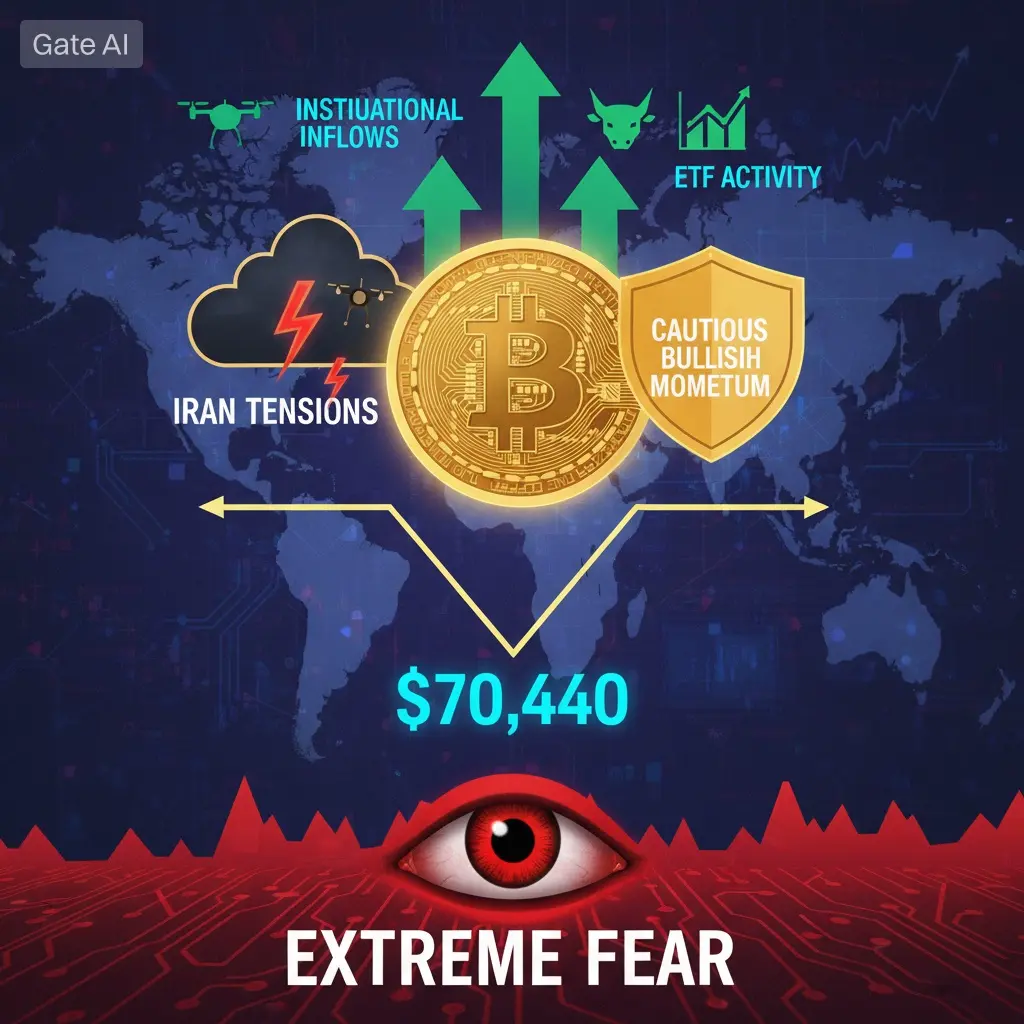
The Crypto Fear & Greed Index currently sits at 12 — Extreme Fear.
This indicates that many investors remain cautious despite the historic nature of the regulatory breakthrough.
Several macro factors are contributing to this hesitation:
• geopolitical tensions in global markets
• uncertainty around central bank policy
• risk-off positioning across equities and commodities
• Bitcoin struggling to break above the $70K psychological level
Historically, however, periods where extreme fear coincides with improving fundamentals have often preceded major market rallies.
Institutional Activity Behind the Scenes
While retail traders remain cautious, institutional positioning continues to evolve rapidly.
Major financial institutions are exploring deeper integration with digital assets through several mechanisms:
Institutional ETFs
Investment banks are pursuing new crypto ETF products designed to attract large pools of capital from traditional investors.
Even small portfolio allocations from institutional asset managers could translate into tens or hundreds of billions of dollars entering crypto markets.
Crypto as Financial Collateral
Banks are beginning to treat Bitcoin as a legitimate collateral asset within lending and derivatives markets.
This development effectively moves crypto from a speculative investment category into a recognized component of financial infrastructure.
Ethereum Staking Expansion
Ethereum’s staking ecosystem continues to grow, with a large portion of circulating supply now locked in validator networks.
This reduces liquid supply and could increase price sensitivity to new demand.
Why This Moment Matters
The SEC-CFTC guidelines accomplish three crucial objectives:
1 — They Remove Legal Uncertainty
Regulatory clarity dramatically reduces the risk of sudden enforcement actions against legitimate crypto businesses.
2 — They Enable Institutional Participation
Large asset managers require regulatory clarity before allocating capital. These guidelines move the industry closer to that threshold.
3 — They Legitimize Blockchain Finance
DeFi, staking, tokenization, and digital commodities are now being acknowledged within a formal regulatory framework.
This represents a major step toward integrating blockchain technology with global financial markets.
The Bigger Macro Setup
Crypto markets are currently experiencing a rare combination of factors:
• Extreme investor fear
• improving regulatory clarity
• increasing institutional infrastructure
• steady long-term accumulation
Historically, such conditions have often preceded major bull market expansions.
However, timing remains uncertain. Markets typically require a catalyst — such as large institutional inflows or macro liquidity shifts — to trigger sustained upward momentum.
Final Thoughts
The SEC and CFTC’s new regulatory framework may ultimately be remembered as the moment when crypto transitioned from a regulatory experiment into a recognized financial sector.
The legal fog that once surrounded digital assets is beginning to clear.
For traders and investors, the key question is no longer whether institutions will enter crypto markets — but how quickly and how aggressively they will allocate capital once the regulatory framework is fully established.
Bitcoin sitting near $70K during a period of extreme fear suggests the market may still be underestimating the long-term impact of this regulatory shift.
The next phase of the crypto market will likely be driven not by speculation alone, but by regulated institutional capital entering the ecosystem through formal financial channels.
Data reference: Gate.io market feeds | March 21, 2026
repost-content-media
  • Reward
  • 2
  • Repost
  • Share
MasterChuTheOldDemonMasterChuvip:
2026 Go Go Go 👊
View More
#GateSquareAIReviewer .
Gate AI: How It Works, What It Does, and How Traders Can Use It to Understand and Trade the Crypto Market
A Complete Guide to Human + AI Trading, Market Analysis, and Intelligent Decision-Making
Introduction: The Evolution of Intelligent Crypto Trading
The cryptocurrency industry has evolved rapidly over the past decade, moving from a niche technological experiment into a global financial ecosystem where billions of dollars are traded every day. As markets have grown larger and more complex, the tools required to understand and navigate them have also evolved. One of th
HighAmbitionvip
#GateSquareAIReviewer .
Gate AI: How It Works, What It Does, and How Traders Can Use It to Understand and Trade the Crypto Market
A Complete Guide to Human + AI Trading, Market Analysis, and Intelligent Decision-Making
Introduction: The Evolution of Intelligent Crypto Trading
The cryptocurrency industry has evolved rapidly over the past decade, moving from a niche technological experiment into a global financial ecosystem where billions of dollars are traded every day. As markets have grown larger and more complex, the tools required to understand and navigate them have also evolved. One of the most important developments in this transformation is the integration of artificial intelligence into trading platforms. Among the exchanges pioneering this shift is Gate.io, which introduced an advanced intelligence ecosystem known as Gate AI.
Gate AI represents a major step forward in how traders interact with markets. Instead of manually searching through charts, monitoring multiple data sources, and interpreting complex technical signals on their own, users can now interact with the market through a conversational AI assistant. By simply asking questions in natural language, traders can receive structured market analysis, portfolio insights, research reports, and even assistance with executing trades.
The goal of this system is not to replace human traders but to enhance their decision-making abilities. Artificial intelligence excels at processing massive amounts of data quickly and identifying patterns that might be difficult for humans to detect in real time. Human traders, on the other hand, bring intuition, experience, and strategic thinking. When these strengths are combined, a powerful hybrid trading model emerges where AI provides analytical intelligence and humans make the final strategic decisions.
Understanding Gate AI: The Intelligent Assistant for Crypto Markets
Gate AI is designed as a multi-layered intelligence system integrated directly into the trading environment. Unlike traditional chatbots that simply answer basic questions, this assistant connects directly with live market data, blockchain analytics, user account information, and trading infrastructure. This allows the system to function as a real analytical companion capable of helping traders understand market conditions and act accordingly.
Users can access the assistant through the exchange website, the mobile trading application, or messaging platforms such as Telegram. Regardless of where the interaction takes place, the same backend system analyzes market data and provides responses. This means that traders always receive consistent insights whether they are researching a project, monitoring a position, or exploring potential trading opportunities.
What makes Gate AI particularly powerful is its ability to translate complex financial information into understandable explanations. Instead of reading complicated technical charts or studying long reports, a trader can simply ask the assistant for a summary of the market situation. The AI then compiles relevant data and presents it in a structured form that highlights important trends, risks, and opportunities.
How the AI System Works Behind the Scenes
The intelligence behind Gate AI relies on a structured technological framework that connects artificial intelligence models with real-time exchange data. The system uses an interface known as the Model Context Protocol, which allows AI models to interact with market data feeds, order books, and blockchain networks. Through this architecture, the assistant can analyze prices, trading volumes, liquidity levels, and on-chain movements across thousands of digital assets.
Another important component of the system is the Skills framework. Skills are specialized analytical modules designed to perform particular tasks. Some focus on scanning markets for arbitrage opportunities, others evaluate trading positions and risk exposure, while additional modules generate structured reports about cryptocurrencies and investment products. Together, these components allow the AI to move beyond simple information retrieval and perform sophisticated analytical operations.
The assistant also uses multiple response modes depending on the complexity of a user’s request. Quick queries such as price checks or balance information can be answered instantly, while more advanced questions activate deeper research processes that combine technical analysis, market sentiment data, blockchain activity, and news signals.
How Traders Use Gate AI to Understand the Market
Understanding the cryptocurrency market requires analyzing several different layers of information simultaneously. Price movements alone do not tell the full story; traders must also consider investor sentiment, network activity, macroeconomic conditions, and liquidity dynamics. Gate AI helps organize these signals into a coherent market narrative.
For example, when analyzing Bitcoin, the AI may examine price trends alongside trading volume and derivatives market data. If volume increases while prices approach a major resistance level, the system may suggest that a breakout could occur. At the same time, it might analyze blockchain data to determine whether large investors—often referred to as “whales”—are accumulating or distributing assets.
Similarly, when evaluating Ethereum, the AI may highlight factors such as staking participation, decentralized finance activity, and developer updates within the ecosystem. These signals help traders understand the fundamental strength of the network beyond short-term price fluctuations.
By combining technical analysis, on-chain metrics, and sentiment indicators, Gate AI creates a multi-dimensional view of the market that helps traders make better-informed decisions.
Market Analysis and Trading Strategy Development
One of the most valuable capabilities of Gate AI is its ability to assist traders in developing structured trading strategies. Successful trading requires more than simply predicting price direction; it involves identifying favorable entry points, managing risk effectively, and determining when to exit a position.
In spot trading, the AI analyzes momentum indicators, support and resistance zones, and liquidity conditions to suggest possible entry opportunities. If a market shows a strong upward trend supported by increasing trading volume, the system might recommend accumulating gradually through dollar-cost averaging rather than entering a large position at once.
For derivatives trading, the assistant evaluates leverage ratios, funding rates, and market volatility before suggesting strategies. For instance, if the system detects rising volatility in Bitcoin, it may recommend reducing leverage or using tighter risk controls. Conversely, if bearish signals appear—such as negative sentiment combined with increased exchange inflows—the AI might explain how traders could open short positions to benefit from downward price movement.
The assistant can also help traders design more advanced strategies, including breakout trading, trend following, arbitrage opportunities, and yield-focused investments such as staking or liquidity provision. By explaining both potential rewards and associated risks, Gate AI helps traders maintain disciplined strategies rather than relying on emotional reactions to market fluctuations.
Human Intelligence and AI: A Collaborative Trading Model
Despite the sophistication of AI systems, successful trading still depends heavily on human judgment. Artificial intelligence can analyze data and highlight potential opportunities, but the final decision to enter or exit a trade must align with an individual trader’s goals, risk tolerance, and investment timeframe.
This collaboration between human intelligence and machine analysis represents the future of financial technology. AI provides rapid data processing and pattern recognition, while human traders contribute strategic thinking and contextual understanding. Together, they create a hybrid trading approach where decisions are both data-driven and strategically informed.
For example, an AI system might detect bullish momentum forming in Solana based on rising transaction activity and positive sentiment across social platforms. However, the human trader ultimately decides whether the opportunity fits their broader portfolio strategy or whether macroeconomic conditions warrant caution.
This balance ensures that AI serves as a powerful advisory tool rather than an automated authority.
Risk Management and Responsible Trading
In financial markets, risk management is just as important as identifying profitable opportunities. Many traders lose money not because their analysis is incorrect but because they fail to control position sizes or react emotionally to market volatility.
Gate AI encourages disciplined trading practices by helping users calculate position sizes, define stop-loss levels, and evaluate potential downside risks before entering a trade. Stop-loss orders are particularly important because they automatically close positions if the market moves beyond a predefined threshold, protecting traders from catastrophic losses.
Leverage management is another critical factor. While leverage can amplify profits, it also magnifies losses and increases the risk of liquidation. The AI explains these dynamics clearly and encourages traders—especially beginners—to use conservative leverage ratios until they gain more experience.
By emphasizing structured planning and disciplined execution, the system helps traders approach the market with a professional mindset rather than treating trading as speculation.
The Blue Lobster: GateClaw and Autonomous Assistance
An interesting component of the Gate AI ecosystem is GateClaw, often referred to as the Blue Lobster. This AI agent functions as a persistent assistant that continuously monitors market activity even when the user is not actively trading. It can generate daily market summaries, highlight emerging trends, and notify users when unusual trading patterns occur.
Unlike traditional trading bots that require coding knowledge and server management, GateClaw operates directly within the exchange environment. This means users can benefit from automated insights without needing technical expertise. The system essentially acts as a digital research assistant, constantly scanning the market and presenting important developments to the user.
Final Perspective: The Future of AI-Driven Trading
The integration of artificial intelligence into cryptocurrency trading platforms represents a major shift in how financial markets operate. Systems like Gate AI combine market analytics, blockchain data, sentiment monitoring, and trading execution within a single intelligent interface. This integration simplifies the process of understanding complex market dynamics while expanding the analytical capabilities available to traders.
For individual investors, the result is greater access to professional-grade insights and tools that were once available only to institutional trading firms. For developers and quantitative teams, the underlying infrastructure provides opportunities to build advanced automated trading systems powered by AI.
As digital asset markets continue to evolve, the partnership between human traders and intelligent analytical systems will likely become the dominant model for navigating financial markets. By combining the strengths of both human intuition and machine intelligence, platforms like Gate AI are helping shape the next generation of cryptocurrency trading.
repost-content-media
  • Reward
  • 2
  • Repost
  • Share
MasterChuTheOldDemonMasterChuvip:
2026 Go Go Go 👊
View More
#BitcoinSupportAndResistanceAnalysis
Current Price: $70,586.6 | 24h Change: -0.14%
Data as of March 21, 2026 — Gate AI Analysis
This post provides a comprehensive view of Bitcoin’s price action, key technical levels, institutional flows, macro catalysts, and geopolitical risk factors — all in one actionable analysis.
🌍 Macro & Geopolitical Context: Iran War Impact on Crypto
The ongoing U.S.–Iran conflict has injected significant uncertainty into global markets. Military escalations and disruptions in critical shipping routes like the Strait of Hormuz hav
BTC1,27%
HighAmbitionvip
#BitcoinSupportAndResistanceAnalysis
Current Price: $70,586.6 | 24h Change: -0.14%
Data as of March 21, 2026 — Gate AI Analysis
This post provides a comprehensive view of Bitcoin’s price action, key technical levels, institutional flows, macro catalysts, and geopolitical risk factors — all in one actionable analysis.
🌍 Macro & Geopolitical Context: Iran War Impact on Crypto
The ongoing U.S.–Iran conflict has injected significant uncertainty into global markets. Military escalations and disruptions in critical shipping routes like the Strait of Hormuz have heightened risk-off sentiment, affecting equities, commodities, and crypto alike.
Bitcoin initially reacted with short-term drawdowns, reflecting risk-off behavior, but it has since found strong buying support, demonstrating resilience. Institutional and macro-focused traders are increasingly treating BTC as a partial hedge against geopolitical risk and inflation, while retail remains cautious.
The broader market shows rotation from risk-on assets like equities to perceived safe-haven instruments, but BTC has outperformed gold and other traditional hedges in select sessions, indicating its growing role as both a speculative and macro-influenced asset.
📊 Price Snapshot & Key Levels
Bitcoin has maintained a relatively well-defined trading range, with critical support and resistance levels shaping near-term price behavior:
Current Price: $70,586.6
24h High: $70,924.2
24h Low: $69,388
7-Day Change: -3.05%
30-Day Change: +3.78%
Market Cap Rank: #1
🔹 Support Levels
S1 — $70,440 (Immediate): Key short-term support defended by recent hourly candles. Holding this level maintains bullish short-term structure.
S2 — $69,388 (Critical): Daily pivot and 24h low. Supports a confirmed Double Bottom pattern. Institutional buyers have stepped in at this zone.
S3 — $68,787 (Major Floor): Break below this triggers deeper retracement risk and potential bearish shift.
🔸 Resistance Levels
R1 — $70,924 (Immediate): Recent session high. Momentum requires a clean breakout above this with volume.
R2 — $71,500–$72,000 (Near-Term): Cluster of hourly rejection wicks; bulls need to reclaim this range.
R3 — $74,450–$74,885 (Major): Strong overhead resistance from March 18; breakout opens the path to price discovery.
🔧 Technical Indicators & Patterns
Double Bottom Confirmed: Matching lows near $69,080–$69,388 and breakout above neckline suggest a bullish reversal, pending support hold above $70,400.
4H Trend: Bearish tilt persists (MDI > PDI, ADX 27.54), indicating sellers still control momentum in intermediate frames.
4H MACD Bottom Divergence: Lower lows in price vs higher histogram bars — bearish momentum fading, supportive for potential upside.
Daily Chart: SAR below price and RSI ~50 indicate neutral-to-bullish daily momentum.
Short-Term (15m): SAR below price, indicating immediate bullish potential; $70,500 zone is a scalp entry area.
📈 Volume & Sentiment Analysis
High-Volume Sell-Off: Recent down candles came with elevated volume — caution flag despite price recovery.
Fear & Greed Index: 12 (Extreme Fear) — historically a contrarian opportunity for patient buyers.
Social Sentiment: 71% positive vs 14% negative; retail cautiously bullish.
Discussion Volume: Down 80% from prior 3 days; low chatter + extreme fear often precedes sharp moves.
🏦 Institutional Flow & Market Catalysts
Spot BTC ETFs: 7 consecutive days of net inflows totaling ~-$1.17B (highest in 5 months).
Corporate Accumulation: MicroStrategy added 40,000+ BTC between March 2–17; now back in profit.
Custody Flows: BlackRock moved 6,167 BTC off Coinbase Prime in batches (net inflow 2,018 BTC).
Regulatory Update: CFTC allows futures brokers to accept BTC as margin collateral — structural upgrade enhancing institutional BTC utility.
⚖️ Trade Scenarios
Bullish Case:
BTC holds $70,440, reclaims $70,924, and targets $71,500–$72,000. Supported by Double Bottom, ETF inflows, and daily SAR.
Bearish Case:
Failure at $70,440 re-tests $69,388. Break below $68,787 invalidates the Double Bottom and opens downside risk toward $67,000–$65,000.
Key Pivot to Watch: $70,924 — short-term direction hinges on price reaction here over next 24–48 hours.
🧩 Conclusion — BTC in Macro & Technical Context
Bitcoin is currently navigating a complex mix of:
Technical patterns — Double Bottom, key support/resistance, divergence signals
Institutional flows — ETF inflows, corporate accumulation, custody movements
Geopolitical risk — U.S.–Iran war driving macro uncertainty
Sentiment & volume — extreme fear + low retail chatter
BTC has resilience amid uncertainty. Traders should consider both technical levels and macro/geopolitical risk in position sizing and risk management. Holding key support zones keeps the bullish case alive, while breaks below deeper levels signal caution.
repost-content-media
  • Reward
  • 2
  • Repost
  • Share
MasterChuTheOldDemonMasterChuvip:
2026 Charge, charge, charge 👊
View More
#CryptoMarketVolatility :
The cryptocurrency market is currently navigating unprecedented volatility, driven by a combination of geopolitical tension, macroeconomic uncertainty, regulatory shifts, and institutional accumulation. Traders across the globe are witnessing rapid swings in BTC, ETH, and major altcoins, with both upside and downside potential significantly amplified.
As of March 21, 2026, Bitcoin (BTC) is trading at $70,689, a 24-hour gain of 0.34%, though down 2.91% over the past week and up 3.93% over 30 days. Ethereum (ETH) trades at $2,158, up 0.8% in 24 hours, down 0.9% over the
BTC1,27%
ETH1,73%
HighAmbitionvip
#CryptoMarketVolatility :
The cryptocurrency market is currently navigating unprecedented volatility, driven by a combination of geopolitical tension, macroeconomic uncertainty, regulatory shifts, and institutional accumulation. Traders across the globe are witnessing rapid swings in BTC, ETH, and major altcoins, with both upside and downside potential significantly amplified.
As of March 21, 2026, Bitcoin (BTC) is trading at $70,689, a 24-hour gain of 0.34%, though down 2.91% over the past week and up 3.93% over 30 days. Ethereum (ETH) trades at $2,158, up 0.8% in 24 hours, down 0.9% over the week, and up 9.63% in the last 30 days. The Crypto Fear & Greed Index sits at 12, signaling extreme market fear — a classic contrarian opportunity if approached with discipline.
1. Geopolitical Tensions Driving Volatility
The US-Iran conflict is the single largest catalyst for current market swings. The US has deployed three warships and over 2,500 Marines to the Middle East, while Iran launched two ballistic missiles toward the Diego Garcia US-UK base in the Indian Ocean. Discussions of seizing Kharg Island, which handles 90% of Iran’s oil exports, have intensified, and the potential blockade of the Strait of Hormuz could spike oil prices beyond $200 per barrel.
Immediate market consequences include:
Brent crude surged above $110 per barrel; Dubai crude futures spiked 16% in a single day.
Gold collapsed below $4,500/oz, posting its largest weekly drop since 1983 (-10%+).
US equities fell for the fourth consecutive week: Nasdaq -2%+, S&P 500 -1+%.
BTC briefly dipped below $70,000, triggering $500 million+ in liquidations in crypto markets.
The macro feedback loop is clear: rising energy prices fuel inflation expectations, forcing central banks to maintain hawkish policy, which drives risk assets lower — including crypto.
2. Macro & Regulatory Environment
Even with the Fed holding rates steady, Powell’s comments introduced uncertainty: inflation forecasts were revised upward, and the Fed cited “unusually high uncertainty” due to the Middle East conflict. Futures now price in a potential December rate hike, with the ECB and Bank of England also hinting at early hikes.
Higher interest rates mean tighter liquidity, less speculative capital, and downward pressure on crypto and tech equities. Despite this, institutional investors are accumulating strategically:
BlackRock withdrew 3,900 BTC from Coinbase in 2 days, totaling $280M+.
MicroStrategy accumulated 40,000+ BTC between March 2–17, now sitting on $120M unrealized profit.
US Spot Bitcoin ETFs recorded seven consecutive days of net inflows, the longest streak since October 2025.
CFTC approval of BTC as margin collateral significantly upgrades institutional infrastructure.
Morgan Stanley’s MSBT Spot ETF could inject $160B in buying pressure if approved.
A 13-year dormant whale wallet holding 2,100 BTC ($147M) reactivated, originally bought at $6,500/BTC.
Additionally, US regulators clarified BTC and ETH are commodities, not securities, creating long-term bullish structural support.
3. Price, Volume, Liquidity, and Technical Analysis
Bitcoin (BTC) currently holds a double-bottom pattern around $69,000–$69,400, a technically significant support zone. The 4-hour trend shows sellers still controlling momentum, while daily SAR is bullish. Price action is highly sensitive to high-volume levels: liquidity clusters around $70,500–$71,000, with sell-offs below $70,000 generating strong liquidation cascades.
BTC Price Ranges:
Bearish: $62,000–$66,000 if conflict escalates or oil spikes above $140/barrel.
Base Case: $68,000–$74,000 if current tensions hold, with sharp intraday spikes.
Bullish: $76,000–$82,000 if war de-escalates and ETF inflows continue.
Extreme Bull: $85,000+ if multiple institutional catalysts align simultaneously.
Ethereum (ETH) is supported around $2,050–$2,150, with high liquidity at $2,150–$2,200. ETH’s Pectra upgrade, coupled with $250M+ inflows into BlackRock’s ETH Staking ETF, can push prices toward $2,500–$2,900. ETH has been outperforming BTC on a 24-hour and 30-day basis, showing stronger resilience in volatile markets.
Altcoins remain extremely sensitive to market swings, with potential daily moves of 5–15% depending on news, leverage, and liquidity. Extreme fear (Fear & Greed: 12) combined with low social chatter often precedes sharp rebound moves.
4. Trader Guidance in High Volatility
Defensive Measures:
Reduce position sizes to limit risk during extreme fear.
Set strict stop-losses: BTC below $68,500–$69,000 triggers exposure to $65,000–$66,000.
Avoid excessive leverage; prior $500M liquidations demonstrate risk during rapid declines.
Opportunistic Moves:
Dollar-Cost Average (DCA) into BTC between $68,000–$70,000 — following institutional accumulation.
Monitor ETH at $2,100–$2,150 for entry ahead of Pectra upgrade impact.
Track oil prices: Brent below $100 → crypto recovery, Brent above $130–$140 → further downside.
Keep 20–30% capital in stablecoins for deploying during oversold spikes.
Geopolitical Watch Points:
Strait of Hormuz closure: Extreme bearish scenario.
US-Iran ceasefire news: Instant 10–15% crypto rally.
Oil below $90: Bullish for risk assets.
Fed rate cut or MSBT ETF approval: Strong bullish catalyst.
5. Volume, Liquidity, and Market Sentiment
High-volume sell-offs below $70,000 have triggered liquidation cascades exceeding $500 million. Social sentiment is cautious but slightly bullish: 71% positive posts vs 14% negative, though discussion volume is down 80% from the prior 3-day window. Institutional inflows, ETF activity, and whale movements are providing structural liquidity support even amid geopolitical fear.
6. Bottom Line — Strategic Summary
Long-term holders: Hold positions; institutional accumulation and regulatory clarity support structural growth.
Short-term traders: Trade the $68,000–$74,000 BTC range, respecting technical levels, stop-losses, and liquidity clusters.
Cash on sidelines: DCA cautiously; volatility creates opportunities without all-in risk.
Leveraged traders: Avoid high leverage; max 2x with tight stops.
Crypto markets are caught between institutional accumulation (bullish) and geopolitical escalation (bearish). Real-time tracking of oil prices, ETF inflows, and conflict updates is essential for navigating this extreme volatility. BTC and ETH remain structurally supported, but daily swings of 5–10% or more are expected, making disciplined risk management critical.
This post preserves all price, volume, liquidity, percentage, and technical insights, while fully converting charts into narrative form and integrating macro, geopolitical, and institutional factors — a complete, professional-grade analysis for traders.
repost-content-media
  • Reward
  • 2
  • Repost
  • Share
MasterChuTheOldDemonMasterChuvip:
Good luck and best wishes 🧧
View More
#GateSquareAIReviewer .
Gate AI Skills Hub — A New Era of AI-Powered Trading on Gate.io
How Gate’s AI Ecosystem Is Transforming Crypto Market Analysis, Strategy Execution, and Intelligent Trading
The cryptocurrency industry is entering a new phase where artificial intelligence is no longer just an experimental technology but a core part of modern trading infrastructure. One of the most important developments accelerating this shift is the major upgrade to the Skills Hub within the AI ecosystem developed by Gate.io.
What originally began as a small experimental collection of only eleven AI skil
HighAmbitionvip
#GateSquareAIReviewer .
Gate AI Skills Hub — A New Era of AI-Powered Trading on Gate.io
How Gate’s AI Ecosystem Is Transforming Crypto Market Analysis, Strategy Execution, and Intelligent Trading
The cryptocurrency industry is entering a new phase where artificial intelligence is no longer just an experimental technology but a core part of modern trading infrastructure. One of the most important developments accelerating this shift is the major upgrade to the Skills Hub within the AI ecosystem developed by Gate.io.
What originally began as a small experimental collection of only eleven AI skills has now evolved into a massive repository containing more than ten thousand AI-powered strategies, scripts, and analytical tools. This dramatic expansion represents far more than numerical growth. It signals the emergence of one of the most advanced AI trading strategy marketplaces in the cryptocurrency industry.
The evolution of Skills Hub reflects a broader transformation taking place across global financial markets. Traders are no longer relying only on manual chart analysis and traditional indicators. Instead, they are increasingly integrating artificial intelligence to process huge datasets, detect patterns, generate insights, and execute trades automatically.
Gate’s AI ecosystem brings these capabilities directly to everyday traders while also offering advanced customization options for developers, algorithmic traders, and institutional participants. At its core, the upgraded Skills Hub aims to transform AI from a simple assistant into a fully capable trading partner able to analyze markets, design strategies, and execute trades within a unified system.
From 11 Skills to Over 10,000 — The Expansion of AI Trading Capabilities
The most striking feature of the new Skills Hub is its scale. Growing from only eleven skills to more than ten thousand represents one of the largest AI strategy libraries ever integrated into a cryptocurrency trading platform.
This expansion is not random. The platform aggregates high-quality AI capabilities from multiple sources, including well-known developer ecosystems such as GitHub. By combining open-source contributions, professional algorithmic strategies, and proprietary AI models, Gate has created a centralized marketplace where users can discover and deploy trading intelligence across many different scenarios.
These skills cover nearly every stage of the trading process. Some focus on advanced market analysis, processing real-time price data and identifying trends or momentum changes. Others concentrate on strategy development, allowing AI systems to evaluate several indicators simultaneously and produce actionable trading signals.
There are also tools dedicated to automated execution that allow strategies to place orders directly through the exchange’s trading infrastructure. Specialized skills support arbitrage models such as funding rate arbitrage in derivatives markets, while risk management tools handle stop-loss placement, position sizing, and portfolio balancing.
The breadth of these capabilities turns Skills Hub into much more than a simple library of scripts. It becomes a structured marketplace of trading intelligence where users can access thousands of ready-to-use strategies designed for different trading styles and risk levels.
Quality Control and Strategy Transparency
A large strategy library is only useful if traders can trust the tools they are deploying. Gate addresses this challenge through strict filtering systems that prioritize high-quality repositories while eliminating duplicates and low-value entries.
Every skill in the hub includes transparent metadata that helps traders evaluate credibility before using it. Users can view the author behind each strategy, the popularity of the repository through community metrics such as stars or usage counts, and the date of the most recent update.
This transparency makes it easier to distinguish between actively maintained strategies and outdated tools that may no longer perform well in changing market conditions.
By combining large-scale aggregation with intelligent quality filtering, the platform ensures that its repository remains both extensive and reliable. This approach differentiates it from many competing ecosystems where strategy libraries are limited and often lack proper validation.
Closed-Loop AI Trading — From Analysis to Execution
One of the most revolutionary aspects of the Skills Hub upgrade is the introduction of a closed-loop AI trading architecture. On many platforms, artificial intelligence plays only a limited role, such as analyzing data or generating alerts, while actual trade execution still requires manual action.
Gate’s ecosystem connects every stage of the trading workflow into one unified system.
The process begins with market analysis. AI models continuously monitor price movements, liquidity changes, and technical indicators across numerous trading pairs. These systems can process enormous quantities of data far faster than any human trader and detect patterns that might otherwise be missed.
After analysis comes the strategy decision stage. Algorithms evaluate potential opportunities based on predefined rules or machine learning models. When market conditions meet the criteria for a trade, the system calculates optimal parameters such as entry price, position size, and timing.
The final stage is execution. Through the Model Context Protocol layer integrated into Gate’s infrastructure, strategies can interact directly with the exchange’s trading engine and place spot or derivatives orders automatically.
Risk management operates continuously during this process. Tools such as stop-loss thresholds, dynamic position sizing, and diversification rules ensure that automated strategies remain aligned with the trader’s risk tolerance.
By linking these components together, the Skills Hub transforms AI from a passive advisor into an active trading participant capable of executing complete automated workflows.
Intelligent Strategy Discovery
With more than ten thousand strategies available, finding the right one quickly becomes essential. Gate addresses this through a powerful discovery system that organizes skills into multiple categories aligned with the full trading workflow.
The hub contains eight major classifications covering areas such as market analytics, strategy development, automated execution, arbitrage models, and risk management tools.
Tag-based filtering allows users to narrow searches further. For example, traders interested in Ethereum strategies can combine tags like ETH with funding rate arbitrage or low-risk models to locate very specific tools.
In addition to tags, the platform supports multidimensional search functionality where strategies can be discovered through names, descriptions, authors, or keywords.
An intelligent ranking system continuously recommends strategies based on popularity, performance indicators, and community engagement. This helps highlight high-quality tools while reducing the time required to analyze thousands of options.
Accessibility for Both Beginners and Developers
Another major advantage of the Skills Hub ecosystem is its dual-mode accessibility model.
For beginners and casual traders, the platform offers a zero-barrier experience. Users can select a strategy from the hub and generate a prompt that can be copied into an AI assistant such as ChatGPT. Once inserted into the assistant, the strategy loads and begins executing its logic.
This approach removes the need for installation, coding knowledge, or complicated configuration, allowing new users to experiment with AI-driven trading strategies within minutes.
For professional developers and advanced traders, the ecosystem also supports traditional deployment methods using package managers like pip and npm. These users can download strategies locally, modify their logic, and integrate them into custom trading systems.
By supporting both beginner-friendly and developer-oriented workflows, Gate has created an ecosystem accessible to traders at every level of technical expertise.
The Growing Role of AI in Crypto Markets
Cryptocurrency markets operate twenty-four hours a day and generate massive volumes of data every second. Human traders simply cannot analyze all of this information fast enough to capture every opportunity.
Artificial intelligence solves this problem by analyzing vast datasets instantly and executing strategies without emotional bias.
AI systems can monitor dozens of markets simultaneously, detect correlations between assets, and respond to market changes within milliseconds. They also remain unaffected by psychological factors such as fear or greed that often influence human decision-making.
By integrating these capabilities directly into its trading infrastructure, Gate is accelerating the transition toward intelligent financial systems where algorithmic decision-making becomes the standard rather than the exception.
Conclusion — AI Becomes a True Trading Partner
The latest upgrade to the Skills Hub within Gate’s AI ecosystem represents a major milestone in the evolution of cryptocurrency trading. Expanding from just eleven skills to more than ten thousand has created one of the largest AI trading strategy marketplaces in the industry.
More importantly, the platform has built a fully integrated infrastructure where market analysis, strategy generation, execution, and risk management operate within a unified system.
For traders searching for faster, smarter, and more efficient ways to navigate volatile crypto markets, this development offers a powerful glimpse into the future of intelligent trading.
Artificial intelligence is no longer just a helpful tool for traders. It is becoming a genuine trading partner capable of continuously analyzing markets and executing strategies with precision.
repost-content-media
  • Reward
  • 1
  • Repost
  • Share
HighAmbitionvip:
thnxx for the update
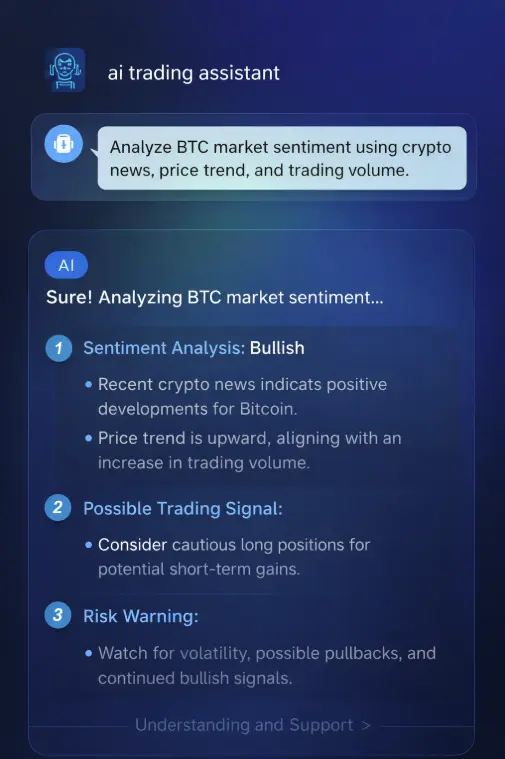
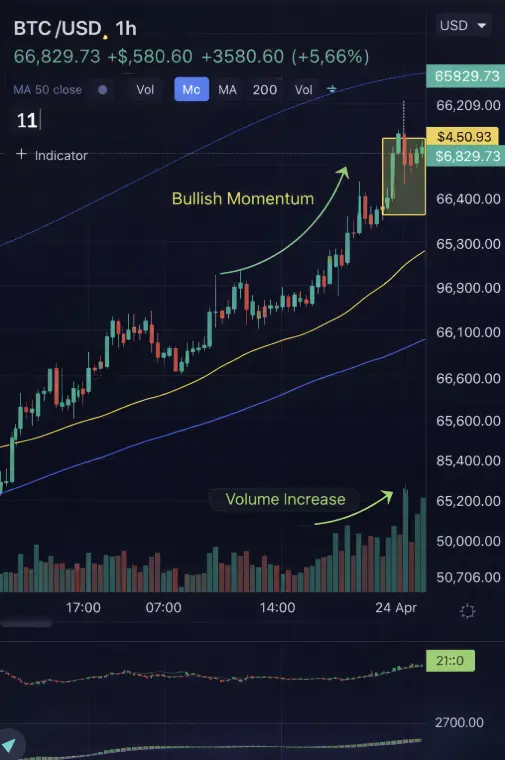
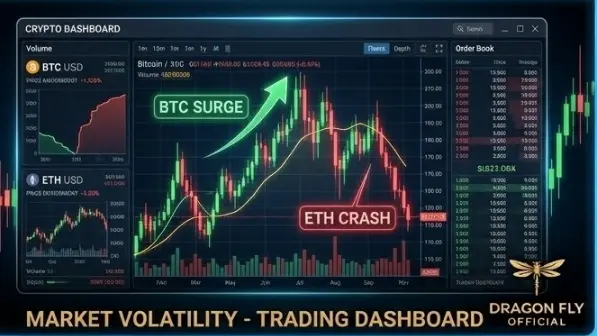
🦞 Prove Your Blue Lobster Is Smarter — AI Trading Agent Powered by Gate for AI MCP
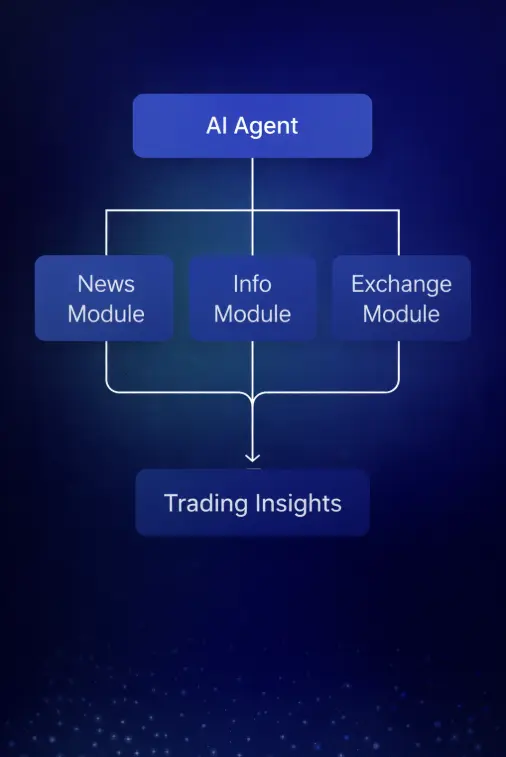
I built a simple AI trading assistant using the Gate for AI MCP (Model Context Protocol) to demonstrate how AI can assist traders with real-time data, market insights, and trading decisions.
⚙️ Core MCP Modules Used
🔹 News Module
The AI collects the latest crypto news and analyzes market sentiment to detect bullish or bearish narratives affecting the market.
🔹 Info Module
The AI gathers important market data including:
• Price movement
• Trading volume
• Market volatility
• Key asset information
🔹 Exchange M
BTC1,27%
ETH1,73%
post-image
post-image
post-image
post-image
  • Reward
  • Comment
  • Repost
  • Share
📊 #USJoblessClaimsMissExpectations — A Warning Sign for the Market?
DragonFlyOfficialvip
📊 #USJoblessClaimsMissExpectations — A Warning Sign for the Market?
The latest U.S. labor data has surprised markets after jobless claims and employment indicators failed to meet expectations, raising concerns about the strength of the economy. When labor market data weakens unexpectedly, it often becomes an early signal that economic momentum may be slowing.
Recent reports indicate that the U.S. economy unexpectedly lost around 92,000 jobs in February, while the unemployment rate climbed near 4.4%, a result that came in significantly worse than forecasts. Such data usually shakes investor confidence because the labor market has been one of the strongest pillars supporting economic growth.
According to Dragon Fly Official, labor statistics like jobless claims are among the fastest indicators traders watch to understand where the economy may be heading next. When claims start missing expectations, it can signal that companies are becoming more cautious about hiring and expansion.
Markets typically react quickly to this type of data. Weak labor numbers can increase speculation about Federal Reserve policy changes, impact the U.S. dollar, and influence global assets ranging from stocks to commodities.
From Dragon Fly Official’s perspective, the key question now is whether this data represents a temporary slowdown or the beginning of a broader shift in the labor market. If upcoming reports show similar weakness, investors may start pricing in slower economic growth.
Another important point highlighted by Dragon Fly Official is that employment data directly affects consumer spending confidence. If unemployment continues rising, household spending could slow down, which would eventually impact corporate earnings and overall market sentiment.
For traders and investors, this situation creates both risk and opportunity. Labor market surprises often trigger short-term volatility, and those who closely follow macroeconomic indicators may find strategic entry points as markets adjust to the new data.
#USJoblessClaimsMissExpectations
repost-content-media
  • Reward
  • 1
  • Repost
  • Share
ybaservip:
To The Moon 🌕
📉 #CulperResearchOpenlyShortsETH — A New Debate Around Ethereum
ETH1,73%
DragonFlyOfficialvip
#CulperResearchOpenlyShortsETH
📉 #CulperResearchOpenlyShortsETH — A New Debate Around Ethereum
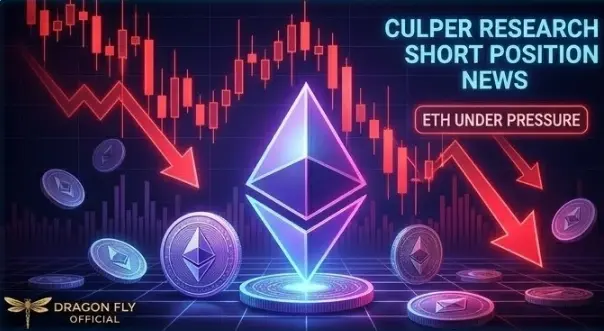
The crypto market is once again in the spotlight after Culper Research publicly announced a short position against Ethereum (ETH) and several ETH-linked companies, including firms with large ETH treasuries. The move has triggered a major debate across the crypto community about Ethereum’s long-term economics.
Culper Research argues that Ethereum’s tokenomics weakened after the December 2025 “Fusaka” upgrade, which expanded network block space and pushed transaction fees sharply lower. According to the firm, fees dropped by roughly 90%, reducing validator income and potentially weakening staking incentives over time.
Because validator rewards depend partly on transaction fees, Culper warns this could create a negative loop: lower fees → reduced staking yield → weaker demand to stake → potential pressure on network security and token value. Some analysts even described the risk as a potential “death spiral” scenario if economic incentives continue to deteriorate.
However, the Ethereum community strongly disputes this view. Supporters argue that lower fees actually improve usability and adoption, especially for DeFi, NFTs, and Layer-2 ecosystems. They also say network activity and institutional interest remain strong despite short-seller criticism.
💡 Dragon Fly Official Insight:
From Dragon Fly Official’s perspective, this short position is less about Ethereum collapsing and more about how professional funds exploit macro narratives. When a large research firm publicly shorts an asset, it often aims to influence sentiment as much as price.
🔥 According to Dragon Fly Official, traders should focus on real indicators such as network activity, liquidity flows, and Layer-2 adoption, rather than reacting purely to headline narratives.
📊 In the view of Dragon Fly Official, this situation highlights a classic crypto market dynamic: whenever a dominant blockchain faces structural criticism, volatility increases—and that volatility often creates both risk and opportunity for traders.
#CulperResearchOpenlyShortsETH
repost-content-media
  • Reward
  • 1
  • Repost
  • Share
ybaservip:
LFG 🔥
#Trump’s15%GlobalTariffsSettoTakeEffect — A Shockwave for Global Trade
DragonFlyOfficialvip
🌍 #Trump’s15%GlobalTariffsSettoTakeEffect — A Shockwave for Global Trade
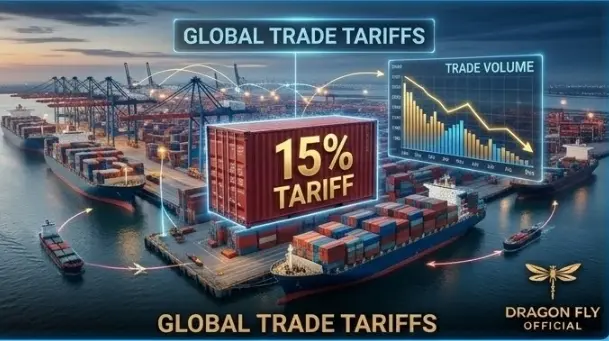
The global economic landscape is entering a new phase as the United States moves forward with a 15% tariff on imports from nearly all countries, marking one of the most aggressive trade measures in recent years. The policy follows a legal shift after the U.S. Supreme Court struck down earlier tariffs, pushing the administration to reintroduce duties under a different law.
Initially, a 10% universal tariff was imposed, but the administration quickly signaled plans to raise it to 15%, the maximum allowed under Section 122 of the 1974 Trade Act. The measure is expected to remain in place for about 150 days unless Congress extends it, making it a powerful but temporary economic lever.
For global markets, this move is significant because tariffs function like a tax on imports. When they rise, imported goods become more expensive, which can ripple across supply chains, consumer prices, and corporate profits. Economists warn that the policy could increase household costs by hundreds of dollars and add inflation pressure, while also triggering volatility in global markets.
From a geopolitical perspective, the tariff strategy is also part of a broader effort to reshape trade relationships. The White House argues the measure is intended to protect domestic manufacturing and reduce trade imbalances, but critics warn it may strain alliances and slow global trade growth.
According to Dragon Fly Official, large-scale tariff policies rarely impact just one country—they reshape the entire global economic environment. When a major economy like the United States changes trade costs, industries from manufacturing to technology feel the pressure almost immediately.
Another key point highlighted by Dragon Fly Official is how tariffs influence market psychology. Investors often interpret aggressive trade policies as signals of economic nationalism, which can trigger short-term volatility in stocks, commodities, and even crypto markets as traders adjust to new supply-chain expectations.
From Dragon Fly Official’s perspective, the real story will unfold over the next few months. If other countries respond with retaliatory tariffs or trade restrictions, global markets could enter a new cycle of trade tensions similar to previous trade wars.
In simple terms, this policy is more than a tariff increase—it is a major test of how resilient global trade and financial markets are in an increasingly geopolitical economic environment.
#Trumps15GlobalTariffs #GlobalTrade #MacroEconomics #DragonFlyOfficial
repost-content-media
  • Reward
  • Comment
  • Repost
  • Share
View Original
DragonFlyOfficialvip
#FebNonfarmPayrollsUnexpectedlyFall
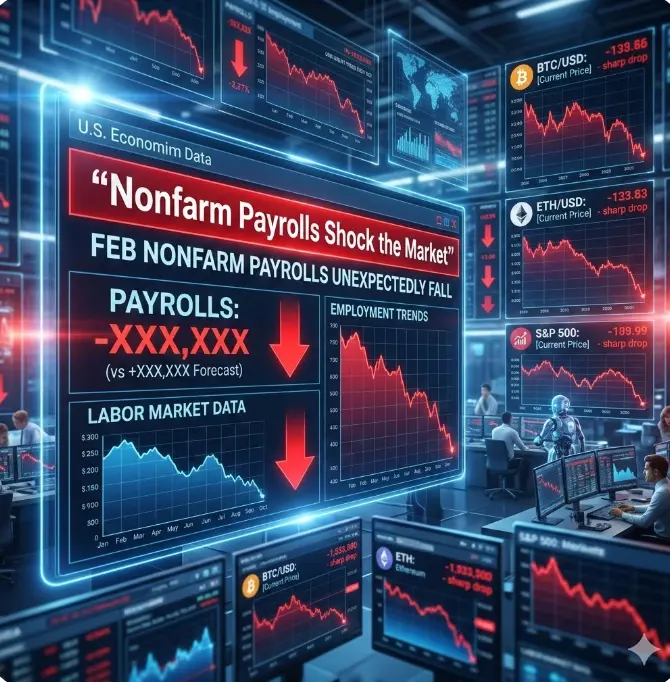
The latest **U.S. Nonfarm Payrolls** report for February surprised global markets after job growth came in weaker than expected. Normally, strong payroll data signals a healthy economy, but when job creation suddenly slows, investors begin questioning whether economic momentum is starting to cool.
This data matters because it plays a major role in how the **Federal Reserve** decides its monetary policy. If the labor market weakens, it increases the chances that the Fed could eventually consider easing financial conditions or slowing the pace of restrictive policies.
Markets reacted quickly after the release. Some traders interpreted the weaker payroll numbers as a sign of potential economic slowdown, while others saw it as a possible signal that interest rate pressure may ease in the future. When expectations around interest rates change, liquidity expectations across global markets also begin to shift.
For crypto investors, macroeconomic signals like this are extremely important. When financial conditions tighten, risk assets often struggle. But if markets begin expecting future policy easing, liquidity can gradually return to risk sectors such as crypto.
According to **Dragon Fly Official**, this payroll surprise may not move markets instantly, but it could become an early indicator of a larger macro shift. If upcoming economic data also shows weakness in employment or growth, market expectations around interest rates could change more rapidly.
Another key point highlighted by **Dragon Fly Official** is that investors are now watching the next inflation reports and policy signals from the Federal Reserve very closely. The direction of interest rates remains one of the biggest drivers of global liquidity and risk sentiment.
At this stage, the question is not just about one payroll report. The bigger question is whether the U.S. labor market is beginning to cool after a long period of strength. If that trend continues, it could reshape expectations across stocks, bonds, and crypto markets in the coming months.
From a broader perspective, **Dragon Fly Official** believes that moments like these often mark the beginning of new narratives in financial markets. While one data release does not define the entire trend, repeated signals from economic data can gradually shift investor sentiment and market direction.
repost-content-media
  • Reward
  • 1
  • Repost
  • Share
ybaservip:
Good luck and prosperity 🧧
View Original
DragonFlyOfficialvip
#CryptoMarketsDipSlightly

The global crypto market saw a slight pullback as major digital assets moved lower during the latest trading session. Market leaders like Bitcoin and Ethereum recorded small declines, causing the overall market sentiment to turn cautiously neutral rather than strongly bearish.
Short-term dips like this are common in crypto markets, especially after periods of strong upward movement. Many traders view these small corrections as a normal market reset rather than a sign of a major trend reversal. Profit-taking, macro uncertainty, and shifting liquidity conditions often trigger temporary pullbacks.
Another factor influencing sentiment is global macroeconomic data. Investors continue watching signals from the Federal Reserve and broader financial markets. When uncertainty around interest rates or economic data increases, risk assets such as cryptocurrencies sometimes experience mild selling pressure as traders rebalance their positions.
Despite the slight dip, the broader structure of the crypto market remains relatively stable. Trading volumes remain active, and institutional interest in digital assets continues to grow. Market participants are still closely monitoring key support levels for Bitcoin and Ethereum, which often act as indicators for the direction of the entire crypto market.
According to Dragon Fly Official, minor corrections like this often help the market cool down after short bursts of bullish momentum. Healthy markets rarely move in a straight line, and temporary dips can create stronger foundations for future growth if overall sentiment and liquidity remain supportive.
Dragon Fly Official also highlights that investor attention is currently focused on upcoming macroeconomic data and capital flows into the crypto ecosystem. If liquidity conditions improve and market confidence strengthens, even small dips can quickly turn into renewed upward momentum.
From a broader perspective, Dragon Fly Official believes that these small market movements are part of the natural rhythm of the crypto cycle. Experienced investors usually pay more attention to long-term trends rather than reacting to every short-term fluctuation.
While the dip may look concerning at first glance, the real story will depend on whether buyers step in to support the market in the coming sessions.
repost-content-media
  • Reward
  • 1
  • Repost
  • Share
ybaservip:
Good luck and prosperity 🧧
View Original
DragonFlyOfficialvip
#GlobalRate-CutExpectationsCoolOff
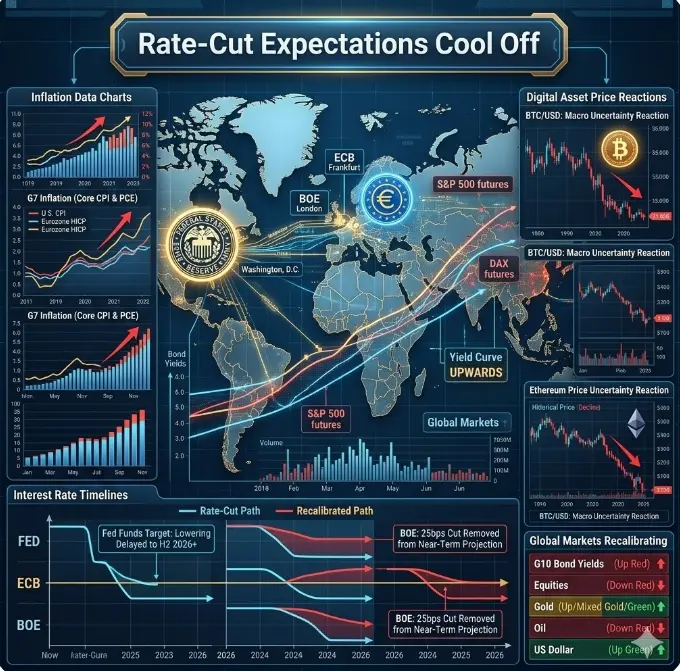
Global financial markets have recently shifted their expectations around interest rate policy as new economic data has reduced the probability of imminent rate cuts by central banks. After a period in which inflation showed signs of slowing and labor markets softened, investors had priced in multiple rate cuts from major central banks — including the Federal Reserve, the European Central Bank, and others. However, the latest macroeconomic indicators and policy signals suggest that those expectations are now being recalibrated, leading to a “rate‑cut cool‑off” across global markets.
Why Rate‑Cut Expectations Cooled
The shift stems from a mix of stronger‑than‑anticipated economic readings in key regions:
Resilient Inflation Data
Recent CPI and PCE inflation readings in the U.S. and Europe remained stickier than markets had hoped. Even as price pressures eased from their multi‑year highs, core inflation components — especially services and shelter costs — have continued to surprise to the upside. This reduces urgency for policymakers to lower policy rates.
Strong Employment Metrics
Labor market data has remained robust in several advanced economies. While some reports showed slight slowing, unemployment rates have held near cyclical lows, supporting consumer spending and economic growth. When employment stays strong, central banks typically avoid cutting rates prematurely for fear of reigniting inflation pressures.
Credit Conditions & Consumer Spending
Credit demand and bank lending surveys indicate that credit conditions are not loosening rapidly. Coupled with continued consumer spending, this suggests that aggregate demand remains healthy — another reason policymakers may delay easing measures.
Divergences Among Central Banks
Notably, while emerging market central banks have begun modest rate reductions as inflation falls closer to targets, major developed‑market central banks are taking a more cautious stance. For example, the Fed’s messaging — emphasizing patience and data dependency — has continued to discourage aggressive easing bets.
Market Reaction: Repricing in Real Time
The immediate reaction in global markets has been visible across key asset classes:
Bond Yields Risen: Expectations for rate cuts were priced heavily into bond markets over recent months. With cooling expectations, yields on 2‑year and 10‑year Treasuries have climbed, reflecting a lower probability of near‑term Fed easing.
Equities Taking a Breather: Risk assets such as stocks and cryptocurrencies rallied when rate‑cut expectations rose. But as markets recalibrated, some of those gains have moderated, especially in rate‑sensitive sectors like technology.
FX Volatility: Currencies perceived as “carry trades” or tied to higher yielding economies have shown strength, as traders reduce bets on lower global rates.
According to Dragon Fly Official, this repricing reflects a more nuanced understanding of macro fundamentals. The market learned that while inflation has eased from crisis‑era extremes, it is not yet at levels that guarantee sustained policy accommodation. As a result, the potential for multiple rate cuts in 2026 — once widely anticipated — is now significantly reduced.
Implications for Crypto and Risk Assets
In the context of digital assets, cooling rate‑cut expectations matter because:
Liquidity Premium Drops: Cryptocurrencies are often buoyed during periods of abundant liquidity. With rate cuts deferred, risk capital may remain more selective.
Correlation with Equities: Crypto markets have shown stronger correlation with U.S. equities in recent cycles. As equities adjust to the new pricing regime, crypto could similarly face sideways or corrective phases.
Macro Sentiment Shift: Investor sentiment tends to favor risk assets when real yields decline. If yields stabilize or rise modestly, risk‑off rotations could intensify.
However, it’s important to recognize that markets are dynamic. Even as expectations cool now, a future economic slowdown or renewed inflation decline could bring rate‑cut pricing back into focus.
What to Watch Next
Dragon Fly Official highlights several key data points and events that could influence the next phase of monetary policy expectations:
Upcoming CPI and PCE prints for the U.S. and eurozone
Central bank meeting minutes and speeches from key policymakers
Labor market and consumer confidence indicators
Credit growth and lending conditions surveys
These metrics will be critical in assessing whether rate‑cut expectations stabilize, continue to cool, or eventually reverse.
Bottom Line
The recent cooling in global rate‑cut expectations is not necessarily bearish for all markets, but it is a signal that investors are reassessing the pace and probability of monetary easing. This recalibration reflects stronger underlying economic data and cautious messaging from central banks — especially in developed markets. As the macro backdrop evolves, markets will continue to balance growth, inflation, and policy risk.
For now, the narrative has shifted from “imminent easing” to “data dependency and patience” — and that shift may be the defining macro theme of the current cycle.
repost-content-media
  • Reward
  • 1
  • Repost
  • Share
ybaservip:
2026 GOGOGO 👊
Celebrate the Goddess Festival with Gate!
DragonFlyOfficialvip
🌸 Celebrate the Goddess Festival with Gate!
Brilliance is more than just a word—the future is defined by her. Amid market ups and downs, she navigates with sharp judgment, turning every trading rhythm into victory. ✨
This Goddess Festival, Gate honors the radiance in every trader:
🎁 Up to 3,000 USDT Future Fund
🎁 Limited edition cash rewards
🎁 Surprise benefits like contract trial funds
⏰ Event Duration: March 6, 2026, 16:00 – March 15, 2026, 16:00 (UTC+8)
🔗 Join now: Gate Goddess Festival
Let the brilliance shine. Let the future be defined by her.
— Dragon Fly Official
#GateGoddessFestival #CryptoRewards #USDT #TradingRewards #GoddessPower
repost-content-media
  • Reward
  • 2
  • Repost
  • Share
ybaservip:
To The Moon 🌕
View More
My Blue Lobster AI is live on Gate for AI!
DragonFlyOfficialvip
🐙 My Blue Lobster AI is live on Gate for AI!
Tracking real-time crypto for multiple coins:
💡 BTC: 🟢 Bullish | ETH: 🔴 Bearish | ADA: 🔴 Bearish
Powered by Gate for AI MCP modules, generating smart AI insights and market signals instantly.
I’ve joined the #GateBlueLobsters challenge!
Demo attached 👇
repost-content-media
  • Reward
  • 1
  • Repost
  • Share
QueenOfTheDayvip:
To The Moon 🌕
#CryptoMarketBouncesBack
ate – Crypto Market Rebound Analysis
The crypto market has shown a powerful rebound with Bitcoin surging to $71,113 and Ethereum climbing to $2,070, signaling renewed bullish momentum across the market. Over the past 24 hours, both major assets recorded strong gains, while altcoins have also started showing signs of recovery, suggesting improving investor sentiment.
This move has sparked an important discussion among traders: Is this simply a short-term rebound, or the beginning of a new bullish trend?
📊 Market Structure Analysis
From a technical perspective, Bitcoin
BTC1,27%
ETH1,73%
post-image
  • Reward
  • Comment
  • Repost
  • Share
good post
Repanzalvip
#CLARITYActAdvances
#CLARITYActAdvances
The progress of the Digital Asset Market Clarity Act marks an important step toward clearer regulation for the cryptocurrency industry in the United States. The legislation aims to establish a more defined legal framework for digital assets, helping determine whether specific cryptocurrencies should be regulated as securities or commodities.
One of the central goals of the bill is to reduce the long standing regulatory uncertainty that has surrounded the crypto market. By clarifying the roles of agencies such as the U.S. Securities and Exchange Commission and the Commodity Futures Trading Commission, the act seeks to provide more predictable oversight for exchanges, developers, and investors. Supporters argue that clearer rules could encourage innovation while also strengthening investor protection.
For the broader crypto ecosystem, regulatory clarity is often viewed as a positive development. Many industry participants believe that well defined laws could attract more institutional investment and accelerate the integration of digital assets into the global financial system. At the same time policymakers continue to debate how to balance innovation with consumer safeguards.
As the CLARITY Act advances through the legislative process, market participants are closely watching its progress because the final framework could significantly influence the future growth, adoption, and regulation of cryptocurrencies in the United States.
repost-content-media
  • Reward
  • Comment
  • Repost
  • Share
  • Pin