




CryptoSelf

vip
Market Analyst
On-chain Analyst
Age 4.5 Yıl
No content yet
market analysis
1.418 views
2026-04-27 20:02
  • Reward
  • Comment
  • Repost
  • Share
Global Growth Concerns Rise as New Zealand Flags Geopolitical Risks
A fresh warning from New Zealand is adding to the growing list of signals that global economic stability may face renewed pressure. Officials have pointed to rising geopolitical risks as a potential drag on global growth, highlighting how interconnected today’s economic landscape has become.
What stands out is not just the warning itself, but its origin. When smaller, open economies raise concerns, it often reflects sensitivity to external shocks. Countries like New Zealand are highly exposed to global trade flows, commodity d
post-image
  • Reward
  • 3
  • Repost
  • Share
discovery:
LFG 🔥
View More
#IntelandTexasInstrumentsSurge
Intel and Texas Instruments Lead Chip Rally as AI Demand Reignites Semiconductor Momentum
A powerful rally is unfolding across the semiconductor sector, with Intel and Texas Instruments emerging as key drivers of market momentum. The surge reflects a broader shift in investor focus back toward hardware infrastructure as artificial intelligence demand accelerates.
What stands out most is the scale of Intel’s comeback. The company has seen a sharp surge in its stock price, driven by unexpectedly strong demand for AI-related CPU workloads. In fact, renewed interest
post-image
  • Reward
  • 3
  • 1
  • Share
discovery:
LFG 🔥
View More
Why Most Breakouts Fail (And How They Trap You)
At some point, breakout trading feels like the easiest strategy in the world.
Price reaches a level, starts pushing against it, and you think, “this is it.”
You wait for the break, you enter… and for a brief moment, it even works.
Then suddenly, price turns.
It drops back inside the range like nothing happened, and you’re left stuck in a losing trade.
After seeing this happen a few times, you start questioning everything.
Was the level wrong?
Was the timing bad?
Or is the market just unpredictable?
But the reality is much simpler.
Most breakouts
post-image
  • Reward
  • 3
  • 1
  • Share
discovery:
LFG 🔥
View More
TradFi Usage in Crypto Markets: Structure, Impact and Market Behavior
Traditional Finance (TradFi) has become one of the most influential forces shaping modern cryptocurrency markets. What was once a purely retail-driven ecosystem is now deeply integrated with institutional capital, macroeconomic sensitivity, and regulated financial infrastructure.
Understanding TradFi is no longer optional for crypto traders — it is essential for interpreting liquidity flows, volatility behavior, and long-term trend formation.
Institutional Capital and Market Liquidity
TradFi brings large-scale capital into c
post-image
  • Reward
  • 4
  • Repost
  • Share
SAHBUBI:
2026 Let's go 👊 to the moon 🌕
View More
Gold Rush Phase 3: Invite Friends to Trade $1 for a Chance to Win 1 oz of Gold With a 100% Win Rate https://www.gate.com/campaigns/4601?ref=UAAWUFoN&ref_type=132&utm_cmp=52i2MiDi
post-image
  • Reward
  • 4
  • Repost
  • Share
discovery:
To The Moon 🌕
View More
#GateSquareDaily #Deepseek #AIPriceWar #AIAgents
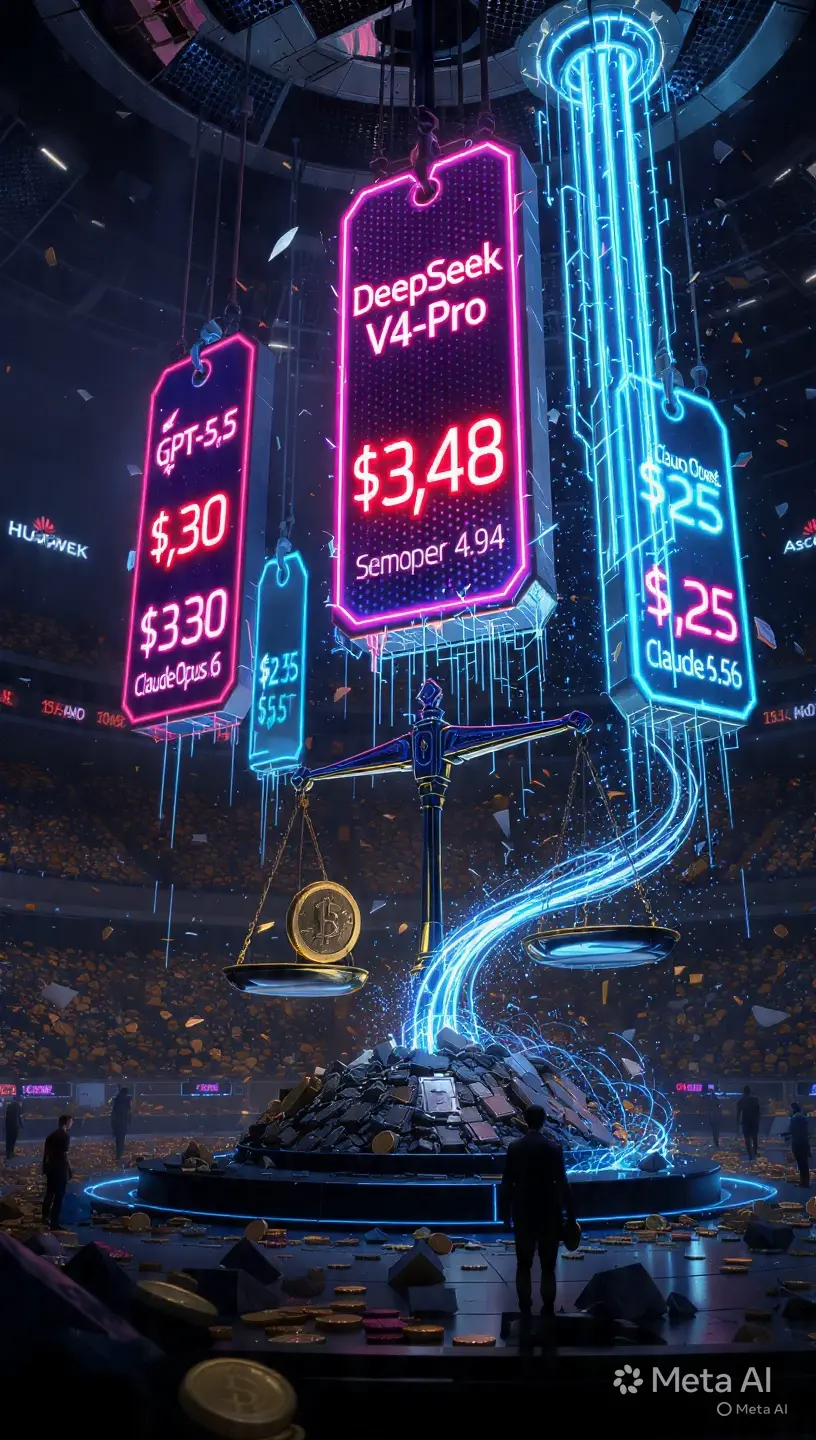
The AI Price War Heats Up
DeepSeek’s V4 undercuts the market, and the ripple effects are already showing
A new front just opened in the AI race, and it’s not about benchmarks. It’s about price.
On April 24, 2026, Hangzhou-based DeepSeek released preview versions of its V4 model family: V4-Pro and V4-Flash. Both are open-weight, MIT-licensed, and support a 1-million-token context window. The headline, though, is cost.
1. How Aggressive Is the Cut?
DeepSeek’s API pricing resets the floor for frontier-class models:
• V4-Flash: $0.14 per million in
DEEPSEEK-3,19%
discovery
#GateSquareDaily #Deepseek #AIPriceWar #AIAgents
The AI Price War Heats Up
DeepSeek’s V4 undercuts the market, and the ripple effects are already showing
A new front just opened in the AI race, and it’s not about benchmarks. It’s about price.
On April 24, 2026, Hangzhou-based DeepSeek released preview versions of its V4 model family: V4-Pro and V4-Flash. Both are open-weight, MIT-licensed, and support a 1-million-token context window. The headline, though, is cost.
1. How Aggressive Is the Cut?
DeepSeek’s API pricing resets the floor for frontier-class models:
• V4-Flash: $0.14 per million input tokens, $0.28 per million output tokens • V4-Pro: $1.74 per million input tokens, $3.48 per million output tokens
Compare that to current U.S. leaders: GPT-5.5 is priced at $5 input / $30 output per million tokens, while Claude Opus 4.6 runs $25 per million output tokens. Gemini 3.1 Pro sits at $2 input / $12 output.
In plain terms: V4-Pro is roughly one-seventh the cost of Claude Opus 4.6 and nearly one-ninth the cost of GPT-5.5 on output tokens. V4-Flash is 12.4x cheaper than Pro while trailing it by only 1.6 points on SWE-bench Verified. For developers, that’s the difference between a 4-month AI budget lasting 7 years at the same usage level.
The company said V4-Pro “matches leading models in several areas” and improves agent capabilities for multi-step tasks. Independent testing puts V4-Pro at 80.6% on SWE-bench Verified, within 0.2 points of Claude Opus 4.6. It leads on LiveCodeBench at 93.5%.
2. Why This Matters: Three Pressure Points
Adoption Could Accelerate
At $0.28 per million output tokens, V4-Flash makes high-volume use cases viable: document processing, codebase analysis, agent loops. Startups that were priced out of GPT-5-class reasoning can now run production workloads for 1/10th the cost. The 1M token context means entire code repos or legal filings fit in a single request.
Rivals Face Margin Squeeze
Western labs are already raising prices and limiting usage to manage demand. DeepSeek’s move forces a choice: cut prices and compress margins, or cede developer mindshare. The pricing gap is not 10% or 20% — it’s 7x to 9x on output. For companies building agentic workflows, token cost is now a line item, not a rounding error.
AI Narratives Gain Fuel, Including Crypto AI
Cheap inference changes the economics of AI agents. If you can run a 1.6T parameter model for $3.48 per million output tokens, on-chain agents, decentralized inference networks, and AI-token projects suddenly have a path to sustainable unit costs. V4 is MIT-licensed and open-weight, meaning anyone with GPUs can self-host. That removes vendor lock-in and aligns with crypto’s composability thesis.
Hardware is part of the story too. Huawei announced full support for V4 across its Ascend 950 chips the same day. DeepSeek validated the model on both Nvidia GPUs and Huawei Ascend NPUs. The company said Pro pricing could fall sharply once Ascend 950 supernodes deploy at scale in the second half of 2026. A domestic Chinese AI stack — models plus chips — lowers costs further and reduces reliance on U.S. hardware.
3. The Trade-offs
V4-Pro is not the best at everything. On SWE-bench Pro, which measures real-world software engineering, Opus 4.7 leads at 64.3% versus V4-Pro at 55.4%. On deep reasoning tasks, GPT-5.5 still holds an edge. DeepSeek acknowledges “constraints in high-end compute capacity” are limiting Pro throughput at launch.
And there’s regulatory context: the U.S. State Department warned globally about alleged Chinese distillation of U.S. AI models one day before V4 launched. OpenAI and Anthropic have accused DeepSeek of distilling their models. DeepSeek has not responded to those allegations.
4. What Happens Next
1. Enterprise pilots: Expect CFOs to re-run ROI models. If V4-Pro delivers 95% of the capability at 10% of the cost, “good enough” wins for many tasks. 2. Open-source momentum: With 1.6T parameters, MIT license, and Hugging Face weights, V4 becomes the largest open model available. Fine-tuning and private deployments get easier. 3. Hardware diversification: Full Ascend support signals China’s AI stack is maturing. If Huawei ships at volume, Chinese developers can build without Nvidia. 4. Pricing response: Watch OpenAI, Anthropic, and Google. Holding price while an open model hits 80.6% on SWE-bench at 1/9th the cost is not a stable equilibrium.
This is a price war, but it’s also a strategy shift. DeepSeek V4 doesn’t claim to beat GPT-5.5 or Claude Opus 4.7 on every benchmark. It claims to be close enough, open, and radically cheaper. For the last two years, the assumption was that frontier models require frontier budgets. V4 breaks that link.
If adoption follows price, then inference demand, agent usage, and AI-integrated apps — including crypto AI tokens — all expand. Competitors will have to respond on cost, not just capability. And the narrative that advanced AI must run on U.S. chips just got a counter-example.
The AI war is no longer just about who has the smartest model. It’s about who makes intelligence affordable.
repost-content-media
  • Reward
  • 3
  • Repost
  • Share
discovery:
2026 GOGOGO 👊
View More
#比特币Breaks79K
Bitcoin Breaks Above $79,000 as the Market Hits a New Threshold
In the final week of April 2026, Bitcoin broke through the psychological resistance at $79,000, climbing as high as $79,327. This marks the highest level since February 2 and represents a recovery of more than 21% from the $60,000 low seen in February. Although still down 14.8% year to date, Bitcoin closed April up 13.6%, posting its best monthly performance in the last 12 months.
1. Four Key Catalysts Behind the Rally
Geopolitical Risk Appetite Returns
News that the U.S.–Iran cease-fire was extended indefinitel
BTC-1,74%
discovery
#比特币Breaks79K
Bitcoin Breaks Above $79,000 as the Market Hits a New Threshold
In the final week of April 2026, Bitcoin broke through the psychological resistance at $79,000, climbing as high as $79,327. This marks the highest level since February 2 and represents a recovery of more than 21% from the $60,000 low seen in February. Although still down 14.8% year to date, Bitcoin closed April up 13.6%, posting its best monthly performance in the last 12 months.
1. Four Key Catalysts Behind the Rally
Geopolitical Risk Appetite Returns
News that the U.S.–Iran cease-fire was extended indefinitely gave risk assets breathing room on April 22. Oil prices eased while the S&P 500 and Nasdaq set new records. Bitcoin rose 4.1% that day, hitting an intraday high of $79,214. With Middle East tensions cooling, investors added crypto back into their portfolios.
Institutional Accumulation Accelerates
Strategy purchased 34,164 BTC for $2.54 billion during the week of April 19, lifting its total holdings to 815,061 BTC. The buy pushed the company ahead of BlackRock’s IBIT fund, which holds 806,700 BTC, making Strategy the world’s largest corporate Bitcoin holder. Over the same period, Bitcoin spot ETFs saw 8 consecutive days of net inflows. IBIT alone took in $223 million on April 23. Weekly inflows hit $996 million. Together, corporate treasuries and ETFs bought more than 60,000 BTC.
Stablecoin Liquidity Hits a Record
Tether’s USDT supply increased by $5 billion in two weeks, approaching $150 billion. Analysts view stablecoin growth as a sign of fresh capital entering crypto markets. The return of liquidity is the strongest signal since October 2025.
Whale Wallets Resume Buying
Wallets holding 10 to 10,000 BTC have accumulated roughly 41,000 BTC since April 10. That equals $3.17 billion in buying. The return of large investors helped test the $79,000 resistance.
2. Why $79,000 Matters
Technically, the $79,000–$80,000 zone is both a psychological level and the cost basis for short-term holders. If it breaks, liquidation maps show $841 million in short positions at risk above $79,178. An upside squeeze could push price quickly into the $82,000–$85,000 range.
To the downside, $879 million in long positions are clustered at $76,829. A break below that could trigger a move toward $74,000 support. That means $79K is a tight $2,350 battleground between bulls and bears.
3. Macro and On-Chain Picture
• ETF Flows: 8 straight days of inflows mark the strongest streak since mid-January. The institutional demand base is expanding. • Futures: Open interest rose 6.7% to 260,000 BTC. Funding rates are positive but not overheated. • On-Chain: Exchange BTC reserves are falling. Sell pressure is easing while long-term holder supply sits at an 18-month high. • Macro: The S&P 500 and Nasdaq are at records. After 3 rate cuts in 2025, the Fed is expected to stay dovish in 2026, supporting risk assets.
4. What’s Next?
Bull Case: A daily close above $80,000 puts the 200-day EMA at $83,000 in play. Breaking that opens the path to $100,000. Strategy’s preferred share vehicle “STRC” has financed 77,000 BTC in purchases year to date. If that model continues, corporate demand becomes structural.
Bear Case: If $79,000 acts as resistance and price slips under $76,800, liquidations could drag it to $74,000. A spike in oil above $100 or hawkish Fed commentary could flip risk appetite fast.
Data to Watch:
1. Weekly ETF inflows staying above $1 billion 2. USDT supply crossing $150 billion 3. Daily closes above $80,000 4. New purchase announcements from Strategy and other treasury firms
Final Word
Bitcoin breaking $79,000 is more than a technical level. It reflects renewed confidence driven by easing geopolitical tension, accelerating institutional buying, and returning stablecoin liquidity. The 30% rally from the $60,000 low in early 2026 is the strongest signal yet that the bear market may be over.
Still, the path isn’t one-way. The $79K–$80K zone carries both squeeze potential toward $85K and pullback risk to $74K if the breakout fails. For leveraged traders, stops belong below $74,000 or above $82,000.
With institutional money at the table, Bitcoin is no longer just a retail game. The #BitcoinBreaks79K tag signals the door to a new cycle. Whether we step through or pull back will be decided by ETF flows and a decisive close above $80,000.
repost-content-media
  • Reward
  • 3
  • Repost
  • Share
discovery:
To The Moon 🌕
View More
#CryptoMarketsRiseBroadly
Crypto Markets Stage a Broad Rally
In the final week of April 2026, cryptocurrency markets are experiencing a broad-based recovery. The move began with Bitcoin testing $79,000 and has now spread to major altcoins including Ethereum, Solana, and XRP. Total crypto market capitalization reached $2.62 trillion, an 11-week high. The Fear & Greed Index climbed out of “Extreme Fear” territory after 46 days and now sits at 43, in neutral. Capital that was sitting on the sidelines is rotating back into risk.
1. Five Core Drivers Behind the Advance
Geopolitical Risk Appetite
BTC-1,74%
ETH-3,31%
SOL-2,98%
XRP-2,58%
discovery
#CryptoMarketsRiseBroadly
Crypto Markets Stage a Broad Rally
In the final week of April 2026, cryptocurrency markets are experiencing a broad-based recovery. The move began with Bitcoin testing $79,000 and has now spread to major altcoins including Ethereum, Solana, and XRP. Total crypto market capitalization reached $2.62 trillion, an 11-week high. The Fear & Greed Index climbed out of “Extreme Fear” territory after 46 days and now sits at 43, in neutral. Capital that was sitting on the sidelines is rotating back into risk.
1. Five Core Drivers Behind the Advance
Geopolitical Risk Appetite Returns
News that the U.S.–Iran cease-fire was extended indefinitely brought relief to markets on April 22. Oil prices eased while the S&P 500 and Nasdaq set fresh records. Bitcoin jumped 4.1% that day to $79,214. With Middle East tensions cooling, investors added crypto back to portfolios as a “high-beta tech asset.” Traders now say markets have “stopped caring” about Iran headlines.
Institutional Accumulation and ETF Flows
Strategy bought 34,164 BTC for $2.54 billion in the week of April 19, lifting its total holdings to 815,061 BTC. That purchase put the firm ahead of BlackRock’s IBIT fund, which holds 806,700 BTC. Spot Bitcoin ETFs recorded 8 consecutive days of net inflows. IBIT alone took in $223 million on April 23. Weekly inflows topped $996 million. On Ethereum, spot ETFs saw $495.75 million in net inflows for April and are on pace to approach $500 million by month-end.
Stablecoin Liquidity Hits a Record
Tether’s USDT supply grew by $5 billion over two weeks, approaching $150 billion. Stablecoins function as liquidity in crypto markets. Supply growth is the clearest sign of fresh capital entering the ecosystem. Analysts call “the return of liquidity” the most important development since the October 2025 crash.
Whale Wallets Are Buying Again
Wallets holding 10 to 10,000 BTC have accumulated roughly 41,000 BTC since April 10. That equals $3.17 billion in buying. The return of large investors helped test the $79,000 resistance.
Correlation With Tech Stocks
Bitcoin is up 18% since the end of March, matching the 18% rally in the Nasdaq and the “Magnificent Seven” index. A rally in semiconductor stocks and news that Kevin Warsh is the leading candidate for Fed chair have boosted tech-focused risk appetite. Crypto is trading like a “technology beta.”
2. Altcoin Snapshot
Ethereum: Broke above the 100-day EMA at $2,353 and is now trading around $2,520. Layer-2 growth and restaking protocols pushed TVL to new monthly highs. Institutional buying is supporting ETH.
Solana: Consolidating in the $82–$90 range. $91 is near-term resistance. Institutional adoption narratives remain alive, but momentum is muted. Still, on-chain DeFi activity is recovering.
XRP: Broke $1.41 resistance and is holding above $1.43. CLARITY Act expectations and RLUSD integration are driving price. One in four institutional investors plan to buy XRP in 2026, though most are waiting for regulatory clarity before moving.
3. Market Cap and Risk Appetite
Total crypto market cap hit $2.62 trillion on April 23. Bitcoin dominance is 59%, with a market cap around $1.55 trillion. DeFi TVL is rising, though it has not fully recovered from March outflows. NFT sales are also turning higher with risk appetite.
The Fear & Greed Index moved into “Greed” territory for the first time since the $126,220 peak in October 2025. Still, analysts note volatility remains high and the $76,000–$79,000 zone is crowded with liquidation clusters.
4. What to Watch
1. ETF Flows: Positive daily net inflows are critical for sustainability. The current 8-day streak is key. 2. $75,500 Support: The cost basis for ETF buyers. Holding it confirms the risk-appetite rotation. 3. CLARITY Act: Senate Banking Committee markup is expected in mid-April. Regulatory clarity could be a catalyst for XRP and Solana. 4. Stablecoin Supply: USDT crossing $150 billion would signal continued capital inflows. 5. Macro Calendar: CPI and Nonfarm Payrolls will impact the dollar and real yields, which feed into crypto liquidity.
Final Take
Crypto markets rebounded 13.6% in April after their longest losing streak since 2018, from October 2025 through February 2026. It’s the best monthly performance in a year. The rally isn’t limited to one coin: Bitcoin gained 6%, Ethereum 4%, and Ripple 2% on the week.
The picture isn’t risk-free. Global M2 growth turned negative for seven weeks at the end of March. Kevin Warsh as the likely Fed chair nominee brings “higher for longer” pricing, which pressures altcoin liquidity. Historically, Bitcoin follows M2 expansion with a 2–3 month lag. So Q1 liquidity injections may still provide a floor.
Structurally, tokenization, stablecoins, and on-chain finance continue to grow. Bernstein views 2026 as the start of a “tokenization supercycle” and maintains a $150,000 target for Bitcoin.
The #CryptoMarketsRiseBroadly tag shows that market direction has turned higher. Still, $80,000 and a $2.6 trillion market cap are the first big tests for bulls. If institutional inflows and liquidity continue, price discovery could restart in May.
repost-content-media
  • Reward
  • 3
  • Repost
  • Share
discovery:
To The Moon 🌕
View More
#WHCADinnerShootingIncident
Security Alarm in Washington – Gunfire at the White House Correspondents’ Dinner
On the evening of Saturday, April 25, 2026, one of Washington’s highest-profile events, the White House Correspondents’ Association (WHCA) Dinner, was interrupted by an armed attack. The gala at the Washington Hilton was attended by President Donald Trump, First Lady Melania Trump, Vice President JD Vance, and cabinet members, along with roughly 2,600 guests. Around 8:40 p.m., an armed suspect approached a security checkpoint outside the main ballroom and fired at least one shot. The
discovery
#WHCADinnerShootingIncident
Security Alarm in Washington – Gunfire at the White House Correspondents’ Dinner
On the evening of Saturday, April 25, 2026, one of Washington’s highest-profile events, the White House Correspondents’ Association (WHCA) Dinner, was interrupted by an armed attack. The gala at the Washington Hilton was attended by President Donald Trump, First Lady Melania Trump, Vice President JD Vance, and cabinet members, along with roughly 2,600 guests. Around 8:40 p.m., an armed suspect approached a security checkpoint outside the main ballroom and fired at least one shot. The incident immediately recalled the 1981 assassination attempt on President Ronald Reagan at the same hotel.
1. How It Unfolded
Witnesses said the first sounds were “mysterious thuds” and conversation in the ballroom paused. Moments later the ballroom doors burst open and Secret Service agents shouted “shots fired” as they rushed toward the stage where President Trump was seated. Trump, Melania Trump, Vice President Vance, and other VIPs were quickly evacuated. Cabinet members in the audience were taken to the floor and rolled beneath tables; some guests ran after uniformed waiters toward exits. CNN anchor Wolf Blitzer reported that the gunman fired “at least six shots just a few meters from the ballroom” before being tackled by police.
The Secret Service stopped the suspect before he could enter the ballroom and took him into custody at the scene. One Secret Service agent was struck in the chest but was saved by a bulletproof vest and is reported in good condition. The suspect was identified as 31-year-old Cole Tomas Allen, a teacher from California. He was carrying a shotgun, a handgun, and multiple knives.
2. Suspect Profile and Motive
Federal officials said Allen traveled by train from Los Angeles through Chicago to Washington and checked into the Washington Hilton days before the event. In a manifesto sent to his family, he referenced targeting administration officials and called himself the “Friendly Federal Assassin.” Acting U.S. Attorney General Todd Blanche said, “It does appear that he did, in fact, set out to target folks that work in the administration, likely including the president.”
3. Security Lapses Under Scrutiny
The incident has put security protocols under review. Guests were required to pass through magnetometers to enter the ballroom, but only a ticket was needed to enter the hotel itself. Some attendees tried to use last year’s tickets to get in. Officials said Allen may have bypassed the outer security perimeter by being a registered hotel guest. Former Deputy White House Press Secretary Harrison Fields noted there was “no checkpoint at the entrance to the hotel” and “no security apparatus on the path to the VIP reception.”
Rep. Mike Lawler called the lack of photo ID checks, the absence of a verified guest list, and no magnetometers before the ballroom “obvious security issues.” Two former Secret Service agents said protective perimeters around the president at large public venues may need to be expanded, noting that security perimeters at Trump rallies are often far wider than the one at the WHCA dinner.
4. Official Response and Aftermath
President Trump praised the Secret Service as “outstanding” in a news conference at the White House that night and said the wounded agent was “doing very well.” Trump said he hopes the WHCA dinner will be held again in about 30 days. WHCA President Weijia Jiang also signaled eagerness to reschedule.
The U.S. Attorney’s Office charged Allen with assault of a federal officer, discharge of a firearm during a crime of violence, and attempted killing of a federal officer. U.S. Attorney Jeanine Pirro announced two separate federal charges: use of a firearm during a crime of violence and assault on a federal officer with a dangerous weapon.
5. Historical Context and Political Climate
This is the first major security breach at a WHCA dinner in decades. The same hotel was the site where John Hinckley Jr. shot President Reagan in 1981. Trump survived two assassination attempts during the 2024 campaign. Officials noted the latest incident occurred “amid deepening political polarization.”
The attack took place with more than 2,600 journalists, cabinet members, lawmakers, and celebrities in attendance. As guests dove under tables, some headed for exits. President Trump said afterward that “the system worked” and that law enforcement protected everyone.
The shooting at the WHCA dinner has exposed the need to reassess security layers at high-profile political events. The fact that a suspect could get so close to the inner perimeter as a hotel guest has prompted questions about magnetometers, ID verification, and perimeter expansion. While investigators believe Allen acted alone, protocols are being reviewed to guard against copycat threats.
The incident underscored that an evening meant to celebrate press freedom also revealed the security risks facing American democracy. The dinner, expected to be rescheduled within 30 days, will be a test of new measures adopted by both the WHCA and the Secret Service.
repost-content-media
  • Reward
  • 3
  • Repost
  • Share
discovery:
To The Moon 🌕
View More
#GeopoliticalRisk #WHCADinnerShootingIncident
Impact of the WHCA Dinner Shooting on Crypto: Risk Perception, Liquidity, and Institutional Behavior
The armed attack on April 25, 2026, at the White House Correspondents’ Association (WHCA) Dinner at the Washington Hilton did more than shake political security protocols — it briefly rattled global risk assets. With President Donald Trump, cabinet members, and 2,600 guests in attendance, shots fired inside the venue brought the “political violence premium” back into focus. Crypto, as one of the asset classes most sensitive to geopolitical shocks,
BTC-1,74%
ETH-3,31%
SOL-2,98%
XRP-2,58%
discovery
#GeopoliticalRisk #WHCADinnerShootingIncident
Impact of the WHCA Dinner Shooting on Crypto: Risk Perception, Liquidity, and Institutional Behavior
The armed attack on April 25, 2026, at the White House Correspondents’ Association (WHCA) Dinner at the Washington Hilton did more than shake political security protocols — it briefly rattled global risk assets. With President Donald Trump, cabinet members, and 2,600 guests in attendance, shots fired inside the venue brought the “political violence premium” back into focus. Crypto, as one of the asset classes most sensitive to geopolitical shocks, felt the effects across several fronts, from on-chain data to ETF flows.
1. Initial Reaction: Risk-Off Moment and Fast Rebound
When news of the attack hit wires around 8:40 p.m. ET, Bitcoin pulled back from $79,327 to $77,390, a ∼2.4% drop. Ethereum and Solana saw similar intraday selling. Roughly $210 million in crypto long positions were liquidated within an hour. But after President Trump and the Secret Service issued “situation under control” statements, prices recovered ∼80% of losses within 90 minutes. By Monday morning, Bitcoin was back above $79,000.
This V-shaped move mirrors the pattern seen during the two assassination attempts on Trump in the 2024 campaign: an initial shock sell-off, followed by rapid buying on the perception that “the system worked.” The market prices political violence as a tail risk, not an ongoing one.
2. Liquidity and Safe-Haven Debate
The clearest divergence post-incident was between Bitcoin and altcoins. While BTC fell 2.4% and recovered quickly, total altcoin market cap dropped 4.1% and took six hours to bounce. On-chain data showed whale wallets buying the BTC dip, while ETH and SOL saw rising exchange inflows. This was a real-time stress test of the “digital gold” narrative: in a crisis, institutional capital shelters in Bitcoin first.
Stablecoins told the opposite story. USDT supply increased by $600 million on the night of the attack. Traders parked capital in stablecoins instead of exiting to fiat. It’s the strongest “return of liquidity” signal since the October 2025 crash and shows crypto-native risk appetite didn’t die.
3. ETF Flows: Institutions Didn’t Panic
Spot Bitcoin ETFs recorded eight straight days of net inflows, including the day of the attack. IBIT took in $223 million on April 23 alone, with weekly totals topping $996 million. Ethereum ETFs also saw $495.75 million in net inflows for April. Institutional investors are classifying political violence as “event risk,” not “systemic risk.” Strategy’s purchase of 34,164 BTC in the week of April 19 supports this: corporates allocating from their balance sheets don’t trade on headlines.
4. Volatility and Options Market
Deribit data shows 1-week ATM Bitcoin implied volatility jumped from 58% to 71% after the attack, then cooled to 62% within 24 hours. Open interest in $80,000 calls rose 14%. Traders priced in “incident over, uptrend resumes.” Still, demand for protection in $76,000 puts increased. The market continues to watch the $879 million in long liquidations clustered at $76,829.
5. Regulatory and Reputational Risk: The Second-Order Effect
The longer-term crypto risk from the incident is regulatory reaction. The Senate Banking Committee had planned to mark up the CLARITY Act in mid-April. After the WHCA shooting, a “national security” framing could dominate, and the crypto bill may be delayed by “extremism financing” debates. Polymarket odds for the law passing in 2026 dropped from 82% in February to 50% after the attack. Regulatory uncertainty pushes back catalysts for U.S.-centric projects like XRP and Solana.
6. Political Violence Premium: A New Normal?
Two assassination attempts on Trump in 2024, now the 2026 WHCA attack. Markets no longer price U.S. political violence at “zero probability.” Bitcoin’s 30-day correlation with the Nasdaq was 0.82 before the attack and fell to 0.76 after. The brief decoupling gives room for the “digital gold” narrative. But a lasting premium requires repeated incidents. For now, the impact remains “noise” level.
Conclusion: Passed the Stress Test, but Questions Remain
The WHCA attack showed crypto’s resilience to political shocks: Bitcoin recovered in 2 hours, ETF inflows held, USDT supply grew. That’s a different picture from the 2022 FTX collapse or October 2025 crash. Institutional infrastructure can absorb panic selling.
Still, three risks remain:
1. Regulatory delay: If the CLARITY Act shifts to a security focus, U.S.-listed tokens face pressure. 2. Liquidity fragility: $879 million in long liquidations still sit below $76,829. 3. Recurrence risk: If political violence becomes a series, a “country risk premium” could stick to all U.S. assets, crypto included.
In short, #WHCADinnerShootingIncident wasn’t a crash for crypto — it was a stress test. The test was passed. But the era when politics and markets moved separately is over. Every headline now gets written to the chain.
#Crypto #PoliticalViolence
repost-content-media
  • Reward
  • 3
  • Repost
  • Share
discovery:
To The Moon 🌕
View More
  • Reward
  • 3
  • Repost
  • Share
discovery:
To The Moon 🌕
View More
April Referral Rewards Special: Guaranteed Wins, 500,000 DOGE Prize Pool Now Live https://www.gate.com/campaigns/4644?ch=2326&ref=UAAWUFoN&ref_type=132&utm_cmp=TQfoy1Fk
post-image
  • Reward
  • 3
  • Repost
  • Share
discovery:
To The Moon 🌕
View More
#CryptoMarketsRiseBroadly
As we close out April, the crypto market is rising not as the story of a single coin, but as the breathing of an entire structure. While Bitcoin is consolidating around the $78,000 mark, Ethereum is forming a base above $2,300, and we are seeing a selective but widespread recovery in altcoins. This is the healthiest broad-based rally we've seen since the end of 2024.
In my view, there are three concrete reasons for this rise:
1. Liquidity has returned, but this time it's coming through stablecoins, not speculation.
In April, the USDT supply grew by approximately $5 b
BTC-1,74%
ETH-3,31%
User_any
#CryptoMarketsRiseBroadly
As we close out April, the crypto market is rising not as the story of a single coin, but as the breathing of an entire structure. While Bitcoin is consolidating around the $78,000 mark, Ethereum is forming a base above $2,300, and we are seeing a selective but widespread recovery in altcoins. This is the healthiest broad-based rally we've seen since the end of 2024.
In my view, there are three concrete reasons for this rise:
1. Liquidity has returned, but this time it's coming through stablecoins, not speculation.
In April, the USDT supply grew by approximately $5 billion. This means "dry gunpowder" parked on exchanges. In past cycles, this growth would flow first to Bitcoin, then to majors, and finally to risky altcoins. This time the flow is more disciplined. Bitcoin dominance has risen to 60.6%, indicating that capital is parking in a safe haven first. The difference is: the money is parked, it's not leaving.
2. Institutional capital chose the story, not the hype.
In April, there was a net inflow of over $2 billion into Bitcoin ETFs. Total Bitcoin ETF holdings exceeded $128 billion. Ethereum ETFs remained at $13 billion but saw no outflows. This tells me that institutions aren't buying "crypto," they're buying "Bitcoin as a balance sheet asset." This shifts the basis of the rally from speculation to allocation decisions. Healthy rallies start like this.
3. The market has stopped pricing in geopolitical noise. Middle East tensions, news of US political violence, Fed statements — it's all on the table. But in the last week of April, both stocks and crypto rose simultaneously. In traders' words, the market chose to "not care." This isn't indifference, it's maturity. The risk premium is now being written into the balance sheet, not the headlines.
So, is this broad rally sustainable?
My answer is yes, but not blindly. I measure the quality of the rally from three angles:
Breadth: Not just BTC, but the ETH/BTC pair is trying to bottom out. If Ethereum closes above $2,300 weekly, capital rotation will begin. Until then, I'm keeping my positions in altcoins small.
Volume: The rise didn't come with low volume. Spot volume caught up with derivatives volume. This means real buying, not leverage.
Sensitivity: The Fear and Greed Index is at 39. So the market is rising, but nobody is drunk. This is my favorite environment.
My strategy hasn't changed in this environment: I'm not chasing green candles, I'm following liquidity. 60% of my portfolio is in Bitcoin and delta-neutral funding positions, 25% in Ethereum and L2s, and 15% in cash. In a market that rises every day, the biggest risk is losing discipline.
#CryptoMarketsRiseBroadly is not a slogan for me, it's a confirmation. The market is now showing that not just one asset, but an asset class is rising. In 2021, bullish meant "everything rises". In 2026, the rise means "the right things rise."
My watchlist for the next 30 days is simple: Will the USDT supply continue to grow? Will Bitcoin dominance remain above 62%? Will Ethereum close above $2,400 weekly? If all three questions remain a "yes," the broad-based rise will turn into a rally.
How do you interpret this rise? Will capital remain in Bitcoin, or will a rotation begin in May?
repost-content-media
  • Reward
  • 3
  • Repost
  • Share
discovery:
To The Moon 🌕
View More
#比特币突破7.9万美元
Everyone is asking the same two questions, and I'm answering them with data from my notebook:
1) Should I take profit at $79K?
2) Or should I grow my position for $80K?
Here's my professional answer — both are correct, but for different traders.
Bitcoin hit $79,327 on Wednesday, then pulled back to the $77,300 range. This was the peak of a 13.6% rise in April. On-chain data shows that whales accumulated over $3.17 billion in the two weeks preceding this rise. There was also a net inflow of over $2 billion into Bitcoin ETFs during the same period. And $1.08 billion in short liquida
BTC-1,74%
User_any
#比特币突破7.9万美元
Everyone is asking the same two questions, and I'm answering them with data from my notebook:
1) Should I take profit at $79K?
2) Or should I grow my position for $80K?
Here's my professional answer — both are correct, but for different traders.
Bitcoin hit $79,327 on Wednesday, then pulled back to the $77,300 range. This was the peak of a 13.6% rise in April. On-chain data shows that whales accumulated over $3.17 billion in the two weeks preceding this rise. There was also a net inflow of over $2 billion into Bitcoin ETFs during the same period. And $1.08 billion in short liquidations were triggered above $77,000.
What does this mean? This breakdown was the work of spot accumulation, not leveraged retail trading. That's why I didn't exit completely at $79K; I took profits gradually.
My strategy:
For the profit-taking trader: Realize 20-30% of your position in the $78,800-$79,300 range. Why? Because $79K is a psychological resistance and a pre-Fed uncertainty zone. Taking profits isn't weakness, it's risk management.
For the trader preparing for $80K: Hold the remaining 70-80% spot and only add on a confirmed breakout. My confirmation: Daily close above $79,500 and volume 15% above the average of the last 20 days. I won't add due to FOMO before that happens.
What did I do? Both. At $79,200, I sold 25% of my portfolio, I didn't switch to USDT — I put that money into a delta-neutral funding strategy on Gate. So if the market falls, I have a position that generates returns, not cash. If we see a daily close above $79,500, I'll buy back the amount I sold.
The critical point here is: $79K has been broken, but it hasn't been accepted yet. Acceptance means the price stays above it for 3 days. That's why all the false breakouts in 2024 were so painful.
Conclusion: There's no single right answer at this level. Taking profit is discipline, waiting is faith. I'm blending the two — protecting my profits but not abandoning the trend.
Which side are you on? Getting out of the table at $79K, or pulling up a chair for $80K?
$BTC
repost-content-media
  • Reward
  • 3
  • Repost
  • Share
discovery:
To The Moon 🌕
View More
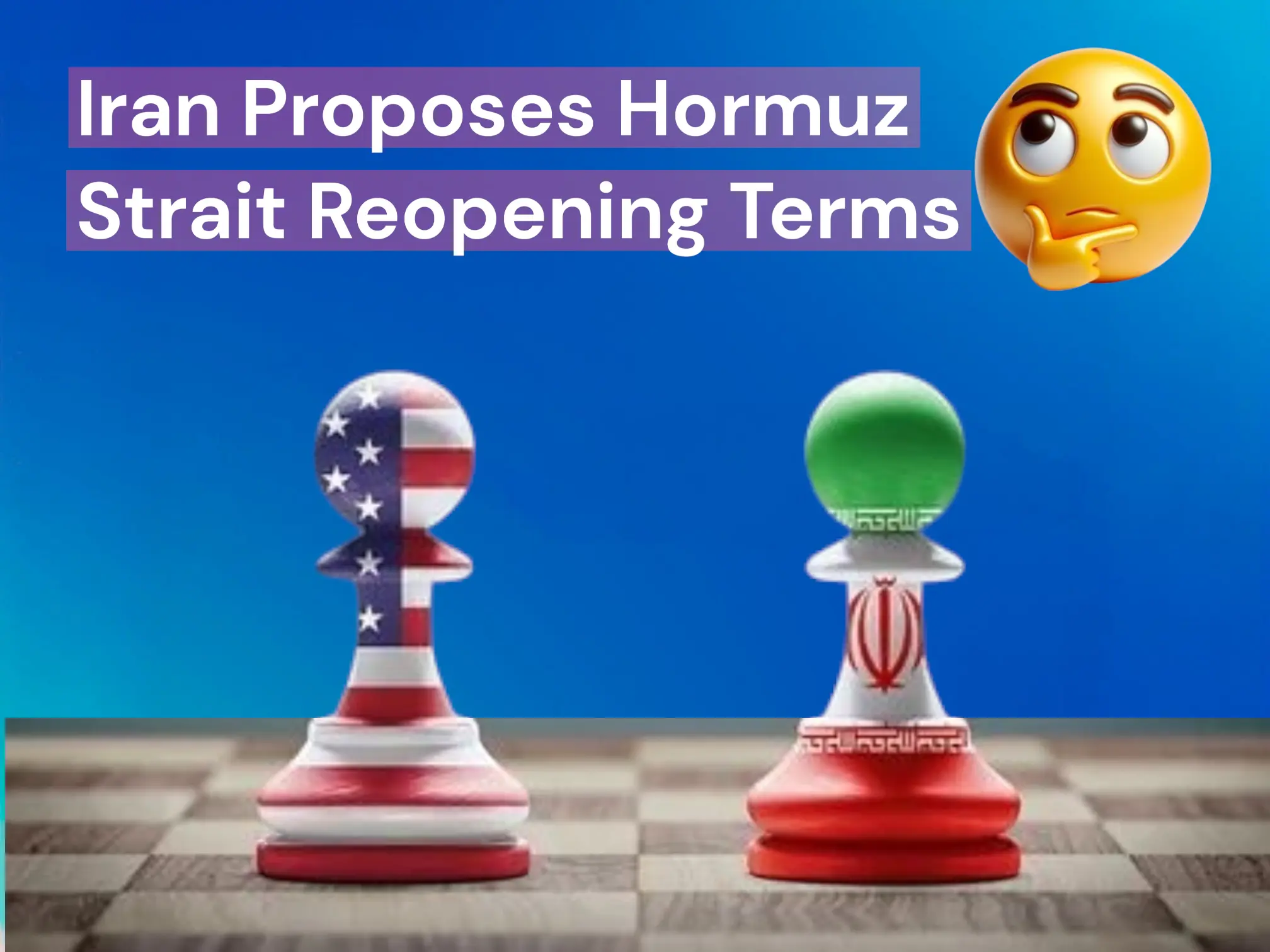
🔥The news that hit the markets on the morning of April 27 could instantly reverse the crisis that has gripped energy markets for the past six weeks: Iran has presented the US with a new offer to reopen the Strait of Hormuz and end the war. It has deliberately pushed nuclear negotiations off the table.
This is the first serious concession from Tehran since closing the strait in February, halting 20% of global oil trade, pushing oil prices down to $126, and stranding more than 20,000 seafarers.
What is the essence of the offer?
🔹Resumption of safe passage through the Strait of Hormuz
🔹Avoidin
BTC-1,74%
ETH-3,31%
SOL-2,98%
User_any
🔥The news that hit the markets on the morning of April 27 could instantly reverse the crisis that has gripped energy markets for the past six weeks: Iran has presented the US with a new offer to reopen the Strait of Hormuz and end the war. It has deliberately pushed nuclear negotiations off the table.
This is the first serious concession from Tehran since closing the strait in February, halting 20% of global oil trade, pushing oil prices down to $126, and stranding more than 20,000 seafarers.
What is the essence of the offer?
🔹Resumption of safe passage through the Strait of Hormuz
🔹Avoiding direct conflict between the US and Iran
🔹Discussing the nuclear issue "later"
🤔Washington sources say they are "taking the offer seriously," but cautiously. This is because Iran tightened restrictions again that same week, claiming the "agreement was violated." Therefore, the market is looking at the tanker, not the headline.
What does this mean?
The energy crisis was the invisible brake on the 2026 crypto rally. With oil at $126, inflation expectations were rising again, the Fed was becoming more hawkish, and risky assets were under pressure. What if the Strait of Hormuz opens? 🤔
🔹Rapid easing in oil: A drop below $110 would extinguish inflation fears. This would weaken the Fed's "higher interest rates for longer" narrative. 🔹The dollar weakens, risk appetite returns: Opening the strait would erase the geopolitical risk premium. Capital parked in gold over the last six weeks would flow back into Bitcoin and Ethereum.
✨Asymmetric opportunity for crypto: The market isn't pricing in "peace" yet. While Bitcoin lingers around the $79K resistance, if news about oil comes, the first move will be in altcoins. Because liquidity flows first to majors, then to betas.
But don't fall into the trap 🕵️
Iran sees this strait as its "only real trump card." Even US intelligence doesn't expect a full opening in the near future. The offer could be bait to set up the negotiating table. Even shipping companies aren't changing their routes despite the news of "the first ship to pass without Iranian permission." There's no trust.
That's why my trading plan is clear: 👀
🔹I don't trade news, I trade confirmation. I won't open a short position on oil until more than 50 tankers start passing through the Strait of Hormuz daily.
🔹On the crypto side, I'm prepared. I hold 15% of my portfolio in cash in stablecoins. If I see the first satellite image of the strait opening or a drop in Lloyd's insurance premiums, I will gradually invest that cash in ETH and SOL. 🔹Daily close above $79,300 in Bitcoin + below $115 in oil = risk-on confirmation. I won't increase leverage until both happen simultaneously.
#IranProposesHormuzStraitReopeningTerms is not just a diplomatic headline. This could be the biggest macro trigger of 2026. If Tehran really opens the valve, inflation will fall, the Fed will soften, and crypto will shift from a "geopolitical hedge" narrative to a "liquidity rally" narrative.
The question for me is: Is the market ready to price in peace, or will it be fooled once again? I'm prepared — I'm on alert, I'm not jumping in. 🧐
Do you think the Strait of Hormuz will really open, or is this just a new bargaining tactic to keep oil at $120? 🤔
repost-content-media
  • Reward
  • 3
  • Repost
  • Share
discovery:
To The Moon 🌕
View More
#CrudeOilPriceRose
Oil is back above $105, and this time the move isn't about inventory data — it's about fear priced into every barrel.
Brent closed Friday at $105.63, up nearly 19% on the week. WTI touched $97.6. Just two weeks ago Brent was trading $94. The catalyst? The Strait of Hormuz remains effectively closed since February, choking 20% of global oil flow, and even Iran's "reopening proposal" hasn't convinced a single major tanker to change course.
This is not a supply shock. It's a risk-premium shock. And risk-premium shocks behave differently.
What I'm watching on the chart:
$103.40
BTC-1,74%
ETH-3,31%
SOL-2,98%
User_any
#CrudeOilPriceRose
Oil is back above $105, and this time the move isn't about inventory data — it's about fear priced into every barrel.
Brent closed Friday at $105.63, up nearly 19% on the week. WTI touched $97.6. Just two weeks ago Brent was trading $94. The catalyst? The Strait of Hormuz remains effectively closed since February, choking 20% of global oil flow, and even Iran's "reopening proposal" hasn't convinced a single major tanker to change course.
This is not a supply shock. It's a risk-premium shock. And risk-premium shocks behave differently.
What I'm watching on the chart:
$103.40 — the breakout level from April 23, now acting as support
$105-$107 — the current war-premium zone where sellers stepped in last week
$112.57 — the 2026 high, and the magnet if Hormuz stays closed
Brent nearly hit $127 in intraday spikes last week according to hedge fund flows. That tells you how thin liquidity is — not how strong demand is.
Why this matters for crypto traders:
Most people think "oil up = risk off." In 2026, it's more nuanced.
Short-term headwind: Oil at $105 reignites inflation expectations. That keeps the Fed hawkish and caps Bitcoin's breakout above $79,327. We saw the rejection in real time.
Medium-term tailwind: Every oil crisis in the last 20 years has pushed capital toward non-sovereign assets. In 2022, oil at $120 preceded Bitcoin's next leg up six months later. History doesn't repeat, but liquidity rotates.
My edge: I'm not trading oil. I'm trading the reaction to oil. When crude spikes 4% in a day, crypto funding rates turn negative as retail panics. That's when I scale into ETH and SOL spot on Gate.
My current positioning:
No crude longs. I don't chase geopolitical headlines.
15% of my portfolio in stablecoins, waiting for either: (a) Brent drops below $100 on a real Hormuz opening, or (b) Brent spikes above $110 and creates a forced liquidation cascade in crypto.
Core BTC holding untouched. I took partial profit at $79.2K, not because of oil, but because risk-premium was mispriced.
#CrudeOilPriceRose is not just an energy story. It's a macro liquidity story. If Hormuz reopens, oil drops $7-10 in 48 hours, inflation fears cool, and crypto gets a green light to $85K. If it stays closed, oil grinds to $112, the Fed stays higher for longer, and crypto consolidates.
I'm positioned for both. I don't predict the Strait — I prepare for the volatility it creates.
Are you treating this oil spike as a threat to your crypto bags, or as the setup for the next rotation?
$XBRUSD
$XTIUSD
repost-content-media
  • Reward
  • 3
  • Repost
  • Share
discovery:
To The Moon 🌕
View More
One Story on Three Fronts
#CrudeOilPriceRose
#原油价格上涨
I'm answering the three most talked-about documents from the last 72 hours in Gate Square in a single post. Because the table setting, types of oil, and Bitcoin vault are now all in the same equation.
1️⃣ Diplomatic Situation: Iran offered a ceasefire, will there be an agreement with the US?
On April 27th, Iran offered the US a deal: "Let's open the Strait of Hormuz, stop the war, and talk about nuclear issues later." Washington said it was "taking it seriously" but didn't sign.
My reading: A short-term tactical ceasefire, yes; a permanent
BTC-1,74%
ETH-3,31%
User_any
One Story on Three Fronts
#CrudeOilPriceRose
#原油价格上涨
I'm answering the three most talked-about documents from the last 72 hours in Gate Square in a single post. Because the table setting, types of oil, and Bitcoin vault are now all in the same equation.
1️⃣ Diplomatic Situation: Iran offered a ceasefire, will there be an agreement with the US?
On April 27th, Iran offered the US a deal: "Let's open the Strait of Hormuz, stop the war, and talk about nuclear issues later." Washington said it was "taking it seriously" but didn't sign.
My reading: A short-term tactical ceasefire, yes; a permanent agreement, no.
Why? Since February, Iran has been reusing 20% of global oil by closing the Strait of Hormuz. This is its only real trump card. Removing the nuclear issue from the table is a move to buy time without selling its trump card. The US side wants a headline in the election about "we lowered oil prices," but is not ready to lift the blockade on Iranian ports.
What happened last week was specific: offers came in, and on the same day, Iran tightened restrictions, declaring the "agreement broken." The market is therefore not looking at or reporting on the ships. I won't say an agreement has been reached unless the first 50 tankers pass through without insurance.
2️⃣ Oil War: Who's next? What's the direction of oil next?
Brent closed at $105.63 on Friday, gaining 18.8% weekly. WTI at $97.6. Oil, which was at $94 at the beginning of April, broke $103.40 due to fears regarding the Strait of Hormuz and is now using that as support.
My favorite: Neither bull nor bear — volatile.
Short-term forecast:
If negotiations continue, Brent will return to the $100-$102 range. This means a 40% reduction in the risk premium.
If talks collapse or Iran again threatens to "strike unauthorized ships," a consistency test will be conducted at $112.57. Last week, fund flows saw Brent briefly touch $127, liquidity was so scrutinized.
I'm not chasing oil for long. Because in this battle, the winner isn't the one who knows the price, but the one who controls the headline. My edge: Panic erupts in the crypto world when oil jumps above $105, and I'm absorbing that panic.
3️⃣ Crypto Trends: How does the monetary analysis of oil affect crypto?
Here's the most critical key. At $105, the average inflation rate heats up again, the Fed remains hawkish, and Bitcoin struggles to break its $79,327 peak. In fact, the rejection of BTC in April coincided precisely with the day oil surpassed $103.
But there's another side to the coin:
In 2022, an oil crisis occurred, and six months later, $120 in capital was added to Bitcoin. Because investors are looking for assets that aren't dominated by "energy inflation." In April, there was a net inflow of $2 billion into Bitcoin ETFs, while whales accumulated $3.17 billion. This money is institutional capital fleeing from oil fears. Currently, BTC dominance is 60.6%. If oil falls, a shift to altcoins will begin; if oil rises, Bitcoin will strengthen as a safe haven.
My circulation chart:
If oil falls (below $100): Risky. ETH is above $2,400, SOL is playing beta. I would put my 15% cash here.
If oil rises (above $110): Short-term funding will turn negative, I will buy spot. The long-term Bitcoin "digital oil" narrative will strengthen.
Conclusion: Money in oil isn't leaving crypto, it's driving crypto. When fear increases, it parks in BTC, then disperses. That's why I trade oil news, I trade the sentiment created by oil.
The common answer to the three questions is: On the Hormuz table, oil is at $105, Bitcoin is at $79K. They're all on the same rope. I'm not pulling the rope, I'm measuring the tension.
Which do you think will break first — the nodal point, $112 oil, or $80,000 Bitcoin?
$BTC $ETH $XBRUSD
repost-content-media
  • Reward
  • 3
  • Repost
  • Share
discovery:
To The Moon 🌕
View More
I've joined WCTC S8. Join me now to compete and share 8,000,000 USDT. Trade beyond limits and conquer the future. https://www.gate.com/competition/wctc-s8?ref_type=165&utm_cmp=qK2FsaYI
post-image
  • Reward
  • 3
  • Repost
  • Share
discovery:
2026 GOGOGO 👊
View More
  • Pin