

Trade
Basic
Futures
Futures
Hundreds of contracts settled in USDT or BTC
Options
HOT
Trade European-style vanilla options
Unified Account
Maximize your capital efficiency
Demo Trading
Futures Kickoff
Get prepared for your futures trading
Futures Events
Futures Mall
Participate in events to win generous rewards
Demo Trading
Use virtual funds to experience risk-free trading
Earn
Launch
CandyDrop
Collect candies to earn airdrops
Launchpool
Quick staking, earn potential new tokens
HODLer Airdrop
Hold GT and get massive airdrops for free
Launchpad
Be early to the next big token project
Alpha Points
NEW
Trade on-chain assets and enjoy airdrop rewards!
Futures Points
NEW
Earn futures points and claim airdrop rewards
Investment
Simple Earn
Earn interests with idle tokens
Auto-Invest
Auto-invest on a regular basis
Dual Investment
Buy low and sell high to take profits from price fluctuations
Soft Staking
Earn rewards with flexible staking
Crypto Loan
0 Fees
Pledge one crypto to borrow another
Lending Center
One-stop lending hub
VIP Wealth Hub
Customized wealth management empowers your assets growth
Private Wealth Management
Customized asset management to grow your digital assets
Quant Fund
Top asset management team helps you profit without hassle
Staking
Stake cryptos to earn in PoS products
Smart Leverage
NEW
No forced liquidation before maturity, worry-free leveraged gains
GUSD Minting
Use USDT/USDC to mint GUSD for treasury-level yields

More



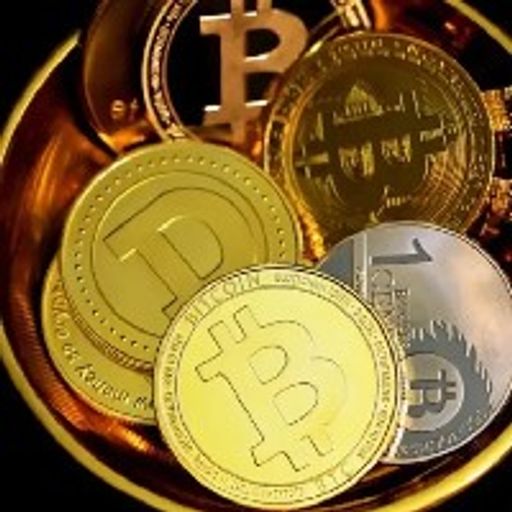



Preserving Wealth Through a Strong Store of Value: The Complete Picture
The concept of a store of value has never been more relevant than it is today. As traditional currencies lose purchasing power and economic uncertainty grows, understanding what makes an effective store of value has become essential for anyone looking to protect their wealth. A store of value refers to any asset, currency, or commodity that can reliably hold or increase its worth over time—a critical function that separates money from mere payment tokens.
Understanding What Makes an Effective Store of Value
At its core, a store of value is an asset you can trust to maintain its worth. Unlike forms of money designed primarily for transactions, a store of value prioritizes long-term wealth preservation. This is one of three fundamental functions of money that economists recognize, alongside the medium of exchange (for daily transactions) and unit of account (for pricing).
The key challenge is that not all assets perform equally in this role. Fiat currencies—the government-issued money most of us use daily—have proven to be weak stores of value. They depreciate continuously due to inflation, which historically averages 2-3% per year but can spike dramatically higher. In extreme cases, countries like Venezuela, South Sudan, and Zimbabwe have experienced hyperinflation, rendering their currencies nearly worthless. This reality underscores why finding reliable stores of value matters.
Why a Store of Value Matters for Your Financial Future
Money serves two purposes: it facilitates transactions, and it should help you secure your future. Here’s where fiat currency falls short. If your savings lose 2-3% of their purchasing power annually, a dollar saved today won’t go as far tomorrow. Over decades, this compounds into significant wealth erosion.
This is why history shows that individuals concerned about preserving wealth have always sought alternatives. Having access to a reliable store of value isn’t a luxury—it’s a financial necessity. Without it, savers face a choice between accepting guaranteed currency devaluation or taking on unnecessary risk elsewhere.
The Three Core Properties That Define a Reliable Store of Value
Not every commodity or asset qualifies as a strong store of value. The best ones share three essential characteristics, each crucial to their success:
Scarcity: A true store of value must have a limited supply relative to demand. As computer scientist Nick Szabo noted, real scarcity means “unforgeable costliness”—the cost of creating something cannot be artificially replicated. If new units can be endlessly created, the value of existing ones diminishes. This is why gold has maintained its store of value status for millennia, and why bitcoin’s fixed supply of 21 million coins gives it similar strength.
Durability: The asset must maintain its physical and functional properties over time. It should withstand wear and tear, remain usable for extended periods, and not deteriorate or lose value through age alone. Gold and bitcoin both excel here—gold never corrodes or disappears, and bitcoin exists as immutable code on a distributed network.
Immutability: This newer property has become increasingly important in digital times. Once a transaction is recorded, it cannot be altered or reversed. This ensures the integrity of ownership records and prevents tampering. For bitcoin, immutability is guaranteed by blockchain technology and cryptographic proof of work.
Bitcoin and Precious Metals: The Best Stores of Value Today
The performance of different assets over time reveals which truly function as stores of value. One historically reliable benchmark is what researchers call the “gold-to-decent-suit ratio”—the principle that an ounce of gold has consistently purchased a high-quality men’s suit across centuries. This ratio traces back to Ancient Rome, where a premium toga cost approximately one ounce of gold. Remarkably, 2,000 years later, this relationship still holds: an ounce of gold still buys roughly the same quality of suit.
Compare this to fiat currencies. In 1913, one barrel of oil cost $0.97. Today, that same barrel costs roughly $80—a massive depreciation for the dollar. Meanwhile, one ounce of gold purchased about 22 barrels in 1913 and roughly 24 barrels today. Gold maintained value; the fiat currency didn’t. This disparity perfectly illustrates why a strong store of value matters.
Bitcoin as a Store of Value: Bitcoin initially appeared highly speculative due to volatile price movements. However, as investors recognized its properties, bitcoin evolved into a serious store of value candidate. Bitcoin increasingly qualifies as sound digital money, offering advantages that merit serious consideration:
Precious Metals: Gold, palladium, and platinum have served as stores of value for centuries due to their perpetual durability and genuine scarcity. Their value appreciates relative to fiat money over long periods. Bitcoin is even more limited in supply than these metals and has appreciated significantly against gold since inception. However, precious metals face practical challenges—storing large quantities of physical gold is expensive and complex, which is why many investors turn to digital alternatives or ETFs, though these introduce counterparty risks.
Real estate also functions as a store of value for many investors due to its tangibility and utility. Property values have generally appreciated since the 1970s, offering stability and a sense of security. However, real estate lacks liquidity and censorship resistance, making it problematic for those needing rapid access to capital.
What Fails as a Store of Value and Why
Not everything preserves wealth effectively. Understanding what doesn’t work is equally important as knowing what does.
Perishable goods lose value by their nature. Food expires, concert tickets become worthless after the event, and transport passes have fixed expiration dates. These are fundamentally poor stores of value.
Fiat currencies, despite their widespread use, consistently lose purchasing power. Every year, the same currency buys less, as prices for goods and services rise across the economy.
Most alternative cryptocurrencies function more like speculative stocks than stores of value. Research by Swan Bitcoin analyzing 8,000 cryptocurrencies since 2016 found that 2,635 had underperformed bitcoin, while a staggering 5,175 no longer existed. Most prioritize functionality over security and scarcity, making them poor wealth preservers with weak economic fundamentals.
Speculative stocks (small-cap or penny stocks trading under $5) are inherently risky. Their high volatility and low market capitalization mean values can multiply or evaporate suddenly, making them unsuitable for wealth preservation.
Government bonds once seemed reliable, backed by government guarantee. However, years of negative interest rates have eroded their appeal, especially in major economies like Japan and Germany. While inflation-protected bonds like I-bonds and TIPS offer some protection, they remain government-dependent and subject to potential miscalculation or manipulation of inflation statistics.
The Bottom Line on Protecting Your Wealth
Whether an asset functions as a reliable store of value ultimately depends on supply and demand dynamics. Many still regard bitcoin as experimental. Yet in its relatively short history, it has demonstrated all the properties associated with effective money, particularly excelling as a store of value. The next evolution will be proving its viability as a widely accepted unit of account.
What’s clear is this: in an era of persistent inflation and currency devaluation, understanding and accessing a true store of value is no longer optional. Whether through precious metals, real estate, or digital alternatives like bitcoin, protecting your wealth requires moving beyond fiat currencies and into assets genuinely designed to preserve value across time.