Author: Liu Honglin, founder and director of Shanghai Mankiw Law Firm
Risk warning: This article only represents the personal views of lawyer Honglin, and is for exchange and discussion only, and does not constitute legal advice on specific matters and commercial projects.
Blockchain is not only a public chain
In the new world pattern of Web3, blockchain has always occupied an important position, and it is also an important part of my country’s development strategy. In April 2020, the National Development and Reform Commission has clearly incorporated “blockchain” into the new infrastructure. Generally speaking, my country’s attitude towards blockchain is very positive.

▲The picture above is from Sohu News
The state is clearly supporting the development of the blockchain, so why do ordinary people like us always feel that it is something that is “on the verge of breaking the law” when we hear blockchain? This is because most people only learned about the blockchain with virtual currencies such as “Bitcoin”, “Ethereum”, and “Tedas”, and our country explicitly prohibits “speculating coins”.
Indeed, blockchain is the core technology of virtual currency, but what virtual currency uses is only one of its forms - “public chain”. A public chain refers to a blockchain in which anyone can read and send transactions and the transactions can be effectively confirmed, and can also participate in the consensus process. However, in addition to public chains, blockchains also include private chains and alliance chains.
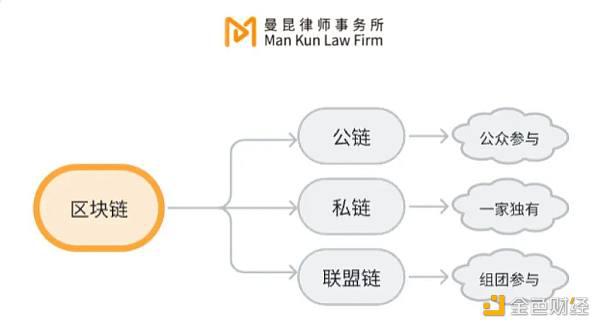
The alliance chain is China’s “darling”
According to inquiries, among the first batch of domestic blockchain information service filing numbers released by the Cyberspace Administration of China in 2019, among the first batch of 197 projects, the number of alliance chains is as high as 116, and the number of public chain projects is only 25. It is not difficult to find where the “wind” of the blockchain is blowing. It turns out that the “alliance chain” is the “darling” of our country. The reason why the country vigorously supports the alliance chain is that it is more suitable for China’s national conditions.
Why is it said that the “alliance chain” is more suitable for China’s national conditions?
Blockchain is a decentralized distributed ledger technology. Simply put, it is like everyone has a ledger. Every time there is a transaction, there will be a loudspeaker shouting “Zhang San traded with Li Si!” ", and then everyone knew about the transaction, and everyone wrote down “Zhang San traded with Li Si” in their own account books. Everyone has an account in their hearts, and they can calculate clearly. This enables blockchain technology to solve the problems of opaque information concentration and data tampering by intermediaries (such as banks, governments, etc.).
However, the public chain has the characteristics of decentralization, immutability, and transparency. This also means that the data on the public chain does not rely on a centralized organization, and cannot control the data in the system. Moreover, the public chain also has the characteristics of no access threshold and anonymity, and anyone can participate. This has led to a large number of blockchain projects based on the public chain will face KYC, anti-money laundering and other issues, especially those in the public chain. Projects that issue tokens often face the issue of whether their Token issuance constitutes illegal fundraising or illegal issuance of securities. It can be seen that the current regulatory mechanism in China is not very friendly to public chains. Correspondingly, the private chain in the name of the blockchain is highly centralized, which is not much different from the traditional centralized server, and obviously cannot solve the existing traditional problems in the industry. The alliance chain - this kind of “compromise” can not only solve the traditional industry problems, but also facilitate supervision, and it has naturally become the “seed player” for the development of blockchain in our country.
The consortium chain is jointly managed by multiple institutions, and each institution manages one or more nodes, whose data can only be read, written and sent internally. Although the alliance chain sacrifices some “decentralization”, it greatly enhances the controllability and can meet the needs of compliance supervision under Chinese law to a greater extent. While using blockchain technology to empower various industries , and avoid the risks brought by the public chain.
At present, my country’s alliance chain is developing steadily with the support of policies, and the alliance chain is growing like mushrooms after rain. For example, Ant Chain, Baidu Super Chain, Tencent Cloud Blockchain…the most influential of these domestic alliance chains are China Blockchain Research Alliance (CBRA), China Distributed Ledger Basic Agreement Alliance (ChinaLedger), Financial Blockchain Chain Cooperation Alliance (Gold Alliance). These three alliances worked together to write the “China Blockchain Technology and Application White Paper” to set industry standards for the development of alliance chains.
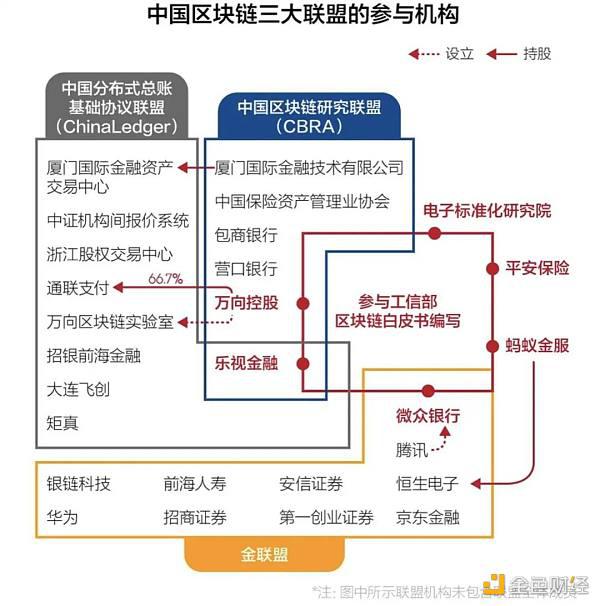
▲The information comes from the ChainCatcher website
What qualifications are required for the alliance chain to operate in compliance with regulations in China?
After learning about the advantages of the alliance chain, many Web3.0 entrepreneurs must be “whetted”: what qualifications do they need to operate an alliance chain in China?
The policy and advantages of the alliance chain are “manageable and controllable”, so what exactly is “how to manage and control”? The author also sorts out the relevant qualifications and filings for everyone here, so that everyone can “be famous” on the track of the alliance chain:
1. ICP filing\permission
According to Article 7 and Article 8 of my country’s “Internet Information Service Management Measures”, the use of domestic servers for Internet business requires ICP filing. If there is further business demand - involving “charges”, such as membership fees, advertising fees, recharge Business, trading business, etc., you need to further apply for an ICP certificate.
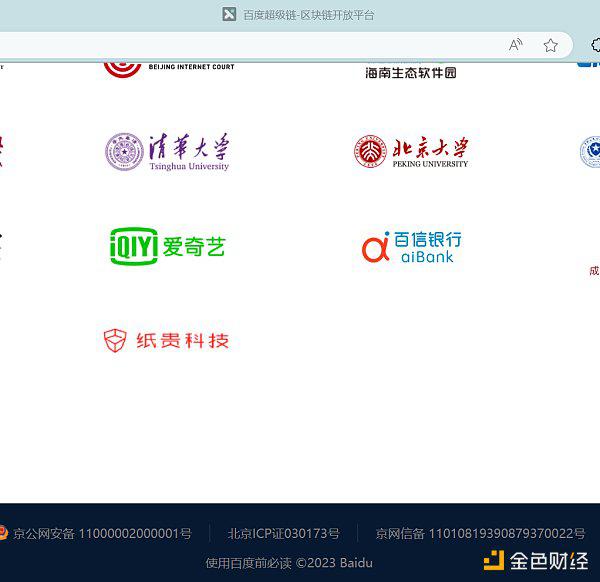
For example, the Baidu Superlink website shows that it has obtained an ICP license:
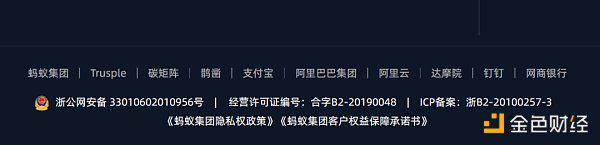
AntChain has carried out ICP filing:
2. Network security filing
According to Article 11 of the “Regulations of the People’s Republic of China on the Security Protection of Computer Information Systems”, for computer information systems that are internationally networked, the units that use the computer information systems shall report to the public security organs of the people’s governments at or above the provincial level for recordation.
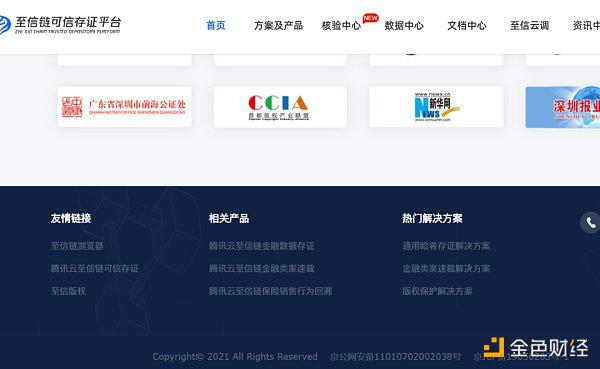
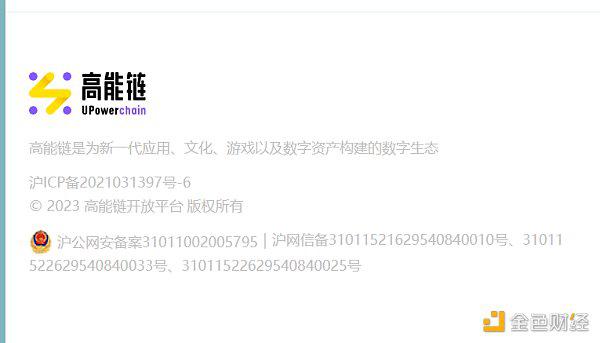
Under normal circumstances, the qualifications of alliance chains led by leading Internet companies are also relatively complete. For example, Tencent’s Zhixin Chain and Bilibili’s High Energy Chain have all undergone network security filings.
3. Blockchain filing
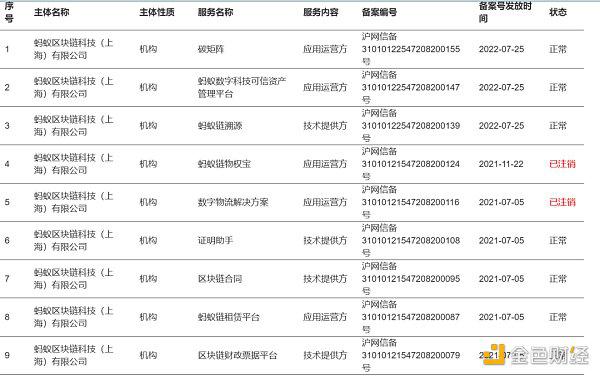
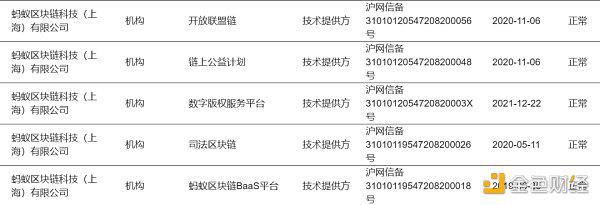
According to Article 11 of the “Regulations on the Administration of Blockchain Information Services”, blockchain information service providers shall fill in the information in the blockchain information service filing management system within ten working days from the date of providing the service, and perform the filing procedures. . What needs to be reminded is that when the name of the filed project is changed, or the website is changed, it is necessary to go through the change procedures within five working days from the date of change. As a part of the blockchain, the alliance chain is naturally indispensable for blockchain filing.
From the pictures above, it can be seen that basically these consortium chains have also undergone blockchain filing. For example, the AntChain blockchain has complete records:
4. EDI License
According to Article 4 of the “Measures for the Administration of Telecommunications Business Licensing”, to operate telecommunications business, a business license issued by the telecommunications management agency shall be obtained according to law. EDI belongs to the second category of value-added telecommunications services, which refers to “online data transaction and processing services”, which includes transaction processing services, electronic data exchange services and network/electronic equipment data processing services. For example, e-commerce, food delivery, and second-hand trading platforms such as Tmall, Taobao, Meituan, and Xianyu all require an EDI license. If the consortium chain involves such transaction business, an additional EDI license is required.
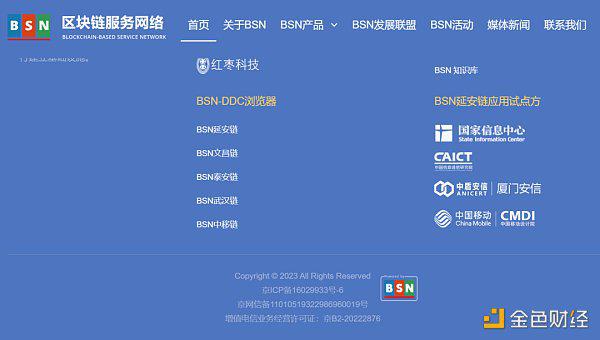
For example, the website page of the blockchain service network BSN shows that it has applied for an EDI license:
Lack of qualification legal risk
Correspondingly, if according to the corresponding circumstances, those who should have the above-mentioned qualifications or filings but fail to file or apply for permission will also be punished accordingly. The author also lists the risks of lack of qualifications here:
1. No ICP, confiscation of illegal income / fine / ordered to close
According to Article 19 of the “Internet Information Service Management Measures”, if there is no ICP record, the operator will be ordered to make rectification within a time limit, and if it refuses to make rectification, there is a risk of closing the website.
If it is a commercial Internet service without an ICP license, or provides services beyond the license, it will be ordered to make corrections within a time limit, if there is any illegal income, the illegal income will be confiscated, and a fine of 3 times to 5 times the illegal income will be imposed; there is no illegal income or illegal income. If it is less than 50,000 yuan, a fine of 100,000 yuan to 1 million yuan will be imposed; if the circumstances are serious, the website will be ordered to close down.
In addition, if the website does not mark the ICP record number, it will be fined! Those who fail to indicate their business license number or filing number on the homepage of their website shall be ordered to make corrections and be fined not less than 5,000 yuan but not more than 50,000 yuan.
2. If there is no network security record, warning or shutdown for rectification
According to Article 12 of the “Administrative Measures for the Security Protection of International Networking of Computer Information Networks”, anyone who violates the filing system for international networking of computer information systems shall be given a warning or shut down for rectification by the public security organs.
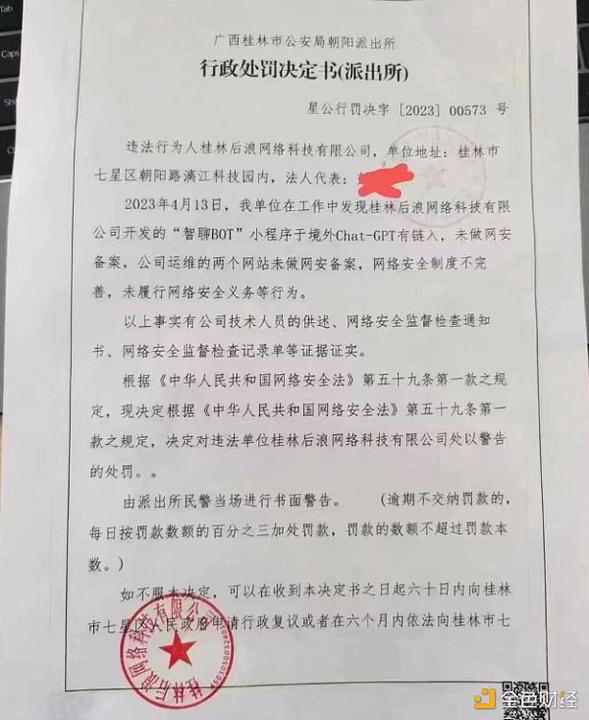
A few days ago, an internet technology company in Guilin, Guangxi was warned and punished for failing to file internet security records.
3. If there is no blockchain information service record, warning/fine
According to Article 22 of the “Regulations on the Administration of Blockchain Information Services”, those who fail to perform the filing procedures in accordance with these regulations or fill in false filing information shall be ordered to make corrections within a time limit; if they refuse to make corrections or the circumstances are serious, they shall be given a warning and fined 10,000 yuan. A fine of not less than RMB 30,000 but not more than RMB 30,000.
4. No EDI, confiscation of illegal gains/fines/suspension for rectification/inclusion in the dishonest list
According to the provisions of Article 46 of the “Measures for the Administration of Telecommunications Business Licensing” and the provisions of Article 69 of the “Regulations of the People’s Republic of China on Telecommunications”, those who operate telecommunications business without authorization or beyond the scope of the telecommunications business shall be ordered to make corrections and their illegal gains shall be confiscated. A fine of not less than three times but not more than five times the illegal income; if there is no illegal income or the illegal income is less than 50,000 yuan, a fine of not less than 100,000 yuan but not more than 1 million yuan shall be imposed; if the circumstances are serious and the punishment of ordering to suspend business for rectification is imposed, it shall be directly included in the telecommunications business operation Untrustworthy list.
Summary
The wind of the alliance chain is still blowing, and “technology” + “policy” is the path to success. A gentleman moves at the right time and follows the trend. While everyone rides the wind and waves in the alliance chain industry and hangs directly on the cloud sails, complete qualifications and filings will also “escort” everyone.


