Original source: NoNoise
The large model reinterprets “China Speed”. Since Baidu released the first GPT-like product in China in March this year, in just three months, 79 large models with a parameter scale of more than 1 billion have been produced in China.
The “China Artificial Intelligence Large-scale Model Map Research Report” also provides another observation perspective: the total number of general-purpose large-scale models released by the United States and China has accounted for 80% of the global releases. It is clear that technology companies in China and the United States are becoming the main drivers of this generative AI revolution sweeping the world.
The joint camp of Open AI and Microsoft has created a number of benchmark-level application landing scenarios in the fields of education, investment banking, and office work, such as the Office Family Bucket, which is known as the king of bombs, the AI training of the language learning platform Duolingo, and the Morgan Stanley The hundreds of thousands of pages of knowledge base, and the latest solutions for the payment services platform Stripe to fight fraud. These landing cases cover both the B-side and the C-side. In contrast, the battle for the launch speed of domestic large-scale models has just come to an end, and large-scale commercial applications are still on the way.
This section of the road is extremely challenging, but crucial. Robin Li, CEO of Baidu, emphasized at a recent meeting that “the key point of the new international competition strategy is not how many large models a country has, but how many native AI applications are on your large models, and how much these applications have improved production. efficiency.”
According to public information, Wenxinyiyan, which runs at the forefront, has launched 11 large-scale industry models, covering multiple to B fields such as automobiles and energy and electricity.
At this time, who can start the first shot of the large model to C application has become a focus of attention. Note that it is the “ring” on the commercial application, not the “printing” on the PPT level.
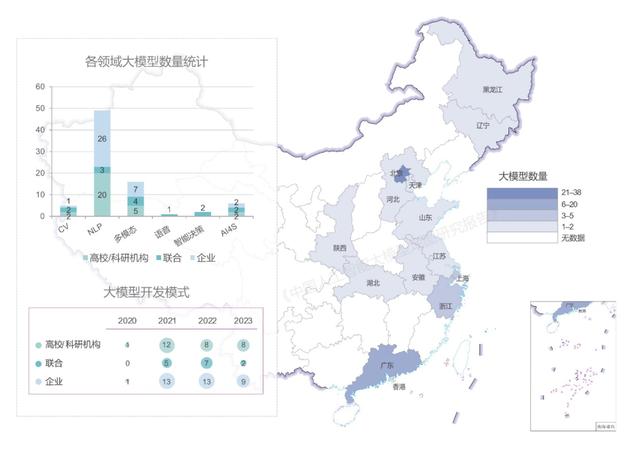 Source: “China Artificial Intelligence Large Model Map Research Report”
From the perspective of C-end users, “NoNoise” believes that there are opportunities in both education and search fields: Needless to say, education, from the hot sales of terminal hardware such as AI learning machines, it is not difficult to see that the group that just needs to pay for large models , you have to be a parent; as for search, the new Bing with GPT can make Microsoft CEO Nadella proudly say that it is Microsoft who made Google “dance”, which shows how much room for imagination the big model brings to search, and search It is the largest AI application scenario in the world.
At the same time, Baidu, who sees this prospect, is also working tirelessly on “alchemy” day and night. Through the intensive launch of generative AI products such as “AI Partner”, Baidu hopes to accelerate the search into a new era and continue to maintain its position as a market leader.
Here comes the question, will search fire the first shot of large-scale application of large models?
01 Several truths behind the search box
Before answering this question, we need to define the nature of the relationship between search and large models.
After the birth of ChatGPT, a voice believed that search giants such as Google and Baidu would be subverted, and Open AI would become a game changer for search.
The most famous representative is Microsoft co-founder Bill Gates. He predicted at the beginning of the year that the top AI companies in the future will work on AI personal assistants, and users will never go to search websites and Amazon again. Although Gates had doubts about Open AI’s technical capabilities before September 2019, he was also criticized by Musk for his “very limited understanding of AI.”
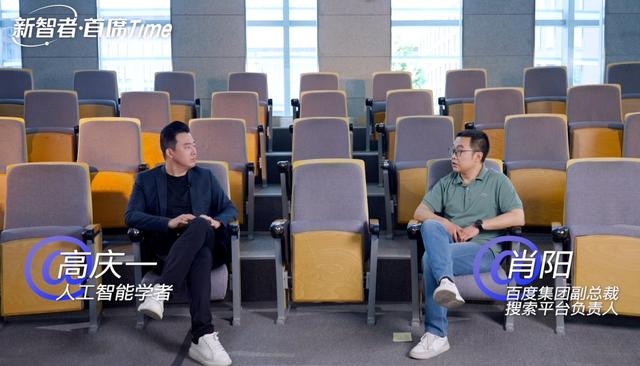
The search giants on the inside clearly hold a different view. “I think it should strengthen Baidu’s position, because many of the problems that ChatGPT needs to solve are the problems that search needs to solve, and their goals are the same.” In a recent column interview called “New Wise Chief Time”, Baidu Xiao Yang, vice president and person in charge of the search platform, made his own judgment. Since joining Baidu in 2004, Xiao Yang has witnessed the 20-year development of the search industry.
 From the perspective of evolution, the search engine was born to solve the problem of information acquisition efficiency, providing users with the shortest path from question to answer. Previously, similar retrieval tasks were carried out by information tools such as “Encyclopedia Britannica” and Internet Yellow Pages until the emergence of algorithms.
Algorithms allow search engines to naturally have AI genes, because the prerequisite for machines to perform tasks is to “understand” the needs behind the search box.
It’s just that at different stages, information matching methods are different.
Take Xiao Yang’s entry into the industry in 2004 as an example. At that time, search engines were still in the era of keyword retrieval—users had to type keywords in the search box like searching for books in a library, and then find accurate matches by constantly changing keywords. content of the web page.
At that time, Baidu Search’s PM also held competitions internally, trying to find ways to find target information faster.
Later, the user’s demand became stronger and stronger, from keyword search to asking questions, and search evolved into asymmetric matching, that is, when users ask questions, search engines give answers similar to expert consultation. For example, if a user asks “What’s the weather like tomorrow?”, the answer may be “Thunderstorm with short-term strong winds.” There are no keywords that intersect with the question at all in this answer.
This matching mode requires search engines to have a deeper “understanding” of both the user’s question and the content of the entire network.
This probably explains why in 2013, Baidu, Google, and Microsoft all participated in the acquisition bid for the company of Professor Jeff Hinton, the “father of deep learning” at any cost.
At that time, Professor Hinton had just made a major breakthrough in deep neural network technology, and the search giant was the first group of companies to smell the potential of technology—deep learning is expected to improve search efficiency. In hindsight, search also provided the earliest application landing scenario for deep learning. Baidu and Google were the first technology giants to deploy deep learning, and Baidu Brain and Google Brain later became top AI open platforms.
 Photo: Jeff Hinton
Starting from about 2018 and 2019, deep learning has ushered in another round of rapid development, and the semantic transformation of search engines continues to evolve. The big language models of search giants such as Google and Baidu are getting bigger and bigger, and the model capabilities are getting stronger and stronger, and the prototype of an intelligent search engine has taken shape. Taking Baidu as an example, it launched Wenxin Large Model 1.0 in 2019, and has continued to iterate to versions 2.0 and 3.0 since then.
It is based on these accumulations that after the release of ChatGPT, Google and Baidu were able to launch Bard and Wenxinyiyan soon. The large-scale model products that seem to grow overnight to the outside world are actually the product of years of business practice by the search giant.
After being robbed of the limelight by ChatGPT, Google CEO Sundar Pichai said in an interview, “In fact, we have had AI models for more than ten years.”
Baidu founder, chairman and CEO Li Yanhong also emphasized several times in public speeches that no matter which company it is, it is impossible to make such a large language model (Wen Xin Yi Yan) in a few months. “Deep learning and natural language processing require years of persistence and accumulation, and there is no way to speed it up.”
02 Changes in Search
Search engines have developed to this day and have become the world’s largest AI application scenario and successful business model.
From the perspective of technological evolution, it seems difficult to draw the conclusion that search has been subverted by large models. If the search in the narrow sense is just a “search box”, the search in the broad sense is a process of user expression and machine feedback, while search boxes and dialog boxes are just different forms of human-computer interaction.
This is also the underlying logic behind why Xiao Yang said that GPT and search engines have the same goals. Even a large model will put the head search engine in a more favorable position in the competitive landscape, because search has a Matthew effect-companies with more users, technology, data and computing power will have better and better product effects.
It is not unreasonable that only four countries in the world, the United States, China, Russia and South Korea, have local search engines. As an Internet infrastructure, it is difficult for latecomers to subvert the pattern. Of course, the EU still doesn’t believe in evil. In 2022, it spent 58 million yuan to try to build an EU’s own open search engine to replace Google. There is no further information yet.
The basic large model also has similar characteristics, and those who run ahead will run faster and faster. “Baidu has search in one hand, and a large-scale model or generative AI technology in the other hand. It is like holding Yitian Sword and Dragon Saber at the same time. The combination of two swords will produce greater value.” While making this judgment. , Xiao Yang also admitted that the top search engines cannot be slack in the competition because of this, and should make rapid changes in user experience.
“Actually, it’s very simple. If you satisfy the user, the user will stay. If you make the user feel that you can satisfy him, new users will come. If you make him dissatisfied, he will leave.”
In the words of Li Yanhong: Never curb the expression of user needs in any way.
The upgrade of user demand expression can only be responded to by the upgrade of technology. Before the emergence of generative AI, the way users express their needs has become increasingly rich and diverse, such as more colloquial, fuzzy expressions, and rising demand for image and video information searches.
In this regard, search engine giants have strengthened cross-modal capabilities on the basis of semantic reasoning models, similar to the later GPT-4.
The emergence of large language models has also brought search engines to a more intelligent stage - they can listen and read, and understand users more and more. People used to joke: Google can give you 100,000 answers, but a librarian can give you the most accurate answer. Today, large models allow search engines to be more problem-solving and begin to evolve toward a generalized search generation experience.
From the latest series of paths explored by the industry leader Baidu, we can see the beginnings of this evolutionary trend.
By “rolling up” itself, Baidu has increased the proportion of “extreme satisfaction” to search internal invisible OKR.
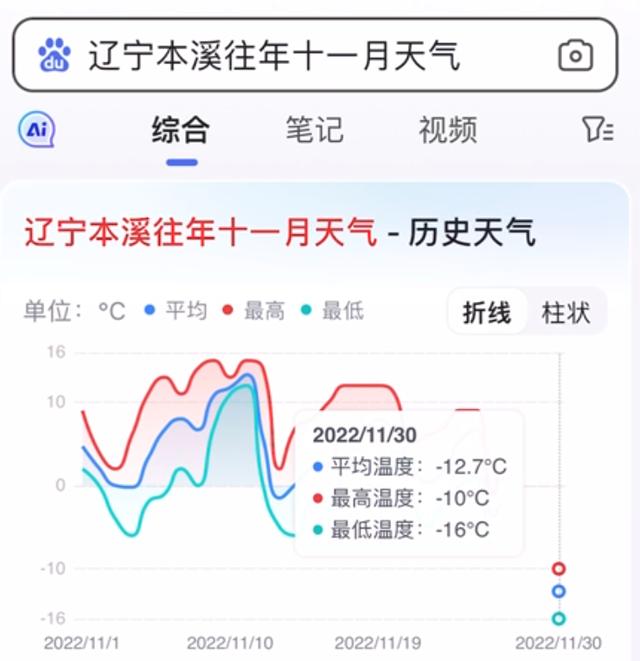 The so-called extreme satisfaction is to see if the first answer given by the search engine can solve your problem after the user asks a question.
The first answer is not only in the form of text, but also in the form of video, and the search engine can extract the key summary from a video. For example, when parents want to find an art cartoon that teaches children to draw, they used to spend time browsing, screening, judging and summarizing. Now, Baidu Search can sort out multiple answers for users, and mark the number of times each answer is mentioned. Each answer also contains richer content, which greatly saves the energy of parents.
 Another interesting exploration is the “authoritative answer”. After the emergence of ChatGPT, people were shocked and soon discovered that it would also talk nonsense in a serious manner. The existence of computer “illusion” puts the authenticity of some content into question. The new function of Baidu search can directly answer questions by citing books to increase trust.
When you ask a certain question, the search engine may tell you in which book this question was written, followed by further expanded reading, which is equivalent to the role of a librarian in the AI era.
Xiao Yang revealed that Baidu search has been paying attention to the “extreme satisfaction” data: half a year ago, the proportion of “first satisfaction” was only 40%; now it has reached 70%. And judging from the data changes, users are willing to pay for the improvement of the search experience - since this year, Baidu search has added more than 50 million new questions and answers every day.
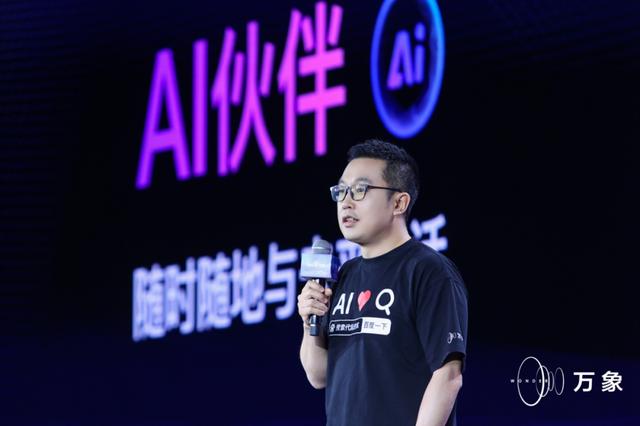
As part of the intergenerational change in search, the “AI partner” who can listen and see has also taken an important position. Baidu demonstrated for the first time the ability to internally test “AI partners” at the Mobile Ecology Conference at the end of May this year.
In the on-site demo display, it is not just a chatbot dialogue interface, but also helps users mark the key points of answers, provide authoritative sources, summarize document summaries, and support calling various tools and services, as well as create pictures or copywriting according to user intentions .
It is understood that this “AI partner” is still in internal testing, and many needs of users have surprised engineers. It is expected that the capabilities of “AI partner” will continue to evolve in the future.
However, whether the future will enter the AI personal assistant era predicted by Bill Gates will ultimately depend on the degree of integration of search engines and large models. This path is full of challenges, but also paved with gold by imagination.
03 NEW STORY
In a media exchange last year, Xiao Yang once talked about a question: what to fight for when the search is done to the end?
It is recognized in the industry that search is one of the most difficult businesses in the Internet field. It is a simple search box, and it may also be a very open system. But the market has never been short of challengers. In the past two years, Byte, Huawei, etc. have actively deployed related businesses. At that time, ChatGPT had not yet brought about disruptive changes.
Xiao Yang’s answer at the time was that, in the end, he had to fight for his understanding of users, his investment in technology, and his ability to achieve the ultimate in search. Nowadays, the intelligence of large models emerges, allowing everyone to see the ultimate direction at the same time - search to generate experience, and even assist decision-making.
 These evolutions in turn continue to inspire new user needs.
The large model also gives Baidu search a new story. In the past, Baidu was just a “starting point” for needs. After users obtained information, they went to other websites or apps to obtain service scenarios, such as e-commerce, local life or content creation.
In order to enhance the service value, Baidu has successively enriched the search content ecology through the layout of small programs, Baijiahao and other products, hoping to allow users to solve problems in one stop and enjoy closed-loop services. Looking at the global search industry, this ecological strategic layout has leading value.
However, before the emergence of large-scale models, it will take longer time and patience to complete the ideal ecological closed loop, because tool products have the challenges of user stickiness and length of stay.
The large model accelerates the formation of a closed loop, which pulls through the whole process of asking questions, finding answers, and making decisions, and the search engine thus gains greater commercial imagination. This is probably the commercial value of the so-called “two swords combined”.
It is almost foreseeable that after integrating more innovative applications of artificial intelligence, search engines may create a more dynamic ecosystem.
Judging from the “arsenal” and “roadmap” that Baidu and other companies have intensively displayed this year, the main players in search will most likely not be subverted. Instead, they will continue to promote technological change as a major participant in disruptive innovation.


