A US pharmaceutical company with a market cap of only $30 million has gone all-in on the Sky protocol with funds exceeding four times its own value, and now even changed its name—this is a more aggressive “on-chain holding company” experiment than MicroStrategy.
(Background: OnlyFans founder Leonid Radvinsky passed away from cancer at age 43, having built a $4 billion “adult subscription empire.”)
(Additional context: Iran announced “selective passage” through the Strait of Hormuz, Bident declared war: exchanging 50 days of US inflation for 50 years of Middle East peace.)
Table of Contents
Toggle
- DeFi version of the Strategy script
- What is an on-chain holding company?
- 26% rebound behind: still down 95% since the beginning of the year
NovaBay Pharmaceuticals, an American pharma company that has lost over 95% of its stock value since the start of the year, announced this Monday that it will completely abandon its biotech core business and pivot to developing stablecoins and DeFi projects, even changing its name to “Stablecoin Development Corporation (SDEV).”
Beyond the renaming game, NovaBay quietly completed a massive gamble over its own scale last year: investing $134 million to acquire nearly 9% of the SKY protocol tokens, while its market cap remains just $35 million.
DeFi version of the Strategy script
If you’re familiar with MicroStrategy’s Bitcoin accumulation strategy, NovaBay’s approach is almost identical: the only difference is that instead of accumulating BTC, it’s accumulating SKY.
In January 2026, the company completed a private placement of $134 million, with investors including Framework Ventures, Tether Investments, R01 Fund LP, and Sky Frontier Foundation. The funding amount was exactly 4.5 times its market cap, an extremely leveraged ratio in any industry.
With this capital, the company acquired SKY tokens in two ways: first, through private placement, obtaining 943.6 million tokens (valued at about $58 million); second, buying 1.09 billion tokens on the open market at an average price of about $0.065, costing $70.7 million.
As of mid-March 2026, the company held a total of 2.06 billion SKY tokens, representing approximately 8.78% of the total supply of about 23.46 billion.
Meanwhile, the company has earned 26 million SKY tokens in staking rewards (Sky protocol’s current staking annual yield exceeds 10%).
What is an on-chain holding company?
CEO Michael Kazley describes SDEV as “the preferred public market vehicle for entering cash flow in the stablecoin economy,” and claims stablecoins are “the most compelling structural opportunity in digital finance.”
In simpler terms: this is a model of “using a publicly listed shell to hold DeFi protocol tokens and earn on-chain yields.” Traditional investors don’t need to manage wallets or private keys; just buying SDEV stock is equivalent to indirectly holding SKY staking positions.
This logic is similar to how Strategy pitches Bitcoin exposure to institutional investors—just with the underlying assets replaced by less liquid, more volatile DeFi governance tokens.
Sky Protocol, evolved from MakerDAO
SDEV’s bet on Sky Protocol, formerly a classic DeFi project, is based on MakerDAO. Sky’s issuance of USDS (formerly Dai) is currently the third-largest stablecoin globally, and SKY is its governance token (MKR holders can exchange at a ratio of 1:24,000).
26% rebound behind: still down 95% since the beginning of the year
After the announcement, NBY’s stock surged over 26% on Monday, briefly reaching about $1.40. But in the broader context, this is just a minor blip: the stock has fallen more than 95% since the start of the year.
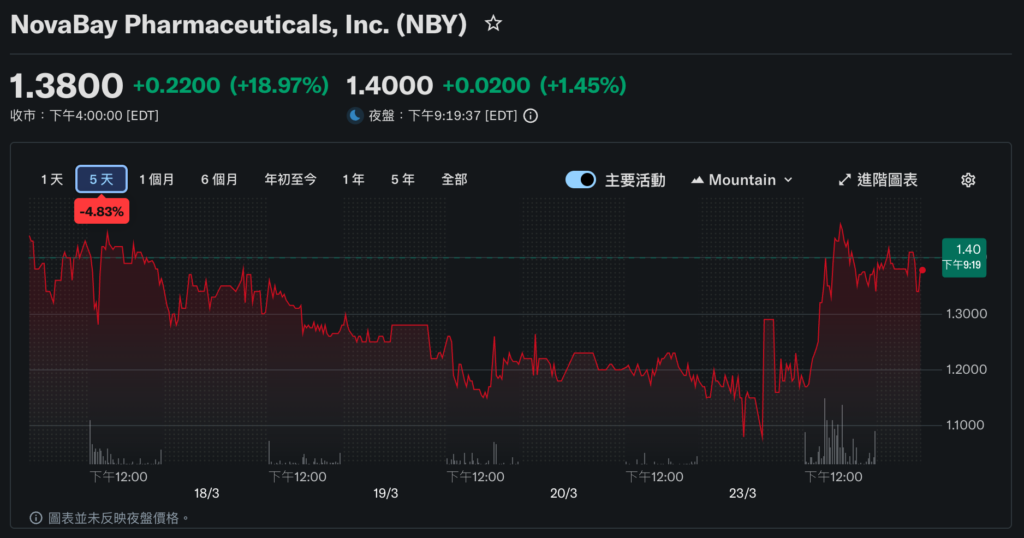
The real question from outside observers is: Is this a legitimate business transformation, or is a stock with nowhere to go but down exploiting crypto hype to create a dead-cat bounce?
SDEV’s on-chain holdings are real, and funds from Tether and Framework are genuine. But can a company with a market cap of $35 million manage a crypto position over four times its size and exert real influence over SKY governance? That remains an unproven question.
Disclaimer: The information on this page may come from third parties and does not represent the views or opinions of Gate. The content displayed on this page is for reference only and does not constitute any financial, investment, or legal advice. Gate does not guarantee the accuracy or completeness of the information and shall not be liable for any losses arising from the use of this information. Virtual asset investments carry high risks and are subject to significant price volatility. You may lose all of your invested principal. Please fully understand the relevant risks and make prudent decisions based on your own financial situation and risk tolerance. For details, please refer to
Disclaimer.


