The threat of quantum computing to Bitcoin investors is real, but not all wallets are equally vulnerable — and those capable of addressing this issue are actively taking action, according to Galaxy Digital analyst Will Owens.
Owens states that in theory, quantum computers could derive a private key from a public key. This would allow attackers to impersonate owners, forge signatures, and steal assets. However, he emphasizes that the level of risk varies among different types of wallets.
“In practice, most wallets today remain secure. Assets are only truly at risk if the public key is exposed on the chain,” he said.
According to Owens, there are two main scenarios that expose wallets: wallets that have publicly revealed their keys in advance, and wallets that only reveal their keys at the time of a transaction.
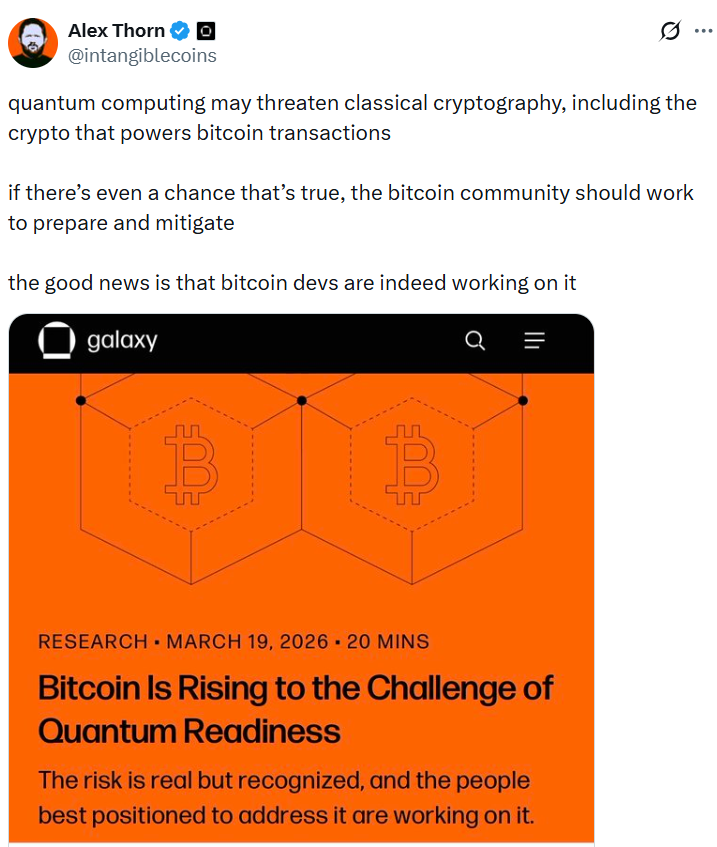 Source: Alex Thorn The threat of quantum computing has long been a topic of debate within the crypto community, seen as a potential turning point. Advanced computing systems are believed to have the capability to break encryption, expose user keys, sensitive data, and lead to asset losses.
Developers are proactively addressing quantum risks
Skeptics argue that this risk is exaggerated, as quantum technology is still decades away from practical application, and traditional targets like large banks could be attacked before Bitcoin.
Owens also mentions online opinions claiming that Bitcoin Core developers are “ignoring” or “controlling” proposals related to quantum, such as the BIP 360 soft fork. However, he dismisses this, stating “the rate of proposals has increased significantly since late 2025.”
“Contrary to some public criticisms, our assessment shows that the development work to address quantum vulnerabilities and mitigation measures is substantial,” he said.
“The ecosystem has now formed a specific and increasingly comprehensive set of proposals covering the entire scope of the issue. This is no longer theoretical — proposals are being developed, reviewed, and actively debated by experienced contributors within the Bitcoin ecosystem.”
Additionally, industry figures have proposed solutions. Analyst Willy Woo has suggested that storing Bitcoin in SegWit wallets over long periods could help mitigate quantum-related risks.
Governance remains a key challenge
Even once post-quantum solutions are developed, deployment remains a difficult problem. Owens notes that Bitcoin has no CEO, no board of directors, and no central authority that can mandate software updates.
“However, the nature of this threat — external, technical, and broadly impactful — creates a consensus of vested interest that previous debates over Bitcoin’s economic direction did not have,” he said. “All honest participants in the network, from miners and holders to exchanges, have a direct financial stake in maintaining system security.”
For investors, the core message is clear: the risk is real but recognized, and those capable of solving the problem are actively implementing solutions.
Mr. Teacher
Disclaimer: The information on this page may come from third parties and does not represent the views or opinions of Gate. The content displayed on this page is for reference only and does not constitute any financial, investment, or legal advice. Gate does not guarantee the accuracy or completeness of the information and shall not be liable for any losses arising from the use of this information. Virtual asset investments carry high risks and are subject to significant price volatility. You may lose all of your invested principal. Please fully understand the relevant risks and make prudent decisions based on your own financial situation and risk tolerance. For details, please refer to
Disclaimer.


