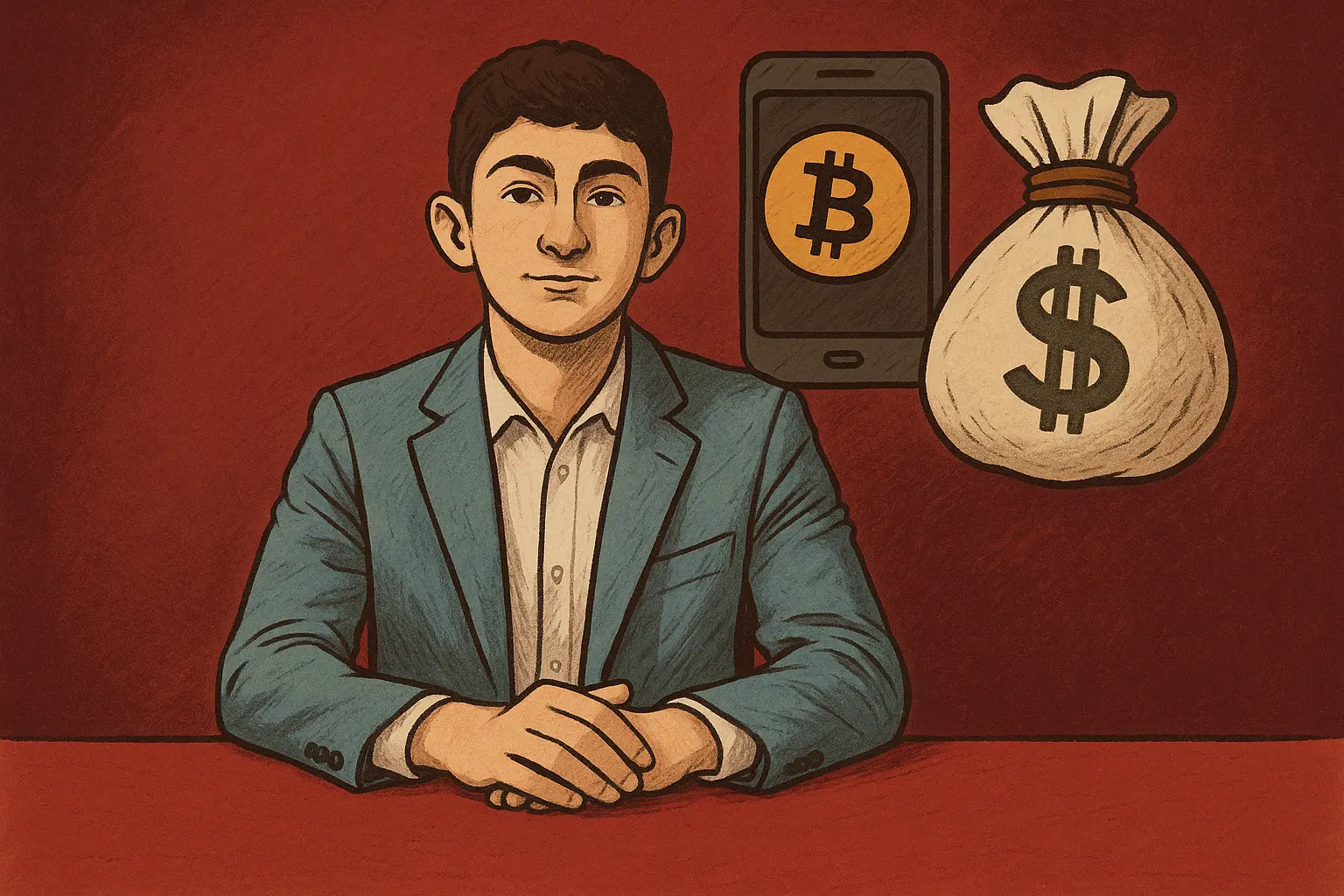
Ellis Pinsky, at 15, stole $24M via SIM swap from Michael Turpin, blew it on escorts and a $100K Rolex. Ellis Pinsky avoided prison but faces a $22M lawsuit.
How Ellis Pinsky Became a Teenage Hacker
Ellis Pinsky’s journey started innocently enough. At 13, he loved video games and trash-talking other players. One night, a player messaged him after a match: “How’s the weather in Irvington?” Ellis’s heart sank. How did this stranger know where he lived? This unsettling experience sparked his curiosity about the internet’s secrets and launched his journey into hacking.
Raised in a cramped NYC apartment, Ellis Pinsky got his first Xbox at 13 and quickly became absorbed in gaming culture. Mentored by a fellow gamer named Ferno, Ellis learned how to uncover hidden information about people online. In exchange for passwords, emails, and social security numbers Ellis retrieved, Ferno taught him tricks of the trade and introduced him to OGUsers forum, where young hackers shared techniques to steal valuable social media handles for profit.
Ellis Pinsky quickly mastered hacking techniques like SQL injections and SIM swaps. SQL injections allowed him to retrieve unauthorized data from databases, while SIM swapping involved bribing wireless carrier employees to switch a target’s SIM card to one under his control. With these skills, Ellis could hack into accounts by requesting password resets and intercepting two-factor authentication codes.
Ellis Pinsky’s Hacking Progression
Age 13: Got first Xbox, discovered gaming communities
Joined OGUsers: Learned SQL injection and social engineering
Flipped Instagram Handles: Stole and sold rare usernames for profit
Age 14: Had insiders at every major telecom carrier
Age 15: Executed $24M Michael Turpin heist
Age 18: Hit with $10M+ lawsuit on his birthday
By age 14, Ellis Pinsky had insiders at every major carrier and could hack virtually anyone. But clout wasn’t enough—he wanted real money. SIM swapping gave him power: bribe a telecom rep, steal a number, intercept texts, reset passwords, and empty wallets.
The $24 Million Michael Turpin Heist
Ellis Pinsky’s big break came in January 2018 when a user named Harry suggested a high-profile target: Michael Turpin, a crypto investor who had just left a conference. Turpin owned hundreds of millions in cryptocurrency, making him an attractive target for the teenage hacking crew.
It started when crypto investor Michael Turpin left a conference. Across the country, a group of teenage hackers led by Ellis Pinsky bribed telecom workers to hijack his phone number. On a Skype call, Ellis launched scripts that ripped through Turpin’s digital life—emails, cloud drives, anything that could lead to wallet keys.
And they struck gold: $900 million worth of Ethereum. But it was locked. Digging deeper, they found $24 million that wasn’t secured. Hours later, Turpin checked his accounts. His main wallet? Untouched. But $24 million? Gone. It became the largest individual SIM swap ever recorded.
With the help of rogue AT&T employee, they executed SIM swap on Turpin’s phone, reset his email password, and ran script to find crypto keys. The hack was executed with surgical precision, demonstrating sophisticated understanding of cryptocurrency security weaknesses and social engineering tactics far beyond typical teenage capabilities.
The Wild Spending Spree
Ellis Pinsky was suddenly rich at 15 years old. He bought a $100,000 Rolex and stashed it under his bed—a teenager hiding luxury watches from his parents like other kids hide report cards. But the spending didn’t stop there. Ellis blew stolen funds on escorts, nightclubs, and lavish experiences completely incongruous with his age.
By 15, Ellis Pinsky had 562 Bitcoin in his possession, telecom insiders on his payroll, a lawsuit brewing, a target on his back, and no idea how close it all was to falling apart. The surreal nature of a teenager controlling millions in cryptocurrency while still living with his parents demonstrates the bizarre reality of digital crime in the modern era.
But chaos came fast. One accomplice ran off with $1.5 million, refusing to return Ellis’s cut. Another accomplice casually discussed hiring a hitman to resolve disputes within the hacking crew. What started as teenage hacking adventure had escalated into serious organized crime with violent undertones.
Nicholas Truglia: The Accomplice Who Got Greedy
Nicholas Truglia, one of Ellis Pinsky’s partners, bragged online with stunning recklessness: “Stole $24M. Still can’t keep a friend.” This lack of discretion would prove fatal to the operation. Ellis used friends from OGUsers to help exchange stolen funds into Bitcoin, keeping cuts for themselves. Nicholas was supposed to exchange $1 million but decided to keep the money instead, living lavishly in Manhattan.
Nicholas’s reckless behavior led to their downfall. He slipped up by using his real name on Coinbase, creating paper trail connecting him directly to stolen funds. In November 2018, the React Task Force traced hacked funds to Coinbase wallets and raided Nicholas’s apartment, finding incriminating evidence linking him to multiple SIM swap operations.
Nicholas Truglia was sentenced to 18 months in prison and ordered to pay $20 million in restitution to Michael Turpin. His arrest brought increased scrutiny to the entire hacking crew, eventually pointing investigators toward Ellis Pinsky as the operation’s mastermind.
The Legal Consequences for Ellis Pinsky
In 2019, Ellis Pinsky’s mother received an email accusing him of masterminding the $24 million hack. The FBI came knocking shortly after. With legal representation, Ellis returned what he could: 562 Bitcoin, the luxury Rolex watch, and $100,000 in cash. However, with Bitcoin’s value drop between the theft and return, it only covered a fraction of the original $24 million theft.
Ellis Pinsky skated on criminal charges thanks to his age at the time of the crime. Juvenile justice systems typically focus on rehabilitation rather than punishment, and prosecutors apparently concluded that prison time for a teenager wouldn’t serve justice as effectively as financial restitution. On his 18th birthday, Ellis was hit with another lawsuit from Michael Turpin’s lawyers demanding over $22 million in restitution.
Although Ellis Pinsky avoided prison due to his age, he faces lifetime of financial liability. The $22 million lawsuit hanging over him means any significant earnings throughout his life could be garnished to repay Turpin. This financial burden will follow Ellis for decades, potentially preventing him from building legitimate wealth even through legal means.
Things got even darker when masked gunmen once broke into Ellis Pinsky’s home. While details remain murky, the incident suggests that either rival hackers, disgruntled accomplices, or criminals seeking the stolen funds targeted Ellis physically. This demonstrated that digital crimes can have very real-world violent consequences.
Ellis Pinsky Today: Philosophy Student and Startup Founder
Today, Ellis Pinsky is a philosophy and computer science major at NYU. He says he’s building startups, trying to repay his debts, and leave his past behind. This represents attempted redemption arc from teenage cybercriminal to legitimate technology entrepreneur, though the $22 million lawsuit ensures his past will never fully release him.
Ellis Pinsky’s technical skills that enabled the heist—understanding of systems, social engineering capabilities, programming expertise—theoretically could be redirected toward legitimate cybersecurity careers. Many former hackers have successfully transitioned to “white hat” security roles, helping companies identify vulnerabilities before criminals exploit them.
However, the severity of Ellis Pinsky’s crimes and ongoing legal liabilities complicate this redemption path. Companies are typically reluctant to hire individuals with histories of major financial crimes, particularly in security-sensitive roles. His best path forward may be independent entrepreneurship where his criminal record matters less than his ability to create value.
The philosophical studies Ellis Pinsky pursues at NYU suggest grappling with ethical dimensions of his past actions. Philosophy forces confrontation with questions of right and wrong, responsibility, and consequences—all directly relevant to someone who made catastrophically bad decisions as a teenager.
Lessons for Parents: Preventing the Next Ellis Pinsky
Ellis Pinsky’s story is stark reminder of potential dangers lurking in online gaming and hacking communities. As parents, understanding these risks and taking proactive measures to safeguard children’s online activities is crucial.
Protective Measures for Parents
Monitor Online Activity: Regularly check websites and forums children visit, use parental controls for inappropriate content
Educate About Cybersecurity: Teach children about risks and ethical implications of hacking
Encourage Open Communication: Maintain dialogue about online experiences, ensure comfort discussing concerns
Set Boundaries and Rules: Establish clear guidelines for internet use including time limits and approved sites
Promote Positive Behavior: Encourage respectful interactions and importance of online privacy
The transition from gaming to hacking can happen gradually and subtly. Ellis Pinsky didn’t wake up one day deciding to steal millions—he took incremental steps from curiosity to SQL injection to Instagram handle theft to SIM swapping to the Michael Turpin heist. Each step seemed small in isolation but created path toward serious crime.
Parents should watch for warning signs: sudden unexplained income or expensive purchases, secretive behavior about online activities, use of multiple phones or SIM cards, discussions of “social engineering” or “security research,” and involvement in communities focused on hacking or cybercrime.
The Broader SIM Swap Epidemic
Ellis Pinsky’s heist represents just one high-profile example of SIM swap attacks that have stolen hundreds of millions from cryptocurrency holders. The attack method exploits telecommunications systems’ reliance on phone numbers for identity verification, combined with inadequate employee verification procedures at carriers.
The attack chain is disturbingly simple: bribe or socially engineer a carrier employee to transfer target’s phone number to attacker-controlled SIM card, intercept SMS-based two-factor authentication codes, reset passwords on email and financial accounts, and drain cryptocurrency wallets and bank accounts.
Defenses against SIM swapping include using authenticator apps instead of SMS for two-factor authentication, implementing additional security layers like hardware keys, removing phone numbers from public profiles and databases, and using carrier PINs or passwords preventing unauthorized SIM transfers.
FAQ
Who is Ellis Pinsky?
Ellis Pinsky is a former teenage hacker who, at age 15 in January 2018, orchestrated the largest individual SIM swap heist in history, stealing $24 million in cryptocurrency from investor Michael Turpin. He’s now a philosophy and computer science student at NYU attempting to rebuild his life.
How did Ellis Pinsky steal $24 million?
Ellis Pinsky and accomplices bribed an AT&T employee to hijack Michael Turpin’s phone number through SIM swap, then intercepted authentication codes to access email accounts containing cryptocurrency wallet keys. They found and drained $24 million from accessible wallets.
Did Ellis Pinsky go to prison?
No, Ellis Pinsky avoided prison due to his age at the time of the crime (15 years old). However, he was hit with $22 million lawsuit from victim Michael Turpin and faces lifetime financial liability despite returning 562 Bitcoin, a Rolex, and $100,000 cash.
What happened to Ellis Pinsky’s accomplices?
Nicholas Truglia, Ellis Pinsky’s main accomplice, was sentenced to 18 months in prison and ordered to pay $20 million restitution after being caught using his real name on Coinbase to launder stolen cryptocurrency.
How much did Ellis Pinsky return to the victim?
Ellis Pinsky returned 562 Bitcoin, a $100,000 Rolex watch, and $100,000 in cash. However, due to Bitcoin price decline between theft and return, this only covered a fraction of the original $24 million stolen.
What is Ellis Pinsky doing now?
Ellis Pinsky is studying philosophy and computer science at NYU and claims to be building startups while attempting to repay his debts and move past his criminal history.


