What is a nonce in security? A randomly generated number used only once in cryptographic communications to prevent replay attacks. In Bitcoin mining, miners calculate billions of nonce values seeking the “golden nonce” that produces valid block hashes.
Understanding the Nonce: More Than Just a Random Number
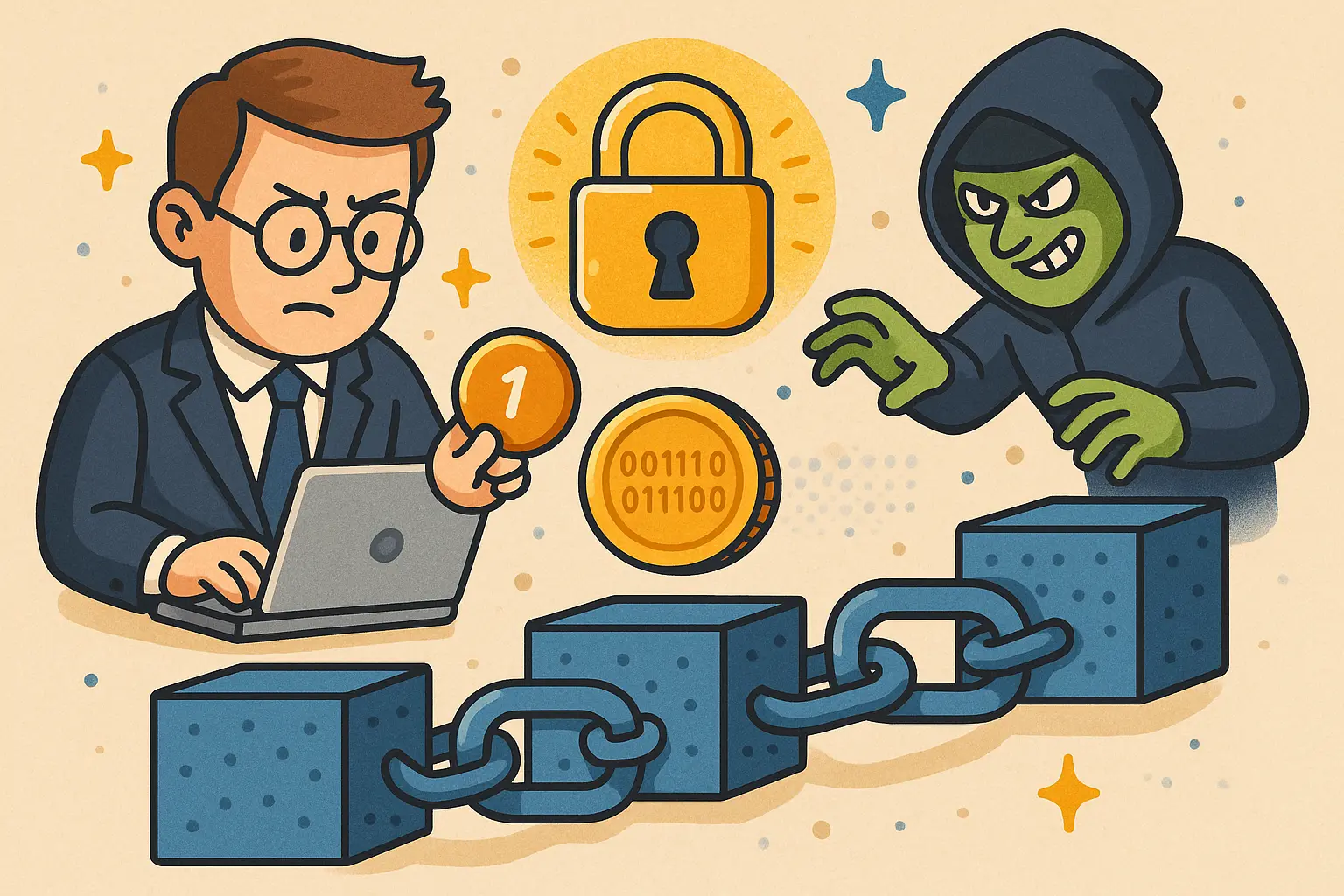
What is a nonce in security contexts beyond blockchain? The word nonce dates back to Middle English, meaning something used once or temporarily. In modern cryptography, nonces serve as arbitrary numbers generated for single-use verification purposes, ensuring each communication session remains unique and preventing old communications from being reused maliciously.
Everyday digital interactions rely on nonces without users realizing. The captchas frequently appearing on websites function as nonces—albeit with letters included—used once to verify human users versus bots. Even simpler, OTPs (one-time passwords) sent to verify transactions are nonces with singular purpose of authenticating something for limited time periods before expiring.
The defining characteristic: a nonce must be unpredictable and non-repeating. If attackers could predict nonce values or reuse old ones, the security mechanism collapses. Therefore, proper nonce generation combines sufficient randomness with optional timestamps ensuring values cannot repeat across reasonable time horizons.
In finance and cryptography specifically, what is a nonce in security systems? It refers to randomly generated numbers verifying transactions or performing security checks. This simple concept scales from small e-commerce transactions to space station communications, demonstrating universal applicability wherever data integrity and authenticity matter.
What Is a Nonce in Blockchain Mining?
Within several Proof-of-Work blockchains including Bitcoin, a nonce is a random 32-bit number that miners use as base for hash calculations. Miners compete with each other, trying to guess valid nonce values as they attempt to calculate block hashes meeting specific requirements.
A block hash functions like a reference number for blockchain blocks. This reference number needs to meet certain requirements—specifically, it must begin with specific number of zeroes. Bitcoin miners perform maddening numbers of hash functions with many different nonce values until valid output is produced meeting the difficulty target.
The first miner to find a nonce resulting in valid block hash gets to add the next block to the blockchain and receives rewards for doing so. This competition drives Bitcoin’s security model, as attacking the network requires overpowering the collective computational resources of all miners—an economically prohibitive proposition.
How Bitcoin Mining Uses Nonces
Trial-and-Error Approach: Every calculation tests new nonce value attempting to meet difficulty requirements
4 Billion+ Possibilities: 32-bit nonce can have over 4 billion values; “extra nonce” extends possibilities to tens of billions
Golden Nonce: The specific nonce value producing valid block hash meeting all requirements
Difficulty Adjustment: Protocol modifies required leading zeroes to maintain consistent 10-minute block times
Proof-of-Work: The process of trying different nonces until valid hash is found constitutes the “work”
Miners employ advanced computing systems to test and discard millions of different nonce possibilities attempting to calculate valid block hashes. The probability of guessing valid nonce on any single attempt approaches zero, making brute-force computation the only viable strategy. This computational burden secures the network—rewriting blockchain history requires recalculating all subsequent blocks, each needing new golden nonce discoveries.
As the number of miners increases over time, the frequency of finding nonces and calculating valid block hashes naturally increases. Therefore, mining difficulty adjusts approximately every 2,016 blocks (roughly two weeks) to keep block time consistent at 10 minutes. The protocol modifies the number of leading zeroes required in block hashes, changing nonce requirements and keeping mining machines constantly challenged.
Preventing Replay Attacks: Nonce in Authentication
What is a nonce in security protocols beyond blockchain? Authentication protocols use nonces as method of preventing replay attacks by ensuring old communications cannot be reused. The nonce helps prove that messages received were sent by intended senders and weren’t intercepted and resent by bad actors.
Replay attacks occur when threat actors intercept communications between two parties and use captured messages to gain unauthorized access. For example, when you send request to server, hackers could intercept this request and resend identical request pretending to be you. Without nonces, servers cannot distinguish legitimate requests from replayed attacks.
Using nonces solves this problem elegantly. Each communication includes unique nonce value. Even if attackers intercept messages, they cannot reuse them because servers reject communications with previously seen nonce values. The randomness of nonces, sometimes with added timestamps, allows applications to verify users and makes it far more difficult for bad actors to impersonate legitimate clients.
Real-World Nonce Applications
HTTP Digest Authentication: Calculates MD5 digest of passwords using different nonces each time, making replay attacks virtually impossible
SSL/TLS Handshakes: Both client and server generate unique nonce values validated with private/public key pairs
E-commerce Protection: Online retailers add nonces to each purchase preventing attackers from reusing order information to place unauthorized repeat purchases
Digital Signatures: Nonce values create, compare, and verify digital signatures using e-signature tools
Two-Factor Authentication: 2FA systems generate temporary nonce codes valid for short time periods
The e-commerce scenario illustrates nonce utility clearly. Without nonces, attackers could take encrypted order information and—without needing to decrypt—continuously send particular orders to suppliers, ordering products repeatedly under same name and purchase information. Nonces give originality to each message, so if companies receive other orders from same person with same nonce, they discard those as invalid orders.
Stream Ciphers and Encryption: Nonce as Initialization Vector
What is a nonce in security for encryption systems? Nonces may be used to ensure security for stream ciphers. Where the same key encrypts multiple messages, different nonces ensure keystreams differ for each encrypted message; often message numbers serve as nonces. This prevents attackers from analyzing patterns across multiple encrypted messages that might reveal the underlying key.
Initialization vectors represent another nonce application in data encryption. An initialization vector is essentially a nonce—often random or pseudo-random and used only once during sessions. This randomization prevents identical plaintexts from producing identical ciphertexts when encrypted with the same key, a vulnerability that could reveal information to attackers analyzing encrypted traffic patterns.
Secret nonce values are used by Lamport signature schemes as signer-side secrets selectively revealed for comparison to public hashes for signature creation and verification. This demonstrates nonces extending beyond simple randomization into sophisticated cryptographic protocol design enabling digital signature schemes resistant to quantum computing attacks.
Nonce Requirements: Randomness and Non-Repetition
To ensure nonces are used only once, they should be time-variant (including suitably fine-grained timestamps in values) or generated with enough random bits to ensure insignificantly low chance of repeating previously generated values. Some cryptography authorities define pseudo-randomness (or unpredictability) as requirement for proper nonces.
The challenge lies in generating truly random numbers. Computers operate deterministically, making true randomness difficult. Cryptographic applications typically use pseudo-random number generators (PRNGs) seeded with entropy from physical processes like mouse movements, keyboard timings, or specialized hardware random number generators. For security-critical applications, the randomness quality of nonce generation can determine whether systems resist attacks or fail catastrophically.
Clock synchronization between organizations becomes necessary when nonces include timestamps to ensure exact timeliness. If communicating parties’ clocks drift significantly, timestamp-based nonces might be rejected as invalid even for legitimate communications, creating availability problems. Therefore, network time protocols become essential infrastructure for timestamp-based nonce systems.
The Golden Nonce: Bitcoin Mining’s Ultimate Prize
What is a nonce in security earning miners cryptocurrency rewards? Within Bitcoin mining, the golden nonce refers to hash value less than the target value. This specific nonce, when combined with block data and hashed, produces output meeting all difficulty requirements—beginning with required number of leading zeroes.
Finding golden nonces requires staggering computational resources. Modern Bitcoin mining operations employ specialized ASIC (Application-Specific Integrated Circuit) hardware calculating trillions of hashes per second. Even with this massive computational power, finding golden nonces takes approximately 10 minutes on average across the entire global mining network—a testament to Bitcoin’s difficulty calibration.
The economic incentives drive this computational arms race. As of December 2025, Bitcoin block rewards equal 3.125 BTC (after the 2024 halving) plus transaction fees, totaling rewards worth hundreds of thousands of dollars per block. This substantial payout justifies the electricity costs and hardware investments required for mining operations, creating self-sustaining security mechanism where financial incentives align with network protection.
Why Nonces Matter: The Foundation of Trustless Security
Therefore, as the evidence demonstrates, nonces sit at the heart of Proof-of-Work consensus mechanisms. Without the right nonce, adding new blocks to blockchains becomes impossible. This requirement creates trustless security—participants need not trust each other because mathematical verification through nonce discovery replaces trust relationships.
The broader security implications extend beyond cryptocurrency. What is a nonce in security for traditional systems? It represents fundamental building block enabling secure communications over insecure channels. When properly implemented, nonce-based authentication prevents replay attacks that plagued earlier network protocols, where attackers simply recorded and replayed valid messages to gain unauthorized access.
Three characteristics make cryptocurrencies unique: decentralization, scalability, and security. Cryptos function without central governing bodies, scale to challenge fiat currencies, and employ one of the highest forms of security available—cryptographic encryption. Nonces enable this security layer by ensuring each transaction, each block, and each authentication attempt carries unique unforgeable identifier provable through mathematical verification rather than trusted authorities.
FAQ
What is a nonce in security?
A nonce is a randomly generated number used only once in cryptographic communications. Short for “number used once,” it prevents replay attacks by ensuring old communications cannot be reused, and it verifies transaction authenticity across authentication protocols, blockchain mining, and digital signatures.
How does a nonce prevent replay attacks?
Nonces give each communication unique identifier. Even if attackers intercept messages, they cannot reuse them because servers reject communications with previously seen nonce values. This makes captured messages useless for unauthorized access attempts.
What is a golden nonce in Bitcoin mining?
A golden nonce is the specific value that, when hashed with block data, produces output meeting Bitcoin’s difficulty requirements (specific number of leading zeroes). Finding this nonce earns miners block rewards worth hundreds of thousands of dollars.
How many nonce possibilities exist in Bitcoin?
A 32-bit nonce offers over 4 billion possibilities. Bitcoin mining includes “extra nonce” field extending this to tens of billions of combinations, ensuring miners have sufficient search space even as global hash rates increase.
Why do nonces need to be random?
Predictable nonces allow attackers to anticipate future values, bypassing security mechanisms. Cryptographically secure randomness ensures nonces cannot be guessed, making replay attacks and pre-computation attacks infeasible.
Can nonces be reused?
No, reusing nonces defeats their security purpose. In authentication, reused nonces enable replay attacks. In encryption, reused nonces with same key can reveal plaintext. Proper systems enforce single-use policies through tracking or time-based expiration.


