Author: BUBBLE
In the past month, major projects seem to have agreed to launch their TGE in September and October, while the wealth effect of new coins led by STBL, 0G, and Aster is quite remarkable.
During the National Day holiday, if you're not inclined to monitor the market, why not take some time to participate in some new projects? Rhythm BlockBeats has compiled several recent projects that have also garnered a lot of attention.
Momentum
Momentum is a decentralized exchange (DEX) invested by well-known VCs such as Sui, Coinbase, and Circle. On June 5th this year, it even secured strategic financing from VCs like OKX at a valuation of 100 million USD.
The product includes multi-signature fund management, token release, and liquidity allocation, developed by the team behind the multi-signature wallet MSafe (Momentum Safe). Due to its background in multi-signature wallet projects, the product places a greater emphasis on asset management security.
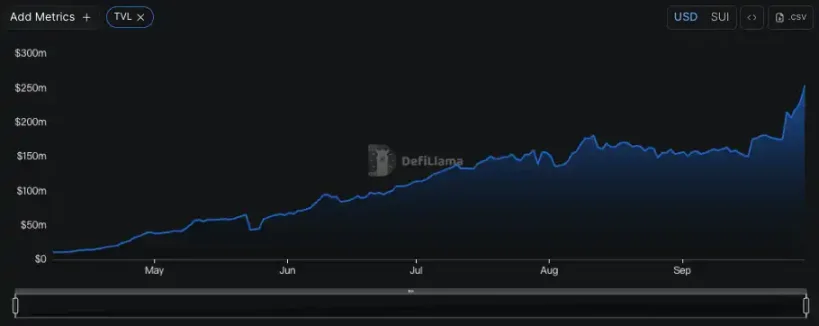
Since the launch of the testnet at the end of March this year, it has rapidly accumulated users and funds, with the current TVL reaching approximately 240 million USD, a cumulative trading volume exceeding 12 billion USD, and more than 1.7 million users and 890,000 liquidity provider addresses. By Q3 of this year, the quarterly trading fees have already exceeded 7 million USD.

From September 26 to October 19, Momentum, in partnership with BuidlPad, is launching the “HODL Yield Campaign” to provide annualized returns of up to 155% for liquidity pools including SUI, stablecoins, and Bitcoin. Participants will also receive double Bricks points rewards (with pre-sale quotas and possible airdrop opportunities; the official statement is that current supporters will benefit first).
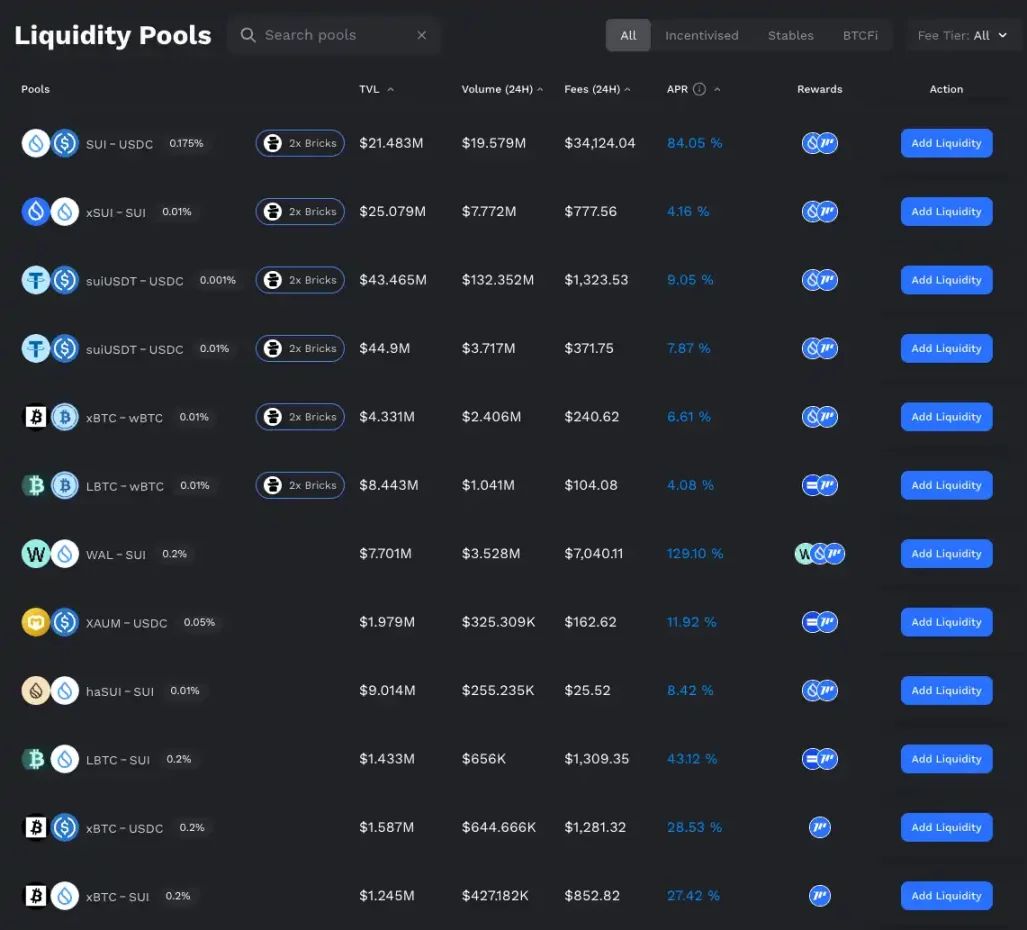
The process is not difficult to implement. Users just need to go to the Momentum HODL event page of BuidlPad (the official Medium has detailed procedures), connect their wallet, and provide liquidity to the designated pools (such as SUI/USDC, xBTC/wBTC, etc.).
During the event, earnings are calculated proportionally. Users can invest in the pool using SUI or USD stablecoins. The system will automatically settle and distribute MMT and Bricks rewards after the event ends.
Yield Basis
Yield Basis is a Bitcoin-native yield protocol launched by Curve founder Michael Egorov, which secured $5 million in funding at a valuation of $50 million at the beginning of the year.
Yield Basis utilizes an automatic re-leveraging mechanism to provide trading fee income for BTC liquidity providers, while hedging against impermanent loss caused by AMM curvature risk. LPs can choose to directly receive BTC-denominated transaction fees or forgo the fees in exchange for YB token incentives. The locked veYB can participate in governance and share in protocol fees.
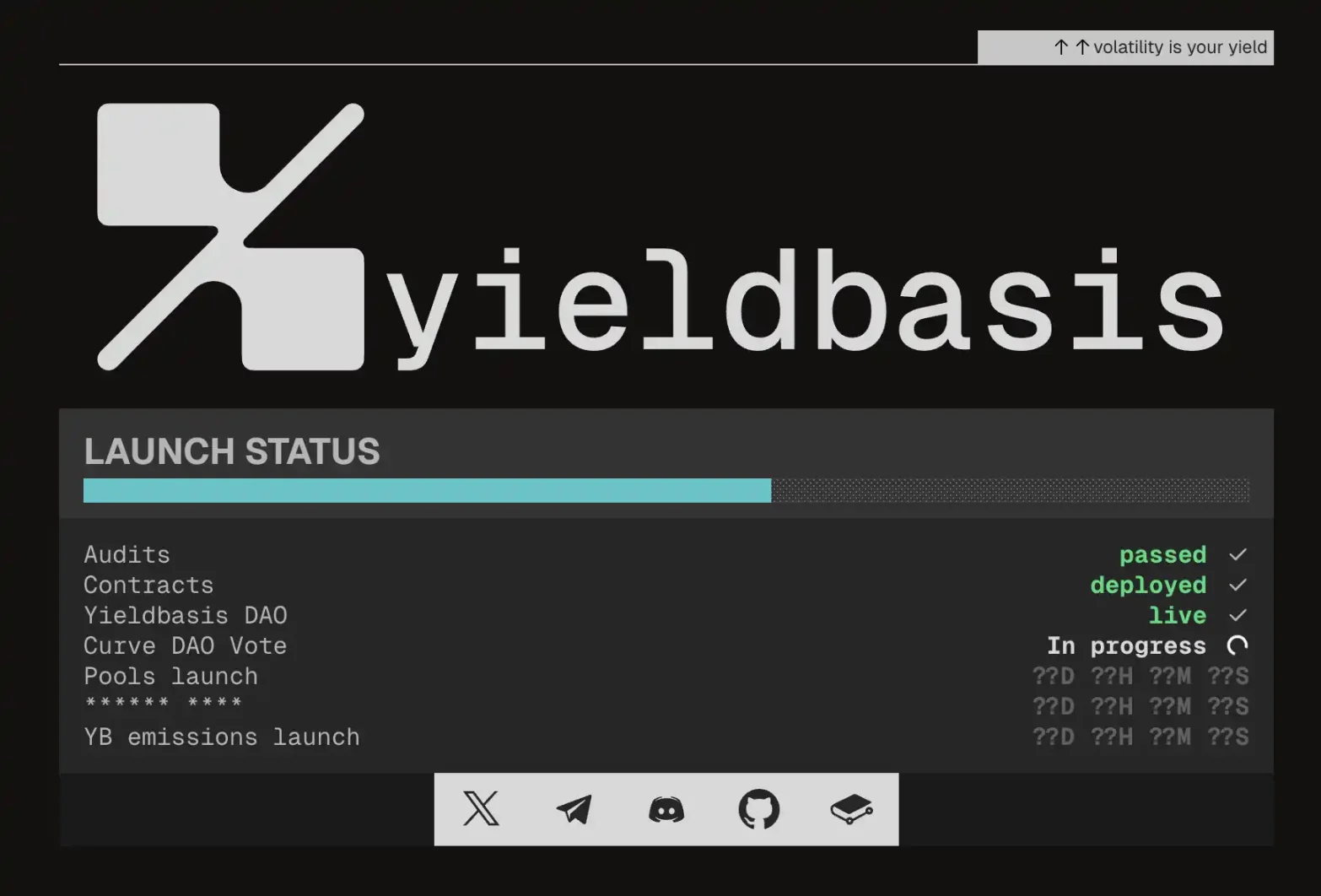
After a day of delays, Kraken announced that the first project selected for the LaunchPad in collaboration with Legoin is Yield Basis. Due to Legion's “Legion Score” system, which allocates quotas based on on-chain behavior, social media activity, and developer contributions, it can filter out a large portion of multi-account participants, ensuring that true builders and core users receive subscription shares first. Coupled with Kraken's listing channel effect, the market is paying close attention to this collaboration between the two parties.
The current presale model is divided into two phases. First, 20% of the tokens are reserved for subscription by high-scoring Legion users (the pre-deposit is currently open, and the project party will determine the quota based on your Legion score). The remaining 80% of the shares will be publicly sold on Kraken and Legion on a first-come, first-served (FCFS) basis, and $YB will be directly listed on Kraken after the sale ends.
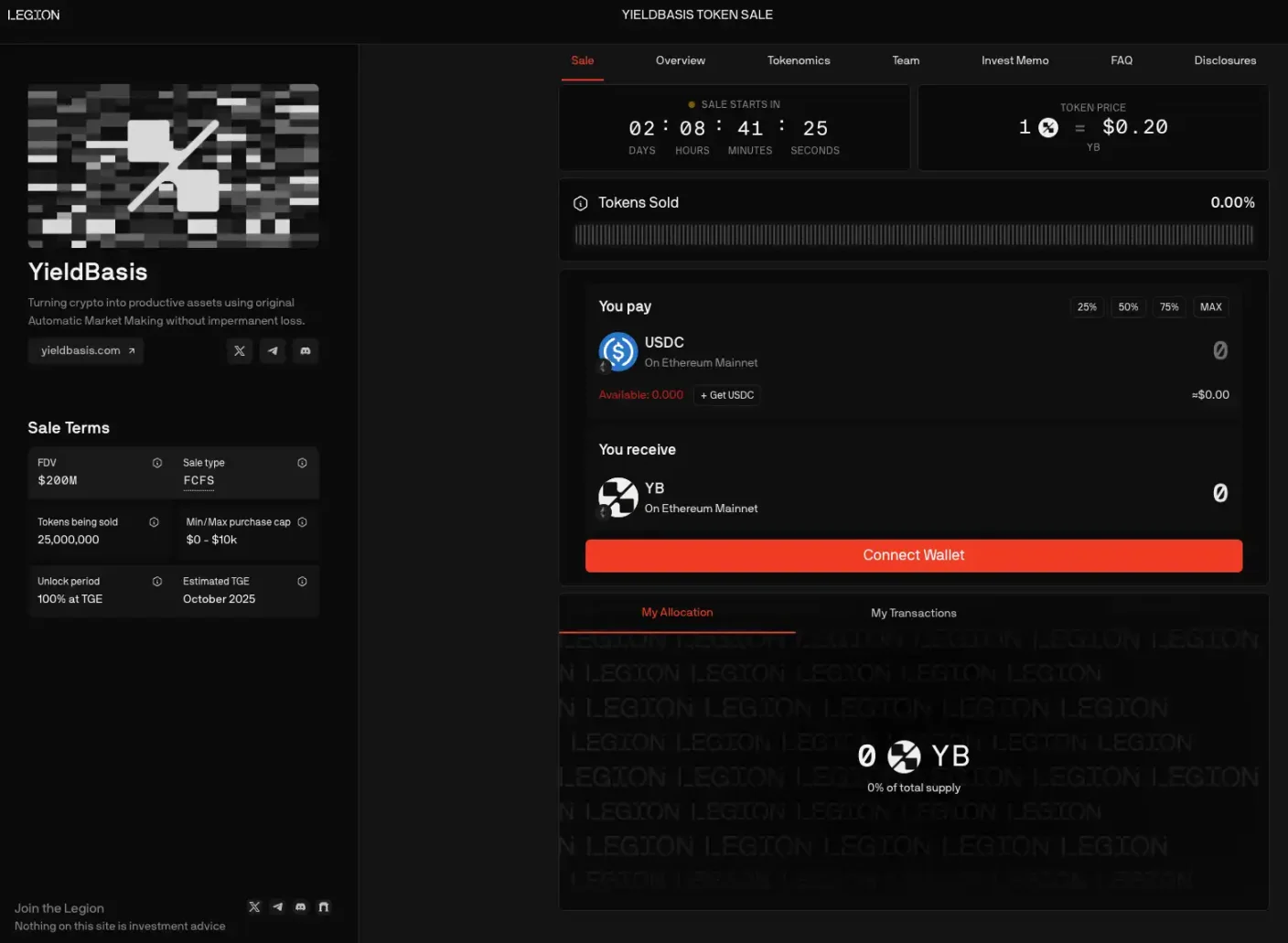
The total supply of tokens is 1 billion, with 2.5% (approximately 25 million) available for community sale at a fixed price of $0.20. Each user can purchase up to $10,000. The distribution of tokens is as follows: 30% for liquidity mining incentives, 25% for the team, 12.5% for ecological reserves, 12.1% for investors, 7.5% allocated for Curve protocol licensing fees, 7.4% as developer reserves, and 3% for the proportional distribution of tokens for Curve governance incentives.
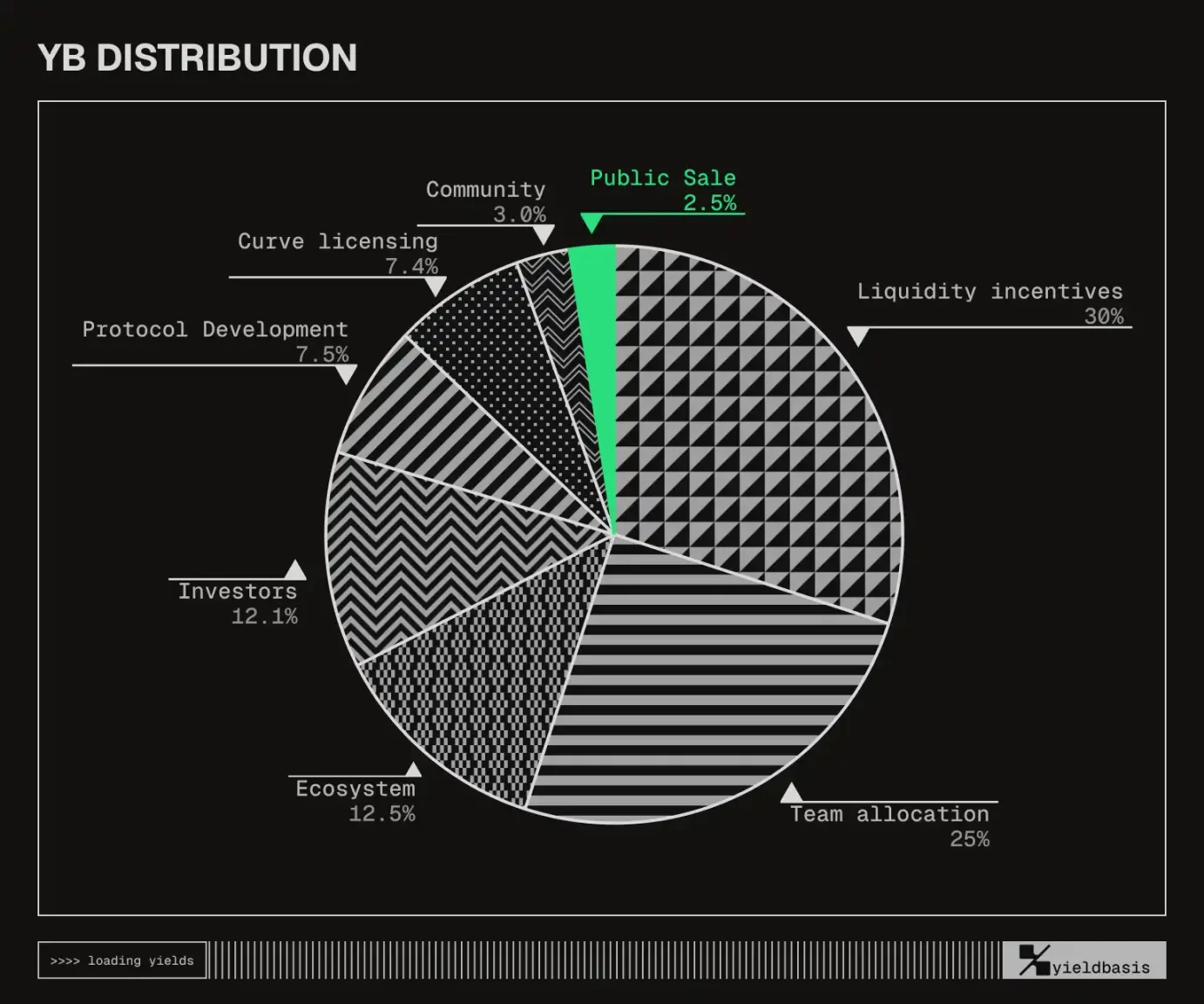
It is worth noting that Curve DAO has voted to approve the issuance of accelerated funds in the form of crvUSD for increasing liquidity in the Bitcoin pool. Although the financing valuation at the beginning of the year was only $50 million, the support from the Curve community, combined with Egorov's influence and the sentiment premium from Kraken and Legion, allowed YB to conduct a presale at a valuation of $200 million, significantly higher than the previous internal financing valuation.
Canton Network
Canton Network is a public chain developed by Digital Asset aimed at institutional financial markets, emphasizing privacy protection and synchronized clearing among multiple institutions. Since 2016, Digital Asset has completed 8 rounds of financing totaling nearly $400 million, with traditional financial institutions such as Goldman Sachs, IBM, and JPMorgan Chase participating as lead investors multiple times. In the recent E round of financing on June 24, it attracted investments from more Crypto Native VCs such as Yzi Labs, Paxos, Polychain, and Circle.
We are at a critical juncture where TradeFi and blockchain are becoming increasingly interconnected. Several top financial institutions, such as Goldman Sachs, Citigroup, JPMorgan Chase, HSBC, and BNP Paribas, have begun participating in testing and applications. There have already been some practical case implementations, such as the issuance of a €100 million digital native bond for the European Investment Bank (EIB) in November 2024, and the completion of tokenization tests with Euroclear and the World Gold Council in October 2024, involving assets such as UK gilts, Eurobonds, and gold.
Canton officially launched the native token “Canton Coin” ($CC) as a payment and incentive tool to further promote interoperability among ecological applications, used to pay for the fees of global synchronization services. Canton Coin can be issued by participants providing computing power or services to the network, and is used to reward application builders, users, and infrastructure providers.
In the past, the total supply of $CC could only be produced through node mining, with a maximum of 100 billion $CC in the first 10 years, and then 2.5 billion each year thereafter. Currently, 28.48 billion have been mined, and the distribution model, which initially provided 80% distribution to super validators, will gradually decrease over time and after the network stabilizes, leaving only 5% after 10 years. Similarly, the share of application providers and other ordinary validators will increase. Because of this, the liquidity of $CC in the secondary market is quite weak.
The Canton Network has collaborated with Temple in the ecosystem to launch a trading platform that allows users to buy, sell, and manage Canton Coin after completing KYC for the first time. However, it is still unknown how retail investors can participate and whether they can participate at all, pending further announcements.
Currently, what we can participate in is the airdrop event of Canton Wallet launched by the wallet project SEND in the Canton Network ecosystem on September 28. The official announcement states that to test Canton Wallet, users participating in the test will be allocated a quota of $CC (after filling out the Google form for verification). The specific process is to buy a SENDTAG, hold 7000 $SEND, and stake 20u into the vault. This may be the most convenient way for ordinary people to join, but Canton Wallet will only airdrop 30% of the $CC it earns to users, so there may not be much profit potential.


