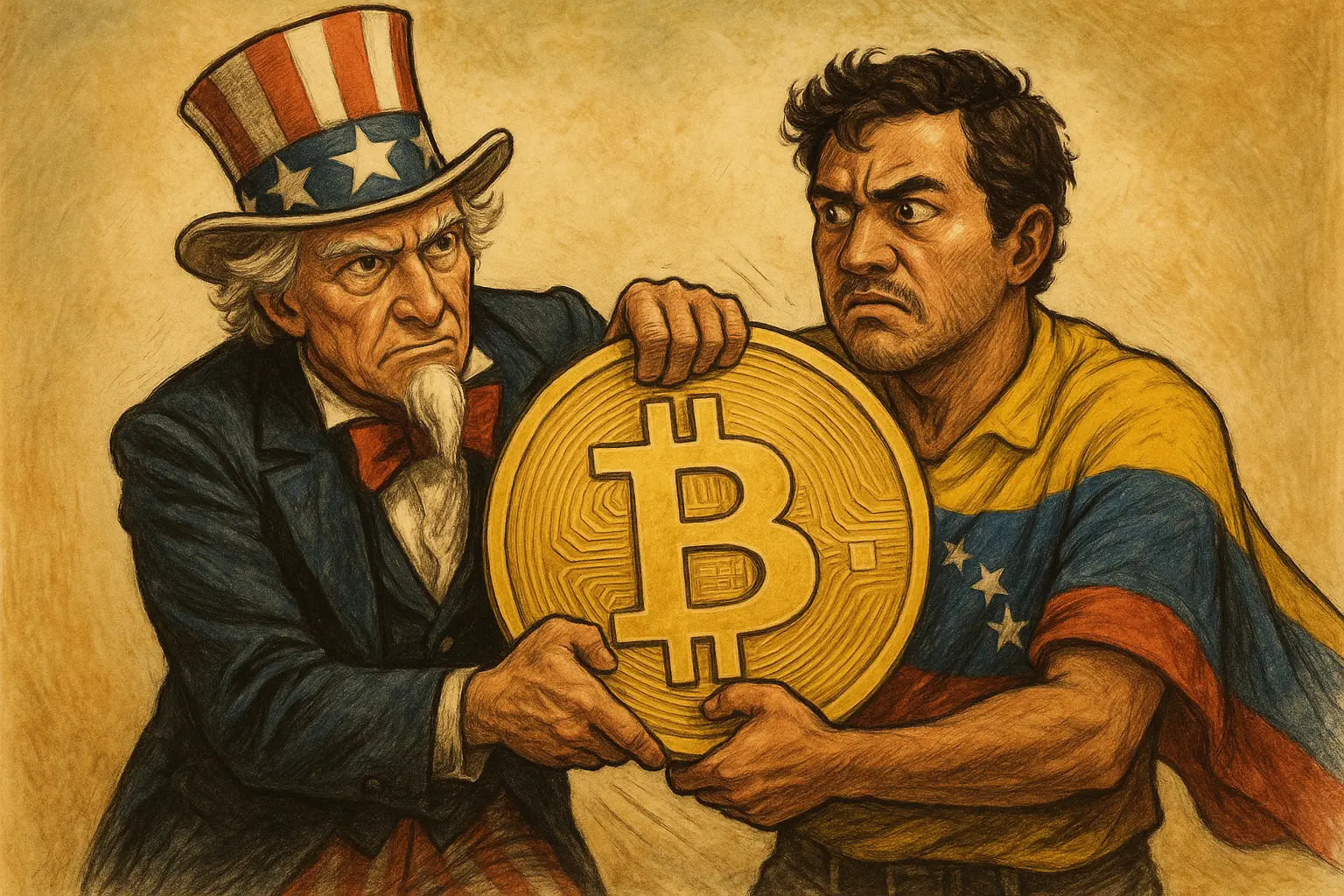
U.S. SEC Chairman Paul Atkins stated that after the U.S. military captured Venezuelan President Maduro, there is no ruling out the possibility of confiscating the alleged $60 billion (about 600,000 coins) worth of Bitcoin he holds, but “it’s still to be observed.” Several blockchain analysts have been unable to verify whether Venezuela truly holds assets of this scale. The Senate will review the CLARITY Act on Thursday, granting the CFTC greater regulatory authority.
The Truth and Doubts Surrounding Venezuela’s $60 Billion Bitcoin Holdings
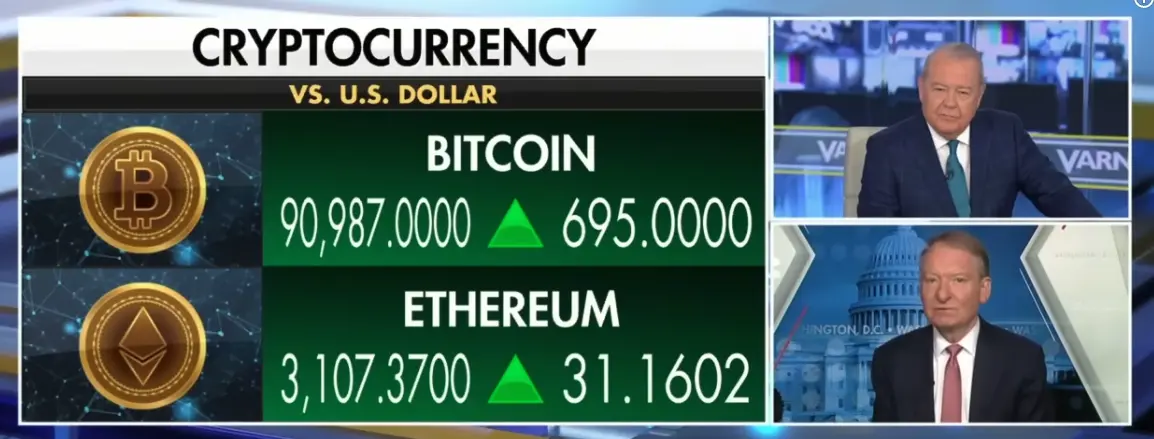
(Source: YouTube)
Reports of Venezuela holding Bitcoin emerged after U.S. forces arrested President Maduro last week under the orders of President Trump and brought him back to New York for criminal charges. On Monday, SEC Chairman Atkins responded to reports claiming Venezuela holds up to $60 billion worth of Bitcoin during an interview with Fox Business host Stuart Varney.
“I leave this matter to others within the government to handle — I am not involved,” Atkins said when asked whether the U.S. would “seize their Bitcoin.” This cautious statement neither denies the possibility of confiscation nor commits to specific actions, leaving room for future policy options. The SEC Chairman indicated that if the U.S. had the chance to uncover the purported 600,000 Bitcoins, what actions might be taken (if any) “remain to be seen.”
However, as of press time, blockchain analysts and intelligence platforms have not confirmed reports of the country holding $60 billion in cryptocurrency. Several analysts stated they cannot verify whether this Latin American country owns such a large amount of crypto assets. If Venezuela truly holds 600,000 Bitcoins, it would make it the fourth-largest Bitcoin holder globally after the U.S., China, and possibly Ukraine. Such a large holding would be difficult to fully conceal and should leave traceable on-chain footprints.
Known and Unknown Aspects of Venezuela’s Crypto Assets
Known facts: Launched Petro in 2018, a digital currency backed by oil reserves, but ultimately failed.
Unknown doubts: The claim of holding $60 billion (600,000 Bitcoins) cannot be verified by blockchain analysts.
On-chain dilemma: Such a large holding should be traceable on the blockchain, but no public evidence exists.
Source mystery: If true, how did Venezuela accumulate such a large holding under sanctions remains a mystery.
The Maduro regime has previously been involved in certain sectors of this industry. The country launched Petro in 2018, a digital currency backed by oil, attempting to bypass U.S. sanctions. However, Petro never gained widespread adoption, and the international community widely questioned its true value. If Venezuela indeed holds 600,000 Bitcoins, it could be the result of years of secret accumulation through oil exports, but this would require highly complex on-chain operations and third-party intermediaries to hide the flow of funds.
Legal and Technical Challenges of Seizing Bitcoin
Even if the U.S. decides to confiscate Venezuela’s Bitcoin, practical implementation faces enormous challenges. First is the legal basis. Traditional asset freezing and confiscation apply to bank accounts, real estate, and corporate shares, all within specific jurisdictions and subject to local laws. But Bitcoin is a decentralized digital asset, not tied to any particular country, with ownership controlled by private keys. If the Venezuelan government does not surrender the private keys, the U.S. cannot technically force the transfer of these Bitcoins.
Second is the identification issue. Even if Venezuela truly holds Bitcoin, how to determine which on-chain addresses belong to the government? Bitcoin addresses do not contain owner information unless linked through exchanges or third-party services, making it difficult to associate addresses with specific entities. If Venezuela uses multiple intermediaries and mixing services, tracking becomes exponentially harder.
Third is the issue of international law. Unilaterally confiscating another sovereign country’s assets, even if the regime is overthrown, could trigger international disputes. Such a precedent might unsettle other countries holding dollar assets and accelerate de-dollarization. From a geopolitical perspective, the long-term costs of this approach could far outweigh the short-term gains of $60 billion.
Historically, the U.S. has successfully confiscated cryptocurrencies mainly related to criminal activities and dark web markets. After shutting down Silk Road in 2013, the FBI seized about 170,000 Bitcoins. In 2022, after dismantling the Bitfinex hacker case, the Department of Justice confiscated approximately 94,000 Bitcoins. But these cases involved criminal activities within the U.S., and are fundamentally different from confiscating sovereign assets.
The Broader Context of the Senate’s Thursday Review of the CLARITY Act
A few days before Atkins made these remarks, the U.S. Senate Banking Committee planned to review the Digital Asset Market Transparency Act (referred to as CLARITY) on Thursday. The House passed the bill in July, but it has been under review in the Senate for months, possibly delayed due to the 43-day government shutdown in October and November.
Banks and some crypto companies have expressed concerns over provisions related to stablecoin rewards in the draft. Reports indicate many Democrats are calling for stronger ethical constraints and clarifications on DeFi regulations. Due to the 2026 midterm elections and the potential for another government shutdown at the end of January, the bill might be delayed.
However, early drafts of the bill show that lawmakers aim to grant the Commodity Futures Trading Commission (CFTC) greater authority to regulate digital assets. This shift in regulatory power would mean cryptocurrencies are more likely to be viewed as commodities rather than securities, a significant positive for the industry. The aggressive enforcement by the SEC over the past years has sparked controversy, and CFTC’s involvement could bring clearer regulatory frameworks.
The timing of the CLARITY bill’s passage also has an indirect impact on the Venezuela Bitcoin issue. If the bill clarifies the legal status and confiscation procedures for digital assets, it could provide legal tools for the U.S. to handle assets of the Maduro regime. But if the bill continues to be delayed, relevant operations might fall into a legal vacuum.
From a broader perspective, the Venezuela Bitcoin issue highlights the legal complexities of sovereign nations holding crypto assets. Unlike traditional foreign exchange reserves, Bitcoin’s decentralized nature makes it difficult to freeze or confiscate unilaterally. This characteristic can serve as a tool for authoritarian regimes to evade sanctions or as a means to protect national assets from external interference.
Disclaimer: The information on this page may come from third parties and does not represent the views or opinions of Gate. The content displayed on this page is for reference only and does not constitute any financial, investment, or legal advice. Gate does not guarantee the accuracy or completeness of the information and shall not be liable for any losses arising from the use of this information. Virtual asset investments carry high risks and are subject to significant price volatility. You may lose all of your invested principal. Please fully understand the relevant risks and make prudent decisions based on your own financial situation and risk tolerance. For details, please refer to
Disclaimer.


