
Futures
Access hundreds of perpetual contracts
TradFi
Gold
One platform for global traditional assets
Options
Hot
Trade European-style vanilla options
Unified Account
Maximize your capital efficiency
Demo Trading
Introduction to Futures Trading
Learn the basics of futures trading
Futures Events
Join events to earn rewards
Demo Trading
Use virtual funds to practice risk-free trading
Launch
CandyDrop
Collect candies to earn airdrops
Launchpool
Quick staking, earn potential new tokens
HODLer Airdrop
Hold GT and get massive airdrops for free
Pre-IPOs
Unlock full access to global stock IPOs
Alpha Points
Trade on-chain assets and earn airdrops
Futures Points
Earn futures points and claim airdrop rewards


More




#Gate广场四月发帖挑战 Deadlock in US-Iran talks and views on its impact on the market
This weekend, representatives from the United States and Iran sat down at the negotiation table in Islamabad. The result was that both sides returned home with grim faces, with no agreement reached, but plenty of harsh words thrown around. US Vice President Vance said, “There’s just no way to make it work,” while Iran’s representative directly scolded the US as “too greedy.”
Honestly, no one was surprised by this outcome. Even before the negotiations began, the two leaders were already hyping their domestic audiences that, “We have already won,” and the conditions they put forward were completely off—like talking to each other across the table without understanding. From the very start, this negotiation looked more like a political performance staged for both domestic and international audiences.
What’s interesting is that while the representatives on both sides were trading verbal blows, another drama was unfolding over the Persian Gulf. A US warship tried to approach the Strait of Hormuz, and Iran’s speedboats immediately swarmed around it. The two sides then stalled for a while on the sea surface, and in the end, the US warship turned around and left.
The US said it was there to “clear mines,” while Iran said, “If you dare move any further, we will open fire.” Even more theatrically, Iran’s negotiating representatives immediately relayed a message through intermediaries on the spot: “If your ships don’t withdraw, we’ll take action within half an hour—this negotiation is off the table!”
This incident reveals a key piece of information: the US now truly has no way to deal with the Strait of Hormuz. Iran doesn’t need any high-tech weapons—just tossing some water mines and flying a few drones could cost only tens of thousands of dollars, yet it may be enough to scare insurance companies into refusing coverage and make ship owners afraid to sail. The strait is still open in name, but in reality it is effectively half-paralyzed.
But here’s the interesting part: for financial markets, this breakdown in talks might not necessarily be bad news.
In the Middle East, don’t expect real peace in the short term. But the situation has changed a bit—after this round of showdowns, the “rules of the game” between the US and Iran are gradually becoming clear.
What financial markets fear most is not bad news itself, but “not knowing what will happen.” Previously, everyone worried that if the two sides really got carried away and “went all-out,” they might blow up oil fields, pipelines, and ports. Now the bottom line has been drawn: civilian energy facilities must not be touched.
It’s like two people fighting—maybe they used to be able to use knives, but now they agree that only fists are allowed. The fight may still happen, but the probability of someone dying is much lower. For the market, this is good news.
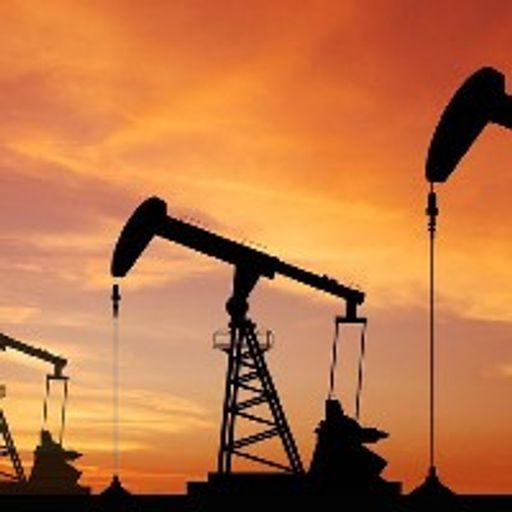
Just look at the oil price trend to understand the logic. A few days ago, news that a ceasefire might be possible caused oil prices to plunge by 20% within a single day—from above $110 per barrel to around $95.
Why did it drop so sharply? Because in the previous round of the rise, a large portion was driven by “panic premium”—everyone was worried that the strait would be blocked for the long term and priced in the worst-case scenario in advance. Now that it turns out, “the worst is basically just this,” the extra “shock fee” naturally has to be paid back.
Some say Trump is playing a long game of chess, deliberately dragging Iran down, ruining Middle Eastern oil producers so the US can monopolize the market. But that idea is a bit naive.
What the US needs most right now are two things: first, maintaining its lead in the AI race; second, bringing down high interest rates to ease debt pressures. Dragging this out with Iran prevents global inflation from settling—while the Federal Reserve would not dare cut rates, US companies face high financing costs. Isn’t that digging a hole for itself?
More critically, America’s credibility in the Middle East is now eroding. Previously, Gulf countries thought it was worth paying protection fees; now they see that the US can’t even manage a strait, so they must be thinking twice. After all this, the share of Middle Eastern countries selling oil to China and settling in RMB has risen to 41%, while the US dollar’s share has fallen to 52%. And just a few years ago, the dollar still held an absolute dominance of over 90%. The foundation of the “petrodollar” system has started to loosen.
Every great power has its cycle and will make strategic mistakes. The US has made plenty of errors over the years, but because of its size it could withstand the upheaval. However, the current situation is that it’s pressing the accelerator while sliding downhill, shouting “from victory to victory”—which only accelerates the consumption of its own resources.
For investors, the path ahead is becoming fairly clear: the game between the US and Iran will continue, and fighting alongside talk will become the norm. Oil prices may keep oscillating between $80 and $120, making it difficult to return to the low levels of the past, but the kind of violent surges that happened as before will become less frequent.
The world is moving from a unipolar era where the US calls the shots into a new pattern of multi-party games. The old order is loosening, and a new balance is taking shape. In the process, there will be chaos and uncertainty, but new opportunities will also emerge.