
Futures
Access hundreds of perpetual contracts
TradFi
Gold
One platform for global traditional assets
Options
Hot
Trade European-style vanilla options
Unified Account
Maximize your capital efficiency
Demo Trading
Introduction to Futures Trading
Learn the basics of futures trading
Futures Events
Join events to earn rewards
Demo Trading
Use virtual funds to practice risk-free trading
Launch
CandyDrop
Collect candies to earn airdrops
Launchpool
Quick staking, earn potential new tokens
HODLer Airdrop
Hold GT and get massive airdrops for free
Launchpad
Be early to the next big token project
Alpha Points
Trade on-chain assets and earn airdrops
Futures Points
Earn futures points and claim airdrop rewards


More

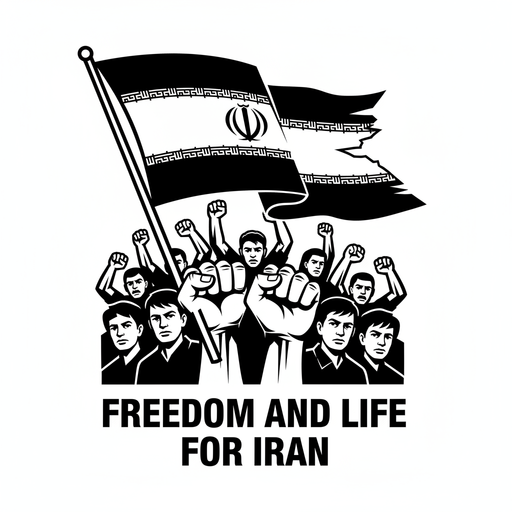




#IranLandmarkBridgeBombed
When the bridge falls, does the world hold its breath — or brace for what comes next?
On April 2, US-Israeli airstrikes destroyed the B1 bridge connecting Tehran to Karaj — Iran's largest bridge and a landmark infrastructure project that had not yet been officially inaugurated. Two strikes hit within an hour of each other, the second arriving while emergency responders were already on the ground assisting the wounded from the first. Eight civilians were killed and 95 wounded according to Iranian state media, and Trump publicly celebrated the strike on Truth Social within hours, warning there was "much more to follow" if a settlement was not reached. That sequence — a strike, a second strike on the rescue operation, a presidential boast, and a threat of continuation — is not the communication pattern of a conflict moving toward resolution. It is the communication pattern of a conflict that has found its rhythm and intends to sustain it, and every energy market, equity index, and risk asset on the planet is now in the process of repricing what that rhythm means for the months ahead.
Iran's response to the bridge strike has moved on multiple tracks simultaneously, which is itself a signal about how Tehran is managing the asymmetry of this conflict. Militarily, Iran has threatened retaliatory strikes on bridges across the Middle East in direct response to the B1 attack, according to Fars news agency affiliated with the Revolutionary Guards — a symmetric escalation threat designed to signal that infrastructure targeting is now a bilateral variable rather than a unilateral one. Diplomatically, Iran is drafting a Strait of Hormuz monitoring protocol with Oman that would require maritime traffic through the world's most critical oil shipping chokepoint to operate under Iranian supervision and coordination — which is not a military move but is a geopolitical move of potentially greater consequence, because it transforms the Strait from a passage that Iran can threaten to close into a passage that Iran is asserting the right to manage as a matter of international protocol. Those two tracks running simultaneously suggest a country that is absorbing severe punishment militarily while attempting to convert its geographic leverage into durable structural power that survives the air campaign.
The scale of what has already happened in this conflict deserves to be stated plainly because the headline pace of new events tends to compress the accumulated weight of the preceding ones. More than 2,000 civilians including women and children have been killed in Iran since the joint US-Israeli strikes began a month ago, according to the Iranian Red Crescent. More than 15,000 bombing raids have been conducted over34 days. The Pasteur medical institute in Tehran was struck on the same day as the bridge, indicating that the target set has expanded well beyond military and infrastructure categories into civilian and scientific institutions. Despite five weeks of sustained bombardment at this intensity, US intelligence assessments indicate that Iran retains approximately half of its missile launchers and a massive drone fleet — which means the military math of this campaign is not producing the kind of capability degradation that would create a clear off-ramp, and the absence of a clear off-ramp is precisely the condition that turns a military campaign into an indefinite state of war with no defined endpoint.
The energy market has already delivered its verdict on what this conflict means for global supply certainty. WTI crude oil settlement crossed $110 and Brent spot traded above $140 in a single session — the highest level since 2008— and the mechanism connecting the conflict to those numbers is not speculative but structural. Approximately 20percent of global oil supply transits the Strait of Hormuz daily, and an Iran that is simultaneously absorbing the destruction of its civilian infrastructure, threatening symmetric infrastructure retaliation across the region, and asserting supervisory rights over Strait of Hormuz maritime traffic is an Iran whose relationship to that chokepoint has qualitatively changed from a latent threat into an active operational variable. Insurance premiums for tankers transiting the region are repricing in real time. Shipping route alternatives that add weeks to transit times are being evaluated by logistics operators who were treating them as theoretical contingencies two months ago. The $140 Brent print is not a panic spike that reverses when sentiment normalizes — it is the market's current best estimate of what oil supply looks like in a world where the most critical maritime passage is contested in multiple simultaneous dimensions.
The transmission from $140 oil into the crypto market is more direct than most participants appreciate, and it operates through three channels that compound rather than cancel. The first is the macro liquidity channel: oil at these levels locks the Federal Reserve into a restrictive policy posture for longer than any market participant was pricing before this conflict entered its current phase, which compresses the multiple that speculative and non-yielding assets can sustain and raises the real opportunity cost of holding crypto against cash and inflation-protected instruments. The second is the energy cost channel: electricity is a direct input into Bitcoin mining economics, and a sustained energy shock that transmits into higher electricity costs across major mining jurisdictions — which is not certain but is increasingly probable at $140Brent — changes the marginal cost of production in ways that create a floor, but a floor that gets approached precisely when sentiment is already at extreme lows and forced selling is most likely to overshoot it. The third is the safe-haven identity channel, which is the most contested and therefore the most interesting: a portion of the market holds Bitcoin as digital gold and will bid it as geopolitical risk intensifies, while another portion treats it as a high-beta risk asset and will sell it for the same reason, and the price at any given moment is the live result of those two populations negotiating in real time over which identity wins in this specific type of crisis.
Bitcoin is currently trading at $67,075 with the fear and greed index sitting at 9 out of 100— deep inside extreme fear territory — and that reading was established before the B1 bridge strike, before the Trump "more to follow" post, and before the Strait of Hormuz protocol announcement. The fear that the index is measuring was already priced from the preceding weeks of the conflict, which means the new information from Thursday's escalation is arriving into a market that is not complacent but is already exhausted, already defensive, and already running on a positioning structure where short sellers are crowded and holders are running on conviction rather than comfort. The $69,000 to $70,100 overhead range carries significant liquidation liquidity that would become a mechanical target in a short squeeze scenario, and short squeezes in extreme fear environments do not need a fundamentally positive catalyst to trigger — they need only a marginal shift in the balance between the sellers who are still selling and the buyers who have been waiting. The conflict escalation does not remove that technical setup. It coexists with it, which is the specific combination that makes this the most analytically demanding environment of the past several years.
The question that no model can answer with precision but that every participant needs a working hypothesis about is what the resolution of this conflict looks like and what it does to risk assets when it arrives. Three scenarios carry the most weight. In the first, a negotiated settlement emerges faster than current rhetoric suggests — Trump's escalation language and his simultaneous "deal or more destruction" framing is consistent with a negotiating posture that uses maximum pressure as a setup for a public win, and a ceasefire announcement in that context would function as an immediate relief catalyst for oil, risk assets, and crypto simultaneously. In the second, the conflict grinds into a sustained low-intensity war of attrition where neither side achieves decisive military outcomes but the energy market uncertainty becomes a permanent feature of the macro landscape for quarters rather than weeks, which is the scenario most damaging to crypto because it removes the relief catalyst without providing a clear bearish endpoint either. In the third, the conflict escalates beyond its current parameters in ways that are difficult to model — Strait of Hormuz closure, wider regional involvement, or military developments that cross thresholds the current pricing has not contemplated — and the repricing in that scenario is not incremental but discontinuous. Participants who have a clear view of which scenario they are inside of, or at minimum a clear framework for what evidence would shift their probability weights between the three, are in a structurally different position than those managing through this period on instinct and sentiment alone. The bridge is gone. The war is not.
---