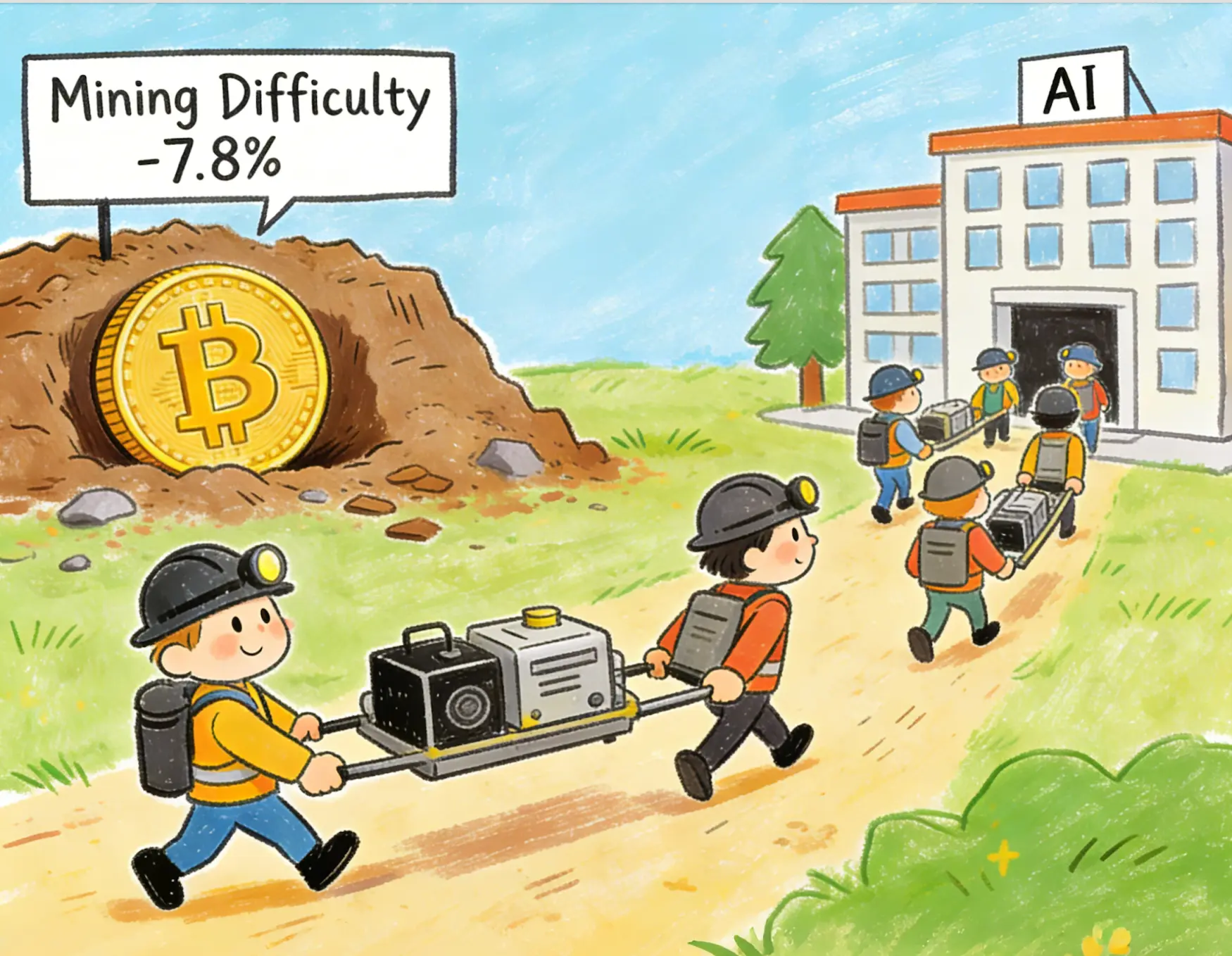
 Bitcoin’s mining difficulty fell 7.76% to 133.79 trillion on March 21, 2026, marking the second-largest negative adjustment of the year, as average block times stretched to roughly 12 minutes and 36 seconds—well above the protocol’s 10-minute target—triggering an automatic downward recalibration.
The decline reflects a structural shift as publicly traded miners increasingly reallocate infrastructure from bitcoin mining toward artificial intelligence (AI) workloads, with the network’s hashrate retreating to approximately 903 to 948 EH/s, well below the record 1 zetahash level reached in 2025. Difficulty now sits nearly 10% below its January level and far below the November 2025 all-time high near 155 trillion.
The average production cost per bitcoin was estimated at approximately $88,000 as of mid-March, while bitcoin traded near $69,200 on Sunday, creating a gap of nearly $19,000 per coin and meaning the average miner is operating at a roughly 21% loss on every block mined.
Mining Difficulty Decline and Network Stress Indicators
Second-Largest Negative Adjustment of 2026
The 7.76% drop in difficulty at block height 941,472 is the second-largest negative adjustment of 2026, following an 11.16% plunge on February 7—the steepest decline since China’s sweeping mining ban in 2021. Average block times during the prior epoch stretched to approximately 12 minutes and 36 seconds, well above the 10-minute target, triggering the automatic downward recalibration.
The latest reading at 133.79 trillion sits roughly 10% below the 148 trillion level where the year began, and far below the November 2025 all-time high near 155 trillion. The next adjustment, estimated for early April, is projected to decline further.
Hashprice at Breakeven or Below
Hashprice—the metric tracking expected miner revenue per unit of computing power—is currently hovering around $33.30 per petahash per second per day, according to Luxor’s Hashrate Index. This level is at or below breakeven for a wide range of mining hardware. Hashprice hit an all-time low of approximately $28/PH/s/day on February 23 following the recovery from winter storm disruptions.
Miner Economics Under Pressure
Production Cost vs. Bitcoin Price
Checkonchain’s difficulty regression model, which estimates average production costs based on network difficulty and energy inputs, pegged the figure at $88,000 per bitcoin as of March 13. With bitcoin trading near $69,200, the average miner faces a loss of approximately $19,000 per coin—a roughly 21% margin deficit on every block mined.
Energy Cost Drivers
The cost squeeze has been building since the October 2025 crash that took bitcoin from $126,000 to below $70,000, but the Iran war has accelerated the pressure. Oil above $100 per barrel feeds directly into electricity costs for mining operations, particularly for the estimated 8-10% of global hashrate operating in energy markets sensitive to Middle Eastern supply.
The Strait of Hormuz, which handles approximately 20% of the world’s oil and gas flows, remains effectively closed to most commercial traffic. A March 20 ultimatum threatening attacks on Iran’s power plants added a new layer of risk for miners.
Structural Shift: AI Exodus Accelerates
Miners Reallocating to AI Workloads
The difficulty decline reflects more than cyclical price pressure. A growing number of publicly traded miners are actively reallocating infrastructure from bitcoin mining toward artificial intelligence workloads, a trend identified in industry outlooks as potentially reducing network hashpower and weakening bitcoin’s security over time.
Notable moves include:
Core Scientific: Expects to sell the majority of its bitcoin treasury in 2026 to fund AI and high-performance computing expansion
Bitdeer: Fully liquidated its bitcoin reserves to zero in February, becoming the largest publicly traded miner by self-mining hashrate to hold no BTC on its balance sheet; holdings remained at zero as of March 21
HIVE Digital Technologies: Launched its first AI GPU cluster in Paraguay in March 2026
Cango, Riot Platforms, TeraWulf, IREN, CleanSpark, and Bitfarms: Have outlined similar diversification strategies in recent quarters
Miner Selling Pressure
Transaction fees as a share of total miner revenue have collapsed from roughly 7% in 2024 to about 1%, leaving miners almost entirely dependent on the block subsidy and, by extension, on bitcoin’s price. When miners cannot cover costs, they sell bitcoin to fund operations, adding supply pressure to a market already dealing with significant underwater positions.
Aggregate miner balances stood at approximately 684,000 BTC, down only 0.5% year-over-year, though miners have effectively sold the entirety of newly issued supply over that period.
Market Structure Implications
Historical Context
Historical analysis offers some context: bitcoin has posted positive 90-day forward returns 65% of the time during periods of shrinking hashrate. However, the period between when costs exceed revenue and when difficulty falls low enough to restore profitability represents a vulnerability for miners and the spot market absorbing forced selling.
Structural vs. Cyclical
The pattern emerging in 2026 suggests a structural shift beyond the typical post-halving shakeout. The combination of AI diversification, rising energy costs tied to geopolitical conflict, and sustained low hashprice has created conditions where miners are reallocating capital away from bitcoin mining on a scale not previously observed.
Frequently Asked Questions
Why did Bitcoin mining difficulty drop 7.8%?
Difficulty dropped because average block times stretched to approximately 12 minutes and 36 seconds—well above Bitcoin’s 10-minute target—triggering the protocol’s automatic downward adjustment. The slowdown reflects reduced hashrate as miners face steep losses (approximately $19,000 per coin) and increasingly reallocate infrastructure toward AI and high-performance computing workloads.
How much are miners losing on each bitcoin produced?
According to Checkonchain’s difficulty regression model, average production costs were approximately $88,000 per bitcoin in mid-March. With bitcoin trading near $69,200, the average miner is losing roughly $19,000 per coin—a deficit of approximately 21% on every block mined.
How is the Iran war affecting bitcoin mining?
The war has pushed oil prices above $100 per barrel, raising electricity costs for mining operations. Approximately 8-10% of global hashrate operates in energy markets sensitive to Middle Eastern supply. The Strait of Hormuz, handling roughly 20% of global oil and gas flows, remains effectively closed, while geopolitical uncertainty adds additional risk for miners operating in the region.
Disclaimer: The information on this page may come from third parties and does not represent the views or opinions of Gate. The content displayed on this page is for reference only and does not constitute any financial, investment, or legal advice. Gate does not guarantee the accuracy or completeness of the information and shall not be liable for any losses arising from the use of this information. Virtual asset investments carry high risks and are subject to significant price volatility. You may lose all of your invested principal. Please fully understand the relevant risks and make prudent decisions based on your own financial situation and risk tolerance. For details, please refer to
Disclaimer.


