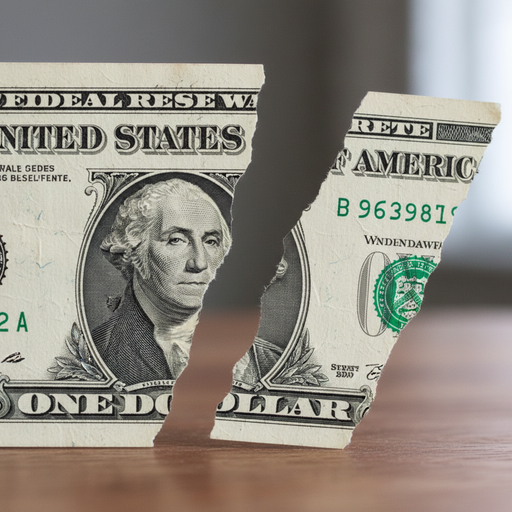
Collectibles are a legit asset class. Full stop. People often overlook this, but the reality is clear—when you break down the fundamentals, digital collectibles represent real value in the same way traditional assets do.


The market has been proving this for years. Whether we're talking about verified ownership on-chain, scarcity mechanics, or community-driven demand, these factors create genuine economic models. It's not speculation alone; there's actual utility and ownership rights backing it.

Yet conversations around collectibles often get dismissed or oversimplified. That's where deeper dives matter—understanding the mechanics, the technology, and the actual use cases separates noise from signal.

For anyone curious about how this asset class really works, exploring quality discussions that break down both the potential and the pitfalls is essential. The space is maturing, and so should our understanding of it.
This page may contain third-party content, which is provided for information purposes only (not representations/warranties) and should not be considered as an endorsement of its views by Gate, nor as financial or professional advice. See Disclaimer for details.
  • Reward
  • 6
  • Repost
  • Share
Comment
0/400
SudoRm-RfWallet/vip
· 01-20 14:51
Exactly right, on-chain ownership has truly changed the game rules. I’ve invested fully in that wave of NFTs, and it now seems clear that they are assets rather than gambling. The key is to understand mechanics, otherwise you’re just a bagholder. Scarcity + community = money printer, it’s that simple. Many people only look at price fluctuations and never consider why there is real demand. The phrase "signal vs noise" hits the point. Friends still mock me for buying collectibles, just wait, you’ll regret it sooner or later. The real issue is that most people don’t understand what on-chain ownership actually means.
View OriginalReply0
GateUser-3824aa38vip
· 01-20 04:01
Honestly, on-chain ownership really changes the game, unlike the vague feeling it used to have. That being said, most people still don't understand how scarcity and demand become valuable, it's hilarious. It's 2024, and some still treat collectibles as pure hype—wake up, everyone. Details determine success or failure. This article clearly explains the economic model, much better than those empty talks. Community-driven demand is the core; without it, everything is pointless. Deep discussions should be like this. Gotta admit, this asset class was really badly blackened a few years ago, but now someone is finally analyzing it seriously. People in the know have already started building positions, while newcomers are still debating authenticity—quite interesting.
View OriginalReply0
GateUser-ccc36bc5vip
· 01-17 21:10
NFTs are all about confidence; we've heard the on-chain ownership story too many times... When it comes to actually making money, who still cares about fundamentals? --- Honestly, I believe collectibles can hold value, but 99% of projects in the market are just air. How did they break out? --- Every time, the word utility is mentioned, but how many are truly useful? It's still driven by community hot money speculation. --- Here we go again, mature market understanding... Can we first get the rug pull issues sorted out before talking about asset classes? --- On-chain ownership definitely changes the game, but that doesn't mean just releasing a JPG has value. That has to be acknowledged. --- Deep discussions sound good, but most people just want fast money. Don't fool yourselves. --- It sounds reasonable, but why is the NFT market size so much smaller than traditional collectibles? Think about it...
View OriginalReply0
DegenTherapistvip
· 01-17 21:09
NFTs have long deserved a proper name. Compared to those vapor projects, collectibles with on-chain ownership are indeed valuable. Honestly, everyone in the know understands that this isn't gambling. Scarcity + community recognition = real money. Are we starting that same old argument again? Honestly, what we need is more rational analysis rather than just "this is really popular." In my opinion, those who can't distinguish between collectibles and speculative items will always lose money. There's very little discussion about on-chain ownership domestically; abroad, there's already a complete theoretical framework. It sounds reasonable, but why are so many still getting scammed... Utility is what matters in the long run. Pure hype should have died out long ago. That's true, but the key is to distinguish what is truly collectible and what is a rug pull. That's why I've always said you need to understand the underlying technology to play this game. As the market matures, even the newcomers need to upgrade their knowledge base.
View OriginalReply0
JustHereForAirdropsvip
· 01-17 21:05
NFT collectibles do have value, but don't get cut and still think you're investing To be honest, the logic of on-chain ownership is fine, but 99% of people are just betting that the next fool will be even more foolish Scarcity, community demand... you've heard all of these, but the problem is that most projects die faster than rabbits? Deep understanding is important, but most people simply don't want to understand; they just want to get rich quickly What about utility? Can you eat it? Can you airdrop it to me?
View OriginalReply0
SleepyArbCatvip
· 01-17 20:56
Hmm... gas fees are too expensive, that's the real pain point. Exactly, but not fully explained. Let's discuss more late at night. I'm already tired of the NFT scene; now I'm focusing on on-chain fundamentals. Scarcity mechanics sound good, but the ones actually making money are still those old-school pump-and-dump schemes. My available time is limited, so I’ll save this for later and study it tonight. Exactly, that's the logic... but don't get caught up in the narrative.
View OriginalReply0
  • Pin

Trade Crypto Anywhere Anytime
qrCode
Scan to download Gate App
Community
  • 简体中文
  • English
  • Tiếng Việt
  • 繁體中文
  • Español
  • Русский
  • Français (Afrique)
  • Português (Portugal)
  • Bahasa Indonesia
  • 日本語
  • بالعربية
  • Українська
  • Português (Brasil)