

Trade
Basic
Futures
Futures
Hundreds of contracts settled in USDT or BTC
Options
HOT
Trade European-style vanilla options
Unified Account
Maximize your capital efficiency
Demo Trading
Futures Kickoff
Get prepared for your futures trading
Futures Events
Participate in events to win generous rewards
Demo Trading
Use virtual funds to experience risk-free trading
Earn
Launch
CandyDrop
Collect candies to earn airdrops
Launchpool
Quick staking, earn potential new tokens
HODLer Airdrop
Hold GT and get massive airdrops for free
Launchpad
Be early to the next big token project
Alpha Points
NEW
Trade on-chain assets and enjoy airdrop rewards!
Futures Points
NEW
Earn futures points and claim airdrop rewards
Investment
Simple Earn
Earn interests with idle tokens
Auto-Invest
Auto-invest on a regular basis
Dual Investment
Buy low and sell high to take profits from price fluctuations
Soft Staking
Earn rewards with flexible staking
Crypto Loan
0 Fees
Pledge one crypto to borrow another
Lending Center
One-stop lending hub
VIP Wealth Hub
Customized wealth management empowers your assets growth
Private Wealth Management
Customized asset management to grow your digital assets
Quant Fund
Top asset management team helps you profit without hassle
Staking
Stake cryptos to earn in PoS products
Smart Leverage
NEW
No forced liquidation before maturity, worry-free leveraged gains
GUSD Minting
Use USDT/USDC to mint GUSD for treasury-level yields

More



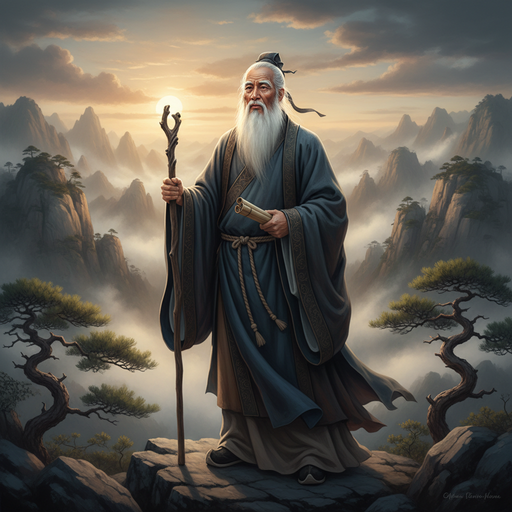

## The 50th Birthday of the Mysterious Creator: The True Identity of Bitcoin's Father Satoshi Nakamoto Remains a Mystery
April 5, 2025, has sparked a new wave of attention in the crypto world—if calculated based on the birthday registered by Satoshi Nakamoto at the P2P Foundation, this Bitcoin creator will turn 50. However, industry insiders have reached a consensus about this date: it is more likely a carefully chosen symbolic marker rather than a real birth date.
This special date carries deep meaning. On April 5, 1933, U.S. President Franklin D. Roosevelt signed Executive Order 6102, prohibiting American citizens from owning gold. In 1975, this ban was lifted. Nakamoto’s choice of this date is essentially a declaration of his political ideals—to create a form of digital asset outside government control. This detail clearly indicates that Satoshi Nakamoto’s anonymity was not accidental but deliberately designed.
## Bitcoin White Paper: A 9-Page Document That Changed the World
On October 31, 2008, a technical document appeared somewhere on the internet. Titled "Bitcoin: A Peer-to-Peer Electronic Cash System," this white paper was published by an author using the pseudonym Satoshi Nakamoto on the cryptography mailing list, fundamentally transforming our understanding of money.
The document itself is only nine pages but contains revolutionary innovations. The most critical is solving the long-standing "double-spending" problem in digital currency. Through proof-of-work mechanisms and a decentralized verification network, Nakamoto designed a system that ensures the same digital asset cannot be spent twice—an epoch-making breakthrough in cryptography.
On January 3, 2009, Satoshi Nakamoto mined the first block of Bitcoin, known as the Genesis Block. Embedded within it was a message: "The Times 03/Jan/2009 Chancellor on brink of second bailout for banks"—a headline from The Times of London. This served not only as a timestamp but also as a political statement: at this moment, I am creating this system to oppose the centralized control of traditional banking systems.
## An Enigmatic Identity: From Hal Finney to Craig Wright
The true identity of Satoshi Nakamoto has been the subject of speculation for over 15 years.
**Hal Finney** (1956-2014) was among the earliest candidates. This cryptopunk received the first Bitcoin transaction from Nakamoto. He was proficient in cryptography, lived in California, and handwriting analysis showed similarities to Nakamoto. But Finney consistently denied being Nakamoto during his lifetime and died of ALS in 2014.
**Nick Szabo** designed "Bit Gold," which is considered a direct predecessor to Bitcoin. Linguistic analysis found his writing style to be strikingly similar to Nakamoto’s. However, Szabo repeatedly denied being Nakamoto: "I’m used to being called Satoshi, but I’m afraid you’re mistaken."
**Adam Back** created Hashcash, which is explicitly referenced in the white paper. Some stylistic similarities and the use of British English point to Back, but he also firmly denied being Nakamoto.
**Craig Wright** is different. This Australian computer scientist has loudly claimed to be Nakamoto and even registered the copyright of the Bitcoin white paper in the US. However, in March 2024, High Court Judge James Mellor in the UK explicitly ruled: "Dr. Wright is not the author of the Bitcoin white paper and is not acting under the name Satoshi Nakamoto." The court found the evidence Wright submitted to be forged.
In 2024, HBO’s documentary "Money Electric: The Bitcoin Mystery" proposed a new hypothesis—**Peter Todd**, a former Bitcoin developer. But Todd himself dismissed this claim as "ridiculous."
## An Unused Massive Fortune
Blockchain data analysis estimates that Nakamoto mined between 750,000 and 1.1 million bitcoins in the first year of Bitcoin’s existence. At the price as of April 2025 (around $85,000), this wealth is worth between $63.8 billion and $93.5 billion—enough to rank among the top 20 richest people globally.
But this wealth has never been touched. The Bitcoin in wallets linked to Nakamoto has remained dormant since 2011. Security researcher Sergio Demian Lerner discovered a pattern called the "Patoshi pattern," which allows experts to identify which blocks might have been mined by Nakamoto. Yet, regardless of how high Bitcoin’s price soars, these coins remain untouched.
Why? Some speculate Nakamoto lost the private keys; others believe he has passed away; some think it’s a philosophical decision—to leave this wealth as a gift to the Bitcoin ecosystem. There are also analyses suggesting that once Nakamoto moves these coins, through KYC processes or on-chain tracing, his identity could be exposed. In 2019, theories emerged that Nakamoto began transferring funds, but most blockchain analysts dismissed this, attributing such transactions to early users rather than Nakamoto himself.
## The Deep Logic Behind the Anonymous Design
Satoshi Nakamoto’s disappearance—completely withdrawing from the public eye after April 2011—is not accidental or mysterious but a practice of the decentralization ideal.
Once the creator appears in the spotlight, Bitcoin could become "centralized." Governments might exert pressure, threaten, or even arrest. Commercial interests could buy him out. Any of his statements could trigger market turmoil or fork disputes. A well-known creator would inevitably become a target of power attacks.
Deeper still is the philosophical significance. The entire design philosophy of Bitcoin is: no need to trust anyone, only trust mathematics and code. In a system aiming to eliminate trust intermediaries, an anonymous creator embodies the integrity of this principle. You don’t need to believe in Satoshi Nakamoto, nor in anyone else—Bitcoin is Bitcoin, operating on mathematical logic.
This also prevents cult-like worship of the creator, allowing Bitcoin’s development to be truly community-driven rather than centered around a single figure.
## From Statues to Fashion: The Cultural Symbolism of Satoshi Nakamoto
By 2025, Bitcoin has become a common topic in finance. Satoshi Nakamoto has long transcended the technical realm and become a cultural icon.
In 2021, a bronze statue of Nakamoto was erected in Budapest, notable for its face made of reflective material—viewers see their own reflection within, symbolizing "We are all Satoshi." A similar monument exists in Lugano, Switzerland.
In March 2025, U.S. President Donald Trump signed an executive order establishing a Bitcoin strategic reserve—marking Bitcoin’s integration into the national financial system. Nakamoto’s radical ideals from that year have gradually become a reality in politics.
Nakamoto’s famous quotes are widely circulated in the crypto community: "The problem with fiat currency is trust," and "If you don’t believe me or understand me, I don’t have time to convince you." These have become the tenets of Bitcoin philosophy.
More interestingly, the commercialization. In 2022, Vans launched a limited edition Satoshi Nakamoto clothing line; various brands released related T-shirts and merchandise. A mysterious technological creator has evolved into a countercultural fashion symbol.
## An Unsolvable Mystery
On the occasion of Satoshi Nakamoto’s "50th birthday," rumors of leaks about his identity have resurfaced. In 2023, there were claims that his identity would be revealed on October 31, 2024 (the 16th anniversary of the white paper), but none of these came true.
Perhaps this is the essence of Bitcoin’s success: it doesn’t need a creator. Technically, Satoshi Nakamoto’s code has fulfilled its mission; philosophically, his withdrawal is the best interpretation of his ideals.
A invention worth hundreds of billions of dollars, relied upon by five million users worldwide, yet no one knows who it came from. This paradoxical combination may be the deepest legacy Satoshi Nakamoto leaves us—not Bitcoin itself, but the possibility of a fully decentralized system.