

Trade
Basic
Futures
Futures
Hundreds of contracts settled in USDT or BTC
Options
HOT
Trade European-style vanilla options
Unified Account
Maximize your capital efficiency
Demo Trading
Futures Kickoff
Get prepared for your futures trading
Futures Events
Participate in events to win generous rewards
Demo Trading
Use virtual funds to experience risk-free trading
Earn
Launch
CandyDrop
Collect candies to earn airdrops
Launchpool
Quick staking, earn potential new tokens
HODLer Airdrop
Hold GT and get massive airdrops for free
Launchpad
Be early to the next big token project
Alpha Points
NEW
Trade on-chain assets and enjoy airdrop rewards!
Futures Points
NEW
Earn futures points and claim airdrop rewards
Investment
Simple Earn
Earn interests with idle tokens
Auto-Invest
Auto-invest on a regular basis
Dual Investment
Buy low and sell high to take profits from price fluctuations
Soft Staking
Earn rewards with flexible staking
Crypto Loan
0 Fees
Pledge one crypto to borrow another
Lending Center
One-stop lending hub
VIP Wealth Hub
Customized wealth management empowers your assets growth
Private Wealth Management
Customized asset management to grow your digital assets
Quant Fund
Top asset management team helps you profit without hassle
Staking
Stake cryptos to earn in PoS products
Smart Leverage
NEW
No forced liquidation before maturity, worry-free leveraged gains
GUSD Minting
Use USDT/USDC to mint GUSD for treasury-level yields

More
Promotions
Activity Center
Join activities and win big cash prizes and exclusive merch
Referral
20 USDT
Earn 40% commission or up to 500 USDT rewards
Announcements
Announcements of new listings, activities, upgrades, etc
Gate Blog
Crypto industry articles
VIP Services
Huge fee discounts
Proof of Reserves
Gate promises 100% proof of reserves


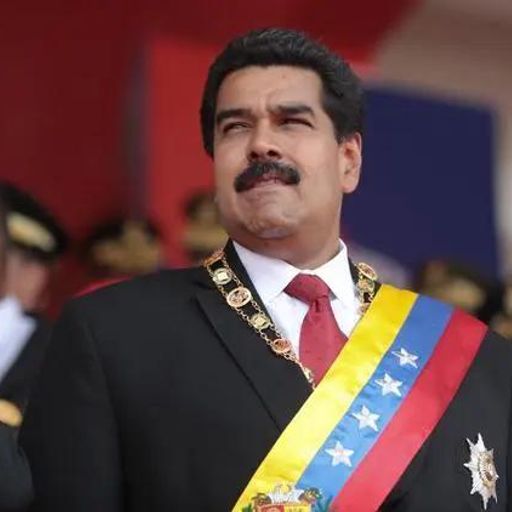


"A plate of egg fried rice for $10" and "40-meter-long queues for stockpiling," directly reflecting the current situation in Venezuela.
On January 3rd, at 2:00 a.m. local time, in a hotel in Caracas, the capital of Venezuela, Guo Yan, who was on a business trip, was awakened by a colleague shouting, “It’s war!” The three short words immediately roused him.
He stepped to the window and saw a blazing fire about three kilometers from the hotel at the airport, with several bright mushroom clouds rising into the sky. In the quiet night, apart from the sounds of bombing and air raid sirens, only a few dogs barking could be heard.
Photo provided by the interviewee
At the time of the bombing, even some local officers were confused and at a loss. Panic-stricken people rushed into President Maduro’s social media live stream, but no effective information was provided. It wasn’t until the president was swiftly captured and taken away that clarity emerged.
This large-scale US attack on Venezuela has impacted every corner of the local society and profoundly affected compatriots living abroad and making a living in Venezuela.
Some residents near the bombing site were awakened in the middle of the night, seeking shelter everywhere, even hiding in subway stations; others frantically stocked up, with local supermarkets’ sales increasing tenfold in a day, and queues for shopping stretching 40 meters long; some hurried to return home but faced flight bans and canceled flights; and newly arrived entrepreneurs, who had spent high freight costs to ship a batch of TVs from China over three months, now faced warehouse backlog and uncertainty about the future…
01 Woken up by the bombing
The bombing occurred during the night when people were most relaxed and alert.
Guo Yan had worked all day and was already exhausted when he lay down. His colleague Xu Lu was still handling phone work. The initial loud bangs did not attract his attention; he thought it was just thunder. But a friend living only a kilometer from the air force base called in a hurried voice: “Something big has happened! What should we do?” breaking the silence.
Xu Lu quickly woke Guo Yan, and the two immediately called several familiar local officers. Some didn’t answer, and some were even unaware of what was happening. “The attack was too sudden,” they said.
The bombing started around 2 a.m., with continuous explosions lasting about an hour, stopping only after 3 a.m., but the roar of helicopters persisted. They waited for over an hour, called to check in with various parties, and only after no new explosions occurred by 4 a.m. did they prepare to rest.
Photo provided by the interviewee
According to the Venezuelan government announcement, the targets of the US airstrikes included civilian and military sites in Caracas, Miranda State, Aragua State, and La Guaira State.
Guo Yan, who has military experience, is very familiar with military operations. He noticed that although the airstrikes were terrifying, the scope seemed small, and the strikes appeared very precise, with few civilian buildings affected nearby.
Soon after the bombing began, he recognized the model of the aircraft flying overhead and judged that they were not fighter jets executing bombing missions. “I sensed they were bringing troops to arrest someone,” he said.
To get the latest news, the two opened President Maduro’s social media account, but they did not see Maduro himself on the live stream, only someone reading historical documents related to Venezuela, which led them to think the arrest operation had failed. It wasn’t until 8 a.m., when they saw a message from Trump, that they finally confirmed the president had been taken away.
“After the plane came in, it took people away in just a few minutes. It was too fast, almost no resistance,” Guo Yan said, surprised and puzzled by the speed.
According to US media reports, the Trump administration used intelligence from inside the Venezuelan government and drone swarms to monitor Maduro. Although helicopters were attacked by fire, Maduro and his wife ultimately gave up resistance.
Guo Yan had felt the war was imminent even before the US began military deployment. He believed that if Maduro had resisted fiercely, the arrest might not have succeeded, and local forces at least had the ability to hide or delay. “But if that happened, civilian casualties would be high, and the US military might come back for another strike, causing greater losses to the country and its people,” he said.
Within hours after the airstrike, the Chinese community in the area was filled with unease. Xu Lu recalled, “No one knew what would happen next. After all, many people were experiencing war for the first time.”
The friend living near the air force base, because of the proximity to the bombing site, dared not go home and went straight to the streets, heading to crowded places like subway stations. Guo Yan and Xu Lu, after seeking help from others, were advised: it was best to stay indoors and avoid moving around.
02 Stockpiling! Supermarkets queue up to over 40 meters
The day after the airstrike, there was no violent storm as expected. Most people stayed indoors, but at the same time, major supermarkets across Venezuela were bustling with people, with cars and electric motorcycles parked along the streets. They were eager to stock up, with some queues starting half an hour early, and others piling seven or eight bulging shopping bags at their feet.
Xiao Lin works at a supermarket run by relatives in Bolívar Province. Although about 600 kilometers from the turbulent Caracas, locals there had already begun frantic stockpiling. On the afternoon of January 3rd, the super