

Trade
Trading Type
Spot
Trade crypto freely
Pre-Market
Trade new tokens before they are officially listed
Margin
Magnify your profit with leverage
Convert & Block Trading
0 Fees
Trade any size with no fees and no slippage
Alpha
Points
Get promising tokens in streamlined on-chain trading
Leveraged Tokens
Get exposure to leveraged positions simply
Futures
Futures
Hundreds of contracts settled in USDT or BTC
Options
HOT
Trade European-style vanilla options
Unified Account
Maximize your capital efficiency
Demo Trading
Futures Kickoff
Get prepared for your futures trading
Futures Events
Participate in events to win generous rewards
Demo Trading
Use virtual funds to experience risk-free trading
Earn
Launch
CandyDrop
Collect candies to earn airdrops
Launchpool
Quick staking, earn potential new tokens
HODLer Airdrop
Hold GT and get massive airdrops for free
Launchpad
Be early to the next big token project
Alpha Points
NEW
Trade on-chain assets and enjoy airdrop rewards!
Futures Points
NEW
Earn futures points and claim airdrop rewards
Investment
Simple Earn
Earn interests with idle tokens
Auto-Invest
Auto-invest on a regular basis
Dual Investment
Buy low and sell high to take profits from price fluctuations
Soft Staking
Earn rewards with flexible staking
Crypto Loan
0 Fees
Pledge one crypto to borrow another
Lending Center
One-stop lending hub
VIP Wealth Hub
Customized wealth management empowers your assets growth
Private Wealth Management
Customized asset management to grow your digital assets
Quant Fund
Top asset management team helps you profit without hassle
Staking
Stake cryptos to earn in PoS products
BTC Staking
HOT
Stake BTC and earn 10% APR
GUSD Minting
Use USDT/USDC to mint GUSD for treasury-level yields


More
Promotions
Activity Center
Join activities and win big cash prizes and exclusive merch
Referral
20 USDT
Earn 40% commission or up to 500 USDT rewards
Announcements
Announcements of new listings, activities, upgrades, etc
Gate Blog
Crypto industry articles
VIP Services
Huge fee discounts
Proof of Reserves
Gate promises 100% proof of reserves

Trending Topics
View More141.43K Popularity
14.83K Popularity
76.3K Popularity
1.67K Popularity
2.53K Popularity


Pin
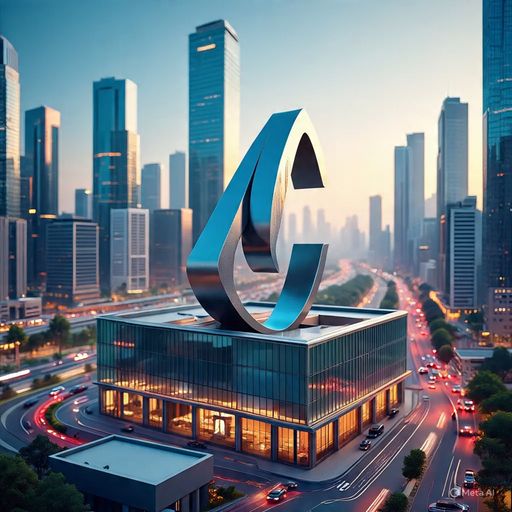
#GateAICreation In 2026, humanity enters a new era as a futuristic city rises above the clouds, suspended by advanced anti-gravity infrastructure and quantum-stabilized platforms. This floating metropolis glows with vibrant neon skylines, where architecture blends organic design with hyper-technology. Buildings are no longer static structures but living systems—adapting their shape, energy use, and transparency in real time based on weather, traffic, and human activity. From a distance, the city appears like a constellation brought down to Earth, hovering peacefully beneath a sky filled with shimmering stars.
The streets of this sky-city are no longer traditional roads but multi-layered holographic avenues. Citizens walk alongside dynamic light projections that display navigation paths, real-time data, art, and social interactions. These holograms respond instantly to voice, gesture, and neural signals, creating a seamless blend between physical and digital reality. AI curators personalize each individual’s experience, transforming the same street into a learning space, marketplace, or entertainment hub depending on who is passing through.
Transportation is fully autonomous and vertical. Flying vehicles glide silently between towers, coordinated by a citywide AI traffic intelligence that eliminates congestion and accidents. These vehicles operate on clean energy systems powered by solar arrays above the cloud layer and wireless energy transfer grids embedded throughout the city. Travel is no longer stressful or time-consuming; it becomes an experience of smooth motion through illuminated airways framed by endless sky.
At the heart of the city is the AI–human collaboration network, where artificial intelligence acts not as a controller but as a guide. AI systems assist humans in exploration, creativity, and decision-making—helping architects design new districts, scientists simulate future ecosystems, and artists create immersive holographic experiences. Education is continuous and adaptive, with AI mentors teaching skills instantly through neural interfaces and augmented reality environments.
New advancements in biotechnology and sustainability define daily life. Atmospheric water harvesting systems pull clean water directly from clouds, while AI-managed vertical ecosystems produce food within the city itself. Carbon-negative technology ensures the floating city not only sustains itself but actively repairs environmental damage below. The city becomes a symbol of coexistence between progress and nature rather than domination over it.
By night, the city transforms into a glowing dreamscape. Neon lights reflect off translucent platforms, holographic constellations dance between buildings, and the boundary between the stars above and the city below disappears. This floating civilization represents more than technological achievement—it reflects a future where AI, humanity, and imagination evolve together, redefining what it means to live, explore, and dream in the age of intelligent creation.