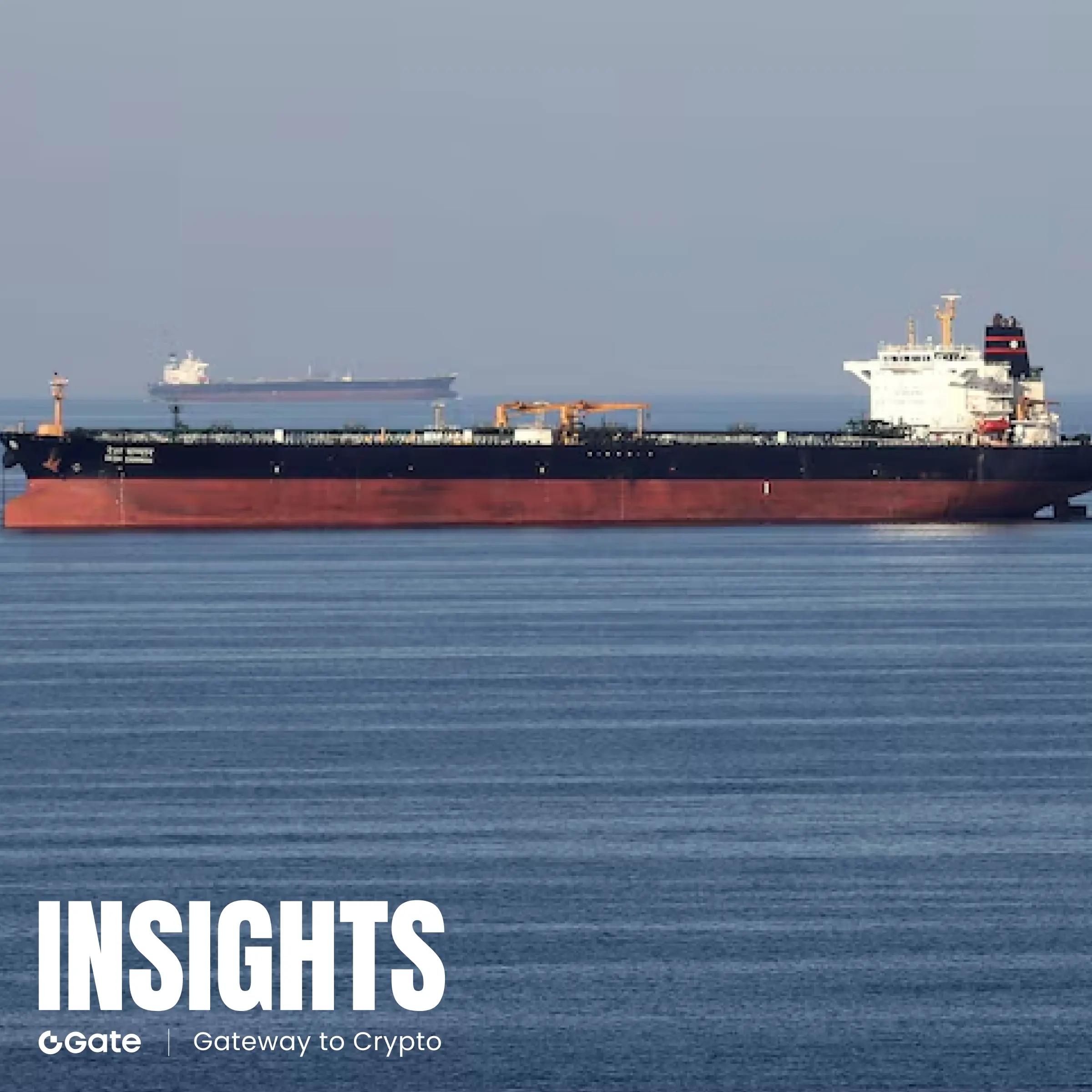
Iran established a toll collection system in the Strait of Hormuz in early April 2026, charging transit oil tankers at least $1 per barrel. According to a report by the British Financial Times, during the two-cycle ceasefire window, Iran would require tankers to pay the toll in Bitcoin to maintain its effective control over the narrow passage of the Gulf. Hamid Hosseini, a spokesperson for the Iranian oil, natural gas, and petrochemical products exporters’ association, told the Financial Times that the mechanism requires each tanker to submit cargo information to Iranian authorities in advance via email, after which Iran will notify the amount of toll due.
The toll rate is $1 per barrel of oil, and empty tankers can pass for free. All payments must be made in Bitcoin to evade the risk of asset tracking and freezing brought about by sanctions. As described by the Iranian side, once a vessel receives the assessment result, it has only a few seconds to complete the Bitcoin payment to ensure it will not be tracked or seized due to sanctions. Iranian authorities will also route all toll-paying vessels to the northern route closer to the coast and conduct registration and inspections. Hosseini explained that Iran needs to monitor goods entering and leaving the strait to ensure the two-week ceasefire period will not be used to transship weapons.
Why the toll must be paid in Bitcoin
Iran requires the toll to be settled in Bitcoin, with the core motivation being to evade U.S. financial sanctions. Iran has long been excluded from the SWIFT system, and any traditional banking transaction involving Iran could trigger the U.S. Treasury’s secondary sanctions. Crypto assets operate on blockchain networks and have the characteristics of decentralization and instant cross-border settlement, providing sanctioned entities with a funding channel outside the traditional financial system.
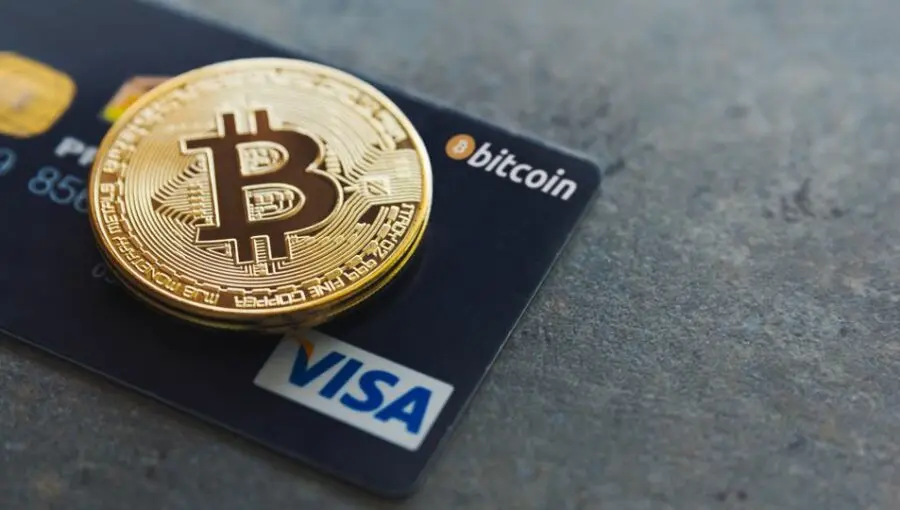
Choosing Bitcoin instead of stablecoins or other crypto assets reflects Iran’s specific considerations regarding asset traceability and the risk of freezing. Compared with relying on stablecoins issued in a centralized manner, Bitcoin is more decentralized, and its transactions cannot be directly frozen or reversed by a single issuer. The ultra-short payment window further reduces the likelihood of the transaction being intercepted. According to publicly reported information, Iran has previously widely used crypto assets for cross-border trade financing; incorporating Bitcoin into this strategic payment channel is a further confirmation of the geopolitical value of this asset type. Iran has faced restrictions on dollar-based settlement systems for many years, and its shift to Bitcoin aims to obtain a payment channel that operates outside conventional banking networks and has resistance to confiscation.
The short-term impact of Bitcoin tolls on global energy trade
The Strait of Hormuz accounts for about 21% of the world’s seaborne crude oil volume. Since changes in the strait’s situation in February 2026, transit volume has fallen significantly from normal levels. According to Bloomberg, before the situation changed, the strait typically saw about 100 ships pass per day, transporting around 20 million barrels of crude oil and petroleum products.
In the short term, the Bitcoin toll mechanism’s impact on energy trade is concentrated in three dimensions:
- The toll itself raises the transportation cost per barrel of crude oil. Using the typical loaded capacity of 2 million barrels for ultra-large tankers, the toll per passage is about $2 million, and this cost will be passed through to terminal oil prices.
- Pre-payment review procedures and uncertainty in Bitcoin settlement extend the time ships are delayed. The Iranian side says that about 300 to 400 ships are waiting in the Gulf to sail.
- The legal risks faced by shipowners rise significantly. Crypto-asset transactions with Iranian counterparts subject to sanctions from multiple countries may violate anti-money-laundering regulations.
Structural challenges facing the oil-dollar system
The currency choice for this charging mechanism carries far-reaching strategic implications. Iran explicitly excludes dollar settlement channels and limits the toll to Bitcoin—marking the first time a sovereign state has incorporated Bitcoin into strategic payment infrastructure. Traditional oil trade relies on the SWIFT clearing network denominated in U.S. dollars, while a blockchain-based crypto-coin network constructs a parallel channel that bypasses traditional U.S.-dollar monitoring. A political analyst in Iran said that by bypassing the dollar-based payment system, this move significantly weakens the effectiveness of sanctions.
From a broader macro perspective, this precedent could have a demonstration effect. If other sanctioned states follow Iran and incorporate crypto assets such as Bitcoin into trade settlement systems, the share of dollar settlement in global energy trade could gradually be eroded. A Turkish security expert also believes that Iran is effectively challenging the role of the dollar as a global reserve currency and the oil-dollar system. While Bitcoin’s price is highly volatile, its transaction chain is outside the regulatory framework of the traditional banking system, offering a value-transfer option different from fiat currency in geopolitical games.
Geopolitical narrative of Bitcoin and its impact on market liquidity
By incorporating Bitcoin into a strategic channel payment system, Iran objectively strengthens the narrative logic of Bitcoin as a geopolitical hedge asset. Market data show that after the U.S.-Iran ceasefire agreement on April 7, 2026, Bitcoin quickly surged from around $68,000 to above $72,850 within a few hours, before pulling back somewhat. As of April 8, 2026, BTC was temporarily quoted near $71,800. In the same period, international oil prices fell sharply by more than 15%. This divergence in asset price performance reflects the market’s differentiated positioning of Bitcoin amid geopolitical shocks.
However, the practical application of Bitcoin in the toll scenario still faces operational constraints. The ultra-short payment window requires extremely high on-chain confirmation efficiency, while the transaction confirmation time on the Bitcoin network is typically 10 to 60 minutes—creating a structural contradiction with the payment window of only a few seconds. Industry analysis suggests that real execution may face technical challenges, and Bitcoin’s role is more likely to be reflected in its narrative value and store-of-value function. A crypto analyst noted that this is a direct challenge to the traditional financial system, but it also means this asset class faces dual uncertainty—both geopolitical and regulatory.
Potential regulatory countermeasures the crypto market may face
The rollout of the Bitcoin toll plan places crypto assets directly at the center of the geopolitical game among international regulators. The U.S. Treasury has repeatedly used its sanctions power in the past to target entities financing illicit activities through crypto currencies, and Iran’s move may be viewed as a direct attempt to evade existing sanctions. Iran’s actions could trigger a swift and forceful response, including broader restrictions on platforms facilitating such transactions.
Regulatory countermeasures could unfold along three paths:
- First, increase pressure on stablecoin issuers, requiring them to block on-chain interactions with sanctioned entities, although this path has limited direct constraints on Bitcoin.
- Second, expand the scope of sanctions on crypto exchanges, banning them from handling transactions originating from addresses associated with Iran.
- Third, push the International Anti-Money Laundering Financial Action Task Force (FATF) to update guidance on virtual asset regulation, incorporating geopolitical risks into the compliance framework. This event marks one of the most significant and controversial real-world uses of crypto so far, and regulatory consequences remain a major concern.
International shipping and response strategies from related stakeholders
In response to the Strait of Hormuz toll mechanism, international shipping companies and relevant countries are adopting differentiated measures. The Pakistani government has reached an agreement with Iran to allow Pakistani-flagged vessels to pass, and it has also engaged global bulk commodity traders, proposing that tankers temporarily reflag to the Pakistan flag to transit the strait.
Moves to find alternative routes are also becoming increasingly active. Countries such as the United Arab Emirates, Qatar, and Bahrain may face realistic near-term pressure to pay the toll due to a lack of alternative oil pipelines, but in the long run they tend to seek alternative routes around Africa’s Cape of Good Hope or the Suez Canal in the Red Sea, even though these routes would significantly increase voyage distance and costs. The toll-related options shipowners face involve multiple variables: accepting compliance risk from paying in Bitcoin, increased transport costs from routing via alternatives, and the sunk cost of continuing to wait for the strait to reopen. The insurance industry has also adjusted its premiums accordingly, classifying the Strait of Hormuz as a high-risk area and further raising overall shipping costs. According to the Financial Times, Iran also routes all toll-paying vessels to the northern route near the coast, which could lead some shipping companies to reconsider whether to take the risk of transiting the strait during the ceasefire.
Sustainability of the toll mechanism and potential future evolution
Regarding whether the charging mechanism can be sustained long term, analysts generally take a cautious stance. Some industry figures estimate that the Iranian Strait toll checkpoint could collect a substantial amount of funds within the next five years. But geopolitical analysts note that Gulf countries will not tolerate continuously paying Iran huge sums to fund its development, and if the toll mechanism operates for a long time, it may ultimately be resolved through other means.
There are also multiple possible directions for the evolution of the toll mechanism itself. In the short term, during the two-week ceasefire period, the mechanism will likely continue in a testing mode. If the ceasefire extends into a long-term political framework, the toll system may become further institutionalized, potentially even expanded to other energy categories such as natural gas transportation. From the perspective of the crypto industry, this precedent may spur more sovereign nations to explore the use of crypto assets in cross-border trade, but it may also trigger more stringent international regulatory coordination, subjecting the crypto industry to dual challenges of geopolitics and compliance. The ceasefire period and scope are limited; any breakdown in negotiations could stop toll collection or change the payment framework, exposing relevant parties to sudden policy shifts.
Summary
The toll mechanism established by Iran in the Strait of Hormuz tightly and for the first time binds the transit rights of a sovereign-state strategic passage with Bitcoin payments. The mechanism uses a base rate of $1 per barrel, requires tolls to be settled in Bitcoin, and the design of a few-seconds payment window further evades the risk of sanctions-related tracking.
This move creates short-term impacts on global energy trade—transit volume declines, freight costs rise, and shipowners face compliance risks. Structurally, it is a direct challenge to the oil-dollar system, providing a reference path for other sanctioned states to bypass dollar clearing.
In the crypto market, the event reinforces Bitcoin’s geopolitical narrative, and Bitcoin’s price surged temporarily after news was released. The sustainability of the toll mechanism remains uncertain, and the Gulf states’ resistance and disputes over its legality under international law could ultimately lead it to be resolved in other ways.
FAQ
Q: How much Bitcoin does each tanker actually need to pay?
Based on an ultra-large tanker carrying 2 million barrels of crude oil, the base toll is about $2 million. Converting at the temporary BTC quote of $71,800 as of April 8, 2026 yields about 27.9 BTC. The actual amount paid would still need to be calculated based on the vessel’s cargo volume.
Q: Do empty tankers need to pay the toll?
According to explanations provided by Hamid Hosseini, a spokesperson for the Iranian oil, natural gas, and petrochemical products exporters’ association, empty tankers can transit for free, and the toll is only charged to loaded tankers.
Q: Why is the payment time window only a few seconds?
The few-seconds payment window is a mechanism designed by Iran to evade asset tracking and sanctions freezing. Completing on-chain transactions within an extremely short timeframe can reduce the risk that the transaction is intercepted or funds are traced. This design reflects Iran’s considerations about the security of crypto-asset transactions, but it also imposes extremely high requirements on the payment system’s real-time capability and the confirmation efficiency of the Bitcoin network.
Q: Does the toll mechanism violate international law?
International maritime law experts say that Iran’s unilateral action of charging tolls in the Strait of Hormuz lacks a clear legal basis under the framework of international law, and it is disputed against the right of innocent passage guaranteed by the United Nations Convention on the Law of the Sea. Iran claims the move is based on legitimate needs for security self-defense, but that argument has not yet gained broad recognition from the international community. If shipowners pay Bitcoin tolls to Iranian counterparts subject to sanctions, it could also violate relevant anti-money-laundering regulations.


