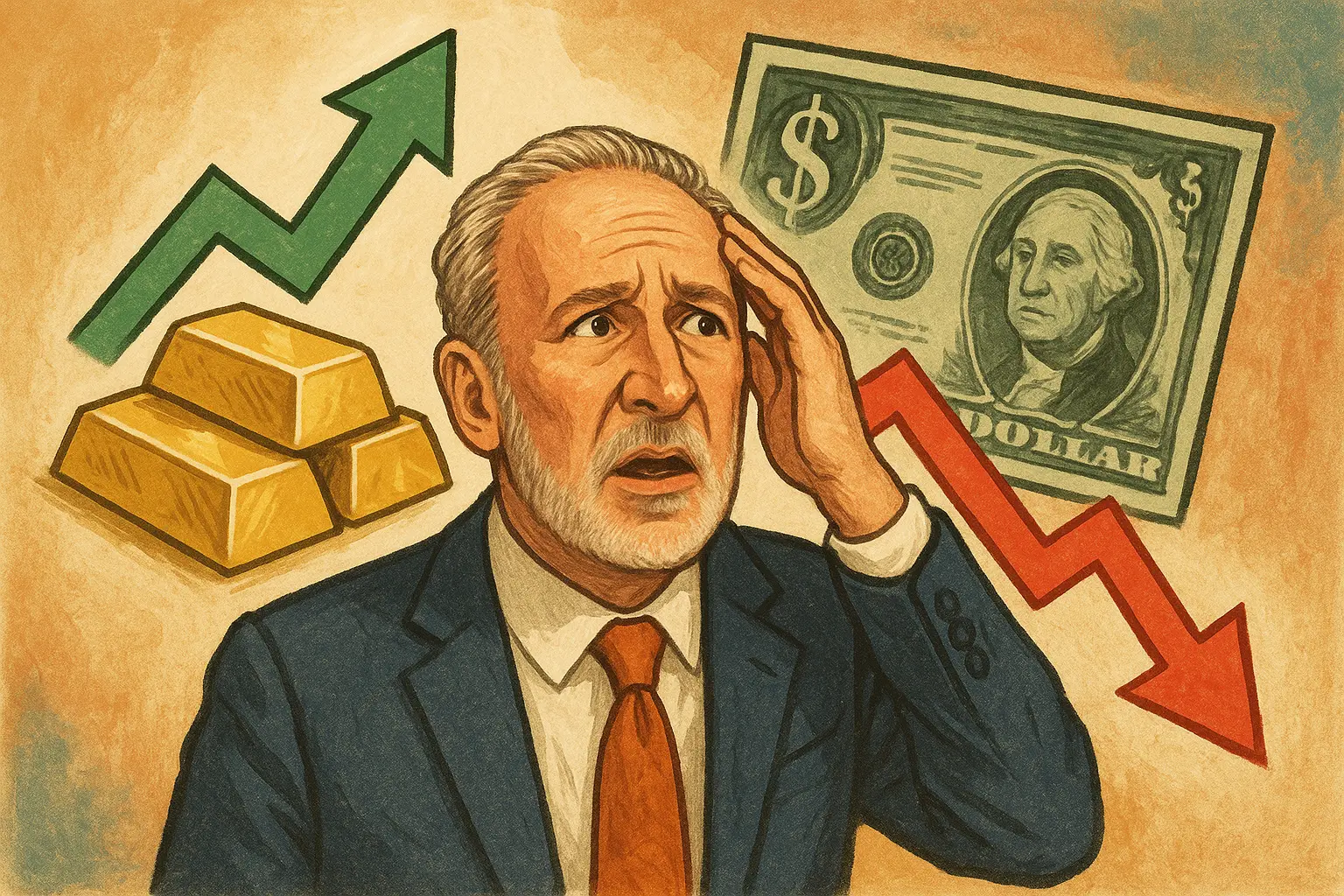
Economist and gold advocate Peter Schiff posted on X on March 31, saying that the price of gold surged by more than $100 in a single day, reclaiming above $4,600, and that this is a signal of deep unease in the market about the stability of the U.S. government’s finances and currency. Schiff warned that the damage Iran war would do to the credibility of the United States will accelerate the process of de-dollarization, which will ultimately take the form of higher interest rates, persistent inflation, and an economic recession.
The Market Significance of Gold Breaking Through $4,600: Schiff’s Analytical Framework
On the X platform, Schiff said: “This war has improved the bullish fundamentals for precious metals. The result will be that America’s credibility is damaged and the de-dollarization process accelerates. For the United States, this means more debt, higher interest rates, constantly rising inflation, and an economic recession.”
Schiff has long held the analytical position that “gold is a contrarian indicator of confidence in the dollar.” Within his framework, the signals conveyed by the rapid strengthening of gold prices are not only geopolitical safe-haven demand, but also systemic doubts in the market about the dollar’s long-term purchasing power and the sustainability of sovereign debt. He also noted that even if the Federal Reserve (Fed) maintains or slightly raises borrowing costs, inflationary pressures may still exceed the power of policy tools, compress real yields, and further strengthen investors’ demand to allocate capital to real assets.
Foreign Central Banks Shift Toward Gold: The Concrete Manifestation of Accelerating De-Dollarization
In a public debate with investor Mark Moss, Schiff directly cited central bank actions as concrete evidence of de-dollarization: “I think foreign central banks have started converting more of their dollar reserves into gold, because they’ve lost confidence in the dollar. They no longer believe that the U.S. government can repay its debts with real money without relying on the printing press.”
He attributes this trend to two structural catalysts: first, the dollar is being used as a weapon of sanctions, weakening its credibility as a neutral reserve asset; second, the ever-widening fiscal deficits are causing the market to doubt long-term debt repayment capacity. Schiff also pointed out that financial innovations such as the tokenization of gold and digital infrastructure are improving gold’s divisibility and transferability, strengthening gold’s competitiveness in modern capital markets without changing the nature of its value storage.
Schiff’s Chain-Reaction Warning: The Full Path From Dollar Loss of Trust to Inflation Recession
Schiff’s macro warning outlines a chain path from shaky dollar credibility to economic recession:
De-dollarization accelerates: dollar weaponization layered on fiscal deficits prompts foreign central banks and institutions to accelerate their exit from dollar-denominated assets
Reserve currency status shaken: Schiff views the loss of reserve currency status as “the death kiss to the U.S. economic framework,” believing that the world’s reliance on the dollar is the core pillar of America’s financial strength
Long-term inflationary recession: reduced dollar demand resulting from de-dollarization will drive inflation higher, suppress real purchasing power, and create what Schiff calls an “Inflationary Recession”
Debt crisis and declining living standards: a debt spiral driven by soaring interest rates, tighter fiscal room, and monetary expansion will gradually emerge in the form of a broad decline in living standards
It is worth noting that Schiff’s predictive framework is a personal viewpoint. His long-standing stance of being bearish on the dollar and bullish on gold is widely discussed in the market; some mainstream analysts believe the resilience of the dollar system has been underestimated, and that the de-dollarization process is also slower than Schiff describes.
Frequently Asked Questions
Why does Schiff think rising gold prices are a signal of a dollar credibility crisis?
Schiff has long held the analytical position that “gold is a contrarian indicator of confidence in the dollar.” In his framework, gold’s rapid strengthening means the market is pricing in a long-term decline in dollar purchasing power and systematic doubts about the sustainability of sovereign debt—rather than just simple short-term safe-haven demand.
How does de-dollarization affect U.S. interest rates and debt?
If foreign central banks and institutions continue to reduce their holdings of dollar assets, overseas demand for U.S. Treasuries will fall. This could push up long-term borrowing costs and further increase the federal government’s interest expense burden. Against the backdrop of ever-expanding fiscal deficits, this may form a debt spiral effect.
Has Schiff’s economic recession warning been recognized by mainstream institutions?
Schiff’s forecasts are personal viewpoints, and assessments differ significantly among all parties. At present, institutions such as JPMorgan have a positive outlook for gold in 2026 (target price of $6,300), but there remains a large gap between their view of the timing and intensity of a dollar collapse and Schiff’s judgment; investors should independently evaluate risks by combining multiple sources of information.
Disclaimer: The information on this page may come from third parties and does not represent the views or opinions of Gate. The content displayed on this page is for reference only and does not constitute any financial, investment, or legal advice. Gate does not guarantee the accuracy or completeness of the information and shall not be liable for any losses arising from the use of this information. Virtual asset investments carry high risks and are subject to significant price volatility. You may lose all of your invested principal. Please fully understand the relevant risks and make prudent decisions based on your own financial situation and risk tolerance. For details, please refer to
Disclaimer.


