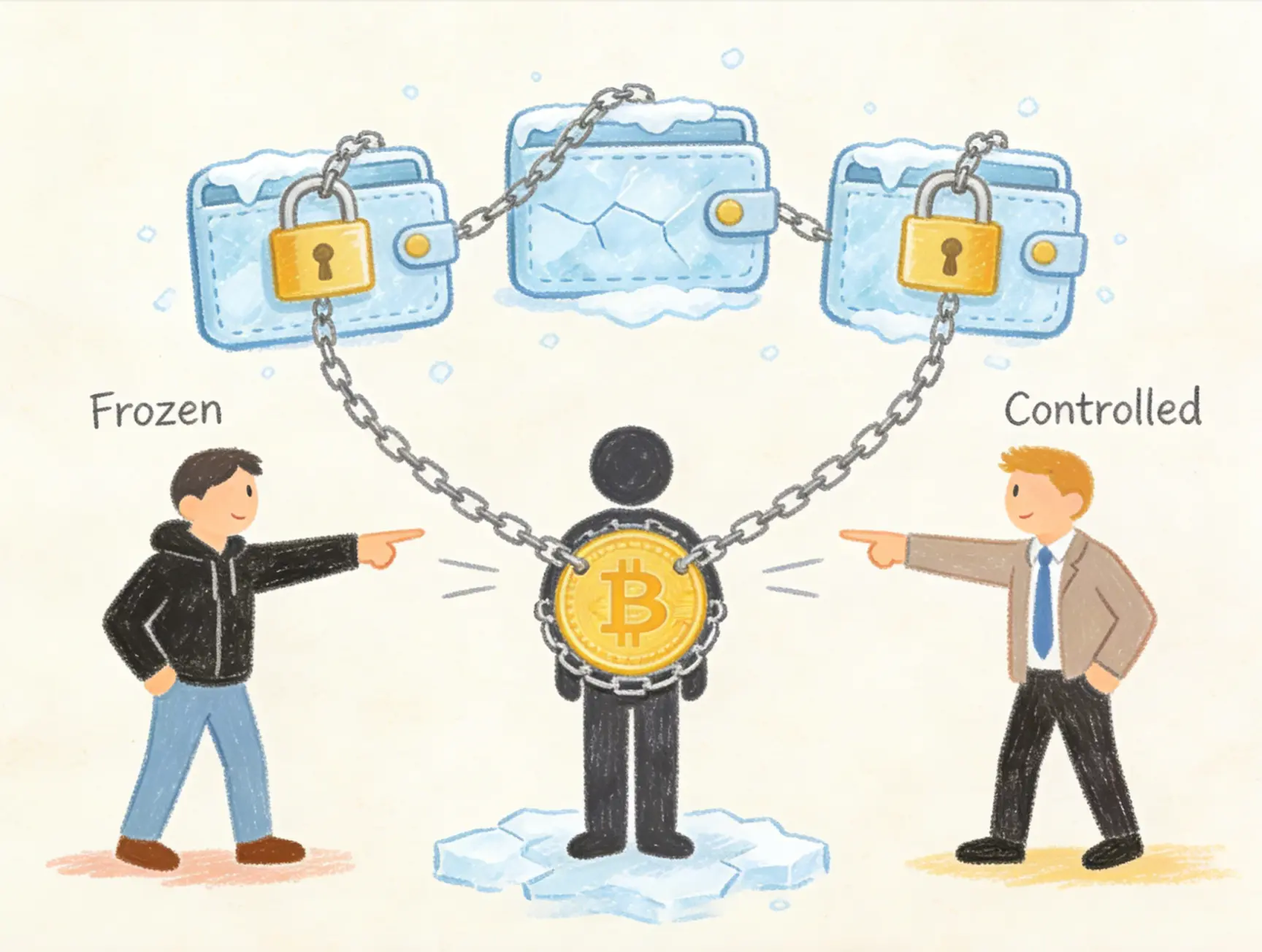
 Stablecoin issuer Circle froze the USDC balances of 16 hot wallets on March 24, 2026, disrupting operations at several exchanges, casinos, and foreign currency exchange platforms in connection with a sealed US civil case, according to on-chain investigator ZachXBT.
The targeted wallets “appear to belong to exchanges, casinos, and forex platforms, with no apparent connection between them,” ZachXBT said, adding that “an analyst with basic tools could have identified, within minutes, that these were operational business wallets from the thousands of transactions they process.” Circle has not publicly responded to the criticism, and affected firms reported that details of the case remain undisclosed.
ZachXBT’s Criticism and Industry Response
Questioning Circle’s Decision-Making
ZachXBT, a prominent on-chain investigator, described the freeze as “incredibly broad” and questioned Circle’s process. In a post on X, he stated: “How come Circle froze the USDC balance of 16 unrelated hot wallets late yesterday for a civil case? A basic review of onchain activity makes this look incredibly broad.” He later added: “In my 5-plus years of investigations, it could potentially be the single most incompetent freeze I have seen. This is what happens when you outsource your freezing decisions to literally any random federal judge instead of having a process.”
Comparison With Tether
ZachXBT also criticized Circle’s enforcement consistency, noting that data shows Tether has frozen approximately $1.6 billion in USDT across more than 2,500 addresses, while Circle has frozen about $110 million in USDC across fewer than 500 addresses. “Why should anyone continue building on $USDC when you never take care of your users as a centralized stablecoin issuer?” he wrote, arguing that Circle’s enforcement has been “slow or inconsistent” compared with rivals.
Centralization Concerns and Industry Debate
Technical Controls and Trade-Offs
USDC’s smart contracts include explicit blacklisting and freezing capabilities, which Circle markets as safeguards against hacks and sanctions evasion. Critics, however, warn that opaque freezes based on undisclosed civil actions risk turning a key settlement asset for crypto markets into a politicized gatekeeping tool. Mert Mumtaz, founder of RPC node provider Helius, responded to the freeze by stating: “This is your 10th reminder that centrally issued stablecoins are not actually yours; they can be frozen, unlike cash.”
Regulatory Context
Jean Rausis, co-founder of the Smardex decentralized trading platform, said provisions in the GENIUS stablecoin regulatory framework laid the groundwork for a privately managed central bank digital currency (CBDC) to emerge, arguing that centralized stablecoins effectively give the issuer the same financial surveillance and asset freezing capabilities that a standard CBDC would provide. Former US lawmaker Marjorie Taylor Greene echoed this warning in May 2025, describing regulated stablecoins under the GENIUS bill as a “CBDC Trojan Horse.”
Frequently Asked Questions
Why did Circle freeze the 16 wallets?
Circle froze the wallets in connection with a sealed US civil case, according to affected businesses. Circle has not publicly disclosed the specific details of the case or the criteria used to identify the targeted addresses.
What did ZachXBT say about the freeze?
ZachXBT criticized the freeze as overly broad and inconsistent, noting that the wallets belonged to operating businesses such as exchanges and casinos with no apparent connection between them. He called it potentially “the single most incompetent freeze” he had seen in his investigations and questioned Circle’s decision-making process.
What are the broader implications for centralized stablecoins?
The incident reignited debate over the trade-offs inherent in centralized stablecoins such as USDC. While blacklisting capabilities are marketed as safeguards against hacks and sanctions evasion, critics argue that opaque freezes based on undisclosed civil actions create risks of arbitrary censorship and undermine the permissionless value proposition of cryptocurrencies.
Disclaimer: The information on this page may come from third parties and does not represent the views or opinions of Gate. The content displayed on this page is for reference only and does not constitute any financial, investment, or legal advice. Gate does not guarantee the accuracy or completeness of the information and shall not be liable for any losses arising from the use of this information. Virtual asset investments carry high risks and are subject to significant price volatility. You may lose all of your invested principal. Please fully understand the relevant risks and make prudent decisions based on your own financial situation and risk tolerance. For details, please refer to
Disclaimer.


