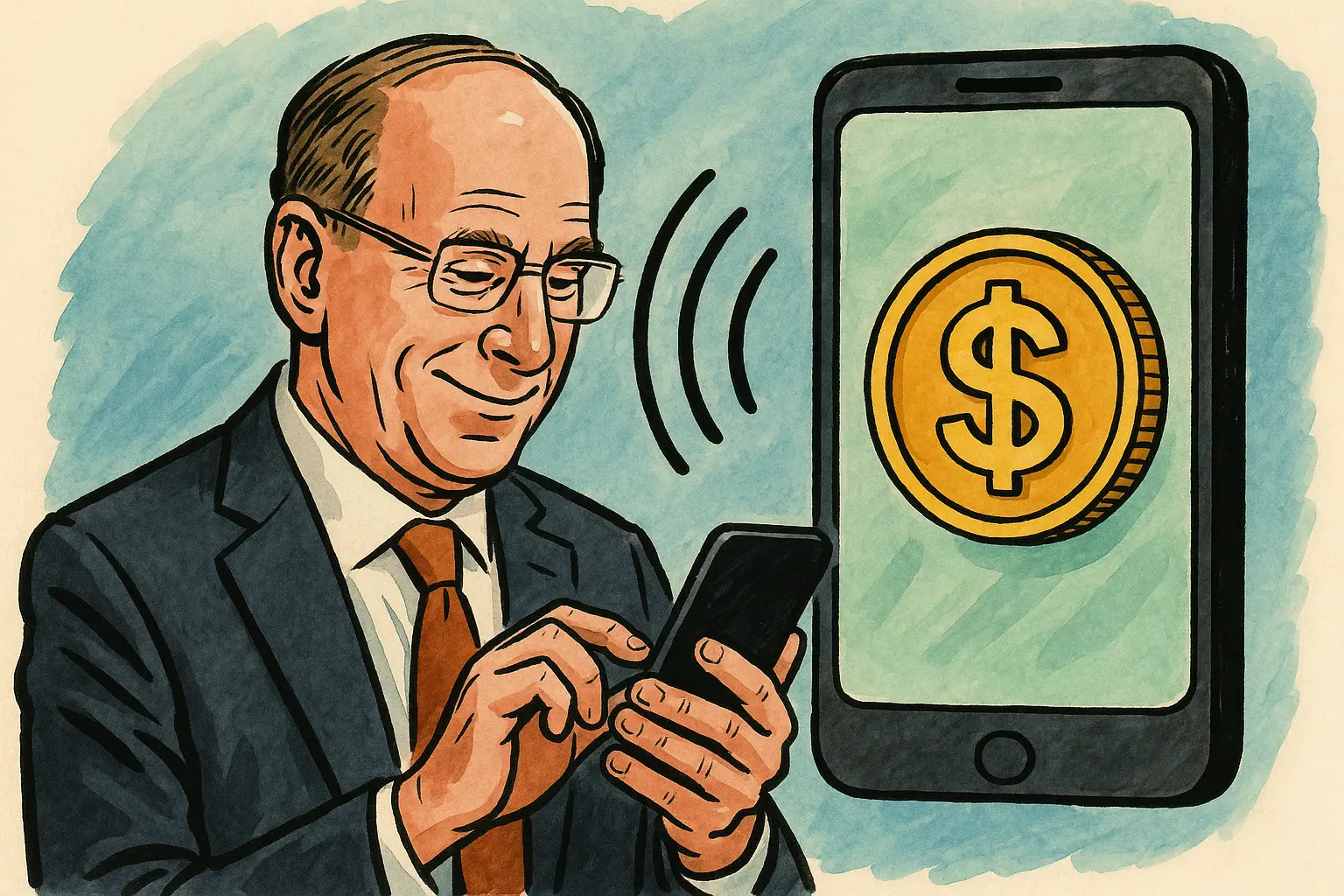
BlackRock CEO Larry Fink, in his latest annual letter to shareholders, continues to strongly advocate for the tokenization of traditional investments for the second consecutive year. This year’s focus shifts from technical feasibility to accessibility and widespread adoption. Fink notes that about half of the global population already has digital wallets on their phones. If tokenization can make investing in assets like stocks and bonds as easy as mobile payments, it will fundamentally lower the barriers to participation.
Fink’s Two-Year Evolution: From Technical Metaphor to Universal Investment Vision
By 2025, Fink’s emphasis is on technological transformation. Using the analogy of “upgrading investment from postal services to email,” he describes how tokenization can compress transaction settlement times from days to seconds, eliminating market closure periods. This year, his perspective clearly shifts toward the user experience.
He writes in his letter: “Imagine if this digital wallet could also make it as easy to invest long-term in various companies as it is to make a payment. Tokenization can accelerate this future by updating the underlying infrastructure of the financial system—making issuance, trading, and access to investments easier.”
Fink’s argument is grounded in concrete data: approximately 50% of the world’s population already has digital wallets on their phones. This widespread infrastructure makes the transition from experimental technology to mainstream market a visible and achievable path, not a distant dream.
Regulatory and Institutional Progress in Tandem
Fink’s advocacy is not isolated; regulatory and institutional developments are accelerating in parallel.
Key Institutional Movements Promoting Tokenization
SEC: Led by Chairman Paul Atkins, the SEC has indicated that Nasdaq may launch a pilot for tokenized stock trading and is actively advancing rules to enable on-chain securities trading.
Nasdaq: Partnering with digital asset firm Talos, Nasdaq aims to enable institutional investors to use tokenized collateral. Executive Vice President Roland Chai states that this move seeks to “integrate on-chain and off-chain market ecosystems while maintaining liquidity and integrity in regulated markets.”
BlackRock: The largest spot Bitcoin ETF issuer has become the most proactive traditional asset manager in digital asset deployment.
Goldman Sachs: Last year, Goldman Sachs acknowledged the growing popularity of cryptocurrencies in its annual shareholder letter and noted that new technologies, including distributed ledger technology (DLT), are intensifying competition within the financial industry.
Core Logic of Tokenization: How Fragmented Ownership Reshapes the Investment Ecosystem
The core mechanism of tokenization involves converting traditional assets like stocks, bonds, and real estate into digital tokens that can circulate on the blockchain. This enables fractional ownership, lower friction transactions, and 24/7 liquidity.
Fink mentioned last year that tokenization has the potential to democratize investment through partial ownership, opening previously exclusive asset classes to a broader audience. This year, he emphasizes that the widespread adoption of mobile digital wallets provides a ready infrastructure for this transformation. From concept to pilot programs, tokenization is rapidly evolving from Fink’s annual metaphor into a tangible reality driven by regulatory approvals, institutional involvement, and technological implementation.
Frequently Asked Questions
Q: What is tokenization, and why does BlackRock’s CEO continue to advocate for it?
A: Tokenization refers to converting traditional assets like stocks, bonds, and real estate into digital tokens on the blockchain, allowing for fractional ownership, low-cost trading, and 24/7 circulation. Fink believes that with the widespread use of mobile digital wallets, tokenization can make investing as convenient as everyday payments, fundamentally expanding access for ordinary users.
Q: What specific actions are SEC and Nasdaq taking regarding tokenization?
A: Under Chairman Paul Atkins, the SEC has indicated that Nasdaq may initiate a pilot for tokenized stock trading and is actively working on rules for on-chain securities trading. Nasdaq also announced a partnership with Talos this week to facilitate tokenized collateral for institutional investors, marking a move from policy discussion to actual infrastructure development.
Q: How does tokenization democratize investing?
A: Traditional assets like real estate or private equity often have high barriers to entry. Tokenization allows for fractional ownership, enabling users to buy small portions of a property or a company and transfer them freely on the blockchain. Coupled with the global adoption of mobile digital wallets, anyone can participate in previously inaccessible asset classes with smaller amounts of capital.
Disclaimer: The information on this page may come from third parties and does not represent the views or opinions of Gate. The content displayed on this page is for reference only and does not constitute any financial, investment, or legal advice. Gate does not guarantee the accuracy or completeness of the information and shall not be liable for any losses arising from the use of this information. Virtual asset investments carry high risks and are subject to significant price volatility. You may lose all of your invested principal. Please fully understand the relevant risks and make prudent decisions based on your own financial situation and risk tolerance. For details, please refer to
Disclaimer.


