
FTX founder Sam Bankman-Fried’s efforts to seek a retrial face new obstacles. This week, U.S. prosecutors submitted documents pointing out irregularities in a letter dated March 16, allegedly sent by SBF himself, raising serious doubts about its authenticity. Judge Lewis Kaplan immediately intervened, ordering SBF to submit an sworn statement by April 15 disclosing the actual author of the letter.
Three Major Concerns About the Suspicious Letter from Sam Bankman-Fried
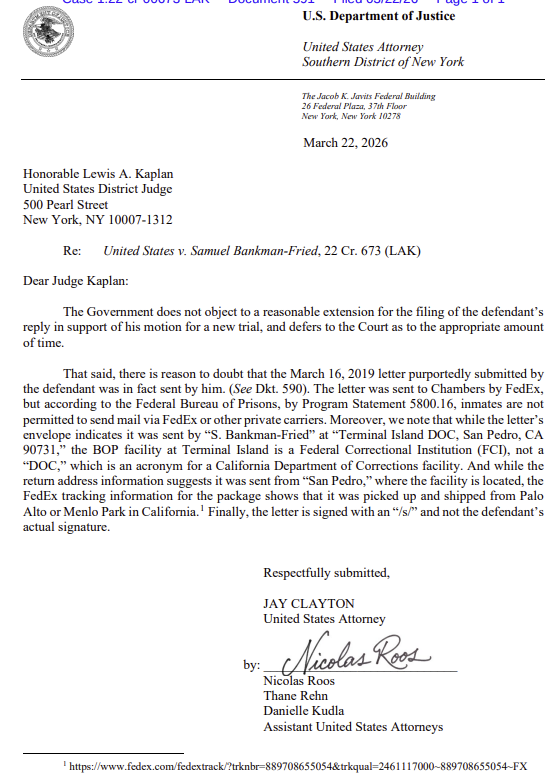 (Source: U.S. Department of Justice)
Prosecutors stated in the documents that while they do not oppose giving Sam Bankman-Fried more time to file a motion for a retrial, they also highlighted multiple undeniable contradictions in the letter.
Use of Private Courier Service: The letter was sent via FedEx to the judge. According to regulations, inmates at SBF’s prison are not allowed to use private courier services, making this an abnormality in itself.
Inconsistent Return Address: The return address and shipping information show clear discrepancies, suggesting the package may not have been sent from inside the prison, raising questions about the true source of the letter.
Electronic Signature: The document uses an electronic signature instead of the handwritten signature typically used by incarcerated prisoners, further fueling doubts about the document’s authenticity.
Judge’s Order: Sworn Statement and Transparency Requirements
In response to these concerns, Judge Kaplan issued another order requiring Sam Bankman-Fried to formally explain how he prepared his court documents. By April 15, he must submit a sworn statement confirming whether the documents were written solely by him or with the assistance of a lawyer. If a lawyer was involved, the lawyer’s identity must be clearly disclosed. Additionally, the judge ruled that all future submissions must include the same disclosure to ensure transparency and compliance in the litigation process.
It’s important to note that this order does not constitute a substantive ruling on whether the retrial is granted. Its main purpose is to establish basic court transparency rules and clarify the current procedural operations of Sam Bankman-Fried’s case.
Retrial Outlook: Application Still Pending, but Delays and Scrutiny Deepen
Sam Bankman-Fried’s motion for a retrial is still ongoing, and the legal process has not concluded. However, the mysterious letter incident has subjected his case to intensified review by prosecutors and the court. The deadline for the sworn disclosure is set for April 15, which may cause further delays. He is currently sentenced to 25 years in prison, and the document authenticity concerns revealed by this incident will add procedural hurdles to his efforts to seek a retrial or appeal.
Frequently Asked Questions
Why does a single letter impact Sam Bankman-Fried’s retrial application?
The letter shows multiple irregularities—sent via FedEx, inconsistent address info, electronic instead of handwritten signature—suggesting it may not have been personally sent by Sam Bankman-Fried from inside the prison. This led the judge to order a sworn disclosure of the source, making the retrial process subject to stricter transparency review and procedural delays.
What is the judge requiring Sam Bankman-Fried to submit by April 15?
Judge Kaplan ordered Sam Bankman-Fried to submit a sworn statement confirming whether the court documents were written by him or with lawyer assistance; if a lawyer was involved, their identity must be clearly disclosed. All subsequent submissions must include the same disclosure.
Does this judge’s order mean the retrial application has been denied?
No. The order addresses procedural transparency and compliance, not a substantive ruling on whether the retrial is granted. Sam Bankman-Fried’s retrial application is still in progress, but it must meet the new disclosure requirements, significantly increasing procedural complexity.
Disclaimer: The information on this page may come from third parties and does not represent the views or opinions of Gate. The content displayed on this page is for reference only and does not constitute any financial, investment, or legal advice. Gate does not guarantee the accuracy or completeness of the information and shall not be liable for any losses arising from the use of this information. Virtual asset investments carry high risks and are subject to significant price volatility. You may lose all of your invested principal. Please fully understand the relevant risks and make prudent decisions based on your own financial situation and risk tolerance. For details, please refer to
Disclaimer.


