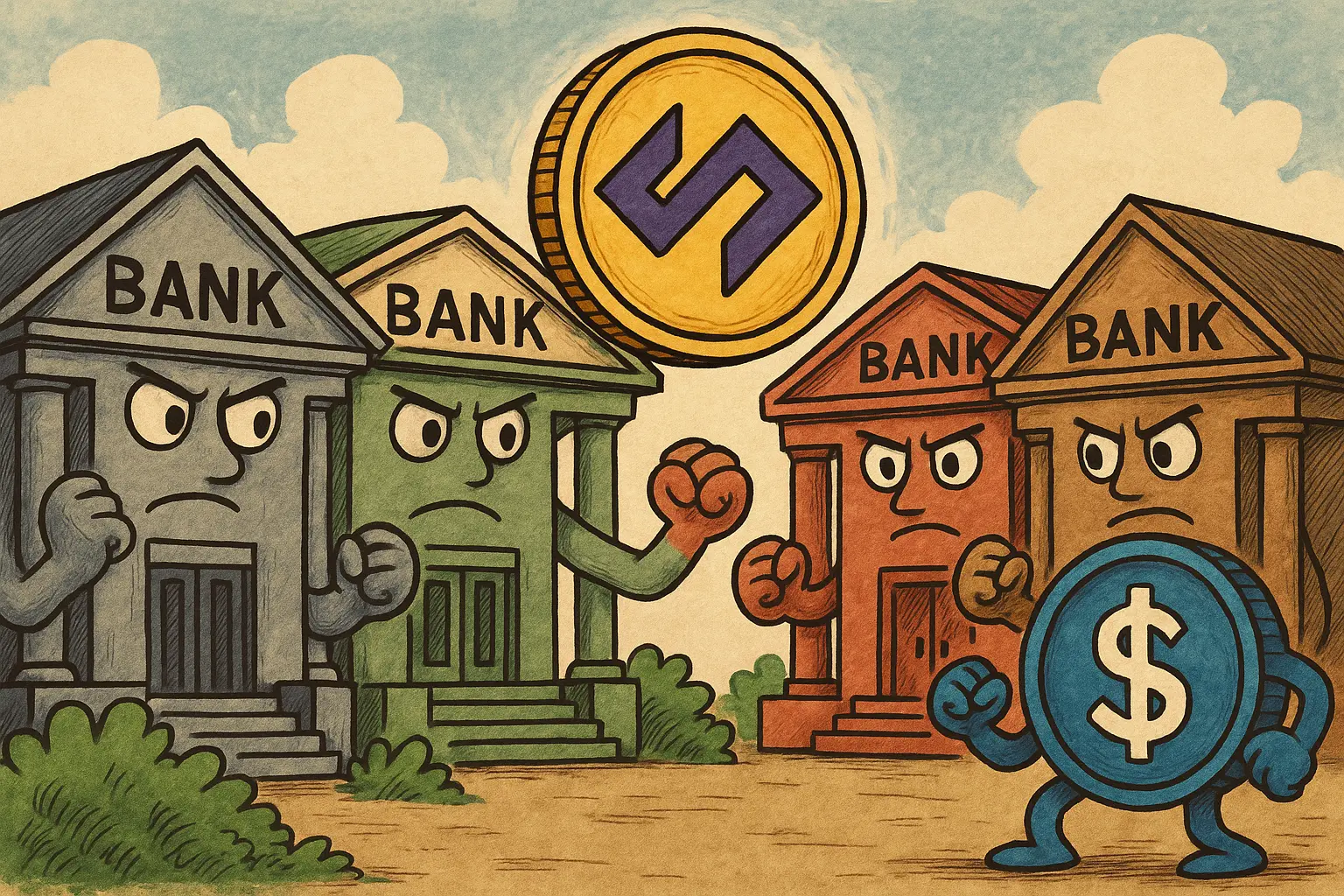
Five major regional banks in the United States—Huntington Bancshares, First Horizon Bank, M&T Bank, KeyCorp, and Old National Bank—announced on Monday the launch of Cari Network, a blockchain payment platform based on ZKsync technology that enables real-time settlement of tokenized deposits, with funds fully protected within FDIC-insured banking systems.
Technical Architecture and Core Differences of Cari Network
The underlying technology of Cari Network is Matter Labs’ “Prividium”—a private permissioned blockchain developed by the same team behind ZKsync Layer-2 network. This technical choice introduces a structure that differs significantly from existing stablecoins in terms of regulatory compliance:
The key difference between tokenized deposits and stablecoins is the main differentiator of Cari Network:
Tether (USDT) and Circle (USDC): Nominal assets backed by treasury bills or cash equivalents in custodial accounts, legally considered liabilities of the issuing institutions, but not under traditional banking regulation and lacking FDIC insurance.
Tokenized deposits on Cari Network: Digital representations of cash directly recorded on member banks’ balance sheets, enabling instant transfers via zero-knowledge proofs (ZKP), while maintaining FDIC insurance and current banking regulatory compliance throughout the process.
This design allows participating banks to offer settlement speeds comparable to native crypto protocols while avoiding the complex regulatory risks associated with maintaining stablecoin reserves. Cari CEO Gene Ludwig describes it as a strategic move for the banking industry to “lead the next phase of digital currency, rather than passively respond.”
Why Banks Are Choosing to Act by 2026
The banking sector’s decision to act now is driven by a combination of competitive pressure, regulatory timing, and survival threats:
Threat of losing settlement dominance: Over the years, crypto-native firms have provided around-the-clock liquidity, while banks, limited by traditional business hours and slow wire transfers, have gradually lost their lead in real-time settlement. Tether (USDT) and Circle (USDC) now dominate a $8 trillion global digital dollar settlement market, with trading volumes comparable to major card networks.
Urgency of narrowing legislative windows: Industry leaders warn that delaying action could significantly reduce the chances of passing the CLARITY Act in 2026. Cari’s strategy is to deploy a “compliant” solution within the existing deposit insurance framework before legislative clarity is achieved, securing a regulated market position early.
Industry background of crypto institutionalization: BlackRock recently invested nearly $600 million in Bitcoin, signaling that institutional attitudes toward crypto assets have shifted from cautious observation to active allocation. For regional banks, the focus is less on price volatility and more on controlling payment infrastructure and market share.
Frequently Asked Questions
What is the biggest advantage of Cari Network compared to existing stablecoins (USDT/USDC)?
The core difference lies in legal structure and safeguards. Tokenized deposits on Cari Network are directly recorded on member banks’ balance sheets, maintaining FDIC insurance and complying with current banking regulations, without requiring additional stablecoin reserve compliance procedures. For corporate clients, this means enjoying near-native crypto transaction speeds while retaining the legal protections and counterparty advantages of traditional bank deposits.
What specific advantages does ZKsync technology bring to Cari Network?
ZKsync’s zero-knowledge proof technology allows transactions to be verified without revealing full transaction details, which is crucial for institutions needing confidentiality and data protection compliance. Prividium, as a private permissioned blockchain, limits participation to authorized entities, effectively balancing speed, privacy, and regulatory compliance.
Are there risks of failure for Cari Network?
Main challenges include interoperability and network effects. A private permissioned network that cannot connect with broader crypto liquidity ecosystems risks becoming an isolated settlement silo, which may be less attractive to enterprise clients requiring cross-platform liquidity. Additionally, if stablecoin regulation eventually adopts a more lenient framework allowing non-bank issuers to continue issuing USDT/USDC, Cari’s competitive edge could diminish. Its success heavily depends on the final regulatory environment.
Disclaimer: The information on this page may come from third parties and does not represent the views or opinions of Gate. The content displayed on this page is for reference only and does not constitute any financial, investment, or legal advice. Gate does not guarantee the accuracy or completeness of the information and shall not be liable for any losses arising from the use of this information. Virtual asset investments carry high risks and are subject to significant price volatility. You may lose all of your invested principal. Please fully understand the relevant risks and make prudent decisions based on your own financial situation and risk tolerance. For details, please refer to
Disclaimer.


