What Is Klink Finance? Vision and Core Mission
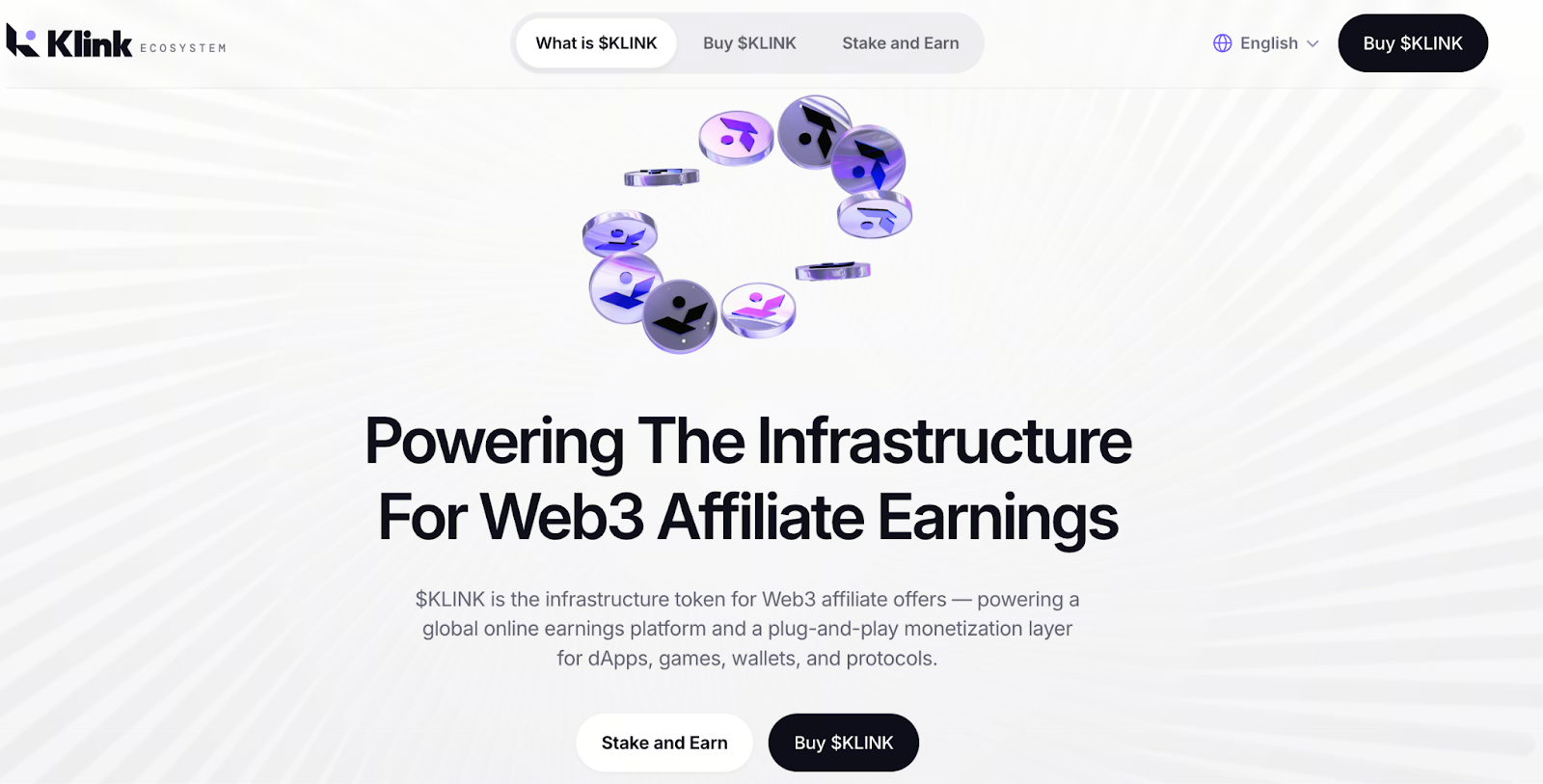
Image source: https://klinkfinance.com/ecosystem
If you’re new to blockchain, understanding a project’s position in the market is essential. Klink Finance is an infrastructure platform focused on linking Web3 advertising and affiliate marketing models to direct user participation. The goal is to build a closed loop among advertisers, the platform, and users, where users earn token rewards by completing tasks and joining activities, while advertisers benefit from measurable user-driven ROI.
Klink’s vision is to address persistent Web3 problems—acquiring users, maintaining retention, and monetizing engagement—by enhancing processes through AI, on-chain verification, and other advanced technologies.
Litepaper: Core Structure and Key Modules
The official Litepaper outlines the project’s main sections: introduction, technology stack, business model, token ecosystem, roadmap, and details about the team and investors.
Key modules for newcomers include:
- Introduction / Mission: Outlines the challenges Klink aims to solve and its core value proposition.
- Technology Stack & Product / Services: Covers Klink’s advertising API, Quest system, and task verification mechanisms—the backbone of Klink’s operational framework.
- Business Model: Details advertiser funding, platform fees, user reward structures, and how revenues are distributed among stakeholders.
- Tokenomics & Vesting: Explains how tokens are allocated (for early investors, the team, ecosystem incentives, user rewards), along with unlock timelines and vesting rules.
- Roadmap: Highlights launch phases, feature upgrades, and partnerships with key milestones.
- Team & Backers: Shows who drives the project and which major funds or partners support it.
A quick scan of these chapters helps beginners understand the project’s core elements without having to read through lengthy documentation.
$KLINK Token Design and Economic Model
The Litepaper makes it clear: $KLINK is the main token in the Klink ecosystem, powering ad payments, reward distribution within the platform, staking benefits, and more.
Token Allocation (Tokenomics): According to public sources,
- Total supply is 1 billion $KLINK tokens.
- About 40% is reserved for ecosystem incentives and partners.
- Early investors and team members have vesting/unlock arrangements, with limited circulating supply at launch.
Token Utility and Incentives
- Advertisers spend $KLINK on campaigns and tasks, resulting in increased demand from advertisers.
- Users earn $KLINK by completing tasks and passing verification, motivating participation.
- Stakers and those who lock tokens may receive extra rights or higher yields (like Klink Pro Status).
As long as advertisers, the platform, and users remain active, $KLINK will continue to have real use cases and sustained demand.
Latest Price Performance
Current: Price and Market Performance
- Trading data indicates KLINK’s price fell roughly 18.80% over the past week.
- The current price is about $0.06404, with market cap and circulating supply publicly available.
- Key market topics include exchange listings, token allocation, and unlock schedules.
Generally, Klink has seen significant volatility after launch. There has been short-term pressure from unlocks and speculative selling. However, if platform adoption and advertiser onboarding accelerate, there remains long-term growth potential.
To trade, visit: https://www.gate.com/trade/KLINK_USDT
How to Participate and Risk Disclosure
If you’re new and interested in joining Klink or similar projects, follow these steps:
How to Participate
- Read the Litepaper and official docs: Understand token distribution, vesting terms, partners, and the roadmap.
- Set up and connect a wallet: Usually, you’ll need one supporting BSC/BEP-20 networks.
- Complete tasks, claim airdrops, or participate in Quests: Early users can earn $KLINK by participating in platform activities.
- Stake or lock tokens (if available): This may provide higher benefits or yields.
- Trade or buy: You can trade on exchanges, but always manage your position size and risk.
Risk Disclosure
- High volatility: New tokens often swing widely; early participation can result in significant gains or losses.
- Unlock/vesting pressure: Token unlocks for teams and investors may trigger selling pressure.
- Platform adoption risk: Ecosystem growth may slow if advertisers or task providers do not participate actively.
- Regulatory risk: Crypto project legality varies by jurisdiction—assess local regulations carefully.
- Information gaps: Some statements from the team or claims in the whitepaper may be overly optimistic; always verify information independently.
Conclusion
The Klink Finance Litepaper is the key resource for understanding this project. By mastering the core modules, token structure, and business model, newcomers can better assess its potential. While the market is volatile, Klink’s unique positioning in Web3 advertising and user task rewards stands out. If you are interested in the “participation equals value” Web3 model, monitor Klink’s future developments and user growth, and participate cautiously.