As the concept of BitcoinFi continues to evolve, more protocols are attempting to bring Bitcoin into decentralized finance. However, because Bitcoin itself does not support complex smart contract functionality, its use in on-chain financial applications has long been limited.
To address this, protocols like Mezo introduce cross-chain infrastructure and financial layer design, allowing BTC to participate in core use cases such as lending and stablecoin issuance.
Within this context, Mezo’s operating model is particularly representative. It not only provides a pathway for generating stablecoins through BTC collateral, but also demonstrates how Bitcoin can enter a programmable financial system.
What is Mezo’s core operating logic? How does Bitcoin enter its financial system?
At its core, Mezo transforms BTC into an on-chain usable asset and builds a full financial system around it. Since the Bitcoin network cannot directly support complex smart contracts, Mezo relies on cross-chain mechanisms to move BTC into an execution environment that supports programmable logic.
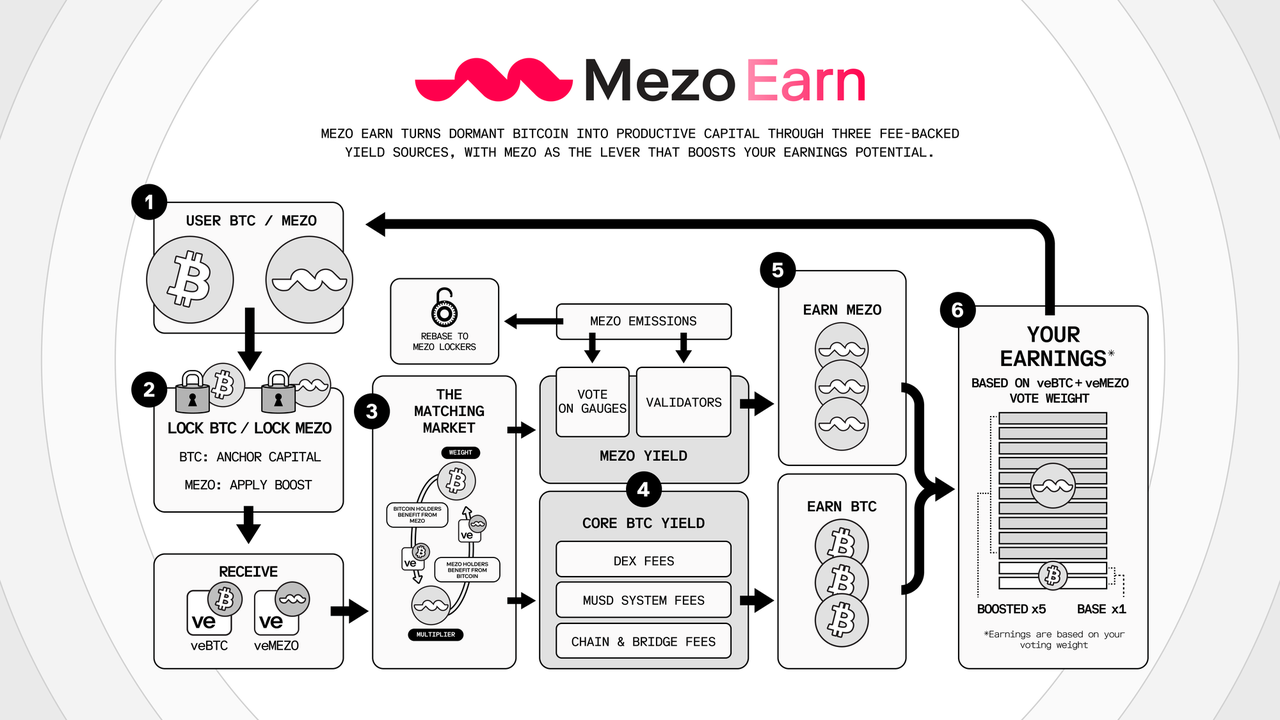
This process is typically achieved through solutions like tBTC. Native BTC is locked on the Bitcoin network, while a corresponding tokenized asset is minted on another chain. Once converted into this on-chain representation, BTC can enter Mezo’s collateral system and participate in stablecoin generation and other financial activities.
What are the key components of Mezo?
Mezo’s functionality depends on the coordination of several core components. Among them, tBTC serves as the bridge between Bitcoin and smart contract environments, enabling BTC to be used in on-chain financial operations.
An EVM-compatible environment provides the foundation for executing smart contracts, allowing collateralization, minting, and liquidation logic to be fully programmable. Meanwhile, cross-chain infrastructure enables assets to move across different blockchains, expanding the system’s flexibility and use cases.
Together, these components form the technical backbone of Mezo, allowing it to build a DeFi-like financial system on top of Bitcoin.
How do users collateralize BTC in Mezo? What role does tBTC play?
In Mezo, users do not directly use native BTC. Instead, they obtain a mapped asset through a cross-chain process.
Here, tBTC plays a key role by converting BTC into a form that can operate within smart contract environments. Users first lock their BTC on the original chain, after which the system mints an equivalent amount of tBTC. This peg is maintained through cross-chain mechanisms and custody or validation models.
Once minted, tBTC can be deposited into the Mezo protocol as collateral. Through this process, Bitcoin’s value is brought into the DeFi ecosystem without requiring users to relinquish direct control over their original BTC.
How is MUSD generated? Understanding the minting mechanism and collateral logic
MUSD is created through an overcollateralization model. After depositing tBTC, users can mint a corresponding amount of stablecoins based on a predefined collateral ratio.
The key principle is that the value of the collateral must exceed the value of the stablecoins issued. For example, under a high collateral requirement, users must provide BTC worth more than the MUSD they wish to mint. This design creates a buffer against market volatility.
In essence, minting MUSD is a form of debt creation. Users gain liquidity by locking collateral, while taking on the responsibility of maintaining the required collateral ratio, a crucial factor in the system’s stability.
Breaking down the Mezo process: from collateral → minting → usage → recycling
Mezo operates as a cyclical system. Users begin by converting BTC into tBTC and depositing it as collateral within the protocol.
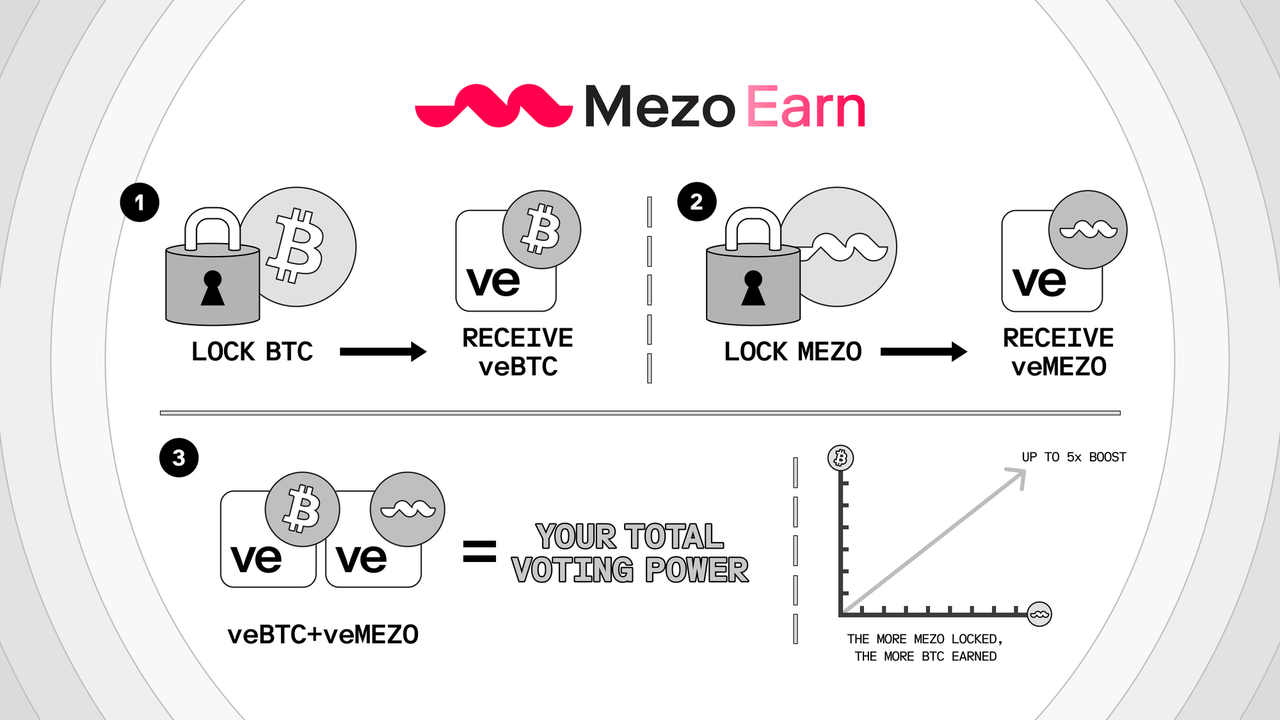
The system then mints MUSD based on the collateral provided, giving users access to a liquid, stable asset. This MUSD can be traded, used for payments, or deployed in other DeFi applications, enabling further capital utilization.
When users wish to reclaim their original assets, they must repay the minted MUSD and unlock their collateral.
The standard workflow is as follows:
-
BTC is locked and converted into tBTC
-
Collateral is deposited into the protocol
-
MUSD is minted based on the collateral ratio
-
The stablecoin is used in on-chain activities
-
Liquidation is triggered if the collateral ratio falls
-
BTC is redeemed after repaying MUSD
This is not a one-time process. It can be repeated continuously, forming an ongoing financial cycle. This structure allows BTC to remain actively engaged in financial activities without being sold, improving overall capital efficiency.
How does Mezo enable “productive use of BTC”? Understanding yield sources and capital efficiency
Traditionally, Bitcoin has been viewed primarily as a store of value, with limited ways to deploy it. Mezo introduces collateralization and stablecoin mechanisms that allow BTC holders to unlock liquidity while retaining ownership.
This “productive use” means users can deploy the MUSD they mint into other financial activities, effectively increasing the utility of their assets. Compared to simply holding BTC, this model enables multi-layered capital usage and more dynamic capital flows.
In practice, this efficiency depends on broader ecosystem activity, including stablecoin circulation, lending demand, and the growth of on-chain applications.
How does MUSD maintain stability? Liquidation and risk control mechanisms
The stability of MUSD relies on both its collateral model and liquidation system. When the value of the collateral declines and the collateral ratio falls below a defined safety threshold, the system automatically triggers liquidation.
During liquidation, the collateral is sold to repay the outstanding stablecoins, ensuring the system remains solvent. This mechanism guarantees that MUSD remains sufficiently backed by underlying assets.
In addition, the system may adjust parameters to manage risk, such as setting minimum collateral ratios or modifying risk thresholds. Together, these controls form the foundation of MUSD’s stability.
Risks and limitations of Mezo
While Mezo provides a pathway for BTC to enter on-chain finance, it also introduces multiple layers of risk.
First is cross-chain bridge risk. Since Mezo relies on mechanisms like tBTC to bring BTC into programmable environments, any vulnerability or attack in the bridging process could lead to loss of collateral.
Second is liquidation risk. Because MUSD uses an overcollateralization model, a sharp drop in BTC price may push collateral ratios below safe levels, triggering forced liquidation. In extreme market conditions, users may lose assets at unfavorable prices.
Third is smart contract risk. The logic for collateralization, minting, and liquidation is executed through smart contracts. Any bugs or design flaws could compromise system security or fund stability.
There are also liquidity and stability risks. The market adoption and liquidity depth of MUSD directly affect its price stability. In times of weak demand or heightened volatility, short-term depegging may occur.
Conclusion
At its core, Mezo is a collateral-based financial system built around BTC. Its key innovation lies in introducing Bitcoin into a programmable environment through cross-chain mechanisms, then unlocking liquidity via stablecoins.
This process transforms Bitcoin from a passive store of value into a productive financial asset, while also providing a scalable foundation for the broader BitcoinFi ecosystem.
FAQs
Why is tBTC needed?
tBTC allows BTC to enter programmable environments so it can participate in smart contract operations.
Is MUSD fully backed by BTC?
Its value is primarily supported by BTC collateral and maintained through overcollateralization.
What happens if BTC price drops?
If the collateral ratio falls below the safety threshold, the system triggers liquidation.
Is Mezo similar to other DeFi protocols?
It follows a similar collateralized stablecoin model, but differs in underlying assets and technical design.
How do users exit Mezo?
Users can repay MUSD and withdraw their collateral to reclaim their original BTC.