Stablecoins: More Than Just Parking Assets
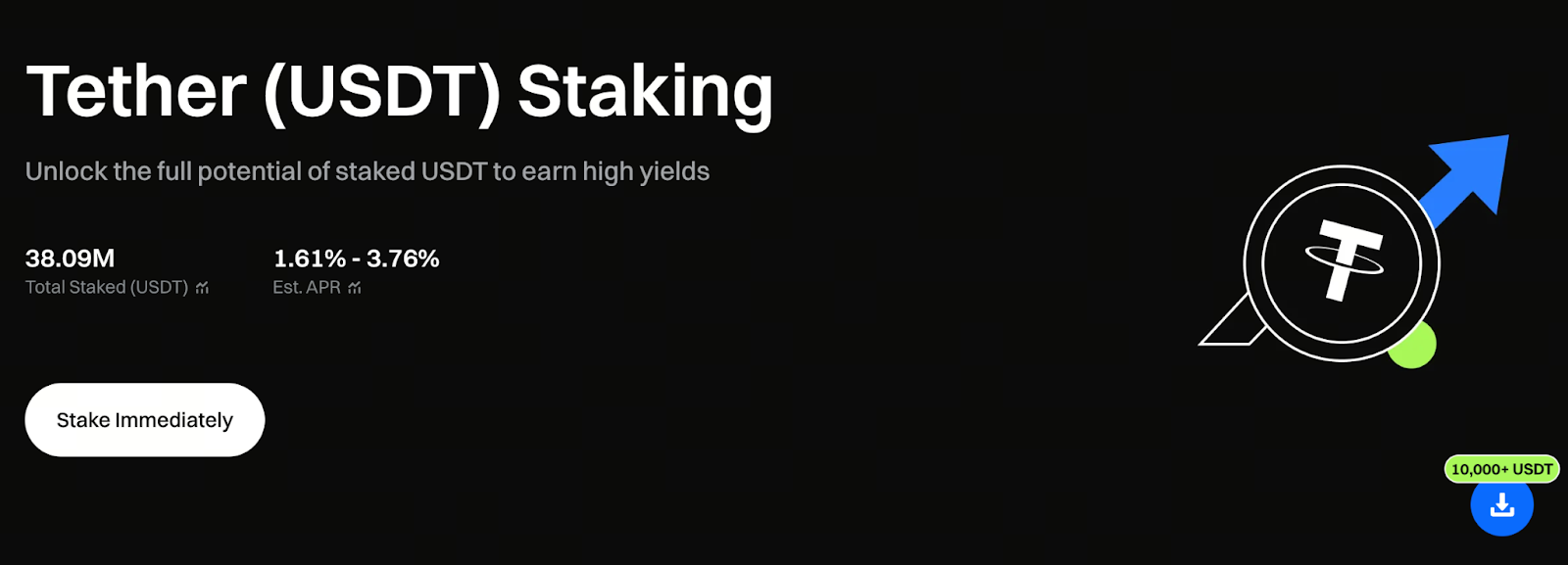
As the cryptocurrency market matures, stablecoins are taking on new roles. In the past, USDT primarily served as a bridge asset during trades—users parked funds temporarily while waiting for their next move. With on-chain yield tools becoming more accessible, more users now recognize that idle stablecoins can generate cash flow on their own.
Gate’s latest USDT staking campaign is designed to meet this demand, enabling users to earn additional returns on their USDT without altering their existing asset structure.
Access On-Chain Yields with Minimal Barriers
Unlike most wealth management products that require significant capital, Gate’s USDT staking offers a low entry threshold—users can participate with as little as 1 USDT. This makes it possible for anyone, regardless of portfolio size, to experience on-chain yield generation firsthand.
This campaign also features additional annualized rewards, with a reference annualized yield of up to 50%. For newcomers seeking yield products without high risk or operational complexity, this is a user-friendly starting point.
Event Period & Eligibility
This limited-time USDT staking event is available during the following period:
- Event Period: January 30, 2026, 09:00 to February 14, 2026, 09:00 (UTC)
Participation is not open to all users. To qualify, you must meet the following criteria:
- No on-chain earn product purchases in the past 30 days
- Account holdings do not exceed 1 USDT
Eligible users will see an exclusive bonus prompt after logging into the event page and can join directly.
Event Details
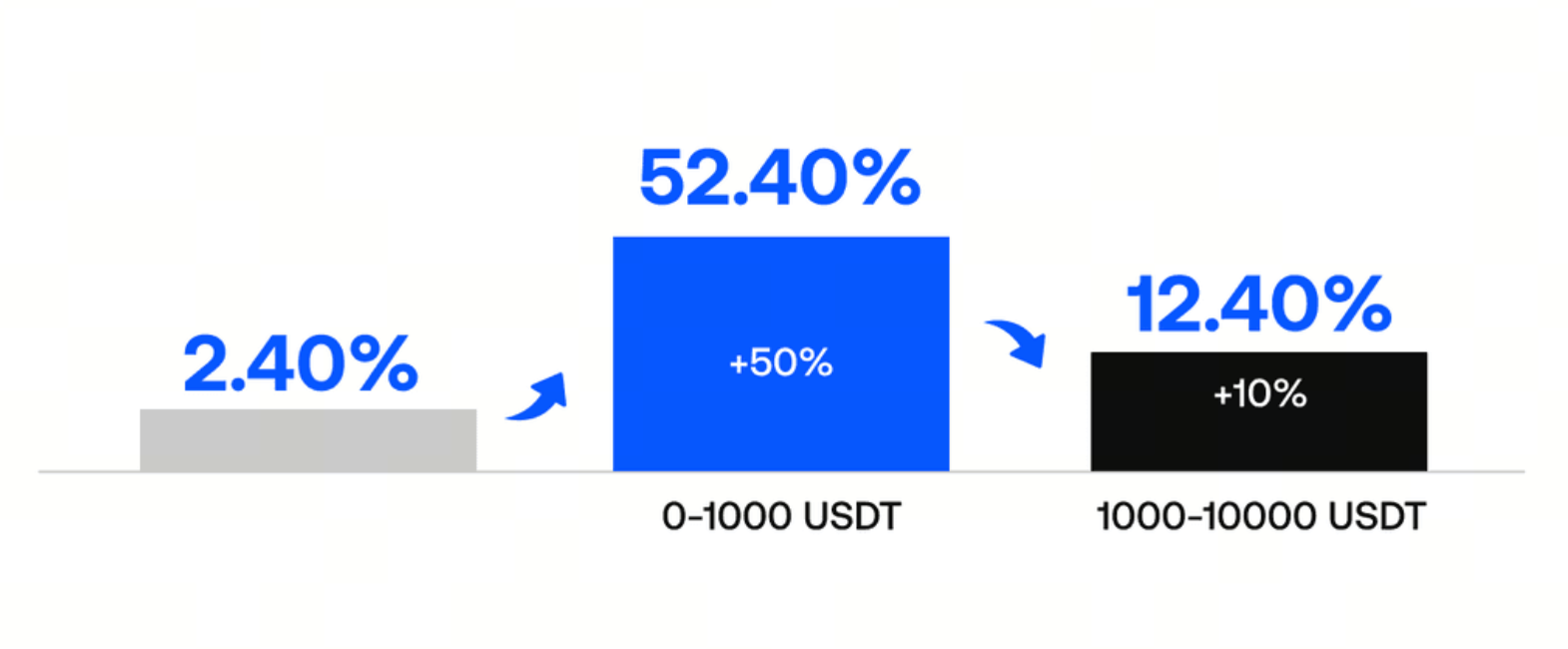
Stake USDT now and earn attractive returns: https://www.gate.com/staking/USDT
How Does USDT Staking Work?
Gate’s USDT staking is part of the on-chain earn ecosystem. The core idea is to pool users’ USDT into on-chain protocols, with the platform handling fund allocation, yield calculation, and distribution.
Compared to managing DeFi operations yourself, this approach offers key advantages:
- No need to switch wallets or sign contracts manually
- No need to study complex protocol mechanisms
- All processes are handled within the Gate platform
For most non-technical users, this provides an accessible and straightforward gateway to on-chain yields.
Yield Source: Aave V3 Mechanism
The actual yield is sourced from the decentralized lending protocol Aave V3. As one of DeFi’s largest and most mature lending markets, Aave balances supply and demand automatically through its interest rate system.
Gate packages Aave’s mechanism into a simplified product, enabling users to earn lending yields indirectly—without direct interaction with on-chain protocols—making the experience similar to traditional wealth management products.
Staking and Distribution Rules
USDT staking operates under the following rules:
- Staking window: Daily from 00:00 to 23:59 (UTC)
- Payout calculation: Earnings begin accruing the same day (D+0) after staking is completed
- Minimum subscription: 1 USDT
- Daily maximum staking: 200,000 USDT
- No total staking cap
This structure gives users the flexibility to adjust their participation based on their capital needs.
Redeem Anytime, Maintain Liquidity
USDT staking supports instant redemption—no lock-up period required. Users can submit a redemption request at any time. Funds will be credited within one day at the latest, with actual timing subject to on-chain conditions.
Redemption rules:
- Minimum redemption: 1 USDT
- Daily maximum redemption: 200,000 USDT
This setup allows users to earn yields while maintaining high liquidity.
How Is the Annualized Yield Calculated?
The reference annualized yield shown on the page consists of two components:
- Market yield: Dynamically adjusts based on supply and demand on Aave
- Additional rewards: GT reward subsidies provided by Gate
The additional reward pool is limited and available while supplies last. Please refer to the subscription page for real-time annualized yield data.
Gate On-Chain Earn: Platform Overview
Gate On-Chain Earn is an integrated yield platform, not a single product. It covers multiple PoS and DeFi protocols, with the platform conducting initial risk assessments before making them available for subscription.
USDT staking is an entry-level product within this ecosystem. Its primary purpose is to lower the technical barrier for users entering on-chain yield opportunities, rather than chasing extreme returns.
How to Participate
- Web: Wealth Management → On-Chain Earn → USDT Staking
- App: Wealth Management → On-Chain Earn → USDT Staking
Risks and Important Notes
This service may not be available in certain jurisdictions (such as the UK and other restricted areas). Please refer to the Gate User Agreement for details. This event does not constitute investment advice. The crypto market remains highly volatile—users should independently assess their risk tolerance and capital allocation.
User Agreement: https://www.gate.com/legal/user-agreement
Summary
The Gate USDT Staking Relaunch is an innovative product that transforms stablecoins from static assets into yield-generating tools. By integrating Aave V3’s lending mechanism, users can access market-driven on-chain interest rates without navigating complex DeFi operations. For those looking to put idle funds to work—while minimizing technical and operational risk—this staking product offers a balanced, manageable, and user-friendly path to yield.







