


LBR vs LTC: Comparing Two Crypto Assets for Long-Term Investment Potential
Introduction: LBR vs LTC Investment Comparison
In the cryptocurrency market, the comparison between LBR vs LTC has always been an unavoidable topic for investors. The two not only have significant differences in market cap ranking, application scenarios, and price performance, but also represent different positions in crypto assets.
Lybra Finance (LBR): Since its launch, it has gained market recognition for its pioneering decentralized protocol designed to bring stability to the cryptocurrency world.
Litecoin (LTC): Since its inception in 2011, it has been hailed as "digital silver" and is one of the cryptocurrencies with the highest global trading volume and market capitalization.
This article will comprehensively analyze the investment value comparison between LBR vs LTC, focusing on historical price trends, supply mechanisms, institutional adoption, technological ecosystems, and future predictions, and attempt to answer the question that investors care about most:
"Which is the better buy right now?"
I. Price History Comparison and Current Market Status
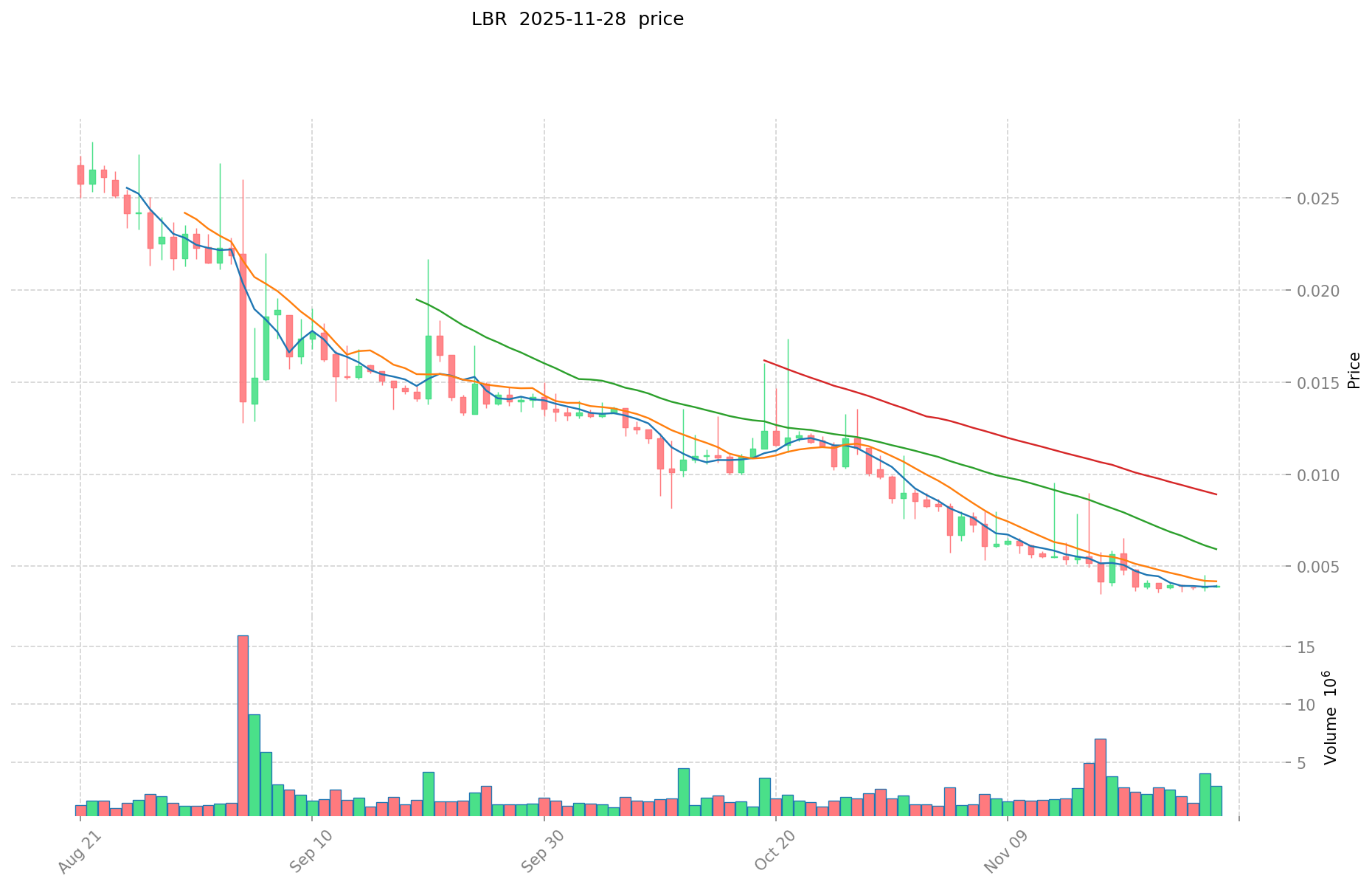
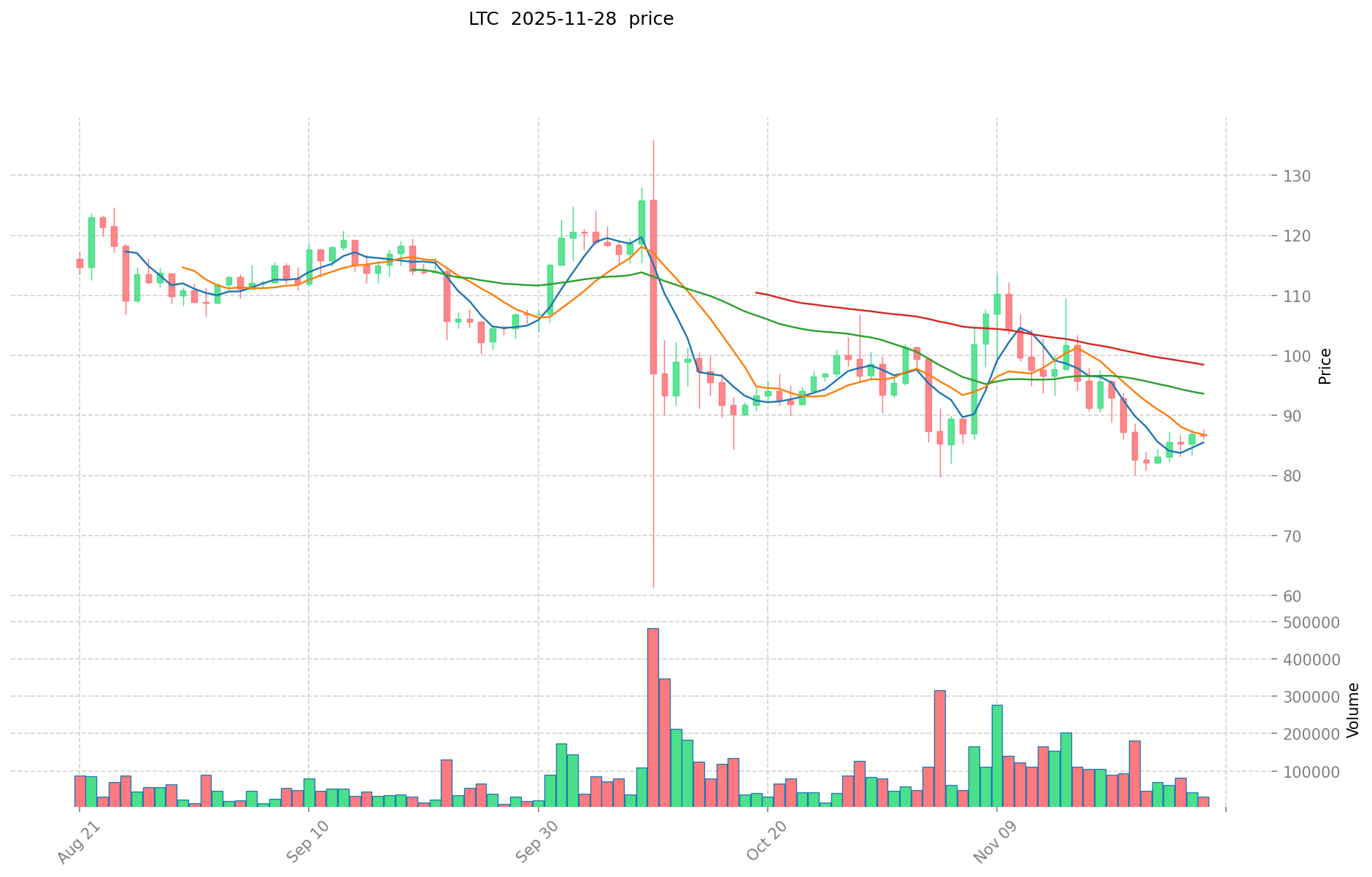
LBR (Coin A) and LTC (Coin B) Historical Price Trends
- 2023: LBR reached its all-time high of $3.834 on July 4, 2023.
- 2021: LTC hit its all-time high of $410.26 on May 10, 2021, during the bull market.
- Comparative analysis: LBR has experienced a significant decline from its all-time high, dropping to $0.003918 as of November 28, 2025. LTC has also seen a substantial decrease but has maintained a higher price level at $85.97.
Current Market Situation (2025-11-28)
- LBR current price: $0.003918
- LTC current price: $85.97
- 24-hour trading volume: LBR $11,617.79653809 vs LTC $3,447,090.691971
- Market Sentiment Index (Fear & Greed Index): 25 (Extreme Fear)
Click to view real-time prices:
- Check LBR current price Market Price
- Check LTC current price Market Price
II. Core Factors Affecting Investment Value of LBR vs LTC
Supply Mechanisms Comparison (Tokenomics)
- LBR: Fixed maximum supply of 1 billion tokens with a deflationary model through token burning
- LTC: Fixed maximum supply of 84 million coins with halving mechanism occurring approximately every 4 years
- 📌 Historical Pattern: LTC's halving events have historically preceded price appreciation cycles, while LBR's deflationary mechanism aims to create long-term value through scarcity.
Institutional Adoption and Market Applications
- Institutional Holdings: LTC has more established institutional adoption through Grayscale's Litecoin Trust and exchange-traded products, while LBR is still gaining institutional recognition
- Enterprise Adoption: LTC has wider merchant acceptance and payment processing integration, particularly in cross-border transactions and as a settlement layer
- Regulatory Stance: LTC benefits from regulatory clarity in most jurisdictions as one of the oldest cryptocurrencies, while LBR faces varying regulatory approaches across different countries
Technical Development and Ecosystem Building
- LBR Technical Upgrades: Integration of ZK-rollups for scalability and enhanced privacy features
- LTC Technical Development: MWEB (MimbleWimble Extension Block) implementation for improved privacy and scalability; continued compatibility with Bitcoin infrastructure
- Ecosystem Comparison: LTC has more established payment solutions and cross-chain interoperability, while LBR is developing a broader DeFi ecosystem with smart contract functionality
Macroeconomic Factors and Market Cycles
- Performance in Inflationary Environments: LTC has a longer track record as a potential inflation hedge, while LBR's deflationary mechanism theoretically positions it well against inflation
- Macroeconomic Monetary Policy: Both assets show sensitivity to interest rate changes and USD strength, with risk-on environments generally benefiting both
- Geopolitical Factors: Cross-border transaction demand tends to benefit LTC due to its wider acceptance and established infrastructure in regions with currency controls
III. 2025-2030 Price Prediction: LBR vs LTC
Short-term Prediction (2025)
- LBR: Conservative $0.00270342 - $0.003918 | Optimistic $0.003918 - $0.00532848
- LTC: Conservative $79.1476 - $86.03 | Optimistic $86.03 - $106.6772
Mid-term Prediction (2027)
- LBR may enter a growth phase, estimated price range $0.003373115904 - $0.006113772576
- LTC may enter a growth phase, estimated price range $97.67364432 - $145.98533936
- Key drivers: Institutional capital inflow, ETF, ecosystem development
Long-term Prediction (2030)
- LBR: Base scenario $0.004157847074795 - $0.007559721954172 | Optimistic scenario $0.007559721954172 - $0.008013305271423
- LTC: Base scenario $98.9089087212828 - $164.848181202138 | Optimistic scenario $164.848181202138 - $206.0602265026725
Disclaimer
LBR:
| 年份 | 预测最高价 | 预测平均价格 | 预测最低价 | 涨跌幅 |
|---|---|---|---|---|
| 2025 | 0.00532848 | 0.003918 | 0.00270342 | 0 |
| 2026 | 0.0059177472 | 0.00462324 | 0.0024965496 | 18 |
| 2027 | 0.006113772576 | 0.0052704936 | 0.003373115904 | 34 |
| 2028 | 0.00757053700704 | 0.005692133088 | 0.0034152798528 | 45 |
| 2029 | 0.008488108860825 | 0.00663133504752 | 0.006432394996094 | 69 |
| 2030 | 0.008013305271423 | 0.007559721954172 | 0.004157847074795 | 92 |
LTC:
| 年份 | 预测最高价 | 预测平均价格 | 预测最低价 | 涨跌幅 |
|---|---|---|---|---|
| 2025 | 106.6772 | 86.03 | 79.1476 | 0 |
| 2026 | 113.697248 | 96.3536 | 61.666304 | 12 |
| 2027 | 145.98533936 | 105.025424 | 97.67364432 | 22 |
| 2028 | 139.3109736648 | 125.50538168 | 102.9144129776 | 46 |
| 2029 | 197.288184731876 | 132.4081776724 | 83.417151933612 | 54 |
| 2030 | 206.0602265026725 | 164.848181202138 | 98.9089087212828 | 92 |
IV. Investment Strategy Comparison: LBR vs LTC
Long-term vs Short-term Investment Strategies
- LBR: Suitable for investors focused on DeFi ecosystem potential and deflationary tokenomics
- LTC: Suitable for investors seeking established payment networks and potential inflation hedge
Risk Management and Asset Allocation
- Conservative investors: LBR: 10% vs LTC: 90%
- Aggressive investors: LBR: 30% vs LTC: 70%
- Hedging tools: Stablecoin allocation, options, cross-currency portfolios
V. Potential Risk Comparison
Market Risks
- LBR: Higher volatility due to lower market cap and trading volume
- LTC: Susceptible to broader cryptocurrency market trends and Bitcoin price movements
Technical Risks
- LBR: Scalability challenges, network stability during upgrades
- LTC: Mining centralization, potential security vulnerabilities
Regulatory Risks
- Global regulatory policies may have differing impacts on both assets, with LTC potentially facing less scrutiny due to its established history
VI. Conclusion: Which Is the Better Buy?
📌 Investment Value Summary:
- LBR advantages: Deflationary model, growing DeFi ecosystem, potential for higher returns
- LTC advantages: Established network, wider acceptance, proven track record
✅ Investment Advice:
- New investors: Consider a higher allocation to LTC for stability
- Experienced investors: Balanced approach with both LBR and LTC based on risk tolerance
- Institutional investors: LTC for established market presence, LBR for potential growth exposure
⚠️ Risk Warning: The cryptocurrency market is highly volatile. This article does not constitute investment advice. None
VII. FAQ
Q1: What are the main differences between LBR and LTC? A: LBR is a newer cryptocurrency focused on DeFi with a deflationary model, while LTC is an established "digital silver" with wider merchant acceptance and a fixed supply. LBR has a maximum supply of 1 billion tokens, while LTC has a maximum of 84 million coins.
Q2: Which coin has performed better historically? A: LTC has a longer track record and reached its all-time high of $410.26 in May 2021. LBR, being newer, reached its all-time high of $3.834 in July 2023. However, both have experienced significant declines since their peaks.
Q3: How do the supply mechanisms of LBR and LTC differ? A: LBR employs a deflationary model through token burning, aiming to increase scarcity over time. LTC uses a halving mechanism that occurs approximately every 4 years, reducing the rate of new coin creation.
Q4: Which coin is more suitable for long-term investment? A: LTC may be more suitable for conservative long-term investors due to its established history and wider acceptance. LBR might appeal to investors interested in the growth potential of DeFi ecosystems and deflationary tokenomics.
Q5: What are the key risks associated with investing in LBR and LTC? A: LBR faces higher volatility due to its lower market cap and trading volume, as well as potential scalability challenges. LTC risks include susceptibility to broader cryptocurrency market trends and potential mining centralization issues.
Q6: How do institutional adoptions compare between LBR and LTC? A: LTC has more established institutional adoption, including Grayscale's Litecoin Trust and various exchange-traded products. LBR is still in the process of gaining institutional recognition.
Q7: What factors could influence the future price of LBR and LTC? A: Key factors include institutional capital inflow, potential ETF approvals, ecosystem development, regulatory changes, and overall cryptocurrency market trends. Technological upgrades and adoption rates will also play crucial roles.
Share
Content
Introduction: LBR vs LTC Investment Comparison
I. Price History Comparison and Current Market Status
II. Core Factors Affecting Investment Value of LBR vs LTC
III. 2025-2030 Price Prediction: LBR vs LTC
IV. Investment Strategy Comparison: LBR vs LTC
V. Potential Risk Comparison
VI. Conclusion: Which Is the Better Buy?
VII. FAQ


