


ART vs LRC: Comparing Two Popular Audio Tagging Formats for Music Lovers
Introduction: ART vs LRC Investment Comparison
In the cryptocurrency market, the comparison between LiveArt (ART) vs Loopring (LRC) has always been an unavoidable topic for investors. The two not only have significant differences in market cap ranking, application scenarios, and price performance, but also represent different positioning in crypto assets.
LiveArt (ART): Since its launch, it has gained market recognition for its AI-powered RWAfi protocol unlocking the $10T market of investment-grade art and collectibles.
Loopring (LRC): Introduced in 2017, it has been hailed as an open multi-token transaction protocol, providing a zero-risk token exchange model on Ethereum.
This article will comprehensively analyze the investment value comparison between ART and LRC, focusing on historical price trends, supply mechanisms, institutional adoption, technological ecosystems, and future predictions, attempting to answer the question most concerning to investors:
"Which is the better buy right now?"
I. Price History Comparison and Current Market Status
LiveArt (ART) and Loopring (LRC) Historical Price Trends
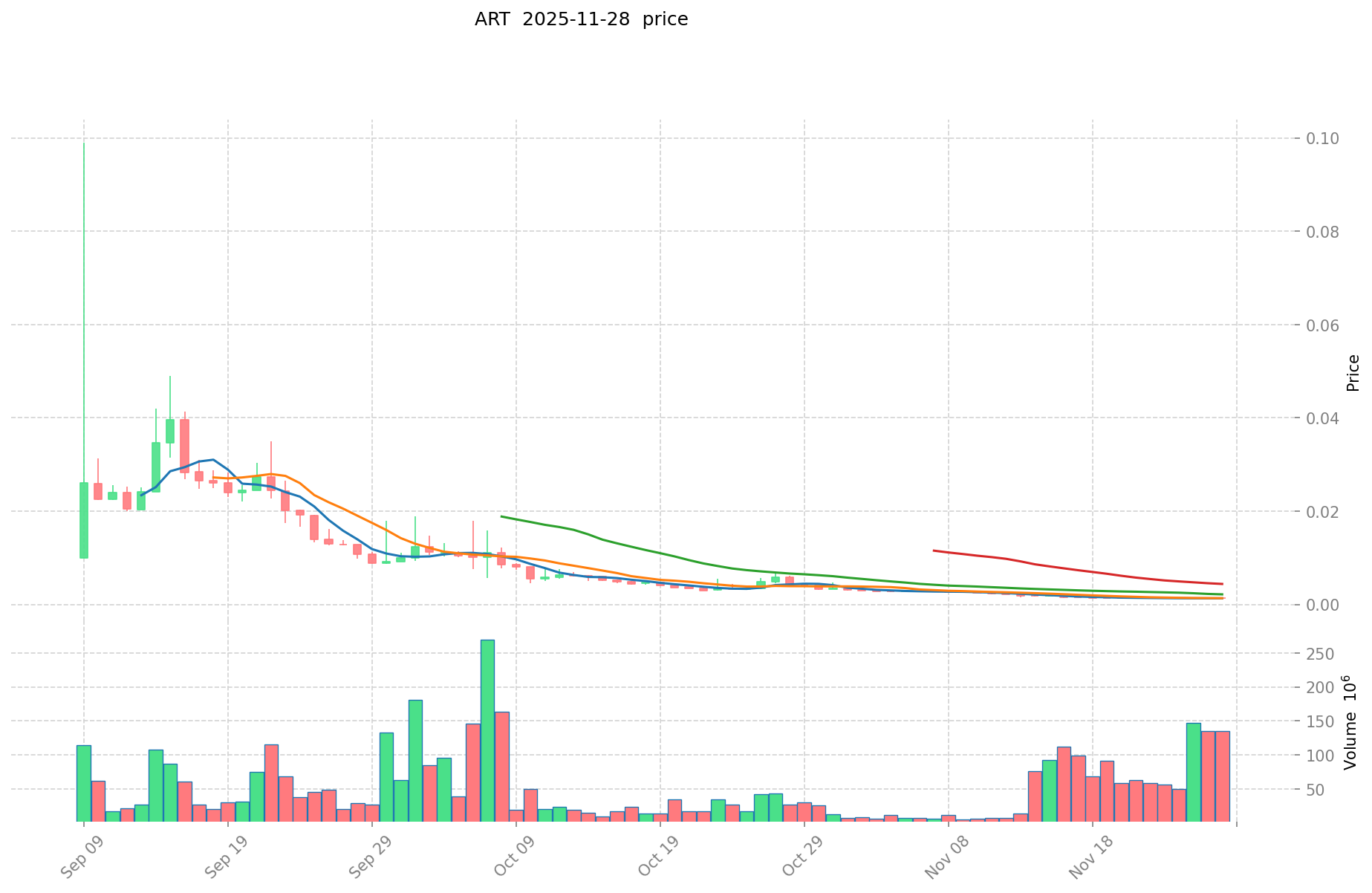
- 2025: ART reached its all-time high of $0.099 on September 9, 2025, but has since experienced a significant decline.
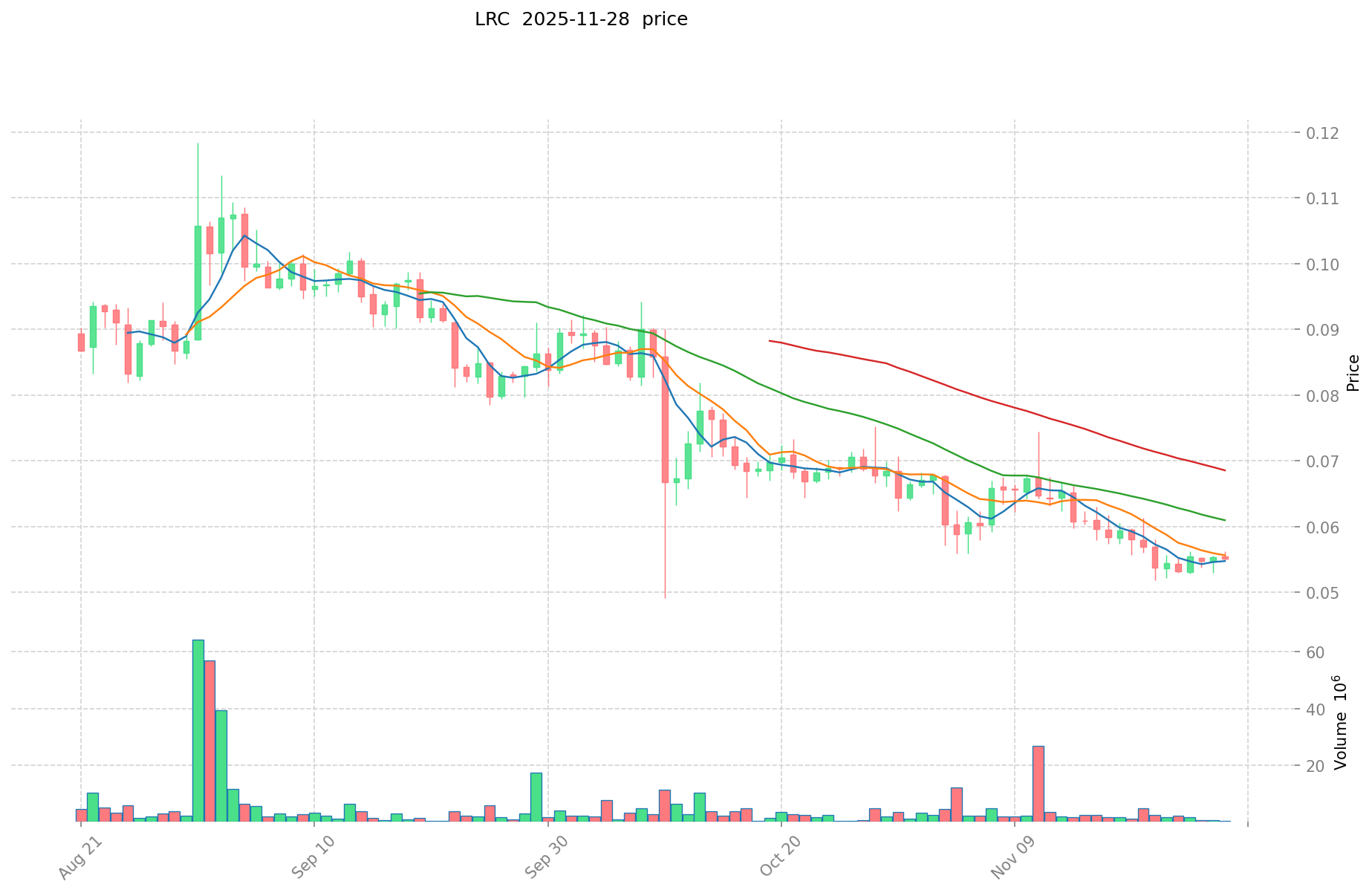
- 2021: LRC reached its all-time high of $3.75 on November 10, 2021, during the bull market of that year.
- Comparative analysis: ART has declined from its all-time high of $0.099 to its current price of $0.001285, while LRC has fallen from its peak of $3.75 to $0.05474, representing a substantial decrease for both tokens in their respective market cycles.
Current Market Situation (2025-11-28)
- ART current price: $0.001285
- LRC current price: $0.05474
- 24-hour trading volume: ART $174,658.93 vs LRC $19,573.82
- Market Sentiment Index (Fear & Greed Index): 25 (Extreme Fear)
Click to view real-time prices:
- View ART current price Market Price
- View LRC current price Market Price
II. Core Factors Affecting ART vs LRC Investment Value
Supply Mechanism Comparison (Tokenomics)
- ART: The token has a maximum supply of 10 million tokens, with 4 million already in circulation. The supply is designed to be inflationary initially with a gradual move toward deflationary mechanics.
- LRC: Loopring has a fixed maximum supply of 1.37 billion LRC tokens, with approximately 1.2 billion currently in circulation. The protocol introduced a deflationary mechanism through fee burning.
- 📌 Historical Pattern: Deflationary tokens like LRC tend to gain value during high network activity periods as more tokens are burned, while ART's controlled supply approach aims to balance ecosystem growth with price stability.
Institutional Adoption and Market Applications
- Institutional Holdings: LRC has more established institutional interest with listings on major exchanges, while ART is newer but gaining interest due to its connection to AI infrastructure.
- Enterprise Adoption: LRC is being utilized for decentralized exchanges and payment solutions with ZK-rollup technology, while ART is positioned for AI infrastructure and computation markets.
- Regulatory Attitudes: Both tokens face varying regulatory approaches across jurisdictions, with layer-2 solutions like LRC generally receiving more favorable treatment than new tokenomic models.
Technical Development and Ecosystem Building
- ART Technical Upgrades: The platform is developing its AI computing infrastructure and marketplace while implementing a delegated computing model for computational resources.
- LRC Technical Development: Loopring continues to improve its ZK-rollup technology for Ethereum scaling, with focus on lower gas fees and higher throughput for DEX applications.
- Ecosystem Comparison: LRC has a more established ecosystem within DeFi and payment solutions, while ART is building toward AI infrastructure services and computational resources marketplace.
Macroeconomic Factors and Market Cycles
- Performance During Inflation: LRC, with its deflationary mechanics, may offer better inflation resistance during market uncertainty.
- Macroeconomic Monetary Policy: Interest rate changes and dollar strength affect both tokens, with higher rates typically applying more pressure on newer technology investments like ART.
- Geopolitical Factors: Global AI regulation and computing resource demands may benefit ART, while LRC benefits from increased demand for decentralized financial infrastructure.
III. 2025-2030 Price Prediction: ART vs LRC
Short-term Prediction (2025)
- ART: Conservative $0.00095016 - $0.001284 | Optimistic $0.001284 - $0.00181044
- LRC: Conservative $0.0372912 - $0.05484 | Optimistic $0.05484 - $0.0723888
Mid-term Prediction (2027)
- ART may enter a growth phase, with prices estimated between $0.00151782282 - $0.002495975304
- LRC may enter a consolidation phase, with prices estimated between $0.03573856992 - $0.09305514432
- Key drivers: Institutional capital inflow, ETF, ecosystem development
Long-term Prediction (2030)
- ART: Base scenario $0.002224839125737 - $0.002680529067153 | Optimistic scenario $0.002680529067153 - $0.003672324822
- LRC: Base scenario $0.077495556484755 - $0.090111112191576 | Optimistic scenario $0.090111112191576 - $0.11894666809288
Disclaimer: This information is for educational purposes only and should not be considered as financial advice. Cryptocurrency markets are highly volatile and unpredictable. Always conduct your own research before making any investment decisions.
ART:
| 年份 | 预测最高价 | 预测平均价格 | 预测最低价 | 涨跌幅 |
|---|---|---|---|---|
| 2025 | 0.00181044 | 0.001284 | 0.00095016 | 0 |
| 2026 | 0.0018257196 | 0.00154722 | 0.0010211652 | 20 |
| 2027 | 0.002495975304 | 0.0016864698 | 0.00151782282 | 31 |
| 2028 | 0.00253037928792 | 0.002091222552 | 0.0013592946588 | 62 |
| 2029 | 0.003050257214347 | 0.00231080091996 | 0.001848640735968 | 79 |
| 2030 | 0.003672324822 | 0.002680529067153 | 0.002224839125737 | 108 |
LRC:
| 年份 | 预测最高价 | 预测平均价格 | 预测最低价 | 涨跌幅 |
|---|---|---|---|---|
| 2025 | 0.0723888 | 0.05484 | 0.0372912 | 0 |
| 2026 | 0.071248128 | 0.0636144 | 0.042621648 | 16 |
| 2027 | 0.09305514432 | 0.067431264 | 0.03573856992 | 23 |
| 2028 | 0.0858602284512 | 0.08024320416 | 0.0746261798688 | 46 |
| 2029 | 0.097170508077552 | 0.0830517163056 | 0.060627752903088 | 51 |
| 2030 | 0.11894666809288 | 0.090111112191576 | 0.077495556484755 | 64 |
IV. Investment Strategy Comparison: ART vs LRC
Long-term vs Short-term Investment Strategies
- ART: Suitable for investors focused on AI infrastructure potential and computational resource markets
- LRC: Suitable for investors interested in DeFi ecosystems and Ethereum scaling solutions
Risk Management and Asset Allocation
- Conservative investors: ART: 30% vs LRC: 70%
- Aggressive investors: ART: 60% vs LRC: 40%
- Hedging tools: Stablecoin allocation, options, cross-currency combinations
V. Potential Risk Comparison
Market Risks
- ART: Volatility due to newer market entry and AI sector fluctuations
- LRC: Dependency on Ethereum ecosystem performance and overall DeFi market trends
Technical Risks
- ART: Scalability, network stability, AI infrastructure development challenges
- LRC: Ethereum network congestion, ZK-rollup technology limitations
Regulatory Risks
- Global regulatory policies may impact both tokens differently, with potential stricter oversight on AI-related tokens like ART and established scrutiny on DeFi protocols like LRC
VI. Conclusion: Which Is the Better Buy?
📌 Investment Value Summary:
- ART advantages: Exposure to growing AI infrastructure market, potential for high growth in emerging sector
- LRC advantages: Established presence in DeFi, proven technology with Ethereum scaling solutions
✅ Investment Advice:
- New investors: Consider a balanced approach with a slight preference for LRC due to its more established market presence
- Experienced investors: Explore a diversified portfolio including both tokens, with allocation based on risk tolerance and market outlook
- Institutional investors: Conduct thorough due diligence on both projects, considering ART for long-term AI sector exposure and LRC for immediate DeFi ecosystem participation
⚠️ Risk Warning: Cryptocurrency markets are highly volatile. This article does not constitute investment advice. None
VII. FAQ
Q1: What are the main differences between ART and LRC tokens? A: ART is focused on AI infrastructure and computational resource markets, with a maximum supply of 10 million tokens. LRC is a DeFi token for Ethereum scaling solutions, with a fixed maximum supply of 1.37 billion tokens and deflationary mechanics.
Q2: Which token has performed better historically? A: LRC reached its all-time high of $3.75 in November 2021, while ART reached its all-time high of $0.099 in September 2025. Both have since declined significantly, with LRC showing a longer track record.
Q3: What are the key factors affecting the investment value of ART and LRC? A: Key factors include supply mechanisms, institutional adoption, technical development, ecosystem building, and macroeconomic factors such as inflation and interest rates.
Q4: How do the future price predictions compare for ART and LRC? A: By 2030, ART is predicted to reach $0.002224839125737 - $0.003672324822, while LRC is expected to reach $0.077495556484755 - $0.11894666809288 in the base scenario.
Q5: What are the main risks associated with investing in ART and LRC? A: Risks include market volatility, technical challenges (scalability for ART, network congestion for LRC), and regulatory uncertainties, especially for AI-related tokens like ART.
Q6: How should investors allocate their portfolio between ART and LRC? A: Conservative investors might consider 30% ART and 70% LRC, while aggressive investors might opt for 60% ART and 40% LRC, depending on risk tolerance and market outlook.
Q7: Which token is considered a better buy for different types of investors? A: New investors may prefer LRC due to its established presence. Experienced investors might consider a balanced approach with both tokens. Institutional investors should conduct thorough due diligence, considering ART for long-term AI sector exposure and LRC for immediate DeFi ecosystem participation.
Share
Content
Introduction: ART vs LRC Investment Comparison
I. Price History Comparison and Current Market Status
II. Core Factors Affecting ART vs LRC Investment Value
III. 2025-2030 Price Prediction: ART vs LRC
IV. Investment Strategy Comparison: ART vs LRC
V. Potential Risk Comparison
VI. Conclusion: Which Is the Better Buy?
VII. FAQ


