Comprehensive comparison of cryptocurrency mining hardware performance. This article provides an in-depth analysis of hash rate, power consumption, and pricing for seven of the latest mining devices, including the Antminer S19 Pro and WhatsMiner M30S++. It also explains ASIC technology, payback periods, and optimal selection methods for both beginners and investors.
Criteria for Selecting Cryptocurrency Mining Hardware
With global GPU supply fluctuations and shifting market conditions, it's essential to carefully evaluate the investment value of Bitcoin mining machines. Investment decisions depend largely on long-term Bitcoin market trends and the local power cost structure.
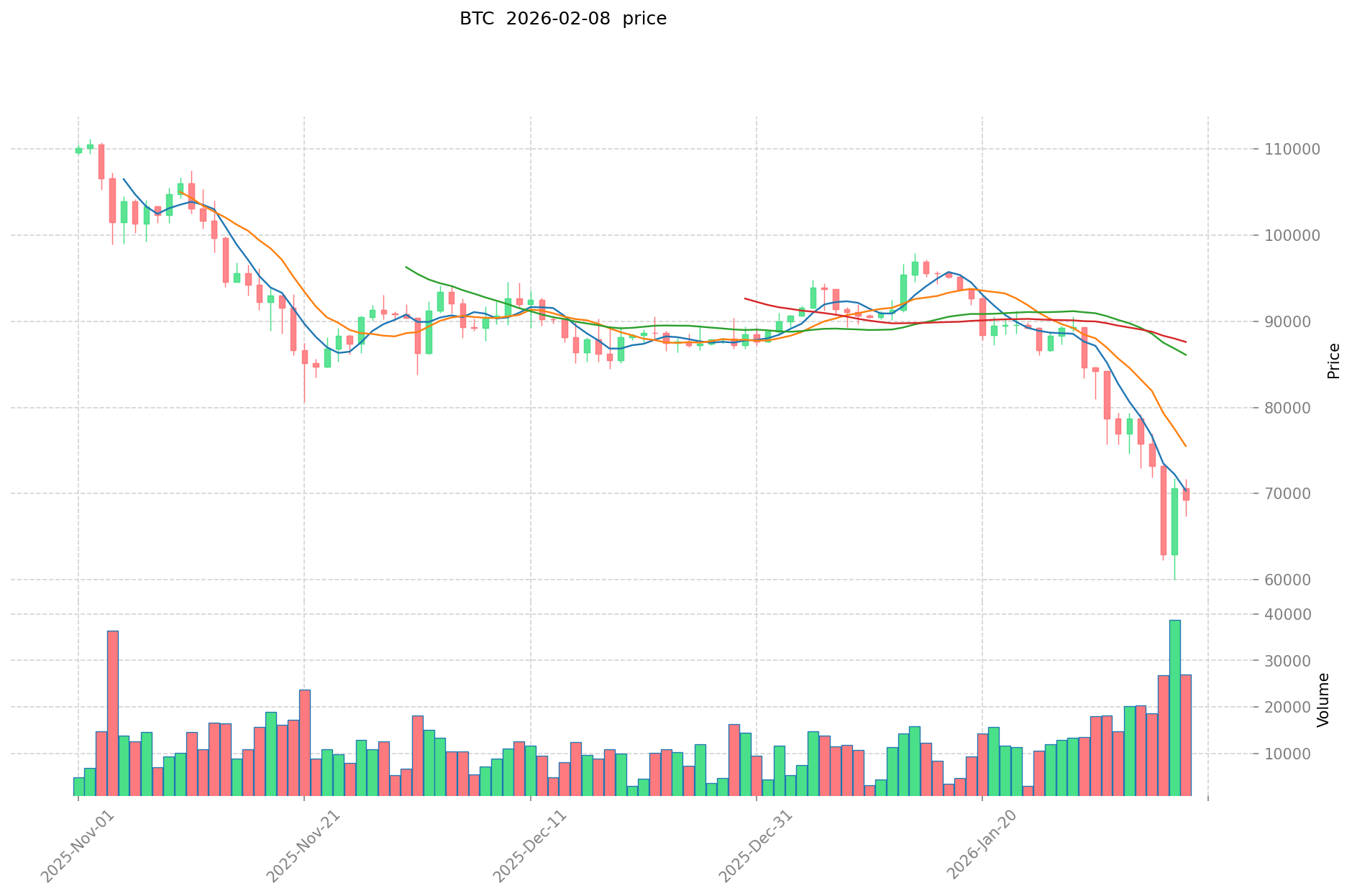 For this reason, thorough market research and selecting mining hardware tailored to your specific environment are crucial.
Cryptocurrency mining profitability hinges on balancing three major factors: the initial hardware investment, power consumption, and hash rate. By accurately gauging these metrics, you can use mining calculators to project revenues based on block rewards and electricity costs. This article provides an in-depth review of seven top-rated cryptocurrency mining hardware models, covering their performance and investment value.
Top 7 Bitcoin Mining Machines
Antminer S19 Pro
- Power consumption: 3.25 kW
- Hash rate: 110 TH/s
- Price range: $10,000–$19,600
Compared to the M30S++, Bitmain's ASIC miner offers leading power efficiency at 29.5J/TH. The latest firmware drastically reduces startup times and improves the user interface, making it one of the highest-performing Bitcoin mining machines available.
Technically, it uses 7nm TSMC chips—the same advanced process as the latest AMD Ryzen CPUs. This miniaturization enables both high hash rates and low power consumption. However, supply chain issues have occasionally made direct purchases from the manufacturer challenging.
AvalonMiner 1246
- Power consumption: 3.43 kW
- Hash rate: 90 TH/s
- Price range: $4,000–$5,300
Canaan Creative, based in China, is a trusted industry veteran with a long track record in crypto mining. Since 2013, it has been a pioneer in commercializing dedicated ASIC Bitcoin mining machines.
The AvalonMiner 1246 features a robust build with four integrated cooling fans, producing up to 75dB of noise—on par with typical traffic. Dedicated space and effective soundproofing are recommended for mining operations.
It boasts excellent power efficiency at 38J/TH and delivers strong cost performance even with extended use. The standard package includes a one-year manufacturer warranty and an integrated AI microchip for improved stability and efficiency.
AvalonMiner A1166 Pro
- Power consumption: 3.4 kW
- Hash rate: 81 TH/s
- Price range: $2,200–$2,850
With hash rate efficiency of 42J/TH, it's slightly less efficient than the AvalonMiner 1246 but stands out for its price advantage. Priced similarly to high-end gaming PCs, it delivers strong power efficiency thanks to its mining-focused design.
Canaan has adjusted specifications to keep costs down, so the warranty is only 180 days—shorter than other models. Direct orders from the manufacturer require a minimum purchase of five units.
Combining five units gives a total hash rate of 405TH/s. With favorable power costs and market conditions, daily earnings can be substantial, making it a compelling choice for small-scale mining farm builders.
WhatsMiner M32-62T
- Power consumption: 3.348 kW
- Hash rate: 62 TH/s
- Price range: $1,075–$1,400
This affordable Bitcoin miner from a recent market entrant uses Samsung's 8nm chipset. Despite its modern chip, power consumption matches the AvalonMiner 1246, resulting in about 30% lower efficiency.
However, its price is just a quarter or fifth that of higher-end models, appealing to those targeting rapid investment recovery. With the right power costs and market conditions, payback can be achieved in less than four months.
It includes a 180-day manufacturer warranty and a standard power supply unit, making it ideal for users seeking a low startup cost. The M32 series offers several variants, with the top model reaching 66TH/s.
WhatsMiner M30S++
- Power consumption: 3.472 kW
- Hash rate: 112 TH/s
- Price range: $9,900–$14,000
MicroBT's flagship model boasts the highest hash rate among mainstream Bitcoin miners. Despite its high performance, it maintains moderate power consumption—31J/TH—making it one of the most efficient ASIC miners available.
Prices start around $10,000, so a serious commitment to Bitcoin mining is required. In regions with reasonable power costs and stable market prices, investment payback is estimated at 10–12 months.
It uses Samsung's latest 8nm ASIC chips, balancing high performance with energy efficiency. It's the ideal choice for large-scale farm construction or long-term mining business planning.
Ebang EBIT E11++
- Power consumption: 2 kW
- Hash rate: 44 TH/s
- Price range: $2,024
Ebang is recognized as a top-tier Bitcoin ASIC manufacturer in China. The latest model features a compact, tube-style design with efficient cooling from exhaust and intake fans on both sides.
The software focuses on usability, with “SimplifyIP” setup enabling fast mining starts via Ethernet. It's particularly user-friendly for beginners.
The warranty covers six months for the main unit and one year for the controller, built on a 10nm chipset. However, hash rate efficiency is lower than mid-priced competitors like the AvalonMiner A1166 Pro, so it's often chosen when more efficient models aren't available.
Bitmain Antminer S5
- Power consumption: 0.56 kW
- Hash rate: 1.16 TH/s
- Price range: $500
Although released in 2014, this legacy model remains effective in certain situations thanks to seamless algorithm integration and efficient hash rate at 0.51J/GH.
It weighs just 2.5kg and features an open-top design for natural airflow cooling. Maximum noise is 65dB, making it relatively quiet and suitable for tight spaces.
While its performance lags behind newer models, it's a smart pick for minimal investment or for learning about mining mechanics.
Hardware Requirements for Bitcoin Mining
If you already own a high-performance PC, you can repurpose it for Bitcoin mining with minimal additional investment. Just as games require minimum specs, Bitcoin mining also demands certain hardware requirements to ensure profitability.
Recommended Minimum Specifications
- CPU: Intel Celeron series or higher
- Motherboard: B250 series or higher
- GPU: Nvidia GTX 1070 or AMD Vega 56 or higher
These specs are the bare minimum for running basic mining operations. To maximize profitability, investing in higher-spec hardware is advised.
High-End Configuration Options
For workstations, high-end gaming, or mining—where maximum processing power is required—AMD Ryzen Threadripper 3970X stands out. With 32 cores and 64 threads, it once rivaled supercomputers, offering 144MB cache and 280W power draw for high productivity in multitasking environments.
The Nvidia RTX 3070 is considered highly cost-effective for GPUs. However, supply issues may make it difficult to buy at the manufacturer's suggested price. Consider alternatives and monitor market trends when planning purchases.
How Long Does It Take to Mine One Bitcoin?
If Bitcoin prices remain stable, a mid-range mining machine with 50TH/s hash rate can theoretically mine 1 BTC in about one year of continuous operation.
However, the era of efficient Bitcoin mining by individuals is fading. Increasing mining difficulty and competition from large-scale farms are steadily eroding individual miner profitability.
Cloud Mining as an Option
If you want to avoid investing in physical mining rigs, cloud mining services are an alternative. Some platforms offer services capable of mining up to 0.0318 BTC per day.
Cloud mining lets you participate safely without installing suspicious software or investing in expensive hardware. Still, it's important to verify provider reliability and check for industry association memberships.
Technical Features of ASIC Miners
In Bitcoin's early days, GPU mining was mainstream, especially in regions with cheap electricity. However, for Bitcoin, GPU mining has become outdated due to cost efficiency.
Evolution of Mining Technology
Bitcoin started with CPU mining, then shifted to GPU for greater hash computation. Later, ASIC miners—a dedicated hardware—revolutionized the field, dramatically outperforming GPUs.
What Is an ASIC Miner?
An ASIC miner is a device built with an Application Specific Integrated Circuit, optimized for Bitcoin mining calculations. It sacrifices versatility for exceptional mining efficiency.
Today, virtually all professional Bitcoin mining farms use ASIC miners. For individuals to remain profitable, ASIC-based mining machines are effectively essential.
The Most Profitable Bitcoin Miners
Recent market research indicates that some new manufacturers' Bitcoin mining machines might deliver the highest profitability. Reported specs include a staggering 360TH/s hash rate at just 550W power consumption, in an affordable price range.
If these numbers are confirmed, the crypto mining industry's power balance could shift dramatically. However, new products require long-term testing in real-world conditions.
Historically, the WhatsMiner M30S++ and Antminer S19 Pro have earned top market ratings. These models are the most popular choices among Bitcoin miners for their proven reliability.
Actual Earnings from ASIC Miners
A single AvalonMiner A1166 Pro ASIC miner with 81TH/s, under favorable market and power conditions, can theoretically earn about $23 per day. This figure represents pure mining rewards and excludes initial purchase, electricity, and cooling costs.
Mining Pool Participation
If you want to avoid large physical ASIC investments (outside cloud mining), joining a mining pool is an option.
A mining pool lets multiple miners combine computing power to raise the odds of adding new blocks. Rewards are distributed to pool participants based on their contributions when successful.
Major Mining Pools
Most mining pools are based in China, Malta, and the US. Leading pools include:
- Major mining pool (Asia-based)
- Antpool
- F2pool
- ViaBTC
- Poolin
- Foundry USA
Physical location doesn't directly affect mining efficiency, so participation isn't geographically restricted. But mining pool participation requires you to own and operate your own rig—unlike cloud mining, where no hardware is needed.
Beware of Mining Scams
Recently, the DeFi and crypto communities have seen a surge in Bitcoin cloud mining and pool mining sites offering enticing terms. Always remember: excessively favorable investment offers are likely scams.
Major crypto fraud cases have occurred, including one where an organization defrauded investors of $722 million in cryptocurrency.
Typical scams promise mining shares for initial investments, but actually operate a Ponzi scheme—using new investor funds to pay old investors. Always verify the operator's credentials, track record, and regulatory status before investing.
How to Choose the Right Cryptocurrency Mining Hardware
Success in cryptocurrency mining depends on choosing hardware that fits your situation, considering factors like power efficiency, upfront cost, and operating environment.
Model-Specific Features and Recommended Uses
1. EBIT E11++ Features:
- Relatively new 10nm chipset design
- Slightly lower hash rate efficiency compared to similarly priced models like AvalonMiner A1166 Pro
- Strong price advantage—ideal for minimizing initial investment
- Low power consumption—suitable for regions with high electricity costs
2. Bitmain Antminer S5 Features:
- Despite being an older model, its compact size and efficient cooling retain value in specific scenarios
- Good for tight spaces or when low power consumption is a priority
- Very affordable—great for learning about mining
- Relatively loud—soundproofing is recommended
3. MicroBT M30S++ Features:
- Delivers industry-leading hash rate and power efficiency
- Best choice for serious Bitcoin mining operations
- High upfront investment, but the strongest long-term profitability
- High power consumption, but outstanding efficiency per hash rate
Key Selection Criteria
To select the best mining hardware for your needs, follow these steps:
- Set a clear budget: Define your initial investment and target payback period
- Assess your power environment: Check local electricity rates and available capacity
- Analyze installation conditions: Consider noise, heat, space, and other physical constraints
- Compare models: Evaluate specs and calculate cost-effectiveness across devices
- Evaluate risks: Consider market volatility and hardware failure risks
By weighing these elements, you can select mining hardware that aligns with your needs and environment—key to long-term success.
FAQ
What is cryptocurrency mining?
Cryptocurrency mining verifies transactions and adds new blocks to the blockchain. Miners use specialized hardware to solve complex mathematical problems, earning new coins and transaction fees. They are essential for maintaining network security and decentralization.
What are the most important factors in choosing mining hardware?
Hash rate, power efficiency, price, and ROI are critical. ASIC miners are best for Bitcoin, offering high efficiency, while GPUs are more flexible for other cryptocurrencies. Brand reliability, cooling systems, and stable power supply also matter.
What's the difference between GPU mining and ASIC mining?
ASICs are tailored for specific algorithms, delivering high efficiency but limiting flexibility to certain cryptocurrencies. GPUs are versatile, supporting multiple cryptocurrencies and decentralization. ASICs offer stable performance, while GPUs are flexible and have lower entry barriers.
What are the initial costs and expected earnings for mining hardware?
Initial investment is about $9,000. After accounting for electricity and depreciation, payback is expected in 12–18 months, followed by ongoing earnings.
What is the most efficient mining hardware in 2024?
As of 2024, Antminer S19 Pro and WhatsMiner M30S++ offer the best efficiency, with high hash rates and power savings—making them top market choices.
What should you watch for and what are the risks when buying mining hardware?
Focus on power usage and ROI calculations. Buy from trusted manufacturers and avoid scams. Ensure proper cooling and power environments. For used equipment, check usage history and test thoroughly.
What about mining hardware power consumption and cooling?
ASIC miners draw 3,250W or more, so efficient cooling systems are essential. Powerful fans manage heat and maintain airflow, boosting efficiency and hardware lifespan.
* The information is not intended to be and does not constitute financial advice or any other recommendation of any sort offered or endorsed by Gate.