# TrumpAnnouncesNewTariffs

92.67K
📢🌍 #TrumpAnnouncesNewTariffs – Global Markets React
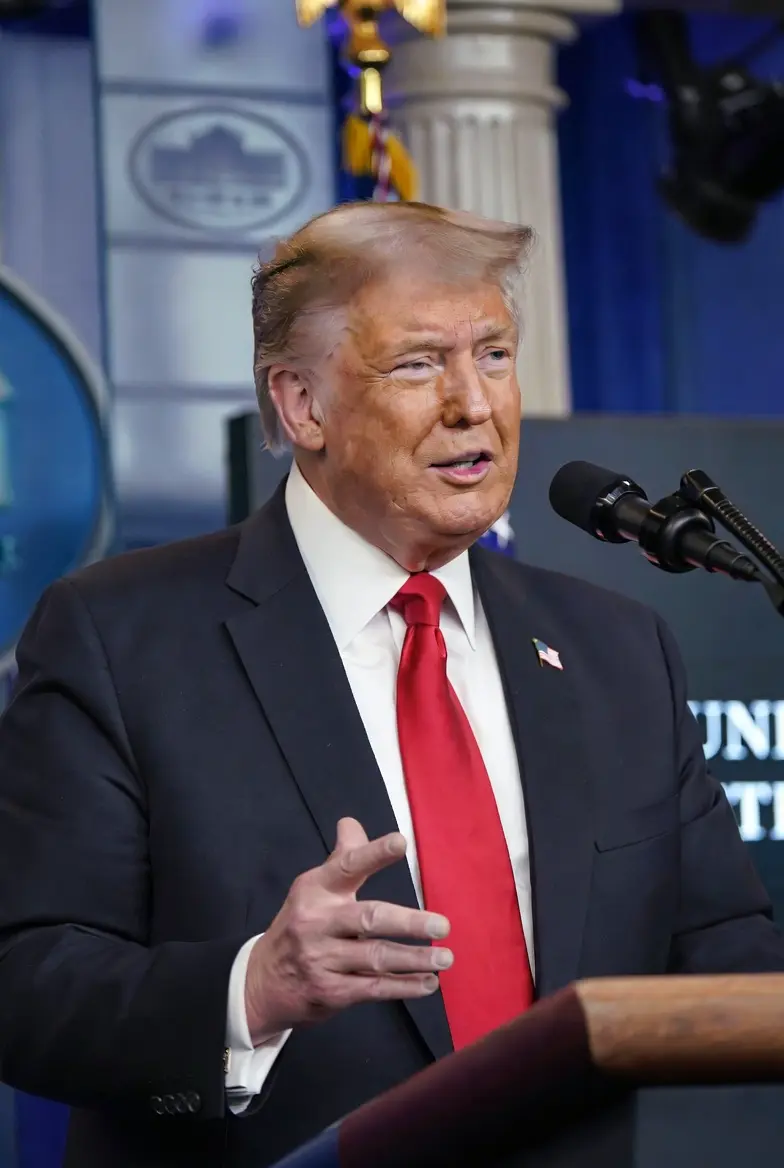
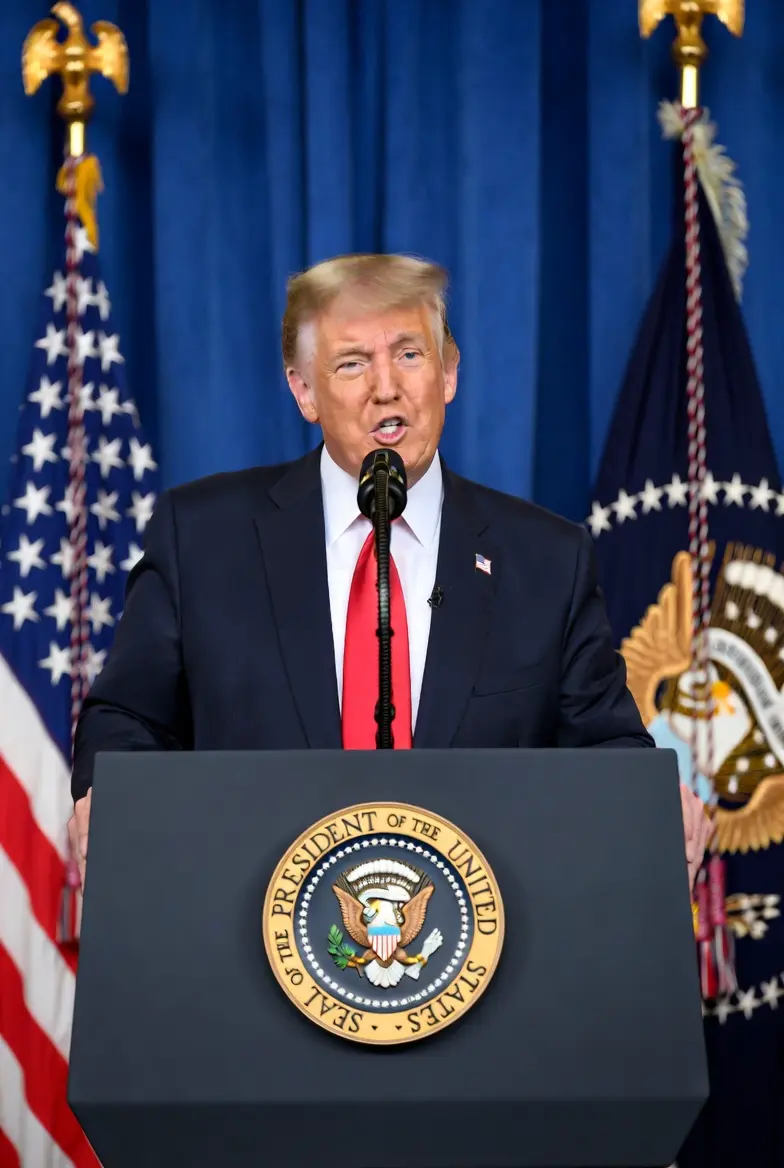
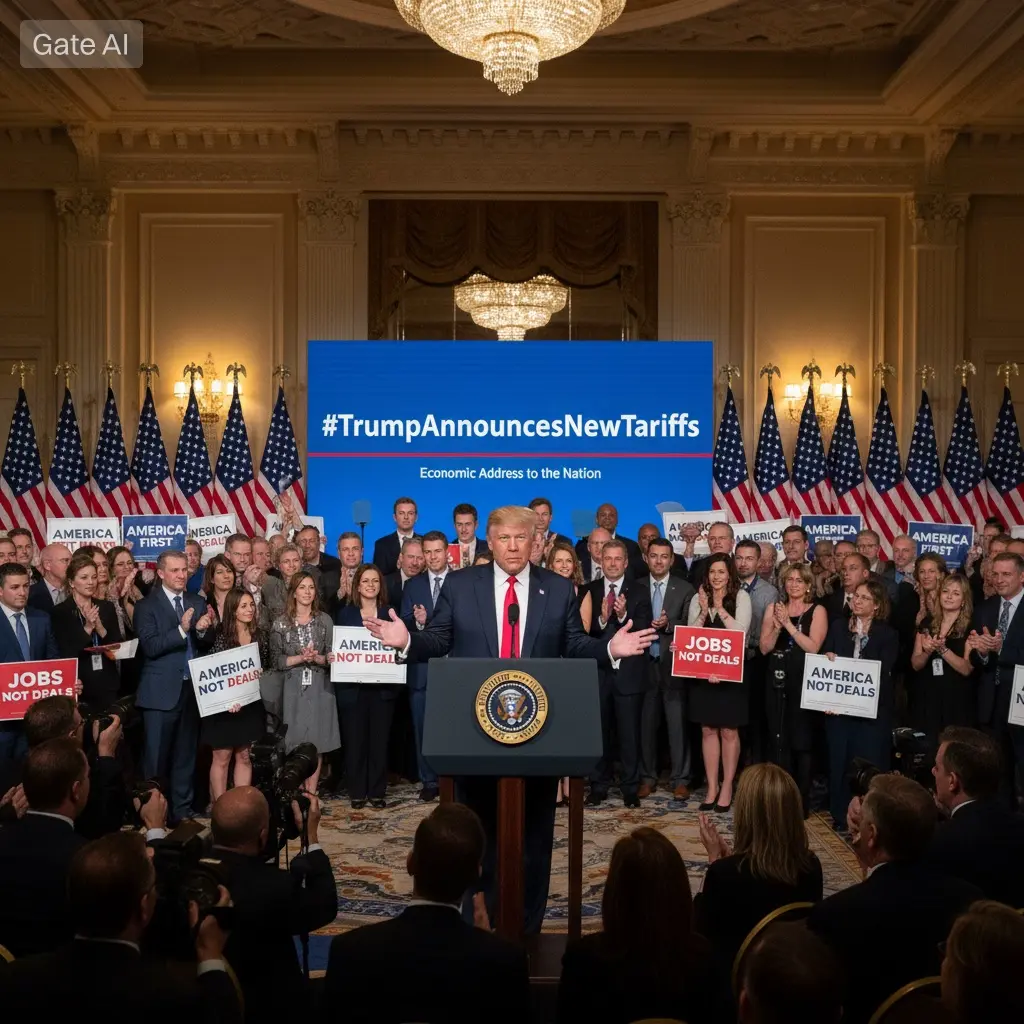
Former U.S. President Donald Trump has announced new tariff measures, reigniting discussions around global trade policy and its potential economic impact. 🏛️📊
🔍 What This Means for Markets:
🔹 Increased trade tensions may raise inflation concerns
🔹 Potential pressure on global supply chains
🔹 Heightened volatility across equities, commodities, and crypto
🔹 Shifts in investor sentiment toward risk assets
📉📈 Historically, macro uncertainty can trigger short-term risk-off reactions — but it can also drive interest toward alternative as
BTC-2.38%
  • Reward
  • Comment
  • Repost
  • Share
#TrumpAnnouncesNewTariffs
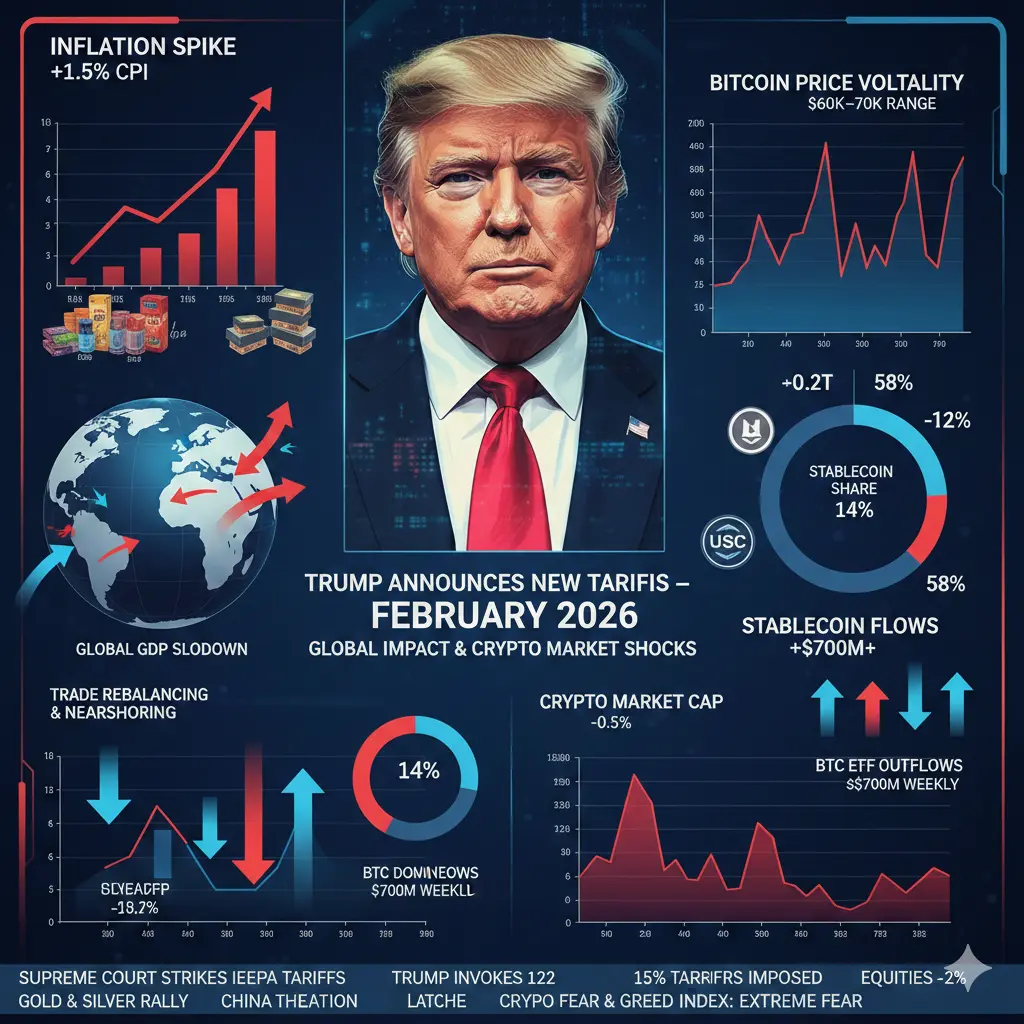
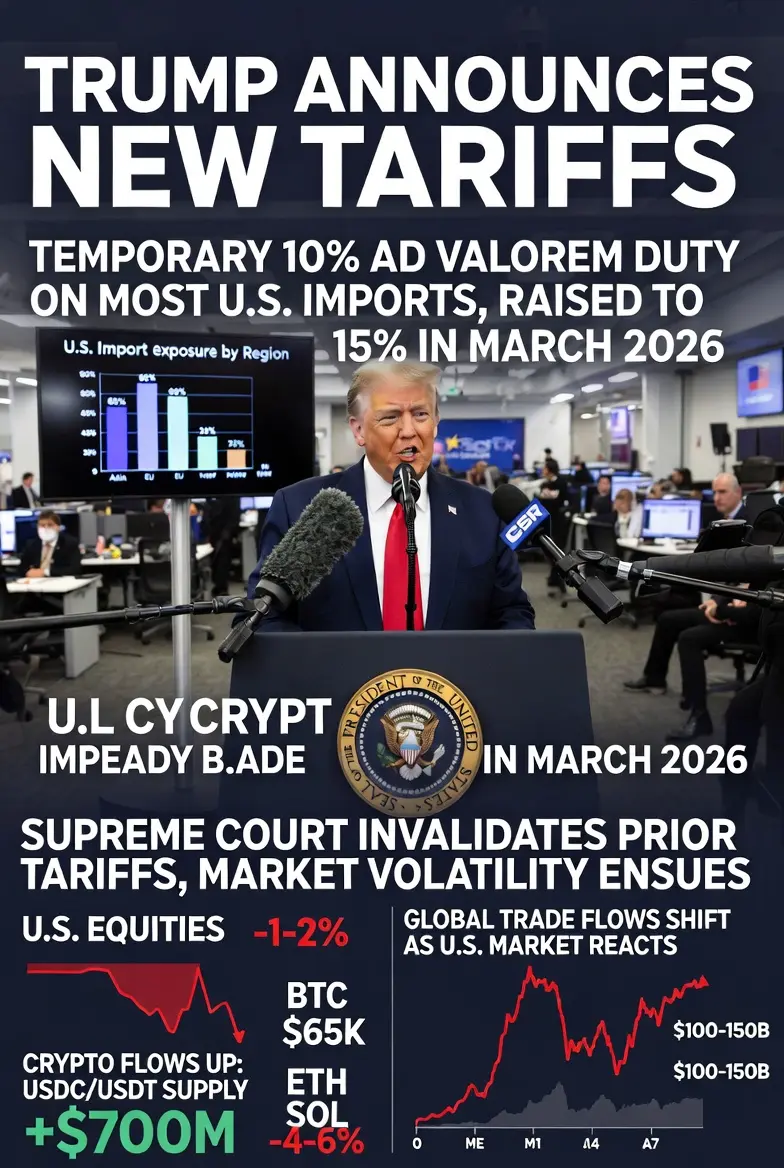
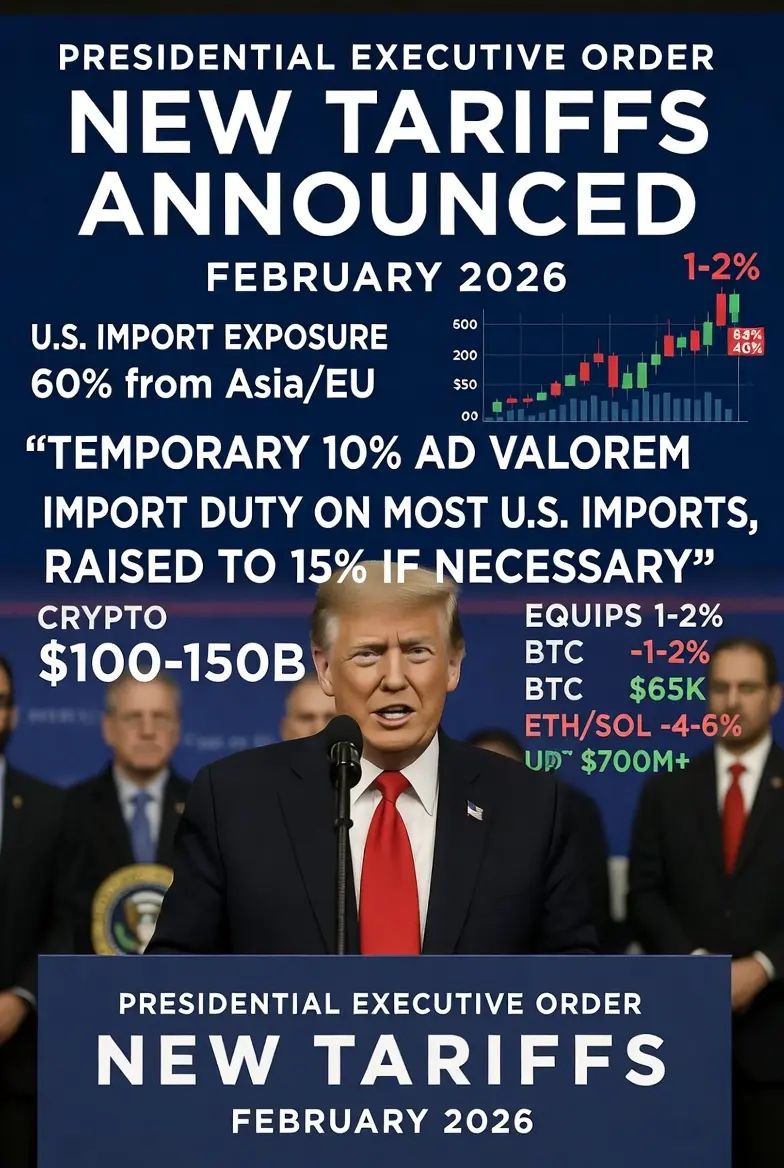
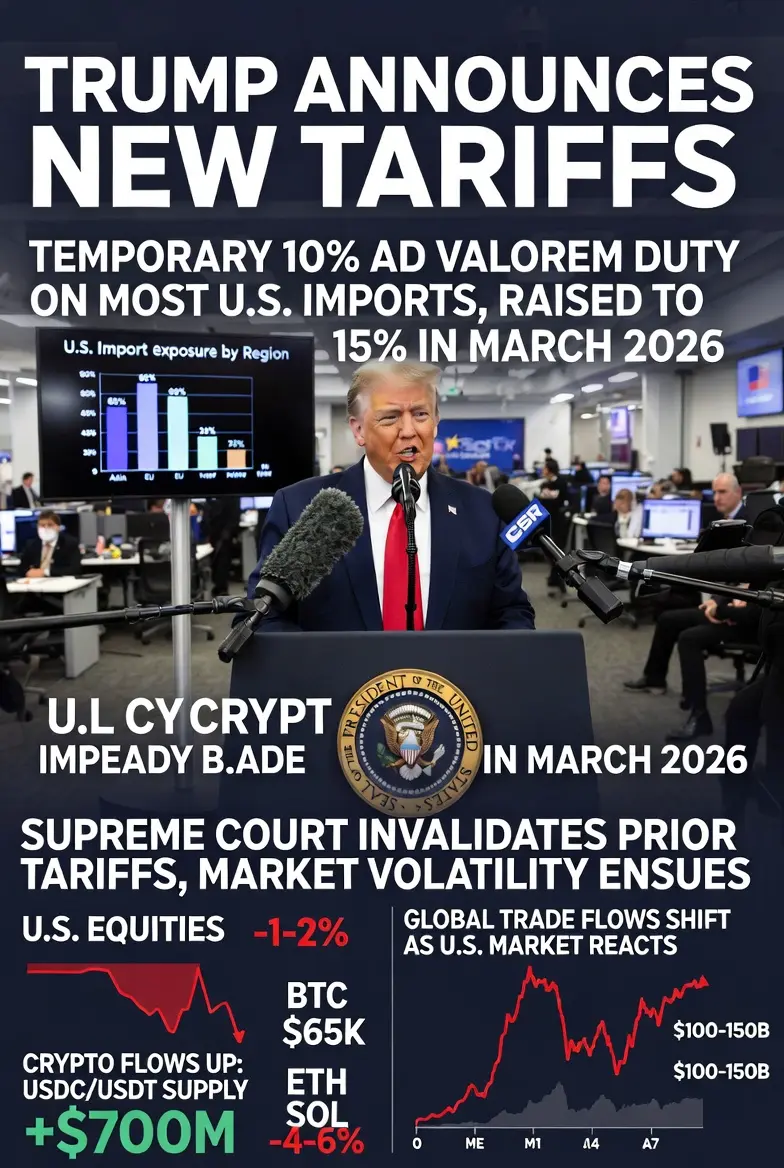
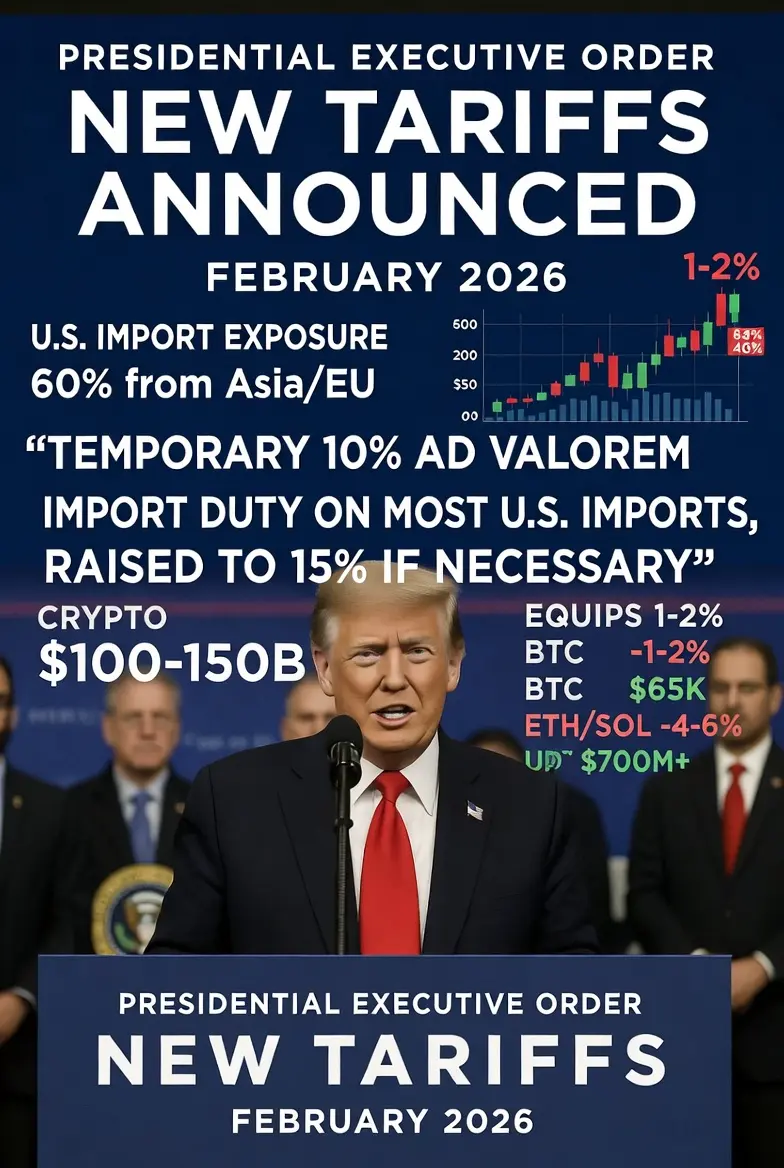
President Donald Trump's February 20, 2026, proclamation imposed a temporary 10% ad valorem import duty on most U.S. imports (effective February 24 at 12:01 a.m. EST), quickly raised to 15% amid weekend statements, using Section 122 of the Trade Act of 1974 after the U.S. Supreme Court struck down prior IEEPA-based tariffs on February 20 in a 6-3 ruling. The 150-day measure addresses trade imbalances and payment issues, with broad exemptions for energy, pharmaceuticals, agriculture, critical minerals, electronics, vehicles, and aerospace to limit domestic harm.
This
BTC-2.38%
ETH-3.57%
SOL-3.5%
HighAmbitionvip
#TrumpAnnouncesNewTariffs
President Donald Trump's February 20, 2026, proclamation imposed a temporary 10% ad valorem import duty on most U.S. imports (effective February 24 at 12:01 a.m. EST), quickly raised to 15% amid weekend statements, using Section 122 of the Trade Act of 1974 after the U.S. Supreme Court struck down prior IEEPA-based tariffs on February 20 in a 6-3 ruling. The 150-day measure addresses trade imbalances and payment issues, with broad exemptions for energy, pharmaceuticals, agriculture, critical minerals, electronics, vehicles, and aerospace to limit domestic harm.
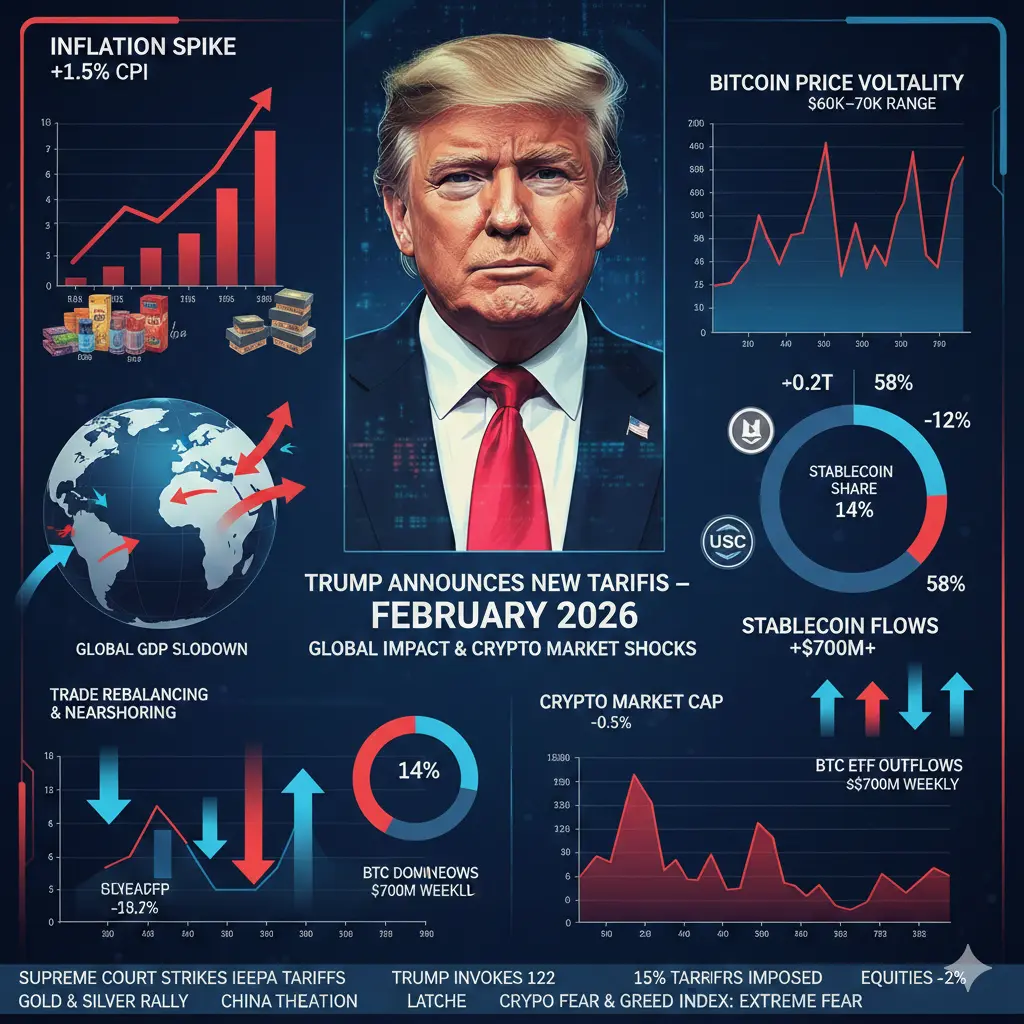
This policy escalation has triggered immediate volatility across equities, commodities, currencies, and crypto, as investors reassess risk, inflation, liquidity, and global trade flows. Crypto markets — particularly Bitcoin and Ethereum — have shown heightened sensitivity, with short-term risk-off rotations, increased stablecoin activity, and shifts in institutional positioning. Below is the maximally extended breakdown: policy details, economic mechanics, sector effects, current market metrics (price, volume, liquidity, percentages), crypto-specific impacts, risks, macro context, and forward scenarios as of February 26, 2026 (early morning PKT).
1. Policy & Legal Mechanics – Full Context
Supreme Court Ruling (Feb 20): Invalidated broad IEEPA tariffs (e.g., "reciprocal" duties from 2025) as exceeding presidential authority; restored congressional primacy over trade.
Immediate Response: Trump invoked Section 122 (Trade Act 1974) for temporary 10% global surcharges (max 15%), no congressional vote needed for 150 days. Rate hiked to 15% over weekend via statements.
Critical minerals/metals, energy/fertilizers, agriculture (beef/tomatoes/oranges), pharmaceuticals, electronics, passenger vehicles/trucks/buses/parts, aerospace, informational materials, donations, personal baggage.
Affected Imports: ~60% of non-exempt goods (~$2.5T annual value), primarily consumer electronics (non-exempt), apparel, machinery, manufactured items from Asia/EU.
Revenue Projection: 10% rate ~$200–300B/year; 15% adds $100–150B; potential long-term shift toward replacing income taxes.
Political Framing: "America First" protectionism to shield workers/manufacturers; midterm leverage; pressure on partners for fairer deals.
2. Economic & Trade Implications – Broad Effects
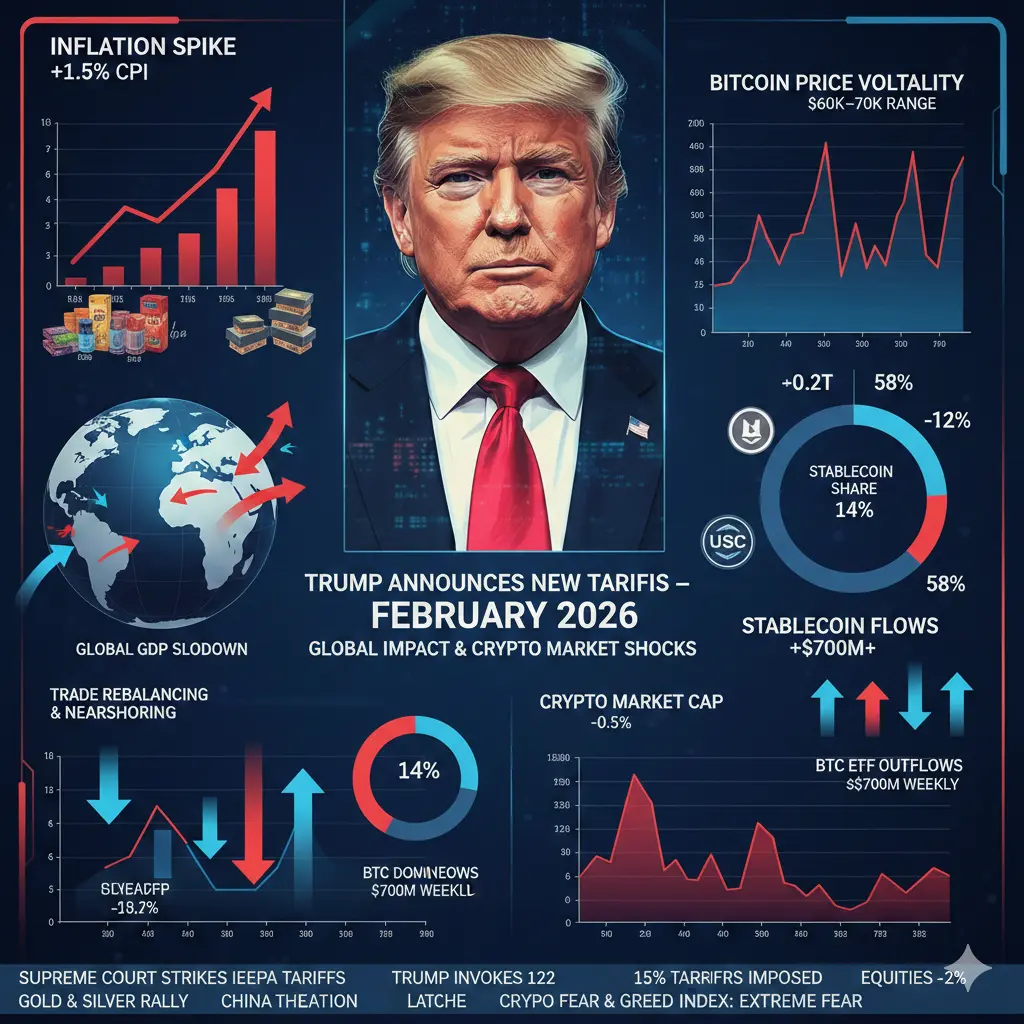
Inflation Dynamics: Adds 0.5–1.5% to core CPI short-term; consumer prices for apparel/electronics up 5–10%.
Growth Trade-Off: IMF-style models suggest 0.2–0.5% U.S. GDP shave; global slowdown risk if retaliation escalates.
Trade Rebalancing: Aims to narrow ~$900B U.S. deficit; encourages nearshoring (Mexico/Canada under USMCA).
Retaliation Potential: EU/China likely countermeasures on U.S. exports (soybeans, aircraft); risk of trade war escalation.
Supply Chain Shifts: Boosts domestic manufacturing; short-term logistics cost spikes.
3. Traditional Market Metrics – Price, Volume, Liquidity, Percentages
Markets showed initial sell-off then partial stabilization; risk-off flows favored safe-havens.
Equity Prices: S&P 500 -1–2% post-announcement; Nasdaq mixed (tech exemptions help); tariff-exposed sectors (retail/auto) -2–4%; domestic steel +3–5%.
Commodity Prices: Oil stable (exempt); gold/silver up 1–4% (safe-haven rotation); agricultural futures mixed.
Currency Moves: USD +0.5–1% vs. EUR/CNY (hawkish signal).
Trading Volume: Global equities +15–30% on announcement day; crypto spot/derivs $100–200B daily peaks.
Liquidity Conditions: Order book depth thinned 10–20% in exposed stocks; slippage higher in volatile sessions.
Percentage Breakdowns:
U.S. import exposure: ~60% non-exempt from Asia/EU.
Revenue Impact: 10–15% rate could cover $300–450B annually.
Sector Hit: Manufacturing/imports ~12–15% U.S. GDP; tariffs affect ~8–10% total imports.
Market Cap Shifts: Vulnerable firms -3–7%; domestic beneficiaries +4–6%.
4. Crypto Market Effects – Direct & Indirect Impacts
Tariffs act as macro risk catalyst: reduced global liquidity, risk-off sentiment, inflation fears, and USD strength pressure risk assets like crypto.
Price Reaction: BTC dipped 3–5%+ initially (below $65K flash crash during weekend low liquidity); ETH/SOL down 4–6%; partial rebound to ~$65K–$68K range as safe-haven narrative emerges. Cycle drawdown deepened (BTC -25% YTD in some reports; -48% from $126K peak).
Volume Surge: Crypto trading volume spiked $100–150B+ on headlines; liquidations $400–500M+ in shorts during whiplash; long positions wiped in weekend rout.
Liquidity Thinning: Order book depth contracted; slippage up in low-liquidity hours; futures OI volatile with deleveraging.
Stablecoin Flows: Increased rotation to USDC/USDT (supply +$700M+ in recent weeks); higher cross-border costs boost stablecoin settlements; USDC minting +$800M+ on Ethereum mainnet.
Institutional Positioning: BTC ETFs net outflows -$700M+ weekly; total AUM ~$95–135B; reversal from inflows earlier in year.
Dominance & Percentage Shifts: BTC dominance 55–60% (up slightly in risk-off); total crypto market cap ~$2.2–2.4T (down 0.3–1% daily on tariff news); stablecoin share ~13–14%.
Broader Crypto Dynamics:
Risk-Off Rotation: Crypto behaves as high-beta risk asset; tariffs reduce global liquidity → pressure on speculative positions.
Hedge Narrative: BTC/gold uptick as inflation hedge; tokenized trade finance/DeFi could gain for tariff avoidance.
Payments/Stablecoins: Cross-border friction boosts blockchain rails; USDC/USDT volume up 10–20% potential.
Sentiment: Fear & Greed in extreme fear (~14–20); social volume high on tariff memes.
5. Risks & Macro Overlay – Interconnected Factors
Inflation/Recession: Tariffs +1–2% CPI risk; growth slowdown if retaliation.
Geopolitical Escalation: China/EU response; U.S.-Iran tensions compound risk-off.
Fed Policy: Hawkish tilt (delayed cuts) from tariff inflation.
Regulatory Spillover: Trade uncertainty delays crypto bills (e.g., CLARITY Act stalled on stablecoin rewards).
Bullish Counters: Domestic manufacturing boost; crypto as non-fiat hedge; stablecoin institutional adoption.
6. Multi-Horizon Scenarios
Short-Term (0–3 Months): Volatility persists; BTC range $60K–$70K; stablecoin volume up; equities/commodities choppy.
Medium-Term (3–12 Months): Trade deficits narrow 5–10%; inflation +1%; crypto benefits from hedge demand if USD strengthens.
Long-Term (1–3 Years): Trade war resolution or escalation; U.S. manufacturing gains vs. global slowdown; blockchain rails gain share in trade finance.
Closing Summary
Trump's February 2026 tariffs (10% launch, 15% hike signaled) — pivoting post-Supreme Court loss — aim to rebalance trade but introduce inflation, volatility, and risk-off pressure. Traditional markets mixed (stocks -1–2%, safe-havens up); crypto hit harder short-term (BTC/ETH dips, liquidations, outflows) via macro channels, though stablecoins and hedge narratives provide offsets.
The policy reinforces protectionism while highlighting crypto's sensitivity to global liquidity and USD strength. Monitor rate hikes, retaliation, inflation data, and ETF flows for next catalysts.
repost-content-media
  • Reward
  • 1
  • Repost
  • Share
HighAmbitionvip:
great 👍👍
#TrumpAnnouncesNewTariffs 📈 The Rebound by the Numbers
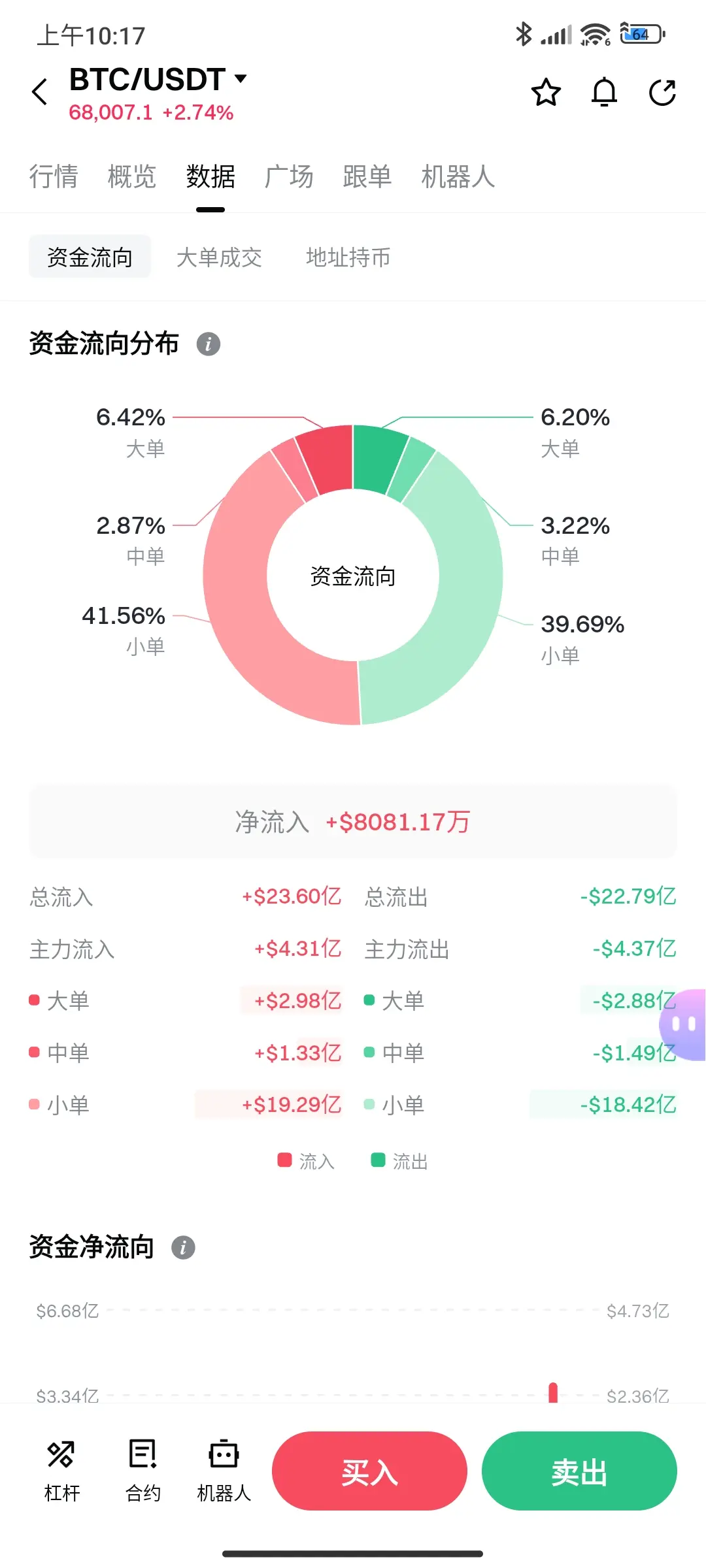
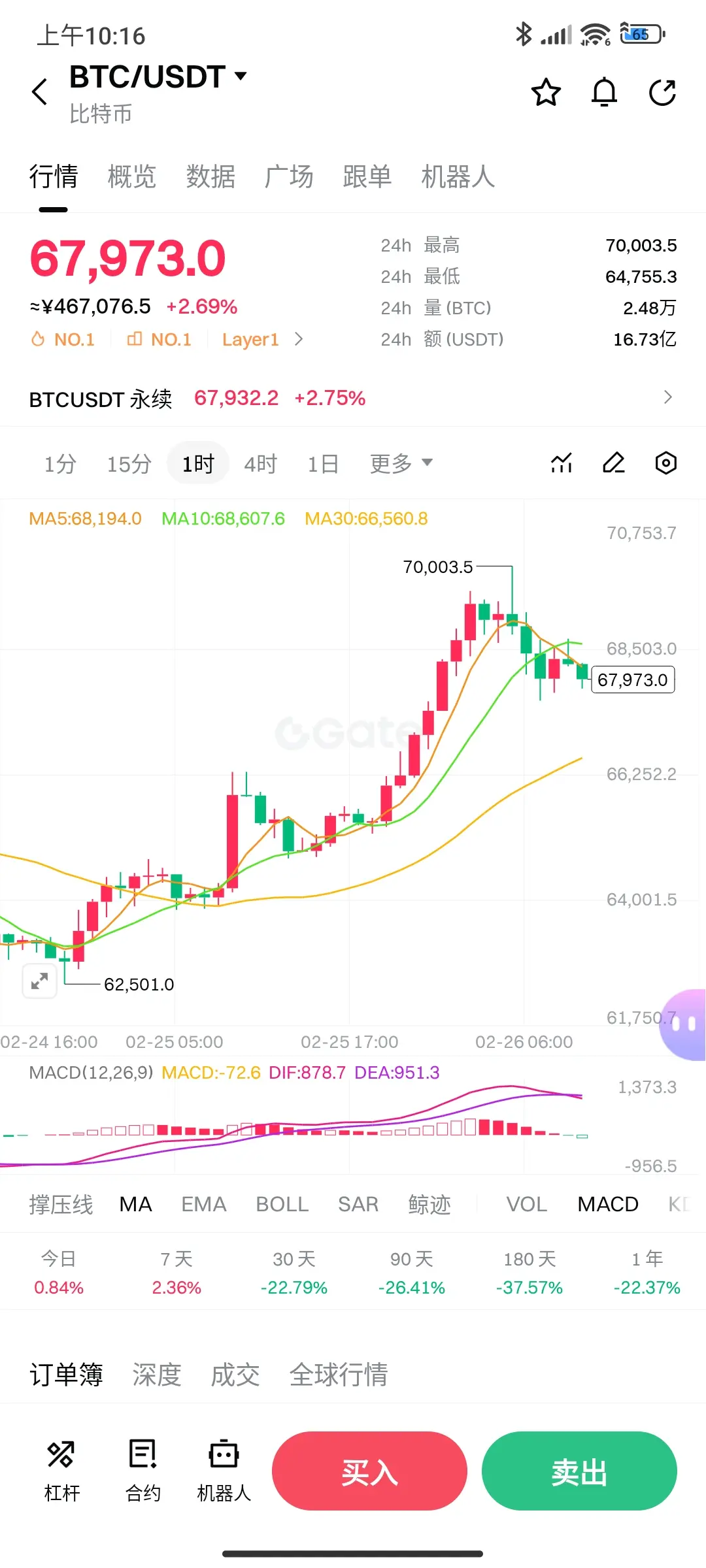
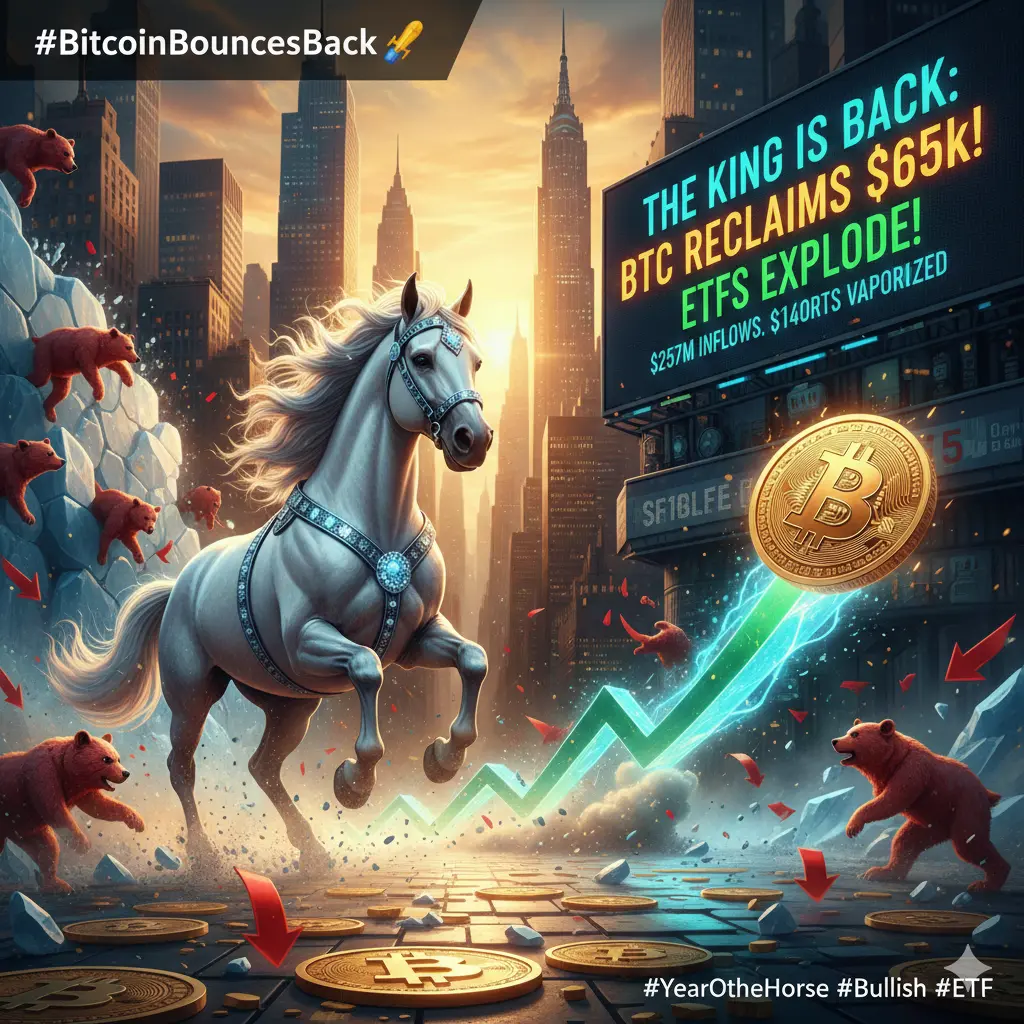
The Price Action: You’re spot on about the reversal. BTC didn't just reclaim $65k; it actually ripped even higher, hitting a 24-hour peak of $69,483. It’s currently hovering around $69,192, showing one of the strongest daily moves since the 50% drawdown started.
ETF Inflows: Your data is solid. We saw $257.7M in net inflows today, snapping a soul-crushing five-week streak of redemptions. Fidelity and BlackRock are definitely back in the driver's seat.
The Liquidation Carnage: It was actually even bloodier for the bears than you thought. O
BTC-2.38%
post-image
post-image
  • Reward
  • 10
  • Repost
  • Share
Yusfirahvip:
Diamond Hands 💎
View More
1. Current Core Levels (as of Feb 26, 2026)
Current price: ~$64,000
Short-term strong support: $60,000
Short-term resistance: $67,000 – $68,000
2. Key Bull/Bear Line
Close above $68,000 and hold: Short-term bearish momentum exhausted, rebound likely
Break below $60,000 and fail to recover: Opens further downside
3. Medium-Term Key Levels
Strong support zone: $55,000 – $60,000
Medium-term reversal signal: Hold above $72,000
4. 4 Critical Signals to Watch
ETF Flows
Consistent outflows → weak trend
2+ consecutive days of inflows → sentiment improves
Price Action
Daily close above $68,000 → bullis
BTC-2.38%
TRUMP-4.38%
post-image
post-image
  • Reward
  • Comment
  • Repost
  • Share
#TrumpAnnouncesNewTariffs
President Donald Trump's February 20, 2026, proclamation imposed a temporary 10% ad valorem import duty on most U.S. imports (effective February 24 at 12:01 a.m. EST), quickly raised to 15% amid weekend statements, using Section 122 of the Trade Act of 1974 after the U.S. Supreme Court struck down prior IEEPA-based tariffs on February 20 in a 6-3 ruling. The 150-day measure addresses trade imbalances and payment issues, with broad exemptions for energy, pharmaceuticals, agriculture, critical minerals, electronics, vehicles, and aerospace to limit domestic harm.
This
BTC-2.38%
ETH-3.57%
SOL-3.5%
post-image
post-image
post-image
  • Reward
  • 10
  • Repost
  • Share
Vortex_Kingvip:
2026 GOGOGO 👊
View More
#TrumpAnnouncesNewTariffs
President Donald Trump's February 20, 2026, proclamation imposed a temporary 10% ad valorem import duty on most U.S. imports (effective February 24 at 12:01 a.m. EST), quickly raised to 15% amid weekend statements, using Section 122 of the Trade Act of 1974 after the U.S. Supreme Court struck down prior IEEPA-based tariffs on February 20 in a 6-3 ruling. The 150-day measure addresses trade imbalances and payment issues, with broad exemptions for energy, pharmaceuticals, agriculture, critical minerals, electronics, vehicles, and aerospace to limit domestic harm.
This
BTC-2.38%
ETH-3.57%
SOL-3.5%
HighAmbitionvip
#TrumpAnnouncesNewTariffs
President Donald Trump's February 20, 2026, proclamation imposed a temporary 10% ad valorem import duty on most U.S. imports (effective February 24 at 12:01 a.m. EST), quickly raised to 15% amid weekend statements, using Section 122 of the Trade Act of 1974 after the U.S. Supreme Court struck down prior IEEPA-based tariffs on February 20 in a 6-3 ruling. The 150-day measure addresses trade imbalances and payment issues, with broad exemptions for energy, pharmaceuticals, agriculture, critical minerals, electronics, vehicles, and aerospace to limit domestic harm.
This policy escalation has triggered immediate volatility across equities, commodities, currencies, and crypto, as investors reassess risk, inflation, liquidity, and global trade flows. Crypto markets — particularly Bitcoin and Ethereum — have shown heightened sensitivity, with short-term risk-off rotations, increased stablecoin activity, and shifts in institutional positioning. Below is the maximally extended breakdown: policy details, economic mechanics, sector effects, current market metrics (price, volume, liquidity, percentages), crypto-specific impacts, risks, macro context, and forward scenarios as of February 26, 2026 (early morning PKT).
1. Policy & Legal Mechanics – Full Context
Supreme Court Ruling (Feb 20): Invalidated broad IEEPA tariffs (e.g., "reciprocal" duties from 2025) as exceeding presidential authority; restored congressional primacy over trade.
Immediate Response: Trump invoked Section 122 (Trade Act 1974) for temporary 10% global surcharges (max 15%), no congressional vote needed for 150 days. Rate hiked to 15% over weekend via statements.
Critical minerals/metals, energy/fertilizers, agriculture (beef/tomatoes/oranges), pharmaceuticals, electronics, passenger vehicles/trucks/buses/parts, aerospace, informational materials, donations, personal baggage.
Affected Imports: ~60% of non-exempt goods (~$2.5T annual value), primarily consumer electronics (non-exempt), apparel, machinery, manufactured items from Asia/EU.
Revenue Projection: 10% rate ~$200–300B/year; 15% adds $100–150B; potential long-term shift toward replacing income taxes.
Political Framing: "America First" protectionism to shield workers/manufacturers; midterm leverage; pressure on partners for fairer deals.
2. Economic & Trade Implications – Broad Effects
Inflation Dynamics: Adds 0.5–1.5% to core CPI short-term; consumer prices for apparel/electronics up 5–10%.
Growth Trade-Off: IMF-style models suggest 0.2–0.5% U.S. GDP shave; global slowdown risk if retaliation escalates.
Trade Rebalancing: Aims to narrow ~$900B U.S. deficit; encourages nearshoring (Mexico/Canada under USMCA).
Retaliation Potential: EU/China likely countermeasures on U.S. exports (soybeans, aircraft); risk of trade war escalation.
Supply Chain Shifts: Boosts domestic manufacturing; short-term logistics cost spikes.
3. Traditional Market Metrics – Price, Volume, Liquidity, Percentages
Markets showed initial sell-off then partial stabilization; risk-off flows favored safe-havens.
Equity Prices: S&P 500 -1–2% post-announcement; Nasdaq mixed (tech exemptions help); tariff-exposed sectors (retail/auto) -2–4%; domestic steel +3–5%.
Commodity Prices: Oil stable (exempt); gold/silver up 1–4% (safe-haven rotation); agricultural futures mixed.
Currency Moves: USD +0.5–1% vs. EUR/CNY (hawkish signal).
Trading Volume: Global equities +15–30% on announcement day; crypto spot/derivs $100–200B daily peaks.
Liquidity Conditions: Order book depth thinned 10–20% in exposed stocks; slippage higher in volatile sessions.
Percentage Breakdowns:
U.S. import exposure: ~60% non-exempt from Asia/EU.
Revenue Impact: 10–15% rate could cover $300–450B annually.
Sector Hit: Manufacturing/imports ~12–15% U.S. GDP; tariffs affect ~8–10% total imports.
Market Cap Shifts: Vulnerable firms -3–7%; domestic beneficiaries +4–6%.
4. Crypto Market Effects – Direct & Indirect Impacts
Tariffs act as macro risk catalyst: reduced global liquidity, risk-off sentiment, inflation fears, and USD strength pressure risk assets like crypto.
Price Reaction: BTC dipped 3–5%+ initially (below $65K flash crash during weekend low liquidity); ETH/SOL down 4–6%; partial rebound to ~$65K–$68K range as safe-haven narrative emerges. Cycle drawdown deepened (BTC -25% YTD in some reports; -48% from $126K peak).
Volume Surge: Crypto trading volume spiked $100–150B+ on headlines; liquidations $400–500M+ in shorts during whiplash; long positions wiped in weekend rout.
Liquidity Thinning: Order book depth contracted; slippage up in low-liquidity hours; futures OI volatile with deleveraging.
Stablecoin Flows: Increased rotation to USDC/USDT (supply +$700M+ in recent weeks); higher cross-border costs boost stablecoin settlements; USDC minting +$800M+ on Ethereum mainnet.
Institutional Positioning: BTC ETFs net outflows -$700M+ weekly; total AUM ~$95–135B; reversal from inflows earlier in year.
Dominance & Percentage Shifts: BTC dominance 55–60% (up slightly in risk-off); total crypto market cap ~$2.2–2.4T (down 0.3–1% daily on tariff news); stablecoin share ~13–14%.
Broader Crypto Dynamics:
Risk-Off Rotation: Crypto behaves as high-beta risk asset; tariffs reduce global liquidity → pressure on speculative positions.
Hedge Narrative: BTC/gold uptick as inflation hedge; tokenized trade finance/DeFi could gain for tariff avoidance.
Payments/Stablecoins: Cross-border friction boosts blockchain rails; USDC/USDT volume up 10–20% potential.
Sentiment: Fear & Greed in extreme fear (~14–20); social volume high on tariff memes.
5. Risks & Macro Overlay – Interconnected Factors
Inflation/Recession: Tariffs +1–2% CPI risk; growth slowdown if retaliation.
Geopolitical Escalation: China/EU response; U.S.-Iran tensions compound risk-off.
Fed Policy: Hawkish tilt (delayed cuts) from tariff inflation.
Regulatory Spillover: Trade uncertainty delays crypto bills (e.g., CLARITY Act stalled on stablecoin rewards).
Bullish Counters: Domestic manufacturing boost; crypto as non-fiat hedge; stablecoin institutional adoption.
6. Multi-Horizon Scenarios
Short-Term (0–3 Months): Volatility persists; BTC range $60K–$70K; stablecoin volume up; equities/commodities choppy.
Medium-Term (3–12 Months): Trade deficits narrow 5–10%; inflation +1%; crypto benefits from hedge demand if USD strengthens.
Long-Term (1–3 Years): Trade war resolution or escalation; U.S. manufacturing gains vs. global slowdown; blockchain rails gain share in trade finance.
Closing Summary
Trump's February 2026 tariffs (10% launch, 15% hike signaled) — pivoting post-Supreme Court loss — aim to rebalance trade but introduce inflation, volatility, and risk-off pressure. Traditional markets mixed (stocks -1–2%, safe-havens up); crypto hit harder short-term (BTC/ETH dips, liquidations, outflows) via macro channels, though stablecoins and hedge narratives provide offsets.
The policy reinforces protectionism while highlighting crypto's sensitivity to global liquidity and USD strength. Monitor rate hikes, retaliation, inflation data, and ETF flows for next catalysts.
repost-content-media
  • Reward
  • 1
  • Repost
  • Share
softwaredynamismvip:
Has the market priced this in
🇺🇸 #TrumpAnnouncesNewTariffs — 5 Smart Tips to Navigate Market Volatility
The new tariff announcement by Donald Trump has increased uncertainty across equities, commodities, and crypto markets. When macro shocks hit, strategy matters more than emotion.
Here are 5 practical tips to stay prepared:
1️⃣ Reduce Excess Leverage
Tariff-driven volatility causes sudden 3–10% swings in hours.
Lower leverage or shift partially to spot positions to avoid forced liquidations.
2️⃣ Watch Inflation & Fed Signals
Tariffs can push inflation higher. Monitor CPI data and Federal Reserve commentary — delayed rat
BTC-2.38%
ETH-3.57%
post-image
post-image
post-image
  • Reward
  • 4
  • Repost
  • Share
Farqana777vip:
Jump in 🚀
View More
#TrumpAnnouncesNewTariffs
A Major Shift in Global Trade Policy
Global markets reacted swiftly after former U.S. President Donald Trump announced plans for new tariffs on imported goods. The proposal signals a return to protectionist trade policies aimed at strengthening domestic manufacturing, reducing reliance on foreign supply chains, and addressing trade imbalances. Whether implemented immediately or used as a negotiation tool, the announcement has already triggered volatility across commodities, currencies, equities, and digital assets.
Tariffs are essentially taxes imposed on imported p
post-image
post-image
  • Reward
  • 9
  • Repost
  • Share
HighAmbitionvip:
1000x VIbes 🤑
View More
#TrumpAnnouncesNewTariffs Tariff Shockwave 2.0: Global Liquidity Repricing Enters a New Phase
The latest tariff announcement from Donald Trump has reactivated a powerful macro catalyst across global markets. Trade policy is no longer a background headline — it has moved to the center of liquidity repricing. While tariffs traditionally impact equities, commodities, and foreign exchange first, crypto markets now sit directly within the global liquidity transmission chain. This is not just a policy update. It is a volatility expansion trigger with cross-asset consequences.
Markets are entering a
BTC-2.38%
MrFlower_XingChenvip
#TrumpAnnouncesNewTariffs Tariff Shockwave 2.0: Global Liquidity Repricing Enters a New Phase
The latest tariff announcement from Donald Trump has reactivated a powerful macro catalyst across global markets. Trade policy is no longer a background headline — it has moved to the center of liquidity repricing. While tariffs traditionally impact equities, commodities, and foreign exchange first, crypto markets now sit directly within the global liquidity transmission chain. This is not just a policy update. It is a volatility expansion trigger with cross-asset consequences.
Markets are entering a phase where macro headlines override short-term technical structure. When geopolitical trade friction rises, capital does not immediately rotate into risk assets — it first contracts, consolidates, and then selectively reallocates.
The Updated Macro Transmission Channels
Tariffs now influence markets through broader and more interconnected pathways than in previous cycles.
1. Corporate Margin Compression & Earnings Risk
Higher import costs raise production expenses. Multinational firms face margin pressure, leading to downward earnings revisions. Equity markets typically price this risk rapidly, increasing volatility in major indices.
2. USD Liquidity Tightening
Trade tensions often create short-term demand for the U.S. dollar as a perceived safe currency. A stronger dollar tightens global financial conditions, especially in emerging markets with dollar-denominated debt. This indirectly impacts crypto liquidity because global risk appetite weakens.
3. Treasury Yield & Rate Expectations
If tariffs increase inflation expectations, bond markets may price prolonged higher rates. Elevated yields reduce speculative appetite and pressure high-beta assets, including altcoins.
4. Risk Correlation Recalibration
Crypto’s correlation with equities tends to spike during initial macro stress. Only later — if narrative strength builds — does decoupling emerge.
Historically, crypto does not immediately act as a safe haven. The first reaction is defensive liquidity behavior.
Immediate Crypto Reaction Model (Updated)
Short-Term Window: 0–72 Hours
BTC shows relative strength against altcoins
Stablecoin dominance increases
Derivatives funding rates become unstable
Open interest spikes without sustained trend
Liquidation clusters form around leveraged zones
Altcoins typically underperform in early macro shock phases because traders consolidate capital into deeper liquidity pools such as BTC and stablecoins.
On major exchanges, macro-driven repositioning often creates rapid OI expansion without price confirmation — a classic precursor to volatility spikes.
On-Chain Metrics to Watch
Beyond price action, on-chain signals now provide early macro stress indicators:
Exchange inflows increasing → potential sell pressure
Stablecoin minting acceleration → defensive positioning
Whale wallet inactivity → large players waiting for clarity
Derivatives long/short imbalance → crowd positioning risk
If stablecoin supply rises while BTC holds structure, it may signal capital preparing for redeployment rather than exit.
Liquidity Phases in a Tariff-Driven Cycle
Phase 1 — Defensive Liquidity (Current Risk Zone)
Spreads widen. Order books thin. Funding flips quickly. Wick-driven fake breakouts dominate. This stage is narrative-driven and unstable. Traders react emotionally to headlines.
Phase 2 — Structured Volatility
Volatility compresses after liquidation events. Arbitrage desks and institutional participants re-enter. Directional expansion begins with clearer trend formation.
Phase 3 — Macro Hedge Narrative (Conditional)
If trade tensions escalate meaningfully:
Equity volatility sustains
Gold strengthens
USD momentum slows after initial spike
BTC begins rising independently of equities
This is the stage where crypto can transition into a macro hedge cycle.
Cross-Market Correlation Monitoring
To assess sustainability, traders should monitor:
BTC vs Nasdaq futures
BTC vs U.S. Dollar Index (DXY)
Gold reaction to trade stress
Emerging market FX weakness
U.S. Treasury yield movements
If BTC falls alongside equities, the move reflects liquidity contraction.
If BTC rises while equities weaken, capital rotation into alternative assets may be forming.
Expanded Forward Scenarios
Scenario A: Escalation Cycle
If tariffs expand into broader retaliation: Global growth expectations decline.
Equity volatility persists.
Capital seeks non-sovereign alternatives.
Crypto liquidity inflows increase.
In this environment, BTC dominance rises first. Altcoin rotation follows only after macro stability forms.
Scenario B: Negotiation Leverage
If markets interpret tariffs as temporary pressure tactics: Equity markets stabilize.
USD momentum softens.
Crypto returns to technical-driven structure.
Altcoins gradually recover.
Strategic Positioning Framework
BTC before altcoins — liquidity concentrates in majors first.
Monitor open interest — rising OI without price continuation signals instability.
Avoid chasing headline spikes — tariff moves often retrace after liquidity normalization.
Track stablecoin flows — inflows signal defense, outflows signal redeployment.
Respect funding extremes — crowded positioning increases liquidation probability.
Volatility Forecast Window
Next 24–72 Hours:
Reactive volatility, funding instability, sharp wicks.
Next 1–3 Weeks:
Trend clarity depends on equity resilience, USD strength, and bond market reaction.
Next 1–2 Months (If Escalation Continues):
Potential transition into macro-driven crypto expansion cycle — but only if BTC decouples from equities and liquidity rotates rather than contracts.
Final Assessment
Tariff announcements shift markets from technical structure to macro narrative dominance. At present, this remains a volatility event — not yet a confirmed structural trend shift.
Confirmation requires:
Sustained BTC strength relative to equities
Stabilizing funding conditions
Liquidity redeployment from stablecoins into majors
Cross-market divergence
Until those signals appear, expect instability, false breakouts, and liquidity-driven price action.
Macro narratives begin with chaos — structure follows only after liquidation clears excess leverage.
repost-content-media
  • Reward
  • 4
  • Repost
  • Share
ybaservip:
2026 GOGOGO 👊
View More
#TrumpAnnouncesNewTariffs Tariff Shockwave 2.0: Global Liquidity Repricing Enters a New Phase
The latest tariff announcement from Donald Trump has reactivated a powerful macro catalyst across global markets. Trade policy is no longer a background headline — it has moved to the center of liquidity repricing. While tariffs traditionally impact equities, commodities, and foreign exchange first, crypto markets now sit directly within the global liquidity transmission chain. This is not just a policy update. It is a volatility expansion trigger with cross-asset consequences.
Markets are entering a
BTC-2.38%
MrFlower_XingChenvip
#TrumpAnnouncesNewTariffs Tariff Shockwave 2.0: Global Liquidity Repricing Enters a New Phase
The latest tariff announcement from Donald Trump has reactivated a powerful macro catalyst across global markets. Trade policy is no longer a background headline — it has moved to the center of liquidity repricing. While tariffs traditionally impact equities, commodities, and foreign exchange first, crypto markets now sit directly within the global liquidity transmission chain. This is not just a policy update. It is a volatility expansion trigger with cross-asset consequences.
Markets are entering a phase where macro headlines override short-term technical structure. When geopolitical trade friction rises, capital does not immediately rotate into risk assets — it first contracts, consolidates, and then selectively reallocates.
The Updated Macro Transmission Channels
Tariffs now influence markets through broader and more interconnected pathways than in previous cycles.
1. Corporate Margin Compression & Earnings Risk
Higher import costs raise production expenses. Multinational firms face margin pressure, leading to downward earnings revisions. Equity markets typically price this risk rapidly, increasing volatility in major indices.
2. USD Liquidity Tightening
Trade tensions often create short-term demand for the U.S. dollar as a perceived safe currency. A stronger dollar tightens global financial conditions, especially in emerging markets with dollar-denominated debt. This indirectly impacts crypto liquidity because global risk appetite weakens.
3. Treasury Yield & Rate Expectations
If tariffs increase inflation expectations, bond markets may price prolonged higher rates. Elevated yields reduce speculative appetite and pressure high-beta assets, including altcoins.
4. Risk Correlation Recalibration
Crypto’s correlation with equities tends to spike during initial macro stress. Only later — if narrative strength builds — does decoupling emerge.
Historically, crypto does not immediately act as a safe haven. The first reaction is defensive liquidity behavior.
Immediate Crypto Reaction Model (Updated)
Short-Term Window: 0–72 Hours
BTC shows relative strength against altcoins
Stablecoin dominance increases
Derivatives funding rates become unstable
Open interest spikes without sustained trend
Liquidation clusters form around leveraged zones
Altcoins typically underperform in early macro shock phases because traders consolidate capital into deeper liquidity pools such as BTC and stablecoins.
On major exchanges, macro-driven repositioning often creates rapid OI expansion without price confirmation — a classic precursor to volatility spikes.
On-Chain Metrics to Watch
Beyond price action, on-chain signals now provide early macro stress indicators:
Exchange inflows increasing → potential sell pressure
Stablecoin minting acceleration → defensive positioning
Whale wallet inactivity → large players waiting for clarity
Derivatives long/short imbalance → crowd positioning risk
If stablecoin supply rises while BTC holds structure, it may signal capital preparing for redeployment rather than exit.
Liquidity Phases in a Tariff-Driven Cycle
Phase 1 — Defensive Liquidity (Current Risk Zone)
Spreads widen. Order books thin. Funding flips quickly. Wick-driven fake breakouts dominate. This stage is narrative-driven and unstable. Traders react emotionally to headlines.
Phase 2 — Structured Volatility
Volatility compresses after liquidation events. Arbitrage desks and institutional participants re-enter. Directional expansion begins with clearer trend formation.
Phase 3 — Macro Hedge Narrative (Conditional)
If trade tensions escalate meaningfully:
Equity volatility sustains
Gold strengthens
USD momentum slows after initial spike
BTC begins rising independently of equities
This is the stage where crypto can transition into a macro hedge cycle.
Cross-Market Correlation Monitoring
To assess sustainability, traders should monitor:
BTC vs Nasdaq futures
BTC vs U.S. Dollar Index (DXY)
Gold reaction to trade stress
Emerging market FX weakness
U.S. Treasury yield movements
If BTC falls alongside equities, the move reflects liquidity contraction.
If BTC rises while equities weaken, capital rotation into alternative assets may be forming.
Expanded Forward Scenarios
Scenario A: Escalation Cycle
If tariffs expand into broader retaliation: Global growth expectations decline.
Equity volatility persists.
Capital seeks non-sovereign alternatives.
Crypto liquidity inflows increase.
In this environment, BTC dominance rises first. Altcoin rotation follows only after macro stability forms.
Scenario B: Negotiation Leverage
If markets interpret tariffs as temporary pressure tactics: Equity markets stabilize.
USD momentum softens.
Crypto returns to technical-driven structure.
Altcoins gradually recover.
Strategic Positioning Framework
BTC before altcoins — liquidity concentrates in majors first.
Monitor open interest — rising OI without price continuation signals instability.
Avoid chasing headline spikes — tariff moves often retrace after liquidity normalization.
Track stablecoin flows — inflows signal defense, outflows signal redeployment.
Respect funding extremes — crowded positioning increases liquidation probability.
Volatility Forecast Window
Next 24–72 Hours:
Reactive volatility, funding instability, sharp wicks.
Next 1–3 Weeks:
Trend clarity depends on equity resilience, USD strength, and bond market reaction.
Next 1–2 Months (If Escalation Continues):
Potential transition into macro-driven crypto expansion cycle — but only if BTC decouples from equities and liquidity rotates rather than contracts.
Final Assessment
Tariff announcements shift markets from technical structure to macro narrative dominance. At present, this remains a volatility event — not yet a confirmed structural trend shift.
Confirmation requires:
Sustained BTC strength relative to equities
Stabilizing funding conditions
Liquidity redeployment from stablecoins into majors
Cross-market divergence
Until those signals appear, expect instability, false breakouts, and liquidity-driven price action.
Macro narratives begin with chaos — structure follows only after liquidation clears excess leverage.
repost-content-media
  • Reward
  • 1
  • Repost
  • Share
Yunnavip:
To The Moon 🌕
Load More
Trade Crypto Anywhere Anytime
qrCode
Scan to download Gate App
Community
English
  • 简体中文
  • English
  • Tiếng Việt
  • 繁體中文
  • Español
  • Русский язык
  • Français
  • Deutsch
  • Português (Portugal)
  • ภาษาไทย
  • Indonesia
  • 日本語
  • بالعربية
  • Українська
  • Português (Brasil)