The Most Expensive NFTs: Decoding the Value Logic Behind Digital Art and Crypto Culture

Beginner
Quick Reads
Last Updated 2026-03-28 01:25:38
Reading Time: 1m
The highest-priced NFTs reflect not only the market’s intense valuations, but also signal deep transformations in digital ownership, community trust, and the broader crypto culture. Iconic works such as Beeple’s “Everydays” and Pak’s “Merge” exemplify how NFTs have evolved from art collectibles into financial assets and cultural symbols.

NFT: From Collectibles Craze to Value System Restructuring

In the history of blockchain, NFTs (Non-Fungible Tokens) have moved far beyond the scope of speculative collectibles. They represent a revolution in digital ownership, enabling the uniqueness and scarcity of works to be cryptographically verified, recorded, and traded for the first time.

Since 2021, the NFT market has seen explosive growth. According to DappRadar, annual NFT trading volume once surpassed $25 billion. Yet, what truly captivates is not just the surge in trading volume, but the value logic revealed by the most expensive NFTs.

The Most Expensive NFT Cases

1. “Merge” by Pak

Sale Price: $91.8 million (2021, Nifty Gateway)

Purchased collectively by over 28,000 buyers, this piece became one of the most expensive NFTs ever, embodying a “decentralized co-ownership” value model.

2. “Everydays: The First 5000 Days” by Beeple

Sale Price: $69.3 million (Christie’s Auction)

This sale marked the first intersection of a traditional art auction powerhouse with blockchain technology, symbolizing digital art’s entry into the mainstream market.

3. “Clock” by Pak x AssangeDAO

Sale Price: $52.7 million (Sotheby’s)

This work merges social activism with crypto art, demonstrating the parallel significance of artistic value and political symbolism.

4. “HUMAN ONE” by Beeple

Sale Price: $29 million

Combining physical installation with digital media, it highlights the potential for NFTs to interact with traditional art forms.

5. CryptoPunk #5822

Sale Price: $23.7 million

As the rarest of the “Alien” characters, it represents the early crypto community’s core beliefs and status symbols. Deepak Thapliyal, CEO of blockchain firm Chain, later confirmed on X that he purchased this highest-priced Cryptopunk avatar.
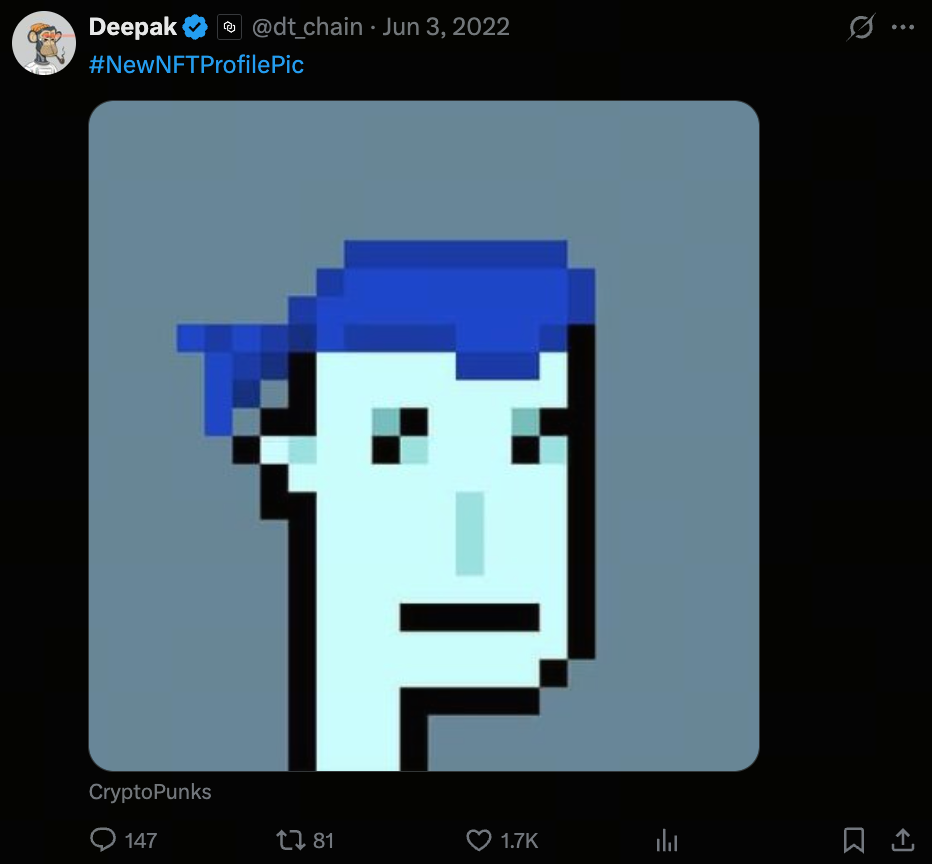

(Source: dt_chain)

The high prices of these pieces are not just about collector mania—they are a concentrated reflection of community identity, narrative authority, and digital cultural capital.

Value Creation Mechanisms

NFT price fluctuations are often attributed to market sentiment, but the underlying logic is far more complex. The value of NFTs is mainly derived from four dimensions:

  • Scarcity: The uniqueness of each NFT forms the foundation of its value.
  • Creator Reputation: Artists like Beeple and Pak have become icons of the Web3 era.
  • Community Effect: Collecting NFTs strongly reinforces community identity.
  • Cultural Narrative: NFTs represent a new cultural language of status, akin to masterpieces in traditional art.

As a result, the most expensive NFTs are not just market phenomena—they are extensions of a cultural movement.

New Directions for NFTs

As technology and use cases mature, NFTs are evolving beyond single-purpose collectibles toward multi-asset functionality. In the future, NFTs may represent not only digital artworks, but also:

  • Tokenized representations of Real World Assets (RWA), such as real estate, bonds, and music copyrights.
  • Ownership units for AI-Generated Content (AIGC), providing traceability and revenue attribution for AI creations.
  • Cross-platform asset identity credentials, enabling NFTs to circulate and interoperate across multiple blockchains.

NFTs are no longer just collectibles; they are becoming programmable, verifiable digital assets.

If you want to explore more Web3 content, click to register: https://www.gate.com/

Conclusion

When we review these record-breaking NFT transactions, the real significance lies not in the prices themselves, but in the transformation they herald: a new era of digital identity, trust mechanisms, and cultural belonging is emerging. NFTs are the language of the Web3 world and the nexus of culture and finance. The most expensive NFTs may only mark the beginning of this movement; their true value will unfold in future applications and community-driven economies.

Author: Allen
Disclaimer
* The information is not intended to be and does not constitute financial advice or any other recommendation of any sort offered or endorsed by Gate.
* This article may not be reproduced, transmitted or copied without referencing Gate. Contravention is an infringement of Copyright Act and may be subject to legal action.

Related Articles

AI-Native Settlement Layers: How United Stables Is Building the Next Financial Rail
Beginner

AI-Native Settlement Layers: How United Stables Is Building the Next Financial Rail

Stablecoins were originally designed as dollar substitutes within exchanges, primarily used for asset pricing and trade settlement. As on-chain financial ecosystems have matured, their role has expanded beyond simple payments to include collateral assets, cross-chain liquidity mediums, and unified settlement units. In particular, as AI systems and automated agents begin to participate directly in economic activity, demand has risen sharply for programmable value units capable of instant settlement. This shift is pushing stablecoins toward the role of foundational financial infrastructure.
2026-03-25 03:16:17
DePIN Identity Network and Real World Applications: How Humanity Protocol Brings on-chain Identity Into the Physical World
Beginner

DePIN Identity Network and Real World Applications: How Humanity Protocol Brings on-chain Identity Into the Physical World

Most Web3 identity systems remain confined to on-chain environments and struggle to achieve meaningful adoption in real world settings. Through a DePIN architecture and physical verification hardware, Humanity Protocol aims to bring decentralized identity into access control systems, hospitality, public services, and offline events, allowing on-chain identity to function not just as a digital credential, but as foundational infrastructure for real world access.
2026-03-25 07:40:53
Gold Price Forecast for the Next Five Years: 2026–2030 Trend Outlook and Investment Implications, Could It Reach $6,000?
Beginner

Gold Price Forecast for the Next Five Years: 2026–2030 Trend Outlook and Investment Implications, Could It Reach $6,000?

Analyze current gold price trends alongside authoritative five-year forecasts, integrating an evaluation of market risks and opportunities. This gives investors insight into the potential trajectory of gold prices and the main drivers expected to shape the market over the next five years.
2026-03-25 18:13:30
Aster vs Hyperliquid: Which Perp DEX Will Prevail?
Beginner

Aster vs Hyperliquid: Which Perp DEX Will Prevail?

Aster and Hyperliquid are the two representative protocols of the "purpose-built L1 path" within the current decentralized perpetual exchange (Perp DEX) sector. As a pioneer in the field, Hyperliquid has built a deep liquidity moat through its highly mature order book architecture and strong community consensus. Conversely, Aster, as a rising challenger, seeks to leapfrog the competition in high-performance trading through more aggressive multi-chain aggregation logic, private transaction modules, and an underlying execution environment optimized for 2026 market demands.
2026-03-24 11:58:33
Aerodrome Tokenomics: How ve(3,3) Powers Base's Most Profitable DEX
Beginner

Aerodrome Tokenomics: How ve(3,3) Powers Base's Most Profitable DEX

AERO is the native token of Aerodrome Finance, a core decentralized exchange and liquidity protocol in the Base ecosystem. It is primarily used for liquidity incentives and ecosystem operations. veAERO is a governance NFT that users receive by locking AERO, representing both voting power and the right to share protocol revenue. Through a dual track structure of AERO as a utility token and veAERO as a governance credential, Aerodrome separates liquidity usage value from long term governance power, allowing participants to act as liquidity providers, governance decision makers, and revenue sharers within the same system.
2026-03-25 06:40:31
The ve(3,3) Flywheel Explained: How AERO Tokenomics Powers Aerodrome’s DeFi Economy
Beginner

The ve(3,3) Flywheel Explained: How AERO Tokenomics Powers Aerodrome’s DeFi Economy

In the competition for DeFi liquidity, high-inflation mining alone is no longer enough to build lasting advantages. Aerodrome applies the ve(3,3) economic model to redesign token emissions, voting mechanisms, and revenue distribution, creating a liquidity flywheel centered on governance and cash flow. This article examines AERO tokenomics, the veAERO locking mechanism, and protocol revenue models to explain how Aerodrome builds a sustainable DeFi economic system.
2026-03-25 06:41:58





