What Is Quantitative Tightening (QT)?
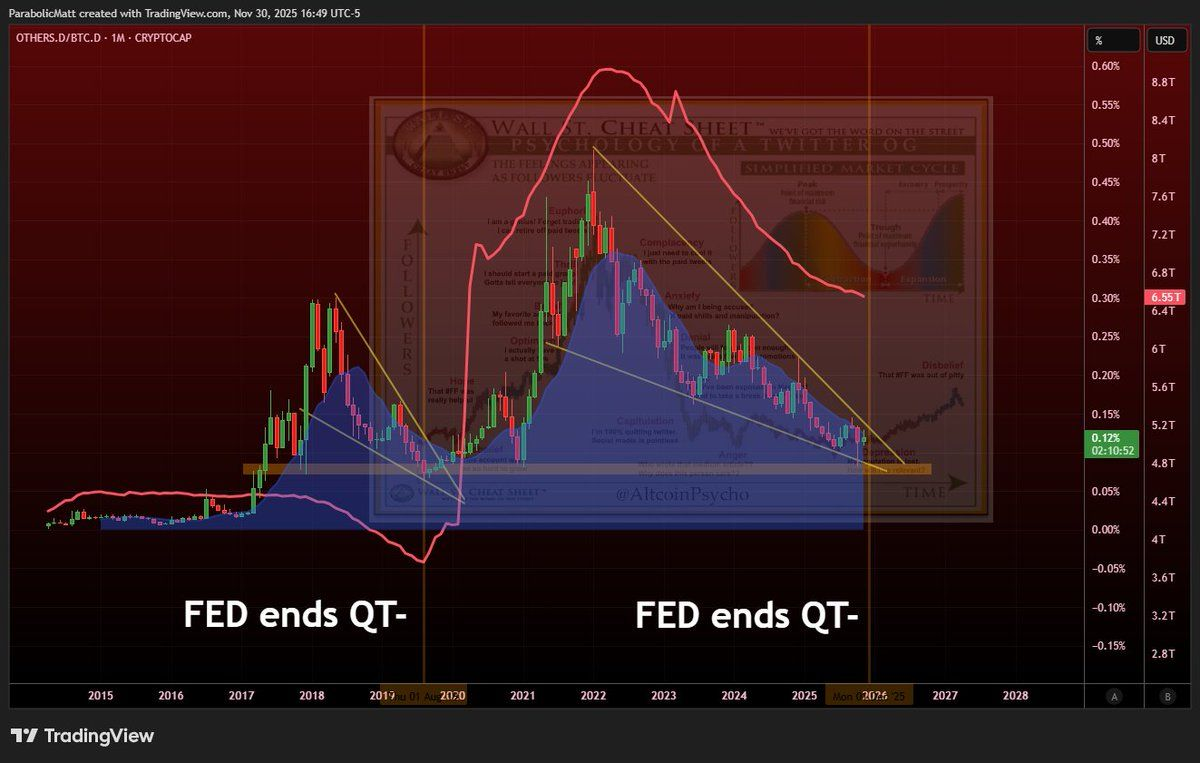
Source: https://beincrypto.com/fed-qt-end-may-trigger-altcoin-rally/
Quantitative Tightening (QT) is a monetary policy tool used by central banks to reduce liquidity and the money supply in the financial system by shrinking their balance sheets. This is accomplished by selling, or choosing not to reinvest in, government bonds and mortgage-backed securities (MBS) held by the central bank.
Beginning in 2022, to address inflationary pressures caused by the monetary easing during the pandemic, the Federal Reserve halted its previous large-scale asset purchases (Quantitative Easing, QE) and started allowing maturing government bonds and MBS to roll off its balance sheet without reinvestment. This process gradually reduced the Fed’s total assets.
Why Did the Federal Reserve Decide to End QT?
- Liquidity pressures: As QT continued over recent years, bank reserves and overall system liquidity declined, tightening conditions in short-term funding markets like repos and overnight lending. Recently, indicators such as the Secured Overnight Financing Rate (SOFR) have repeatedly exceeded the central bank’s upper limit, signaling that liquidity is approaching a critical threshold.
- Preventing market dysfunction: Both the Federal Reserve and many market participants have expressed concern that further balance sheet reduction could trigger a liquidity crunch reminiscent of the 2019 repo market crisis.
- Timely policy shift: The minutes from the Federal Reserve’s November 2025 meeting revealed that policymakers believed it was time to pause QT, even though the balance sheet remained well above pre-pandemic levels.
Consequently, the Federal Reserve officially ended QT on December 1, 2025, capping its balance sheet at around $6.5 trillion.
Potential Effects of Ending QT on Financial Markets
Liquidity improvement may benefit interest rates and risk assets
- Halting balance sheet reduction will stop further liquidity drainage from the market, helping to stabilize the banking system, short-term interest rates, and credit conditions.
- For the bond market, increased liquidity may push down long-term Treasury yields, raising bond prices. Interest rate-sensitive equity sectors—such as technology, small caps, consumer, and real estate—may also rebound.
- Improved risk appetite is likely, supporting credit bonds, high-yield assets, emerging market assets, and even cryptocurrencies as looser funding conditions provide a lift.
Impact on the US Dollar and Global Capital Flows
- Better liquidity and expectations of lower rates may weigh on the US dollar, making emerging market and USD-denominated assets more attractive.
- For emerging markets that rely on dollar funding, this could provide short-term relief. Even a slight easing in global liquidity and lower financing costs can help stabilize certain asset prices.
Implications for Individual Investors and Global Asset Allocation
- Watch rate-sensitive sectors: If rates decline and risk appetite rises, bonds and equities sensitive to interest rates may benefit. For medium- and long-term investors, this could be an opportunity to reposition into bonds or high-dividend stocks.
- Exercise caution with “liquidity catalysts and risk asset rebounds”: Improved liquidity is positive, but does not guarantee sustained asset gains. Inflation, economic fundamentals, and geopolitics remain critical variables.
- Diversify asset allocation—avoid relying on a single strategy: In a climate of ongoing uncertainty, maintain a diverse mix of bonds, equities, and cash/money market instruments to flexibly respond to future policy shifts and market changes.
- Monitor dollar and FX risk: If the dollar falls on rate cut expectations, FX assets may benefit. However, investors in USD-denominated assets should remain aware of currency risk.
Key Risks and Outlook
- Ending QT does not mean restarting QE: Most institutions agree that while balance sheet reduction has paused, this is not a new round of easing. The Federal Reserve states it is currently engaged in “technical liquidity management” (such as repo operations in short-term Treasuries) to stabilize liquidity, not actively expanding its balance sheet.
- Inflation and economic data remain decisive: If inflation remains high or economic data improves too quickly, the Federal Reserve may delay rate cuts or a return to QE. Instead, it may stay cautious to avoid overstimulating markets and inflating asset bubbles.
- Liquidity could remain tight: Some analysts note that even after QT ends, systemic liquidity may still be constrained due to unresolved structural issues such as long-term supply shocks, high debt levels, and increased risk sensitivity in the banking sector.
- Market sentiment volatility: Markets may see a short-term rebound, but if fundamentals, inflation, or policy do not align, risk assets could face another correction.
Conclusion
The Federal Reserve’s decision to end Quantitative Tightening marks the end of a significant phase in monetary policy. This move relieves liquidity pressures and creates opportunities for bonds, equities, and other risk assets. However, it does not signal a full return to easing policies or the end of the bear market. Investors should remain cautious, prioritize risk management, and maintain diversified asset allocations. In the coming months, every Federal Reserve statement, economic data release, and inflation trend will demand close attention.