Bitcoin Price Analysis 2010: The Rise from Zero to One

Beginner
Quick Reads
Last Updated 2026-03-28 16:54:14
Reading Time: 1m
Since its launch in 2010, Bitcoin started with almost no value and became the world's leading digital currency. This article examines Bitcoin's price movements during 2010. It also explores how that year set the stage for Bitcoin's future growth.


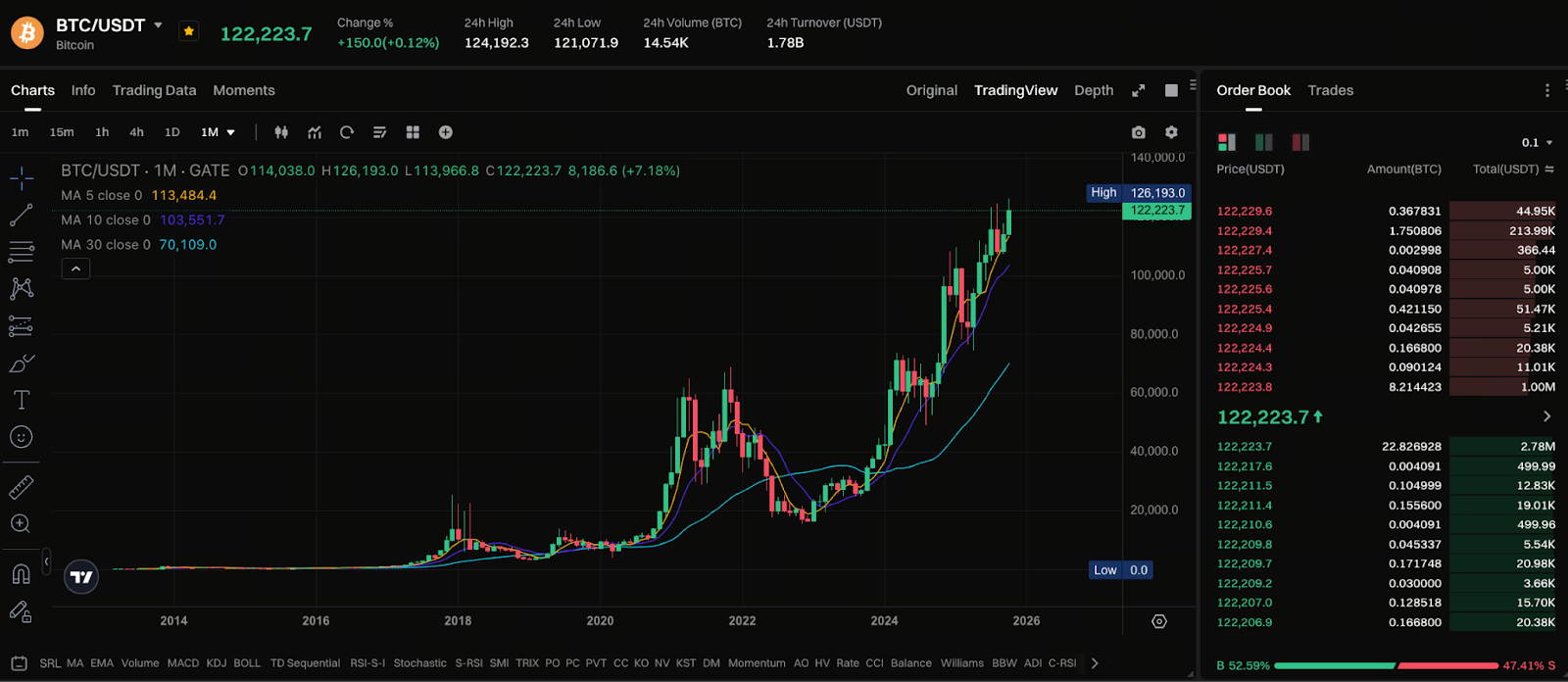
Image: https://www.gate.com/trade/BTC_USDT

2010: Bitcoin’s Beginnings

Satoshi Nakamoto published the whitepaper “Bitcoin: A Peer-to-Peer Electronic Cash System” in 2008. Bitcoin entered the blockchain space in 2009. It did not reach the actual market until 2010. At that time, only a small group of tech enthusiasts and geeks discussed Bitcoin. The price was virtually zero. Anyone could acquire Bitcoin through mining without spending any real money.

Bitcoin Price Volatility in 2010

In 2010, Bitcoin’s price remained extremely low, fluctuating between $0.0008 and $0.0025. For instance, on January 12, 2010, Bitcoin traded at $0.0008, giving it almost no market value. Over time, prices did not surge, but Bitcoin’s influence gradually expanded.

On May 22, 2010, a historic event took place: the most iconic transaction in Bitcoin’s history—10,000 BTC exchanged for two pizzas—valued at approximately $25. This modestly priced transaction demonstrated that Bitcoin could serve as a medium of exchange. The value of Bitcoin for both parties was negligible at the time, but today, people consider this transaction a milestone in Bitcoin’s history.

Key Milestones for Bitcoin in 2010

The pizza transaction on May 22, 2010, defined Bitcoin’s history and laid the groundwork for its future. This transaction showed that Bitcoin was more than a theoretical concept—it could function as a real currency. This event introduced Bitcoin into the actual economy and confirmed its use as a transactional tool.

BitcoinMarket.com, Bitcoin’s first exchange, launched in 2010. It created a platform for Bitcoin trading and drove further market growth. In October 2010, the price of Bitcoin surpassed the $1 mark for the first time. While the market was still in its infancy, this milestone started a new chapter for Bitcoin.

How 2010 Prices Shaped Bitcoin’s Future

Although Bitcoin traded at just a few cents in 2010, that year’s price movements enabled its eventual success. The pizza transaction and the first $1 breakthrough attracted more attention to Bitcoin. As the network grew, more participants and investors joined. This growth led to Bitcoin’s rapid expansion.

Conclusion: The Historical Significance of Bitcoin’s 2010 Price

While Bitcoin’s price in 2010 saw little volatility, this foundational period started its journey. From a virtually worthless digital asset to a global market force, Bitcoin’s modest price fluctuations in 2010 paved the way for its eventual success.

These early transactions and price milestones in 2010 matured Bitcoin’s market and created conditions for large-scale capital inflows and technological innovation. Bitcoin’s price was low. It built trust in the cryptocurrency market and established the foundation for Bitcoin’s explosive growth in the years to follow.

Author: Max
Disclaimer
* The information is not intended to be and does not constitute financial advice or any other recommendation of any sort offered or endorsed by Gate.
* This article may not be reproduced, transmitted or copied without referencing Gate. Contravention is an infringement of Copyright Act and may be subject to legal action.

Related Articles

What is Fartcoin? All You Need to Know About FARTCOIN
Intermediate

What is Fartcoin? All You Need to Know About FARTCOIN

Fartcoin (FARTCOIN) is a representative meme coin within the Solana ecosystem based on an AI-driven narrative. Its core concept originated from an experiment aimed at exploring the "boundaries between AI Agents and humor." More than just a digital asset with social attributes, the project deeply couples absurd humor culture with on-chain financial logic by integrating autonomous AI interaction models.
2026-04-04 22:01:19
Gold Price Forecast for the Next Five Years: 2026–2030 Trend Outlook and Investment Implications, Could It Reach $6,000?
Beginner

Gold Price Forecast for the Next Five Years: 2026–2030 Trend Outlook and Investment Implications, Could It Reach $6,000?

Analyze current gold price trends alongside authoritative five-year forecasts, integrating an evaluation of market risks and opportunities. This gives investors insight into the potential trajectory of gold prices and the main drivers expected to shape the market over the next five years.
2026-03-25 18:13:30
Aster vs Hyperliquid: Which Perp DEX Will Prevail?
Beginner

Aster vs Hyperliquid: Which Perp DEX Will Prevail?

Aster and Hyperliquid are the two representative protocols of the "purpose-built L1 path" within the current decentralized perpetual exchange (Perp DEX) sector. As a pioneer in the field, Hyperliquid has built a deep liquidity moat through its highly mature order book architecture and strong community consensus. Conversely, Aster, as a rising challenger, seeks to leapfrog the competition in high-performance trading through more aggressive multi-chain aggregation logic, private transaction modules, and an underlying execution environment optimized for 2026 market demands.
2026-03-24 11:58:33
AI-Native Settlement Layers: How United Stables Is Building the Next Financial Rail
Beginner

AI-Native Settlement Layers: How United Stables Is Building the Next Financial Rail

Stablecoins were originally designed as dollar substitutes within exchanges, primarily used for asset pricing and trade settlement. As on-chain financial ecosystems have matured, their role has expanded beyond simple payments to include collateral assets, cross-chain liquidity mediums, and unified settlement units. In particular, as AI systems and automated agents begin to participate directly in economic activity, demand has risen sharply for programmable value units capable of instant settlement. This shift is pushing stablecoins toward the role of foundational financial infrastructure.
2026-03-25 03:16:17
How Does Kite Work? An In-Depth Look at Kite's Identity and Programmable Permission Architecture
Beginner

How Does Kite Work? An In-Depth Look at Kite's Identity and Programmable Permission Architecture

Kite is an EVM compatible Layer 1 blockchain network that runs on proof of stake. It is designed to give AI agents verifiable identity, programmable permissions, and real time settlement in an on-chain execution environment. In Kite's design, AI is no longer only a tool that follows instructions. It becomes an economic participant with independent on-chain identity and direct control over assets. Within secure and auditable infrastructure, an AI agent can complete payments, call services, and coordinate tasks autonomously, making Kite a foundational layer for the emerging agent economy.
2026-03-25 06:02:34
DePIN Identity Network and Real World Applications: How Humanity Protocol Brings on-chain Identity Into the Physical World
Beginner

DePIN Identity Network and Real World Applications: How Humanity Protocol Brings on-chain Identity Into the Physical World

Most Web3 identity systems remain confined to on-chain environments and struggle to achieve meaningful adoption in real world settings. Through a DePIN architecture and physical verification hardware, Humanity Protocol aims to bring decentralized identity into access control systems, hospitality, public services, and offline events, allowing on-chain identity to function not just as a digital credential, but as foundational infrastructure for real world access.
2026-03-25 07:40:53