
Futures
Access hundreds of perpetual contracts
TradFi
Gold
One platform for global traditional assets
Options
Hot
Trade European-style vanilla options
Unified Account
Maximize your capital efficiency
Demo Trading
Introduction to Futures Trading
Learn the basics of futures trading
Futures Events
Join events to earn rewards
Demo Trading
Use virtual funds to practice risk-free trading
Launch
CandyDrop
Collect candies to earn airdrops
Launchpool
Quick staking, earn potential new tokens
HODLer Airdrop
Hold GT and get massive airdrops for free
Pre-IPOs
Unlock full access to global stock IPOs
Alpha Points
Trade on-chain assets and earn airdrops
Futures Points
Earn futures points and claim airdrop rewards


More

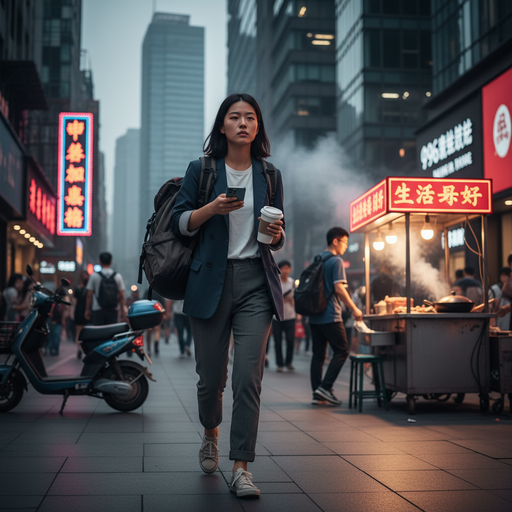



Seeking opportunities, the Chinese story of foreign enterprises
Southern Finance National Two Sessions Reporting Team Li Yinong Yang Yulai Beijing Report
As global uncertainties increase, where will foreign-invested companies direct their investments? For many companies, China remains an important investment destination. China also continues to open its doors to foreign enterprises, welcoming their investment in China and sharing development opportunities.
The 2026 government work report proposed further expanding high-level opening-up. Adhering to win-win cooperation, steadily expanding institutional opening-up, and expanding international circulation, using openness to promote reform and development.
This policy direction continues China’s longstanding path of opening-up. Over the past five years, as restrictions on foreign investment access have gradually eased and the business environment has continuously improved, China has consistently attracted foreign companies to increase investment, with a series of major investment projects successively landing in China.
ExxonMobil has added investment in Huizhou, Guangdong, building a wholly-owned major petrochemical project with a total investment of about 70 billion yuan, one of the world’s largest ethylene monomer projects. BASF is constructing an integrated base in Zhanjiang, Guangdong, with a total investment of about 80 billion yuan, also one of its largest global investment projects. Airbus continues to expand aircraft assembly capacity in Tianjin, building a second A320 series final assembly line to boost capacity, with a total investment of over 6 billion yuan.
These investments are not mere experiments, but firm choices made by foreign companies—betting on the certainty of the Chinese market, betting on the complete and efficient supply chain here, and betting on long-term development.
Data shows that by the end of June 2025, China’s actual use of foreign investment during the 14th Five-Year Plan period reached a total of $708.73 billion, surpassing the 700 billion dollar target set in the business development plan six months early. More important than the figures is that an increasing number of companies are making long-term commitments to the Chinese market.
During the 14th Five-Year Plan, a total of 229k new foreign-invested enterprises were established nationwide, an increase of about 25k compared to the 13th Five-Year Plan. Meanwhile, the layout of foreign investment is also changing: no longer concentrated solely in traditional manufacturing, but accelerating into high value-added sectors such as R&D and technical services.
Honeywell established a regional R&D headquarters in Shenzhen to further deepen innovation; Philips built an intelligent home appliance R&D center in Guangzhou, collaborating with the local industrial ecosystem; AstraZeneca announced an investment of about 17 billion yuan in Beijing to build a global strategic R&D center; Bosch plans to invest about 10 billion yuan in Suzhou over the next five years. In 2024, high-tech industry investment accounted for 34.6%, an increase of 6 percentage points from 2020.
This means that the meaning of investment is shifting from “production” to “innovation.” More and more foreign companies are establishing regional headquarters and even global R&D centers in China. The reasons are not only cost but also the ecosystem—here gather talent, markets, speed, and a complete and efficient industrial chain system.
Meanwhile, the consumer sector is also releasing new attractions. From encounters with Minions and Kung Fu Panda in Beijing, to searching for Judy, Nick, and Goku in Shanghai, to meeting Elsa and Anna in Hong Kong… Over the past five years, Walt Disney has continued expanding in Shanghai and Hong Kong, with Universal Studios and Legoland opening one after another, and Harry Potter and Peppa Pig theme parks also opening successively. The “happy economy” is becoming a new track for foreign investment in China.
Some invest in industry, some in R&D, and others in happiness. Because they believe that the consumer imagination of 1.4 billion people has not yet reached its ceiling.
Projects are landing, systems are being implemented. Over the past five years, China has continuously reduced the negative list for foreign investment access, fully canceled restrictions on foreign investment in manufacturing nationwide. At the same time, in response to enterprise concerns, policies such as the “24 Measures for Foreign Investment” and stable foreign investment action plans have been introduced. Of the 59 measures proposed in the “24 Measures,” 42 have been fully implemented, and the rest are ongoing. The continuous optimization of the business environment is providing foreign-invested enterprises with clearer and more stable expectations.
In the past five years, foreign-invested companies in China have demonstrated their investment choices through projects landing, laboratories operational, and theme parks lighting up. China has also made continuous improvements to the business environment, with shorter negative lists, expanded market access, and opening-up fields, turning foreign investment into a matter of trust.
New Media Coordination: Ding Qingyun, Zeng Tingfang, Lai Xi, Huang Daxun
Overseas Operations Supervisor: Huang Yanshu
Overseas Operations Content Coordinator: Huang Zihao
Overseas Operations Editor: Zhuang Huan, Wu Wanjie, Long Lihua, Zheng Quanyi
Produced by: Southern Finance All Media Group