


Futures
Access hundreds of perpetual contracts
TradFi
Gold
One platform for global traditional assets
Options
Hot
Trade European-style vanilla options
Unified Account
Maximize your capital efficiency
Demo Trading
Introduction to Futures Trading
Learn the basics of futures trading
Futures Events
Join events to earn rewards
Demo Trading
Use virtual funds to practice risk-free trading
Launch
CandyDrop
Collect candies to earn airdrops
Launchpool
Quick staking, earn potential new tokens
HODLer Airdrop
Hold GT and get massive airdrops for free
Launchpad
Be early to the next big token project
Alpha Points
Trade on-chain assets and earn airdrops
Futures Points
Earn futures points and claim airdrop rewards


More




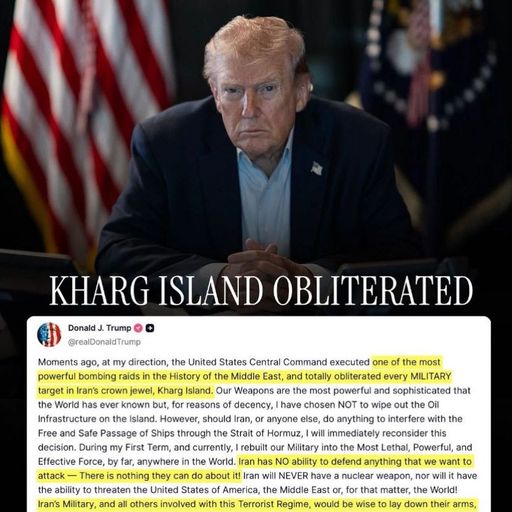
Should You Sell (or Avoid) Cryptocurrencies Due to the Conflict With Iran?
When Israeli and U.S. forces started attacking Iran on Feb. 28, crypto markets moved before U.S. stock exchanges opened. Bitcoin (BTC +2.87%) wobbled, then clawed its way back above $71,000 within days, which is roughly where it is now, two weeks later. So far, crypto prices haven’t collapsed, and majors like Ethereum, (ETH +6.87%), Solana, (SOL +6.08%) and XRP (XRP +5.54%) have actually held up pretty well despite the volatility.
If you’re wondering whether to sell your coins right now, don’t do it. But if you’re still worried, or wondering if you should avoid buying more crypto, there’s a lot to unpack here, so let’s investigate what’s happening, what could happen, and what you should do about it.
Image source: Getty Images.
Crypto’s direct exposure is minimal here
One key thing to know is that Bitcoin, Ethereum, Solana, and XRP do not have substantial direct exposure to risks stemming from this conflict spiraling further out of control.
Expand
CRYPTO: BTC
Bitcoin
Today’s Change
(2.87%) $2049.80
Current Price
$73499.00
Key Data Points
Market Cap
$1.5T
Day’s Range
$71324.00 - $74157.00
52wk Range
$60255.56 - $126079.89
Volume
41B
None have meaningful operational ties to Iran, Israel, or Lebanon. Official Bitcoin mining activity in these countries accounts for less than 0.5% of the network’s computational power; when estimates of unofficial mining activity are taken into account, their proportion of global mining power rises to 5% at the very most. Nor are there any records indicating that any of the combatants, save the U.S., retain significant crypto reserves.
The problem with crypto as an asset class is that it tends to experience disproportionate downside when the traditional financial markets are selling off as a result of a new catalyst. Crypto is still very much exposed to whatever this conflict brings.
Expand
CRYPTO: ETH
Ethereum
Today’s Change
(6.87%) $144.61
Current Price
$2249.63
Key Data Points
Market Cap
$272B
Day’s Range
$2088.51 - $2283.80
52wk Range
$1398.62 - $4946.05
Volume
25B
The more frightening indirect risks are still in play
You’ve probably heard that the Strait of Hormuz, right off the coast of Iran, is where 20% of the world’s oil supply needs to pass to reach its destination. As of March 10, no tanker ships are passing through. Thus the world is now heading closer and closer each day to a major energy crisis, and the economic disruption that would bring.
Expand
CRYPTO: SOL
Solana
Today’s Change
(6.08%) $5.36
Current Price
$93.56
Key Data Points
Market Cap
$53B
Day’s Range
$87.55 - $94.07
52wk Range
$70.61 - $252.78
Volume
4.6B
And that’s the scenario that would likely obliterate crypto. Recessions drain liquidity, and when investors need cash, risk assets get sold first. Bitcoin, Ethereum, Solana, and XRP aren’t going to have their investment theses invalidated if such a downturn happens, they’re just going to be among the things people sell right away.
Therefore, if you might need your investment dollars in the next five years, the current macro risk environment is a real reason to slow down with buying risky assets. But if your time horizon is longer and setbacks along the way won’t force your hand, the conflict itself doesn’t alter the investment case for any of these four assets, and you still shouldn’t sell them.