


Futures
Access hundreds of perpetual contracts
TradFi
Gold
One platform for global traditional assets
Options
Hot
Trade European-style vanilla options
Unified Account
Maximize your capital efficiency
Demo Trading
Introduction to Futures Trading
Learn the basics of futures trading
Futures Events
Join events to earn rewards
Demo Trading
Use virtual funds to practice risk-free trading
Launch
CandyDrop
Collect candies to earn airdrops
Launchpool
Quick staking, earn potential new tokens
HODLer Airdrop
Hold GT and get massive airdrops for free
Launchpad
Be early to the next big token project
Alpha Points
Trade on-chain assets and earn airdrops
Futures Points
Earn futures points and claim airdrop rewards


More





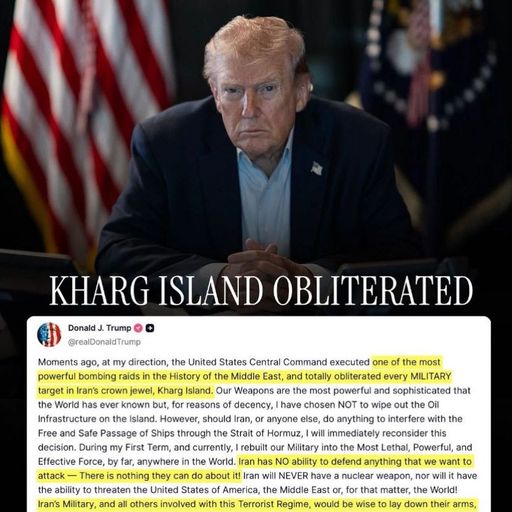
Hormuz Strait, also stuck tech stocks
How AI and Energy Costs Are Dragging Down Tech Stock Valuations
On March 9, Asian stock markets experienced a “Black Monday.”
By the close of trading, the Nikkei 225 plummeted 2,892 points, a 5.2% drop. The Korean KOSPI index was even more brutal, falling 5.96% amid concerns over soaring manufacturing costs. The MSCI Vietnam index dropped 6.88%, ranking among the worst performers in Asia.
In contrast, the A-shares and Hong Kong markets showed some resilience. The Hang Seng Index declined 1.35%, with the Hang Seng Tech index down just 0.12%. The Shanghai Composite managed a slight decline of 0.67% to 4,096 points, supported by gains in oil and coal sectors. The Shenzhen Composite fell 0.74% to 14,067.50 points, and the ChiNext dropped 1.69%.
Behind these numbers lies the intense pain from the world’s energy heart—the Strait of Hormuz. As tensions in the strait shifted from confrontation to actual blockage, Brent crude oil prices surged to $119.50 per barrel during Asian trading hours. By 6 p.m. Beijing time on March 9, the price had retreated to around $101 per barrel.
For Asian economies heavily dependent on this waterway, every wave rolling in the strait now hangs like the Sword of Damocles over the capital markets.
01. A Narrow “Energy Lifeline”
To understand why Asian markets are so fragile today, we must face the Strait of Hormuz’s narrow width—only about 33 kilometers on average. This vital waterway connects the Persian Gulf to the open ocean, handling nearly 30% of global seaborne oil trade and 20% of liquefied natural gas (LNG) flows.
For Asian countries, this isn’t just a distant geopolitical arena; it’s a true energy “lifeline.” Take Japan, for example, which imports over 70% of its crude oil through this strait. The sharp decline in Japanese stocks essentially reflects extreme pricing for potential energy shortages. South Korea faces a similar dilemma, with 65-70% of its oil imports passing through the Strait of Hormuz.
This dependence isn’t just trade; it’s a deep, technically embedded linkage that’s hard to reverse quickly. Over the past decade, East and South Asia have invested hundreds of billions of dollars in advanced refining facilities. But these plants were designed specifically for “medium-heavy, sour crude” from the Persian Gulf. This means that even if Asian countries seek alternatives—be it North American, West African, or Central Asian light crude—they cannot seamlessly integrate into existing industrial systems. This physical infrastructure anchoring makes any fluctuation in the Strait of Hormuz ripple through complex supply chains, ultimately collapsing corporate profit margins.
02. Cost Spiral: From Gas Stations to Semiconductor Factories
In the March 9 decline, tech stocks and manufacturing sectors suffered far more than the broader market, revealing a second layer of energy crisis transmission: the cost spiral.
The shift from “deprioritizing tech, favoring energy” reflects an instinctive defensive move by capital amid extreme uncertainty.
First, when oil prices jump from around $60 at the start of the year to $120, it triggers not just higher fuel costs but a comprehensive overhaul of societal production costs. Oil isn’t just energy; it’s the lifeblood of the chemical industry—plastics, fertilizers, industrial solvents—all tied to its price. For Asia’s manufacturing-driven economies, this is akin to a profit harvest across entire industries.
For example, South Korea’s semiconductor industry and Japan’s precision manufacturing require vast amounts of electricity. When natural gas and oil supplies are restricted due to the strait’s closure, soaring electricity prices directly increase the costs of producing chips and industrial robots. This cost pressure could squeeze global consumer purchasing power, creating a vicious cycle of “cost surge—consumer slowdown—valuation correction.”
Second, there’s a deadly financial logic—reignited inflation that kills valuations. Over the past two years, tech stocks, especially AI sectors, benefited greatly from cooling inflation and easing rate hike expectations. But the turmoil in the Strait of Hormuz has shattered this logic. As global oil and gas prices rise, inflation risks resurface. This could force the Federal Reserve and Asian central banks to restart rate hikes. For tech companies relying on high growth expectations and discounted cash flow (DCF) models, each jump in discount rates means valuation collapse.
At this uncertain juncture, the impact of the Strait of Hormuz crisis on the global economy is just beginning.
For investors caught in this environment, in an era where energy security is weaponized, paying attention to the geopolitical games behind every oil tanker may be more important than just watching price charts.