


Futures
Access hundreds of perpetual contracts
TradFi
Gold
One platform for global traditional assets
Options
Hot
Trade European-style vanilla options
Unified Account
Maximize your capital efficiency
Demo Trading
Introduction to Futures Trading
Learn the basics of futures trading
Futures Events
Join events to earn rewards
Demo Trading
Use virtual funds to practice risk-free trading
Launch
CandyDrop
Collect candies to earn airdrops
Launchpool
Quick staking, earn potential new tokens
HODLer Airdrop
Hold GT and get massive airdrops for free
Launchpad
Be early to the next big token project
Alpha Points
Trade on-chain assets and earn airdrops
Futures Points
Earn futures points and claim airdrop rewards


More





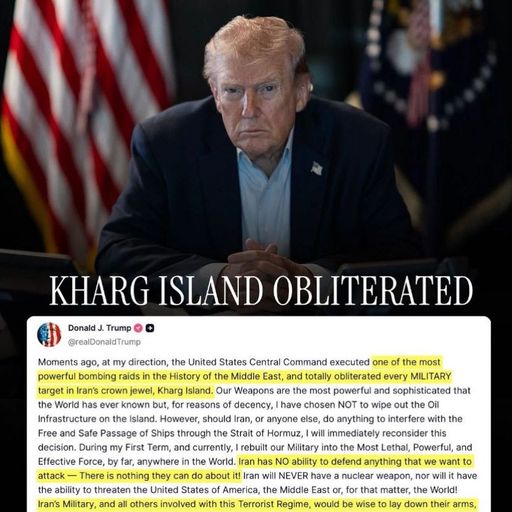
Goldman Sachs Top Trader: Geopolitical Risk Intensifies Uncertainty, There's Still Time to Hedge Now!
The S&P 500 has fallen 5% from its high, and the market is re-pricing for hedging strategies. In an environment of high uncertainty and low conviction, Goldman Sachs top trader Louis Miller issues a warning: targeted macro hedges should become a core component of portfolios rather than optional.
In his latest report, Miller notes that hedging activity has significantly increased in recent weeks—last week, short positions in US-listed ETFs rose by 8.3% in a single week, the second-largest weekly increase in nearly five years.
Meanwhile, fund flows in derivatives markets show a pattern of “realizing hedges during declines and re-establishing positions during rebounds or volatility drops,” indicating that institutional investors are systematically managing tail risks.
Beyond hedging strategies, Miller offers specific operational advice on the timing of AI theme re-entry, selection paths for physical assets (HALO), and stress signals in the private credit market. Current geopolitical shocks, oil price volatility, and stagflation expectations are reshaping cross-asset risk-return profiles.
Hedging remains urgent: how to allocate tools
In the US market, mainstream index hedging tools recommended by Miller include S&P 500 put options (SPX puts) and VIX call spreads. In Europe, Goldman Sachs’ asset allocation team suggests buying V2X call options and shorting European industrial put options.
On directional hedging, Miller favors shorting cyclicals or establishing long positions via Goldman Sachs’ geopolitical risk exposure stock basket (GSXUGEOP) and oil factor hedging portfolio (GSPUOILY). The logic is that Goldman Sachs’ research team has raised oil price forecasts—assuming low traffic in the Strait of Hormuz persists for 21 days (up from 10 days previously), followed by a 30-day gradual recovery—leading to an adjusted Q4 2026 Brent/WTI “post-shock” forecast of $71/$67. In extreme scenarios, March average prices for Brent crude could spike to $140.
If high oil prices continue to suppress growth expectations and delay the Fed’s rate cut cycle, Goldman Sachs’ stagflation hedge portfolio (GSPUSTAG) will serve as a re-positioning tool—long commodities equities and defensive compound assets, while shorting low-quality consumer, semiconductor hardware, and unprofitable tech companies. Goldman economists have delayed the first rate cut from June to September, but their probability-weighted path remains more dovish than market expectations.
Private credit: redemption pressures intensify, valuation still room to fall
Signals of risk in the private credit market are accumulating. According to Goldman Sachs research, data disclosed in March show that subscription volumes for alternative asset managers declined over 50% from the 2025 monthly average, combined with high single-digit redemption rates, suggesting net outflows are likely in the coming quarters.
Miller points out that about 80% of assets in direct lending are held in long-duration locked funds, SMAs, and publicly traded BDCs, which lack immediate redemption mechanisms, making systemic risk of large-scale redemptions relatively manageable. However, negative sentiment around software sector exposure and AI disruption narratives is increasing redemption requests, which could weigh on recent management fee income and wealth growth prospects for US BDCs (GSFINBDC) and alternative asset managers (GSFINALT).
In terms of valuation, although private credit baskets have corrected somewhat since the start of the year, Miller believes this does not yet make the sector attractive—after deducting equity incentives, the after-tax return multiples remain in the high teens. In a forced deleveraging scenario, valuations could further compress. Additionally, Miller introduces a European private credit exposure basket (GSXEFINC), covering European alternative asset managers, insurers, and wholesale banks with private credit exposure.
AI theme: infrastructure remains the best solution
While current market focus is on geopolitical risks, Miller believes the AI disruption narrative is likely to persist over the next 12 months, and the industry-wide impact and company-specific differentiation will make it difficult for the market to stabilize before fundamental data clearly refutes the narrative.
Within Goldman Sachs’ AI theme basket, infrastructure plays continue to attract the most capital: data center basket (GSTMTDAT) has gained 26% since the start of the year, and grid upgrade basket (GSXUGRID) has risen 22%. Although US and global memory chip baskets (GSTMTMEM, GSXGMEMO) have pulled back about 10% from their highs, Miller sees this as a good opportunity to buy on dips.
Goldman Sachs’ research expects that driven by strong demand for server-related applications and limited capacity expansion, the global memory market (DRAM, NAND, HBM) will remain undersupplied through 2026–2027, with upward revisions to Samsung Electronics and SK Hynix target prices. The next few quarters could see “unprecedented operating profit margins in the traditional memory cycle.”
HALO investments: physical assets require careful selection
After the accelerated AI disruption narrative and rising stagflation expectations, physical assets are no longer cheap—industry-neutral heavy and light asset P/E premiums are emerging. Miller recommends differentiated positioning within the HALO framework, focusing on three categories.
First, AI-related physical assets—robots. Miller believes robot themes will garner more attention. Recent catalysts include: NVIDIA and ABB announcing AI-driven industrial robot collaborations; Alphabet’s Intrinsic integrated into Google to expand smart robot capabilities; Qualcomm’s long-term strategic partnership with German startup NEURA Robotics to accelerate humanoid robot commercialization. Goldman Sachs’ global robotics basket (GSXGROBO) covers global stocks in the robot supply chain (excluding China), with a version including Chinese A-shares (GSXGBOTZ).
Second, inflation-resistant physical assets—Brazil. Goldman economists have raised Brazil’s 2026 GDP forecast by 20 basis points to 2.0%, and expect the Central Bank (Copom) to initiate a gradual rate cut cycle, with policy rates falling to 12.5% by the end of 2026. Brazil’s stock market shows the strongest negative correlation with local interest rates among emerging markets; falling rates will support equities. The Goldman Brazil interest rate-sensitive basket (GSBZRATE) offers related exposure.
Third, industry-supported physical assets—defense and energy security. In broader Asia, Middle East conflicts are tightening energy supplies, boosting interest in nuclear power (GSXANUCP)—South Korea, China, and Japan are progressing with nuclear restarts or new builds. In Europe, energy shocks have exposed regional vulnerabilities; the EU has updated its clean energy strategy and is deploying small modular reactors. Goldman Sachs’ European power basket (GSXEPOWR) is viewed as a core beneficiary.
Risk warnings and disclaimers
Market risks are present; investments should be cautious. This article does not constitute personal investment advice and does not consider individual user’s specific investment goals, financial situation, or needs. Users should consider whether any opinions, views, or conclusions herein are suitable for their particular circumstances. Investment involves risk, and responsibility rests with the individual.