


Futures
Access hundreds of perpetual contracts
TradFi
Gold
One platform for global traditional assets
Options
Hot
Trade European-style vanilla options
Unified Account
Maximize your capital efficiency
Demo Trading
Introduction to Futures Trading
Learn the basics of futures trading
Futures Events
Join events to earn rewards
Demo Trading
Use virtual funds to practice risk-free trading
Launch
CandyDrop
Collect candies to earn airdrops
Launchpool
Quick staking, earn potential new tokens
HODLer Airdrop
Hold GT and get massive airdrops for free
Launchpad
Be early to the next big token project
Alpha Points
Trade on-chain assets and earn airdrops
Futures Points
Earn futures points and claim airdrop rewards


More




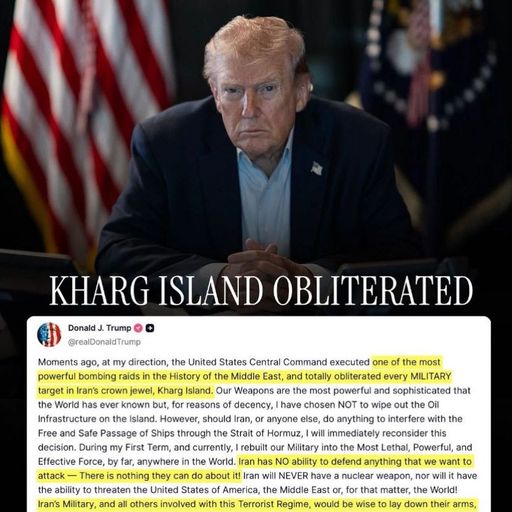
"Next is Cuba!" Trump threatens: Reach a deal quickly, or we'll take action!
The Trump administration is designating Cuba as the next target for pressure after Venezuela and Iran, pushing Cuba to the brink of an energy crisis through oil embargoes and economic sanctions, and issuing a clear final warning: either reach an agreement quickly or face “control.”
According to Xinhua News Agency, President Trump said on the 15th that the U.S. might quickly reach an agreement with Cuba or take other actions. “Cuba also wants to reach an agreement. I think both sides will quickly come to an agreement or do what we have to do,” Trump said in an interview aboard Air Force One. “We are talking with Cuba, but we will first resolve Iran, then Cuba.”
Cuba’s President Díaz-Canel publicly admitted last Friday that direct talks have taken place between the U.S. and Cuba, aimed at “seeking solutions through dialogue to resolve bilateral differences,” confirming widespread reports of secret contacts between senior Trump administration officials and Cuba. Díaz-Canel stated that negotiations are still in the “first stage,” with both sides establishing an agenda.
Cuba is currently facing an unprecedented energy crisis. Reports indicate that an internal memo from the U.S. Embassy in Havana this Monday shows that Cuba’s energy gap is about 60%, with some communities experiencing over 30 hours of power outages, and the island may enter a “zero hour” where water supply, sewage, and power systems completely shut down. Analysts believe that the Trump administration’s strategy of economic strangulation instead of military intervention closely mirrors its approach in Venezuela, aiming to force the current Cuban government to make a choice at the negotiating table.
Energy Crisis: Approaching the “Zero Hour”
Cuba’s energy situation has worsened sharply in recent months. Díaz-Canel admitted at a press conference last Friday that no fuel has entered Cuba in the past three months, and the energy shortage has become “unsustainable.” “The current gap is completely different from what we faced before, and the impact is huge,” he said. “Thousands of people are waiting for surgeries but cannot proceed due to power shortages.”
An internal memo from the U.S. Embassy in Havana estimates that Cuba can produce about a quarter of its oil needs domestically, theoretically enough to keep hospitals and critical services running. But the island may enter a “zero hour,” when water, sewage, and power systems shut down entirely, potentially threatening embassy operations and endangering personnel. Currently, the embassy has reduced staff by half, with some residences only allowed four hours of generator use per day, and has equipped itself with batteries, solar panels, and satellite phones.
The root of this crisis lies in the systemic blockade by the U.S. The Trump administration cut off the oil supply previously provided by Venezuela and threatened to impose high tariffs on any country exporting energy to Cuba. A tanker reportedly loaded with Russian fuel, scheduled to arrive in early March, ultimately failed to dock.
Secret Negotiations Between Cuba and the U.S.
Díaz-Canel revealed in a speech to Cuba’s party and government leaders that talks with the U.S. are led jointly by “revolutionary historic leader” Raúl Castro and himself.
Reportedly, U.S. participants include advisors to Secretary of State Pompeo. At the end of last month, during the Caribbean Summit in St. Kitts, Pompeo’s advisors met with Raúl Guillermo Rodriguez Castro, grandson of Raúl Castro. However, some Cuba experts question their qualifications as negotiation representatives; others speculate that the 94-year-old Raúl Castro is bypassing Díaz-Canel’s leadership to work behind the scenes with high-ranking military officials.
Pompeo—whose political career is rooted in South Florida’s anti-Castro circles and who is of Cuban descent—earlier this year, during a congressional hearing, was asked whether he seeks regime change in Cuba. He responded, “I think we very much want to see a change in the government there… That doesn’t mean we will directly cause the change, but we very much want to see it happen.”
U.S. Strategy: Economic Intervention Replacing Military Action
Reports indicate that the Trump administration’s strategy clearly emphasizes economic intervention rather than military action, aiming to control Cuba’s existing government institutions while maintaining the current governance structure—similar to its approach in Venezuela.
A White House official, speaking anonymously on Friday, said, “We are negotiating with Cuba, and its leaders should reach an agreement.”
Nevertheless, Democratic members of Congress have attempted to set legal barriers against military options. Last Thursday, a group of Democratic senators proposed legislation to prevent military action against Cuba, which may be voted on by the end of March.
Risk Disclaimer
Market risks are present; invest cautiously. This article does not constitute personal investment advice and does not consider individual users’ specific investment goals, financial situations, or needs. Users should consider whether any opinions, views, or conclusions herein are suitable for their particular circumstances. Invest at your own risk.