


Futures
Access hundreds of perpetual contracts
TradFi
Gold
One platform for global traditional assets
Options
Hot
Trade European-style vanilla options
Unified Account
Maximize your capital efficiency
Demo Trading
Introduction to Futures Trading
Learn the basics of futures trading
Futures Events
Join events to earn rewards
Demo Trading
Use virtual funds to practice risk-free trading
Launch
CandyDrop
Collect candies to earn airdrops
Launchpool
Quick staking, earn potential new tokens
HODLer Airdrop
Hold GT and get massive airdrops for free
Launchpad
Be early to the next big token project
Alpha Points
Trade on-chain assets and earn airdrops
Futures Points
Earn futures points and claim airdrop rewards


More





Are Bigger Financial Market Shocks Still to Come? Experts: "War Panic Peak" May Arrive Within 1-3 Weeks!
Standard & Poor’s 500 Index has only fallen 3% so far this year, with a decline of just 5% from its all-time high. It is still far from entering a bear market or a significant correction, indicating that investors have not yet panicked over the US-Iran conflict.
However, industry insiders are concerned that this situation could change rapidly.
Notably, since the Middle East conflict ignited two weeks ago, oil prices have surged over 40%, with nearly a 70% increase this year—one-fifth of the world’s oil supply is trapped due to Iran’s de facto blockade of the Strait of Hormuz, yet current oil prices remain below the peak seen after the Russia-Ukraine conflict in 2022.
“The end remains far off,” said Dan Alamariu, Chief Geopolitical Strategist at Alpine Macro, in a recent report. “The Strait of Hormuz is effectively closed, and the market is beginning to price in a prolonged and uncertain final game.”
Alamariu pointed out that although the US and Israel have carried out intense bombings destroying parts of Iran’s military and crippling its top leadership, the regime still threatens ships in the Persian Gulf and maintains high oil prices. Meanwhile, Tehran shows no interest in ending the conflict, trying to exert maximum economic pain to deter future attacks.
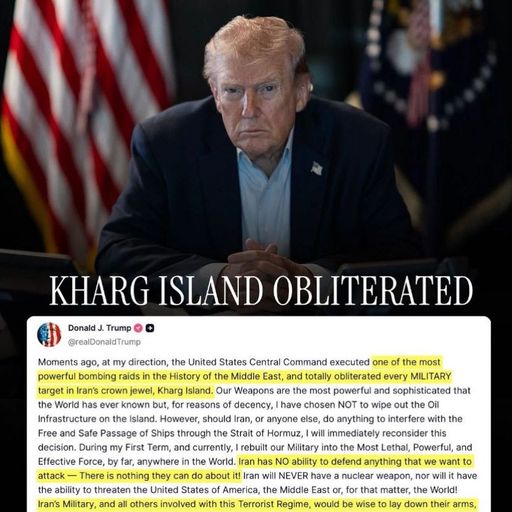
Latest signs indicate both sides are prepared to escalate further. Last Friday, the US attacked military facilities at Iran’s main oil export terminal on Khark Island and deployed up to 2,500 Marines to the Middle East. Iran is increasingly targeting civilian infrastructure in neighboring Gulf countries and threatened to attack the region’s largest port last Saturday.
Potential for Further Escalation
Alamariu noted that Iran’s Houthi allies in Yemen are likely to attempt closing the Red Sea shipping lanes, which, on top of the Hormuz Strait blockade, could bring additional economic pain.
He warned, “Simultaneous disruptions of both straits would intensify the impact, affecting the roughly 5 million barrels per day of oil passing through the Strait of Mandeb and damaging key Eurasian trade routes. This could further drive inflation, especially in Europe.”
Certainly, the US is unlikely to launch a full-scale ground invasion of Iran—current mainstream views suggest that capturing Khark Island could cut off Iran’s revenue lifeline and force the country to negotiate without occupying Iranian territory.
However, even if only US Marines land on Khark Island, they face risks of missile and drone attacks from Iran. Recent weeks have shown that despite advanced US and Israeli missile defense systems, Iran’s weapons can still strike US military bases across the Middle East.
Additionally, Alamariu mentioned a more alarming escalation option: Iran attacking desalination plants that supply most of the Gulf region’s freshwater. White House AI and crypto advisor David Sacks have discussed this possibility, warning it could make the Gulf nearly uninhabitable.
Peak War Panic Could Arrive in 1-3 Weeks
Therefore, although Alamariu’s baseline scenario still expects the war to end within two months, he admits the duration could extend beyond his two-month estimate, and the Strait of Hormuz may remain closed during the conflict.
This would keep Brent crude prices above $100 per barrel, possibly exceeding $150.
Alamariu noted that the market has not yet reached maximum panic. “The peak of war panic is more likely to occur within the next 1 to 3 weeks. The longer the conflict lasts, the greater the economic losses priced in by investors.”
According to Alamariu, oil prices are typically the gauge of market panic, peaking four to eight weeks after similar conflicts erupt. Currently, Iran’s war is in its third week.
Panic could manifest as a global risk aversion event, such as intervention by Houthi forces, Gulf producers declaring force majeure, or further US escalation triggering stock market crashes. Alamariu pointed out that if the Strait of Hormuz remains closed, spillover effects could impact agricultural products and semiconductors, as shortages of key inputs like fertilizer and helium develop.
“If we misjudge and the war drags beyond two months, the strategy will shift from trading volatility to hedging against systemic economic damage,” Alamariu added.
Notably, the International Energy Agency (IEA) last week stated that the Iran conflict has caused the most severe oil supply disruptions in history. Although IEA members have agreed to release 400 million barrels from strategic reserves, this will be far from enough to offset the daily lost supply.
Energy research firm Wood Mackenzie also warned last week that with 15 million barrels per day of Gulf region supply suddenly disappearing, oil prices would need to reach $150 per barrel for demand destruction to occur and market rebalancing to happen.
The firm’s data shows that, after inflation adjustment, oil prices actually peaked around $150 following the Russia-Ukraine conflict in 2022. However, Wood Mackenzie’s Chairman and Chief Analyst Simon Flowers said the current situation could be worse. “The scale of the at-risk oil supply is larger—and real. We believe that reaching $200 per barrel by 2026 is not impossible.”